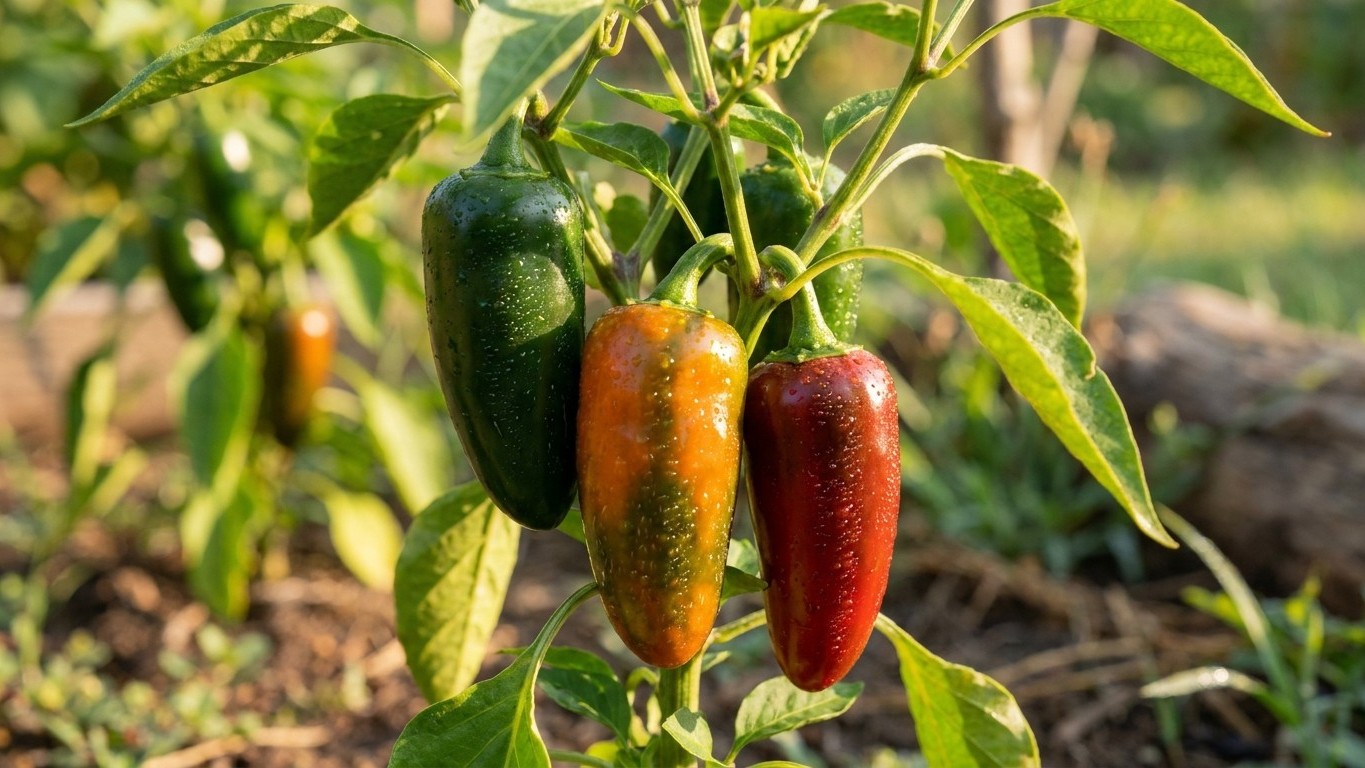

Pick peppers when they reach full size and feel firm, which in a Massachusetts garden usually means 70 to 85 days after transplanting. Then keep them out of the refrigerator. Clemson Extension puts ideal storage at 45 to 50 °F with 80 to 90 percent humidity, and a home fridge runs colder than that. Below about 45 °F, peppers pit and go soft. Harvest timing and storage both come down to temperature.
The short answer
The hot end and the cool end of fruit set
The reference station at Boston records 10.2 days a year at or above 90 F, according to NOAA NCEI Climate Normals. That figure measures summer heat load. It is not the average summer temperature. Utah State University Extension says pepper fruit set fails when days climb above 90 F, so in most Massachusetts summers the hot-end problem is a few scorching afternoons during a heat wave, not a whole season. Keep two caveats in mind. The station is Logan, a waterfront spot, and 10.2 is a yearly mean, so any single year can run higher. A bed against a south wall or beside pavement can also run hotter than any weather station reports.
The other end gets less attention. The same Utah State rule says fruit set fails when nights drop below 55 F. Watch your own nights. A cheap min/max thermometer set at plant height and read each morning will tell you more than any regional average. If a run of sub-55 F nights lands while the plants are flowering, cover them at dusk and uncover them in the morning. The full diagnosis is in Why Peppers Fail to Set Fruit in Massachusetts, and the broader picture of the crop is in Growing Peppers in Massachusetts.
When the fruit is ready, and where it goes next
Clemson Extension says peppers should be ready for harvest about 70 to 85 days after transplanting. The count starts at the transplant date, not the sowing date, so the indoor weeks come on top. That range is a general guide from a Southern extension service, not a Massachusetts measurement. Pick when the fruit has reached full size and the walls feel firm and glossy. Cut the stem with pruners or scissors, because yanking a pepper can snap the brittle branch it hangs from. Keep an eye on your local forecast and bring in everything worth saving before a frost.
Then comes the mistake nearly everyone makes. Clemson’s optimal storage is 45 to 50 °F and 80 to 90 percent relative humidity, for two to three weeks. That is a ceiling under ideal conditions, not a promise. A domestic refrigerator runs colder than that range, and below about 45 °F peppers suffer chilling injury. The skin pits, the flesh softens, and the pepper breaks down faster than it would have on a kitchen counter. A cool basement or pantry that holds 45 to 50 F is the right place. Without one, leave whole peppers on the counter and use them within a few days. Once a pepper is cut, the fridge in a sealed container is fine, since it will be eaten soon.
When to start seed here
Peppers hate being rushed outdoors. Utah State University Extension says transplants need 8 to 10 weeks indoors, and that they go out when the soil reaches 60 F, after frost. Working backward from that date gives you the sowing date, and you can redo the math for any county.
- Find your last spring frost. NOAA NCEI’s freeze probabilities for Logan, in the 30 to 70 percent band, put the last 32 F freeze between April 1 and April 8. Logan is a waterfront urban station and the mildest spot in the state. Inland suburbs and the Berkshires frost noticeably later in spring, so treat that window as the earliest possible date, not your date.
- Wait for the soil, not the calendar. Frost-free is only the first gate. Push a soil thermometer a few inches down in the morning, and do not set transplants out until the bed reads 60 F. In most years that comes well after the last frost, because cold soil lags behind the air.
- Pick your transplant date. It is the later of the two gates: after frost, and at 60 F soil. Write it down.
- Subtract 8 to 10 weeks. Eight weeks is 56 days and ten weeks is 70 days. For illustration only, say your transplant date is May 20. Ten weeks back lands on March 11, and eight weeks back lands on March 25. That March 11 to March 25 span is your sowing window.
- Add the harvest count. Using the same example, 70 days after a May 20 transplant is July 29, and 85 days is August 13. That is the stretch when the first firm, full-size fruit can be expected, according to Clemson’s range. Cool weather or a stalled flowering period can push it later.
Notice that the sowing window moves with your transplant date, not with the frost date alone. A gardener in the Berkshires with a later transplant date sows later than a gardener near the coast, and starting seed in February just produces leggy plants waiting by a window. If your transplant date shifts because the soil stays cold, shift the sowing date with it. A late-set plant is better than a root-bound one that stalls after planting.
What goes wrong here
Massachusetts rarely wrecks a pepper crop outright. More often, a handful of specific failures cost you the first flush of fruit. Each one has a cause you can see and a fix you can apply.
- Blossom drop in a hot spell. Flowers fall off instead of setting when days climb above 90 F. With about 10.2 such days in a typical year at the Boston station, this tends to show up during a heat wave, not all summer. Water deeply in the morning, and drape shade cloth over the plants through the hottest afternoons. New flowers usually follow once the heat breaks, so do not tear out plants that look bare for a week or two.
- Blossom drop after a cool night. The same loss happens when nights fall below 55 F. When the evening forecast looks cold, lay row cover or set cloches over the plants at dusk and remove them after sunrise. Holding transplants back a few days in a chilly spring also helps, since an early plant that sits in cold nights loses its first flowers.
- Sunscald. Pale, papery, sunken patches on the side of the fruit facing the sun mean the skin was cooked. It happens when leaves that shade the fruit are lost, whether from heavy pruning, disease, or insects. Leave the canopy alone, and look at What Eats Pepper in Massachusetts, and When if leaves are being chewed. Shade cloth over exposed plants in strong afternoon sun protects the fruit that is already set.
- Blossom-end rot. A dark, leathery, sunken patch on the bottom of the fruit is blossom-end rot, a calcium delivery problem and not a disease you can spray away. It usually follows uneven watering, a soaking followed by a dry stretch. Keep moisture steady, mulch the bed to even out swings, and pick off affected fruit so the plant puts its energy elsewhere. Run a soil test through your state extension before adding any calcium, since the soil often has plenty and the water supply is the real problem.
Common questions
Can I put peppers in the refrigerator at all?
Cut peppers, yes, in a sealed container and used soon. Whole, uncut peppers do best at 45 to 50 °F and 80 to 90 percent humidity. A refrigerator is colder than that, and below about 45 °F peppers pit and soften from chilling injury. A cool basement, root cellar, or pantry that holds that range works better. A kitchen counter is the next-best choice for a few days.
How long will picked peppers last?
Clemson Extension says two to three weeks under optimal conditions, meaning 45 to 50 °F and 80 to 90 percent relative humidity. That is a maximum, not a guarantee. Peppers stored warmer or drier, or ones picked with bruises, will not reach it. Check them every few days and use the soft ones first.
Are 10.2 days at or above 90 F enough to hurt my crop?
It can, if those days arrive while the plants are flowering. Utah State University Extension says fruit set fails when days run above 90 F, and the 10.2 is a yearly mean for the Boston reference station, not a promise for your yard. A short hot spell usually costs you a few flowers, not the season. Shade cloth and steady watering are the cheap insurance.
When should I start counting days to harvest?
Count from the transplant date. Clemson’s 70 to 85 days run from transplanting, not from sowing, so the 8 to 10 weeks spent indoors do not count toward it. If you transplanted on a given date, add 70 and 85 days to get your first expected picking window, then adjust for cool nights or a late flowering start.