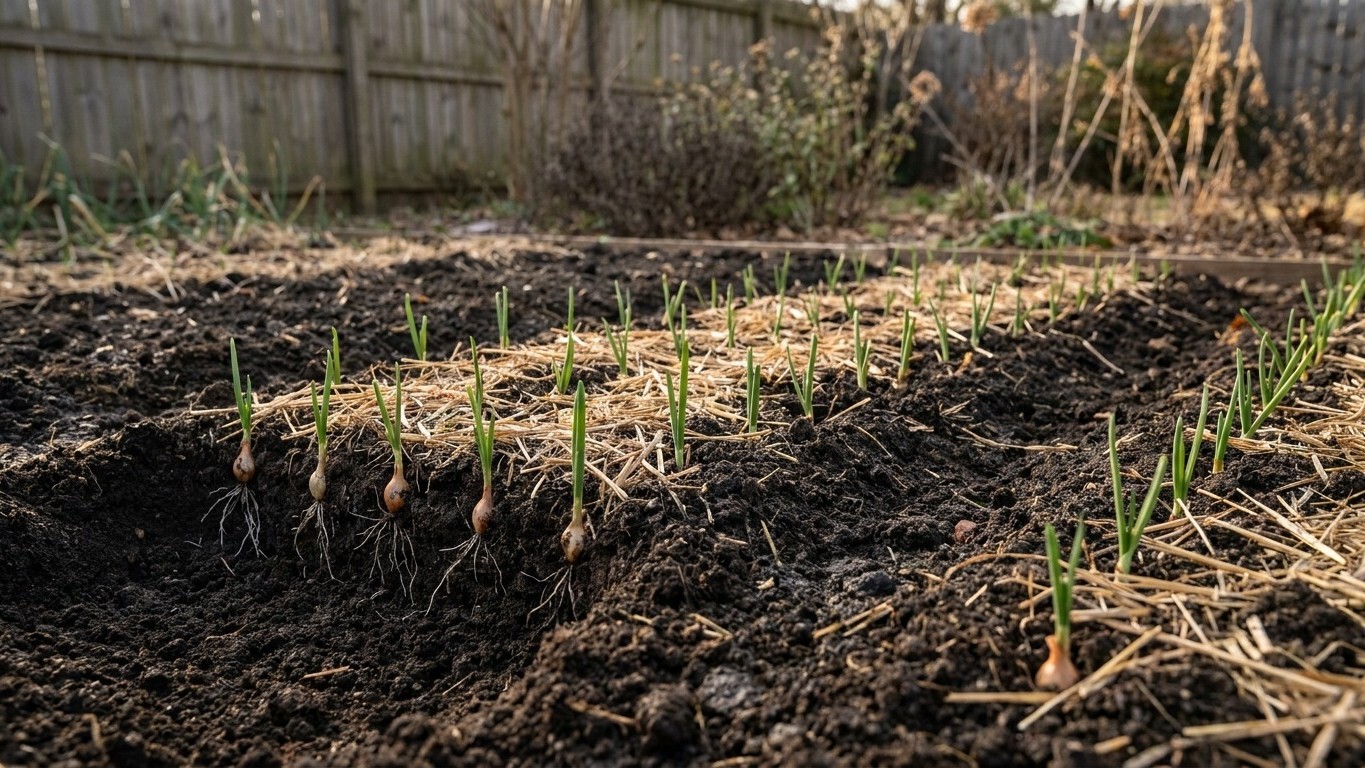

Garlic in Virginia gets hit twice. Soil pests and rodents go after cloves from planting through winter, then mites, thrips and nematodes show up as spring warms and the plants bulb up for a summer harvest. The first fall freeze anchors the whole schedule: plant relative to it, and the early threats mostly pass while the cloves are still underground.
The short answer for Virginia
At NAS Oceana, the first fall freeze (32°F) lands between November 10 and November 24, according to the 30-70% probability band in the NOAA NCEI 1991-2020 Climate Normals. Garlic pests cluster on either side of that window: wireworms, slugs, cutworms and voles in the first weeks after planting, then mites, thrips and bulb nematodes the following spring and early summer.
That window is a midpoint, not a deadline you can count on. In one year out of two the freeze arrives later than the dates above, and a late freeze means a longer stretch of mild, damp soil where slugs and soil insects stay active. A cloves-in-the-ground garden in a warm November is a buffet for them.
Pest timing follows the garlic’s own calendar. Fall-planted cloves spend autumn making roots, sit through winter, and put on leaf in early spring. Anything chewing at that stage hits roots and young shoots. By the time bulbs swell in late spring, the threat shifts to sap-feeding pests on the leaves, and to organisms already inside the clove that you can’t see. The crop comes out the following summer, so the exposure runs close to ten months from planting to lifting.
Be aware that the Oceana figure comes from the mild end of the state. The Blue Ridge and southwest Virginia run weeks later in spring and earlier in fall, so the clock starts sooner there and pest emergence is pushed later into spring. Where your garden sits changes which pest you meet first, which is why the next section shows how to redo the math for your own ground.
Working it out for your own garden
The arithmetic
A state is not one climate. Elevation, the Chesapeake Bay and the Atlantic coast can each move frost dates by roughly two weeks either way. Here is the method:
- Find the NOAA normals station closest to your garden and in a similar setting (valley floor, ridge, waterfront).
- Read its 32°F freeze probability dates and note the 30% and 70% points.
- Compare them to the Oceana window of November 10 to November 24.
- Shift every date in your pest calendar by the same number of days.
Say your station runs two weeks ahead of Oceana. Your window becomes October 27 to November 10, and everything that depends on the freeze moves with it. If it runs two weeks behind, the window becomes November 24 to December 8. Same math, different garden.
The planting date itself counts back from that window. The lead time and the reasoning are in When to Plant Garlic in Virginia: Counting Back From the First Frost, so there is no need to repeat it here. What matters for pests is the consequence: plant too early and the cloves sprout above ground before winter, handing cutworms and slugs tender shoots. Plant too late and roots barely form, leaving a weak plant that pests and heaving soil take apart easily.
Where pests fall on that calendar
Once you have your shifted freeze window, hang the pests on it. Voles and mice move in as soon as you mulch, because straw is exactly the cover they like, and the risk lasts through the cold months. Wireworms, which are soil-dwelling beetle larvae, are the worst in beds recently converted from lawn or sod, and they chew into cloves before roots take hold. Slugs thrive in mild, wet autumns and again in cool, damp springs.
Spring brings the second wave. Thrips, tiny insects that rasp leaves and leave silvery streaks, build as weather warms and dries toward harvest. Garlic curl mites and stem and bulb nematodes are different: they travel on or in seed cloves, so the real timing is when you buy and plant, not when they appear. Virginia-specific dates for each pest’s emergence are not published here, so check with your local extension office (more on that below).
What changes across Virginia
Three broad zones behave differently, and the differences come down to cold, water and elevation. Tidewater and the Eastern Shore are moderated by the Atlantic and the Chesapeake Bay, which hold heat into fall and keep winters milder. Oceana sits at that mild end. The Piedmont, from Richmond west toward Charlottesville and Lynchburg, swings more between warm and cold spells. The Blue Ridge, the Shenandoah Valley and southwest Virginia are higher and colder, with frost arriving earlier in fall.
| Area | Frost timing vs. Oceana | Pest tendency |
|---|---|---|
| Tidewater and coast | This is the reference: November 10 to November 24 | Slugs and soil insects stay active longer into a mild fall |
| Piedmont | Not published here; check your nearest station | Mixed: fall chewers, then spring thrips |
| Blue Ridge, Shenandoah Valley, southwest Virginia | Earlier in fall, later in spring (per NOAA station notes) | Shorter soil-pest season; voles under winter mulch matter more |
I’m not putting freeze dates for places the source doesn’t cover. Make your own calculation from the nearest NOAA station, as outlined above.
Which garlic you plant matters for the same reason. Colder western counties suit types that need real winter chill, while the coast leans toward types that cope with mildness. Garlic Varieties That Suit Virginia Winters sorts that out, and the broader Growing Garlic in Virginia guide covers the full season. Gardeners comparing notes with the Pacific Northwest will find different dates and different pests in When to Plant Garlic in Washington: Counting Back From the First Frost and Garlic Varieties That Suit Washington Winters.
The mistakes this climate punishes
Virginia’s winters are mixed: cold enough in the mountains to kill unprotected cloves, yet mild enough along the coast to keep pests moving. The costly errors reflect both.
Planting too early is the first. Warm Octobers, common near the coast, push cloves to sprout leaves before the freeze. Tender green shoots are what cutworms and slugs want, and a hard freeze can then burn what’s left. Planting right after the window opens works better than racing the calendar.
The second is planting too late, especially in the higher, colder west. Cloves put into cold ground late make few roots, and with a shallow, weak root system the plant heaves out of the soil during repeated freezing and thawing. Exposed cloves get found by voles and birds. A late freeze in a mild year can seem to forgive this, but remember the frost date is a midpoint: half of years go the other way.
Third, mulching without thinking. Mulch protects roots in the mountains, but thick straw in a wet, mild coastal winter shelters voles and slugs. Use a light layer and check beds in late winter for tunnels.
Fourth is reusing seed stock from infested beds. Stem and bulb nematodes live in soil and cloves, and you can’t treat your way out once they establish. Buy clean seed garlic, and rotate away from garlic and onions after any suspected problem. Planting a hardneck variety in the mildest coastal areas is a related error, since those types are built for deeper chill than Tidewater delivers. Match the variety to your winter first.
One last warning: a spring that is wet and cool brings slugs, and one that is warm and dry brings thrips. You don’t control which you get, so scout leaves weekly from early spring until harvest.
Checking this against your county
The county agent is the best source for what’s actually active near you. Virginia Cooperative Extension has local offices that can confirm freeze dates, identify pests from a photo or a sample, and test soil. Bring a sample of damaged leaves or bulbs if something looks wrong; identification is free or low-cost, and it beats guessing.
Common questions
What is the most damaging garlic pest in Virginia?
No Virginia-specific ranking is published here. Stem and bulb nematodes are the hardest to fix, because they live in soil and seed cloves. Voles, wireworms and thrips are more common and easier to manage.
When should I start watching for pests?
Right after planting, around the first fall freeze window (November 10 to November 24 at Oceana, shifted for your area). Check again in early spring when shoots are up, and weekly through late spring.
Does a late frost help or hurt?
A later freeze extends the mild, damp conditions slugs and soil insects like. Since the frost date is a midpoint, it comes later than listed in about one year out of two, so don’t treat it as a safe date.
Do deer eat garlic?
Not usually; the smell puts most browsers off. Voles, mice and soil insects are the bigger concern for the bulbs.