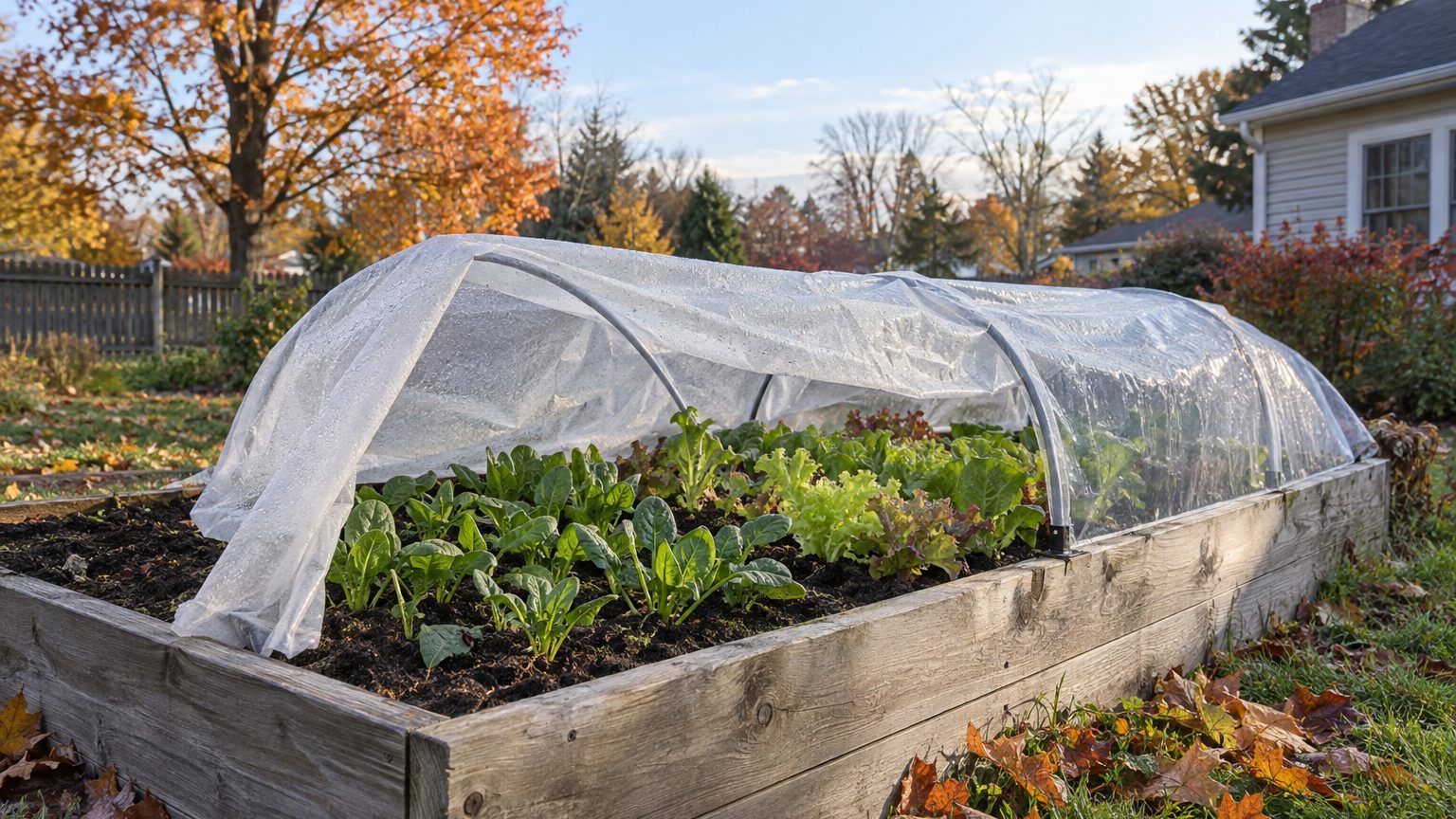

Around Charlotte, the average last spring freeze falls between March 23 and April 5, and the first fall freeze between October 30 and November 8. Row covers, low tunnels and cold frames stretch both ends of that window. They work on the ground and the air just above it, so sowing dates still follow how warm the soil is. That is where to start.
When the soil is warm enough in North Carolina
The date most gardeners want is March 23 to April 5. That is the span of the mean last spring freeze at the Charlotte station, taken from the 30 to 70 percent band of 32°F freeze probabilities in NOAA’s 1991-2020 U.S. Climate Normals. Any single spring can land outside that band, so read it as the middle of the odds. Charlotte sits in the Piedmont. The Blue Ridge mountains to the west run several weeks later in spring, and the coastal plain runs earlier.
Why doesn’t the frost date tell you when to plant?
Air warms in a day. Soil is a heavy, wet mass and takes weeks. By the time frost risk ends, the ground at planting depth is often still too cold for warm-season seed, which sits in cold, wet soil and rots or sprouts unevenly. Peas and spinach tolerate it. Beans, squash and cucumbers do not.
The reliable test is a soil thermometer pushed in to planting depth, read in the morning when the ground is at its coolest. Every seed packet lists a minimum soil temperature, and that number is the real planting date. A cover laid over the bed a week or more before sowing lets sun warm the soil under it, which is one of the most dependable things a cover does.
How does a cover protect a crop on a cold night?
The mechanism is simple. Soil soaks up sun all day and gives that heat back after dark. A cover traps part of the heat as it radiates upward and keeps the air under it still, so it can’t be swept away by wind. A second layer, such as fabric inside a low tunnel, adds another pocket of still air.
The gain is real but variable. It depends on the material, the night, the wind and whether the ground was warm and moist at dusk. Clear, calm nights are the hardest on a bed because the ground loses heat straight to the sky. A cover shifts the limit a crop can take. It does not remove it, and a hard freeze after a warm spell can still kill what is underneath. Never treat a covered bed as frost-proof.
Closed structures need ventilation. A shut cold frame or tunnel in spring sun can cook its contents, even when the air outside is cool. Prop the lid or open the ends on any sunny morning, then close up again in late afternoon. Everything here is passive: the sun and the soil supply all the warmth.
How long the season lasts here
The reference station has about 208 to 230 frost-free days between the mean last spring freeze and the mean first fall freeze, depending on which end of each date band you use. The first fall freeze comes between October 30 and November 8, late enough that fall gardening has real room.
A window that long allows a second sowing, and in places it allows a third. A spring planting of lettuce or radishes can come out in time for beans in warm soil. Late summer then opens space for greens, carrots and brassicas that mature in cooling weather. The succession sowing guide on this site lays out how to space those plantings. Because the first fall freeze arrives so late, a cover on a fall bed carries harvests well past it.
The length also changes whether transplanting earns its keep. Every transplant takes a root check: watch for it to stall while it re-establishes. In a short season that pause can cost the crop its ripening. Here it is affordable for crops that need a long, warm run, such as tomatoes, peppers and eggplant. Their days to maturity count from transplanting. For quick crops sown straight into the ground, such as radishes, lettuce, beans and cucumbers, packet days count from sowing, and direct seeding avoids the root check altogether.
These numbers belong to the Piedmont. Gardeners in the mountains lose weeks at both ends, and those near the coast gain them. Elsewhere the arithmetic changes more sharply: Extending the Growing Season in Oklahoma deals with swings between hot and cold, while Extending the Growing Season in British Columbia covers a cooler, damper coast.
Heat and water in North Carolina
Summers in the Piedmont are long, hot and humid, but for season extension heat is not the governing fact. Light and cold are. Charlotte sits at 35.22 degrees north, and that latitude sets when daylight shrinks to the point where plants stop growing. After that, a cover holds a crop alive rather than growing it. The figure belongs to Charlotte only. A gardener in the mountains or on the coast should check their own latitude, because the state is long and the terrain varies.
The practical rule: a fall crop has to be close to full size before days get short in late fall. Packet days assume summer-like growth, so count back from the first fall freeze and add generous extra time. A bed of lettuce sown too late will sit at seedling size all winter under its cover, alive but not producing.
Cold decides the next question. The mean daily minimum in the coldest month at Charlotte is 31.8°F, just under freezing on an average night. On those nights a light fabric laid over hardy greens is often enough. But that is an average, and individual nights run colder. For tender crops or a hard cold snap, a framed structure with a plastic skin and vented ends gives more margin. The USDA Plant Hardiness Zone Map (2023) runs from 5b to 8b across the whole state. It is built on the average annual extreme minimum, so ask your county for your own zone instead of borrowing Charlotte’s.
Heat and wet matter in a different way. Hot spells end the season for cool-season crops. Lettuce bolts and spinach quits, so these crops are sown in fall and early spring, not midsummer. Tomatoes and peppers can drop blossoms in hot weather. Shade cloth over a bed is season extension in reverse, trimming the heat load on the leaves.
Humidity is the bigger risk to covered crops. Summer storms drop heavy rain, and humid air keeps leaves wet for hours. A fabric cover left in place through warm, damp weather holds that moisture against the plants and invites mildew and other fungal disease. Pull covers off when no frost is forecast. Fabric lets rain through, while plastic does not, so a bed under plastic needs hand watering. Raised beds drain better after storms.
Which season extension suit North Carolina
Choose by type, reasoning from the climate. The long window and the late first fall freeze make fall and winter extension the best return. Light fabric over hardy greens, a low tunnel with open ends during mild stretches, and a cold frame for late-winter starts all fit that rhythm. For spring, favor the earliest types: quick, cold-tolerant crops such as leafy greens, radishes and peas, which tolerate cool soil under fabric while the ground warms for the later plantings.
Hot summers favor types given airflow and shade at the root. Heat-tolerant plantings, mulch over the soil and shade cloth over sensitive beds all keep roots cooler. Humidity makes disease resistance the first criterion for anything planted into the wet months, especially tomatoes, squash and cucumbers. Pick types that resist the common leaf diseases before anything else.
This guide names no varieties, on purpose. A variety that thrives in the clay of the Piedmont can struggle in the sandy coastal plain or the cool mountain valleys, and a name carries no value without local trial results behind it. The trials that matter run through NC State Extension and the county center nearest you. Their staff know which types have performed in your soil and your microclimate, and they can tell you how your last frost date differs from Charlotte’s.
Wherever a closed structure goes in, ventilation goes with it. Vent on sunny days, close before the evening chill, and keep the whole system passive. For the general case on what a cover buys and where it stops, see Extending the Season: What a Cover Buys, and What It Cannot.
Common questions
Can I plant before the last frost date if I use a cover?
Cold-tolerant crops, yes. Tender crops still wait for warm soil, since a cover does nothing for a seed in cold ground and a hard freeze can still get through it. Check soil temperature with a thermometer before sowing.
How much warmer does it stay under a row cover?
There is no fixed number. The gain changes with the fabric, the night, the wind and the warmth of the soil underneath. A min-max thermometer placed under the cover and another outside will show what your bed gains on your own nights.
Do I need to vent a cold frame in winter?
Yes, on sunny days, even cold ones. Glazing heats up fast in direct sun. Prop the lid in the morning and close it again in the afternoon.
Is the frost date the same in the mountains and on the coast?
No. The March 23 to April 5 band describes Charlotte in the Piedmont. The Blue Ridge runs several weeks later in spring, and the coastal plain earlier, so a gardener in either place should confirm local dates with the county extension office.