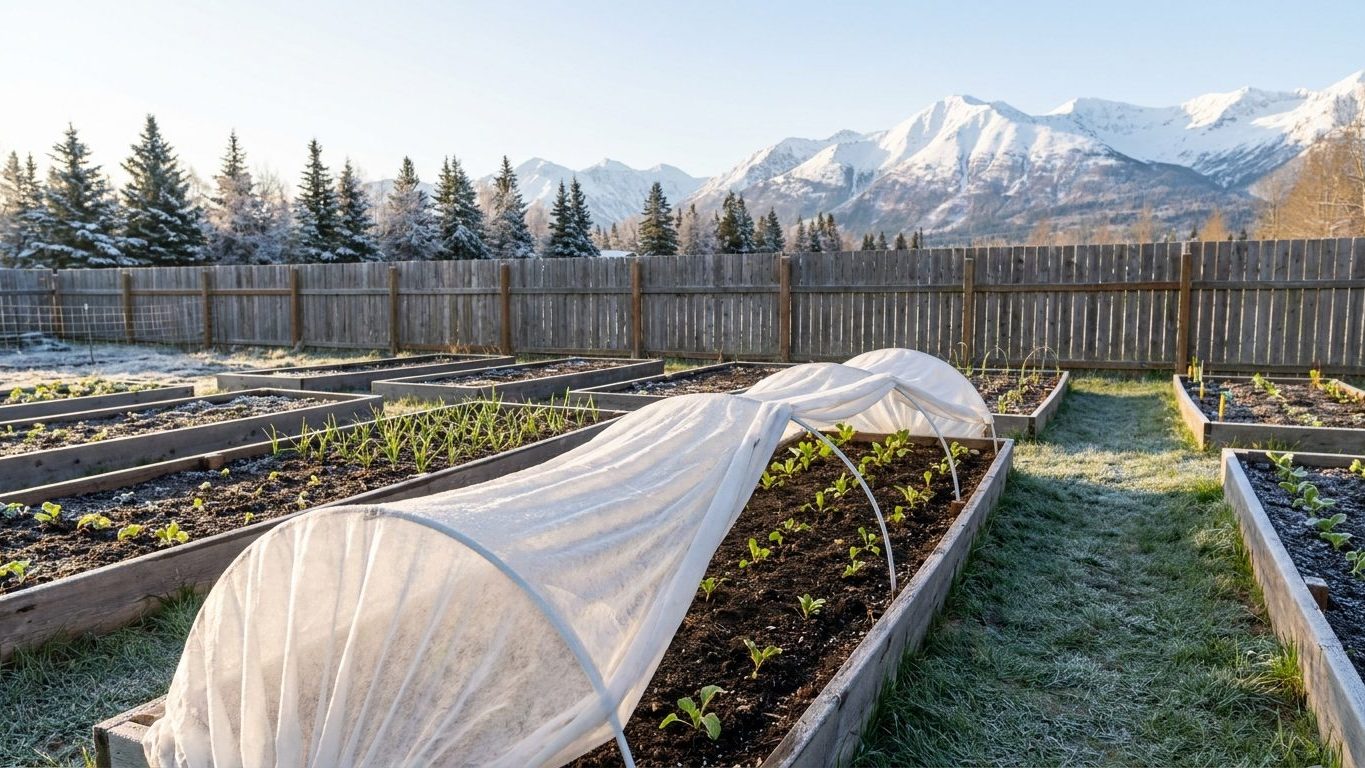

Cover tender plants the evening a frost is forecast, when the overnight low is expected to reach 32°F. Cool-season crops can wait for a hard freeze. In Nevada, that evening can fall anywhere from late September to well into spring depending on where you garden, so the forecast is a better guide than any calendar date.
The short answer for Nevada
Put the cover on before sunset on any night the forecast low is 32°F or colder, and take it off the next morning once the air warms. That rule holds from the Mojave Desert to the high basins in the north. What changes from place to place is how many nights a year it applies.
How do the Las Vegas frost dates compare with the rest of Nevada?
The Las Vegas airport station sits at 36.07 degrees north, in one of the warmest urban pockets in the West. Its NOAA 1991-2020 normals put the chance of a 32°F freeze between 30 and 70 percent from January 7 to February 1 in spring, and from December 8 to December 23 in fall. Those are probabilities that a freeze will occur, and they describe a single concrete-and-asphalt location. Reno, Carson City and any garden at elevation see frost months earlier in fall and months later in spring. Treat the Las Vegas dates as the warmest edge of the state, not as a planting window for anyone else.
The same station shows how mild winter can get in the low desert. The mean daily minimum of its coldest month is 39.6°F. Averages hide cold snaps, though, and one clear, still night can drop a basil bed or a pepper plant that has been growing happily for months.
Which plants need covering first?
Frost tolerance sorts crops into two groups, and the cover goes on the tender group first.
- Tender crops such as tomatoes, peppers, squash, beans and basil: cover at the first forecast of 32°F, and in spring keep them covered until the last freeze has passed.
- Hardy crops such as kale, spinach, carrots, beets and cabbage: they shrug off a light frost, so save the cover for hard freezes or for stretching harvests deep into winter.
- Seedlings of any kind: young plants have less tissue and less stored warmth than established ones, so they get covered earlier and uncovered later.
Timing matters on the morning side too. A cover left on through a sunny day traps heat, and in the dry air of the Great Basin it can swing from freezing to uncomfortably warm in a few hours. Pull it off by mid-morning once the temperature is climbing, and put it back on in the late afternoon before the air starts to cool.
For a full rundown of fabrics, hoops and tunnels, see Which Season Extenders Work in Nevada. For the bigger picture of how much time a cover can actually buy you, start with Extending the Growing Season in Nevada.
What will not work here
Covering by the calendar fails first. A date that suits a garden in the Las Vegas valley is months off for a garden in Elko or at 5,000 feet near Reno. Someone who copies a southern Nevada schedule into a northern yard will either cover for weeks of freezing that never needed it, or, worse, uncover just before a late freeze takes the tomatoes.
Why do covers fail in the low desert?
Heat is the problem. A closed plastic tunnel or a clear cover can overheat on a sunny winter afternoon, even in the weeks when nights are still cold. In the low desert, where the mean minimum of the coldest month stays near 39.6°F, many nights never need covering at all. Gardeners there get more benefit from shade cloth in summer than from frost cloth in winter, and a cover left on out of habit can cook what it was meant to protect.
Why does a cover not rescue a short season?
At higher elevations and in the northern part of the state, the frost-free stretch is short enough that a single layer of row cover cannot turn it into a long one. A cover can take the edge off a light frost, so watch the forecast and cover plants when frost is expected. It will not ripen a long-season melon or a late tomato variety in a garden where fall freezes arrive early. In those places the fix starts before the cover: choose early varieties and start seedlings indoors, then use the cover to protect them once they are out.
Wind is the other thing that defeats a cover. Nevada’s open basins can blow a lightweight fabric off a bed in a single gust, and a cover that has blown off at midnight protects nothing. Weight the edges with soil, boards or bricks, and anchor hoops deep enough to stay put. A cover that touches the foliage also passes cold straight through to the leaf, so keep it lifted on hoops wherever the plants are tall enough to reach it.
One more common mistake is watering right before a freeze and then covering wet foliage. Moist soil does hold heat longer than dry soil, so a watering the day before can help. Wet leaves under a cover that freezes to them are another matter, and fabric frozen to a plant can tear the leaf when you pull it off.
What changes across Nevada
Nevada does not have a single garden climate. The USDA Plant Hardiness Zone Map (2023 edition, built on 1991-2020 normals) runs from zone 4a to zone 10a inside the state’s borders. Zone ratings rest on one thing, the average annual extreme minimum temperature, so that spread is a measure of how far winter lows differ between the high northern valleys and the low southern desert. There is no single answer to when to cover, and anyone offering one for the whole state is guessing.
The spread matters for covering because the same plant sits in a different season depending on where it grows. In the north and at altitude, shift everything toward caution: expect the first fall freeze earlier, expect spring freezes to linger, and expect nights to turn cold quickly even after a warm day. A gardener there will often need a heavier fabric or a double layer to protect tender crops, and will keep covers on hand well into the season when a southern Nevada gardener has already put them away.
As for which zone you live in, the USDA map will tell you by ZIP code, and it is better than any rule of thumb. Look yours up there, then read the number as a statement about winter lows only. It says whether a plant can survive the winter, and it says little about when the first fall freeze will arrive. Elevation within a single county can change the cold a garden sees, and a cold hollow at the bottom of a slope can run colder than a yard higher up.
Where to check this for your own county
University of Nevada, Reno Extension is the place to start. It is the state’s land-grant extension service, and its county offices work with local growers and gardeners, with local soil, and with the frost patterns of a specific valley instead of an average across the state.
When you get there, look for two things. The first is a local planting calendar for your county, with frost-date ranges and sowing windows built for your elevation. The second is the list of varieties that have been trialled in your county, because a tomato that ripens in the Truckee Meadows may never finish in a cooler valley. County staff can also tell you whether the extension offers a master gardener helpline, and what local gardeners use when late frosts catch them.
A county recommendation beats a state one. Use the rule here to decide when to be alert, and use the county calendar to decide when to plant.
Checking this against your own garden
Your own yard outranks every date in a calendar. Three signs in the garden itself tell you more than any chart, and they cost nothing to read.
Soil warmth by feel. Push your hand a few inches into the bed on a spring morning. If it feels cold and clammy, the soil is not ready for tender transplants, cover or no cover. A bed on a south-facing wall warms sooner than one in the shade of a fence, and the difference you feel tells you how your own microclimate compares with the neighboring yard.
The first true leaves. A seedling’s first leaves are rounded seed leaves. The true leaves that follow have the shape of the mature plant. If seedlings stall at the seed-leaf stage for weeks, check whether nights in that spot are staying cold, and a cover over the bed at night is worth the effort. If true leaves come quickly, that bed is a warm one.
Frost on the grass. Walk the yard on a cold morning and note which corners are white and which are clear. The white spots freeze first and thaw last, and those are the beds to cover first.
Common questions
What temperature should I cover plants in Nevada?
Cover tender plants when the forecast low is 32°F or lower. Hardy greens and root crops can take a light frost, so you can wait for a harder freeze before covering them.
Can I use the Las Vegas frost dates for my garden?
Only if you garden in the Las Vegas valley, and even then they describe the airport, which runs warm. Reno, Carson City and higher-elevation gardens frost much earlier in fall and later in spring, so check your own county’s calendar.
When should I take the cover off?
Remove it the next morning once the air has warmed and the frost has melted. A cover left on through a sunny day can overheat plants, especially in dry desert air, so put it back in the late afternoon.
Does a cover work in a hard freeze?
A single layer gives a few degrees of protection, which handles a light frost but may not save tender plants from a hard freeze. Double layers, or a cover over a bed of moist soil, help more, and fabric kept off the leaves works better than fabric resting on them.