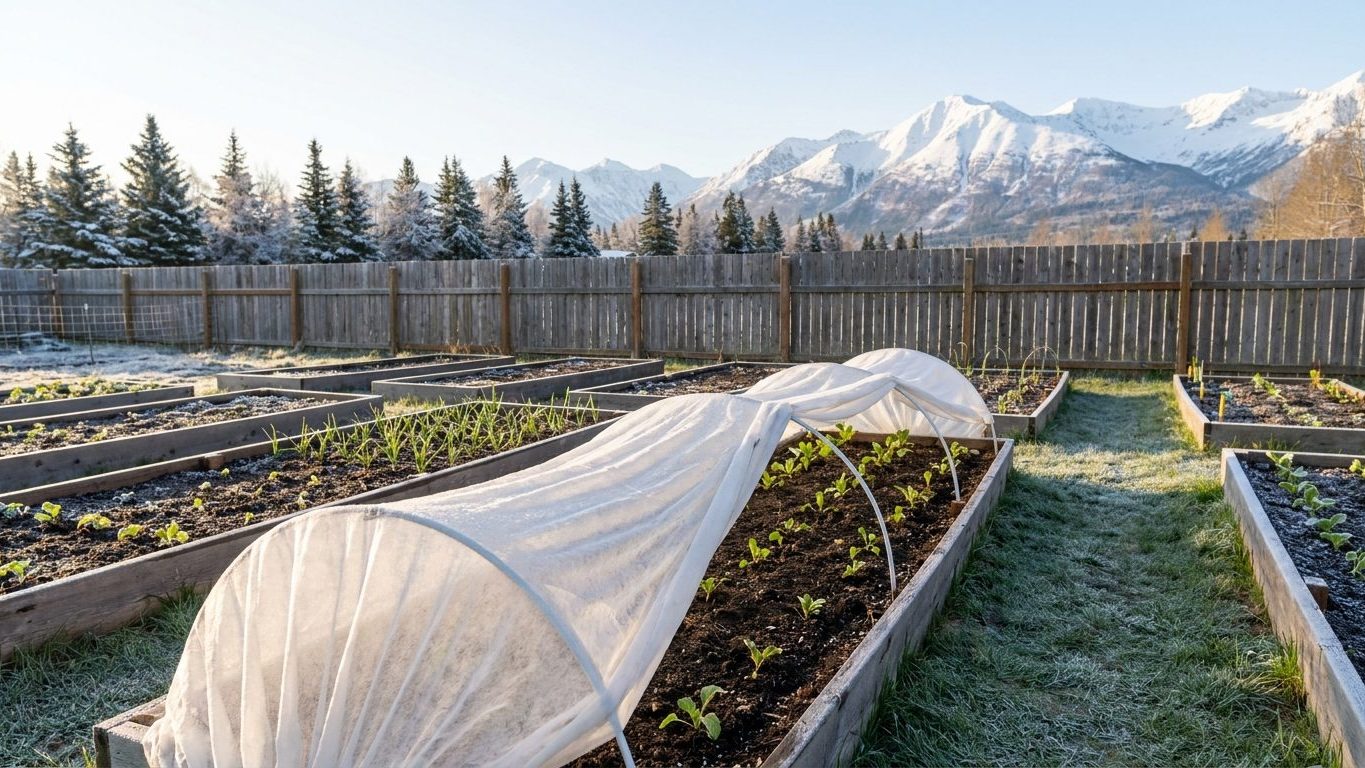

Cover the garden on any night the forecast reaches 32°F, and keep covers handy through the weeks around your area’s average last spring freeze and first fall freeze. At the Albuquerque reference station, that runs from late March into mid-April and again from late October into early November. Gardens at higher elevation, or out of town, need covers earlier in fall and later in spring.
The short answer for New Mexico
Put covers on whenever the overnight low is forecast at 32°F or below, and expect to do that from March 31 to April 12 in spring and from October 29 to November 9 in fall. Those are the reference-city dates for Albuquerque, taken from the NOAA 1991-2020 climate normals. They describe when a 32°F freeze becomes a coin-flip, so they are a starting point for covering, not a deadline for planting.
What do the spring and fall frost dates actually mean?
The spring window of March 31 to April 12 is the stretch when the chance of another freeze at 32°F or colder sits between 30 and 70 percent. Early in the window, a freeze is more likely than not. By the end, it is less likely, but it has not gone away. The fall window of October 29 to November 9 works the same way in reverse: the odds of the first freeze climb from 30 to 70 percent across those days.
The numbers come from the airport weather station in Albuquerque. Suburban and rural gardens usually see the last spring frost later and the first fall frost earlier than an airport does, often by one to two weeks, and by more at elevation. Treat the dates as the reference-city figure and shift them for your own ground.
When should covers go on in spring?
Two moments matter. The first is about two weeks before you plan to transplant, when a cover over bare soil starts warming it. The second is every night after planting that the forecast dips to freezing, which can still happen well after April 12. Hardy greens and peas can ride out light frost, while tomatoes, peppers, squash, and beans cannot, so those need cover (or a delay) until the forecast stays above freezing.
When should covers go on in fall?
Put them on a few days before the first forecast freeze, not after the plants are already frosted. A single night near 32°F often comes early, then warm weather returns for weeks. Covering through that first cold snap can add several weeks of harvest for tomatoes, peppers, and beans. The cover type changes the picture, and Which Season Extenders Work in New Mexico compares fabric, hoops, and cold frames for local conditions.
What will not work here
Planting tender crops on the reference-city average last-frost date will fail about half the time. Averages in the 30-to-70-percent band mean a freeze on or after that date is a real possibility, and a 12-day spread between March 31 and April 12 shows how much the timing wobbles from year to year. Wait until the forecast is clear, or plant with covers ready.
Why do closed plastic tunnels cook plants?
New Mexico sun is strong, and a sealed plastic tunnel can climb far above outdoor temperatures by midday, even in March. Seedlings under clear plastic that stays shut all day can scorch. Plastic needs to be vented or opened every sunny morning and closed again before sunset. If you cannot be home to do it, use breathable row-cover fabric, which holds some warmth overnight but does not trap midday heat the same way.
Why does a loose cover blow away?
Spring winds in much of the state are a regular feature, and an unanchored sheet of fabric or plastic becomes a sail. Covers that are only laid over plants and held at the corners by a few stones tend to shift, tear, or end up on the neighbor’s fence. Bury the edges in soil, or pin them down along the full length, and brace hoops so they cannot rack sideways.
What else fails in dry, cold-night conditions?
Dry air lets heat leave the ground fast after sunset, so a clear, still night can drop a lot of degrees quickly. A cover that touches the leaves passes cold straight through, and frost can burn the foliage at every contact point. Keep fabric lifted on hoops where you can. Also water the bed the day before a forecast freeze. Moist soil holds and releases more heat overnight than dry, powdery soil, so a garden that has gone a week without a drink loses its small buffer.
Finally, winter protection with a simple cover will not carry tender crops through the cold months. The mean daily minimum in the coldest month at the Albuquerque station is 26.4°F, so the average overnight low sits below freezing for weeks. A cover buys a few degrees on a cold night. It does not turn a freezing winter into a warm one. Cold-hardy crops like kale, spinach, and carrots can keep going under a low tunnel, but tomatoes and peppers cannot.
What changes across New Mexico
The USDA Plant Hardiness Zone Map (2023 edition, built on 1991-2020 data) lists New Mexico as running from zone 4b to zone 9a. That is a spread of nearly five zones inside one state, so there is no single answer to “when do I cover.” Zone ratings rest on the average annual extreme minimum temperature, which tells you what survives winter. Frost dates tell you about spring and fall, and the two do not always move together, but a colder zone usually means a shorter frost-free season too.
What should a northern or high-elevation gardener shift?
Move everything toward the cold end. Expect the last spring freeze to come later and the first fall freeze to come earlier than the Albuquerque dates, by more than the one-to-two weeks that typical suburban and rural sites see. In the northern mountains and high valleys, covers may be needed into late spring, and they go back on by early fall. Heavier fabric, sturdier hoops, and a plan for snow load make more sense there than a light sheet draped over wire.
Gardeners in the warmer southern lowlands can run the other way. Covers go on later in fall and come off earlier in spring, and they spend more of the year as shade or wind protection than as frost protection.
How do I find my own zone?
Look up your location on the USDA Plant Hardiness Zone Map. Latitude helps, too. The 35.04 degrees north figure belongs to Albuquerque, and the state stretches several degrees north and south of that, so a reader near the northern or southern edge is living with a different climate than the reference city. For an overview of the whole subject, see Extending the Growing Season in New Mexico.
Where to check this for your own county
Your county office at New Mexico State University Cooperative Extension is the place to confirm any date in this article. A county recommendation beats a state one, because the county staff know the elevation, the wind, the cold-air pockets, and the soil of the places where people in your area actually garden. The state-level guidance here is a general frame.
What should I look for on the extension site?
Two things matter most. The first is the local planting calendar, which gives sowing and transplanting windows for your county, often tied to local frost dates. The second is the list of varieties trialled in your county, since a tomato that ripens well in a lowland valley may stall at 6,000 feet. If the site lists average frost dates for a station near you, use those in place of the Albuquerque figures.
If your county has a Master Gardener program, ask whether it keeps a record of the last freeze each year. A few years of actual dates from nearby gardens are worth more than a 30-year average.
Checking this against your own garden
Your own observations outrank any date in this article. A south-facing wall, a low spot where cold air pools, and a bed sheltered from wind can each shift your real frost dates by days or weeks. Three signs are easy to watch without any equipment.
How warm is the soil?
Press your bare hand flat on the soil in mid-morning and hold it for a few seconds. If it feels cold and clammy, warm-season seeds and transplants will sit and wait. If it feels comfortably cool or mild, they will start to grow. Do this in several beds, and the ones that warm first show you where your warm microclimates are.
Are the first male squash flowers open?
If the male flowers show up early in one bed and late in another, you have found the warmer spot. It also tells you that the vines are ready for steady warmth, and that a cold night would hit them hard.
Have the first true leaves appeared?
Seedlings first show rounded seed leaves, then the first true leaves with the shape of the adult plant. Those true leaves appear faster in warmer ground. If seedlings under a cover reach that stage days ahead of uncovered ones, the cover is working. If the covered seedlings are leggy or pale, the tunnel is probably running too warm or too dark.
Common questions
What temperature should trigger covering plants in New Mexico?
A forecast low of 32°F is the usual line for tender plants. Hardy greens tolerate a light frost, but a hard freeze, with temperatures well below 32°F, can damage even those. Because open, dry ground can run colder than the forecast for town, cover when the predicted low is within a few degrees of freezing.
How long should covers stay on after the last frost?
Keep them on until nighttime lows stay safely above freezing and the weather has settled, which can be well after April 12 at elevation. If daytime temperatures climb high under a cover, remove it during the day and put it back at dusk. Peppers and eggplant, which dislike cold nights, can benefit from a little extra time under fabric.
Is row-cover fabric better than plastic here?
Fabric breathes, so it is more forgiving on sunny days and in wind. Clear plastic adds more warmth but needs daily venting. For most home gardens in New Mexico, a mix works well: fabric for the shoulder weeks, and plastic only if someone can open it each morning.
Can I cover a garden in winter and keep growing?
Cold-hardy crops can keep growing under low tunnels or in cold frames, depending on elevation and the severity of the winter. Growth is slow, and short winter days limit it as much as cold does. Where the coldest month averages a nightly low of 26.4°F, as at the Albuquerque reference station, expect to harvest from plants that are holding rather than racing, and check your county extension office for what works at your altitude.