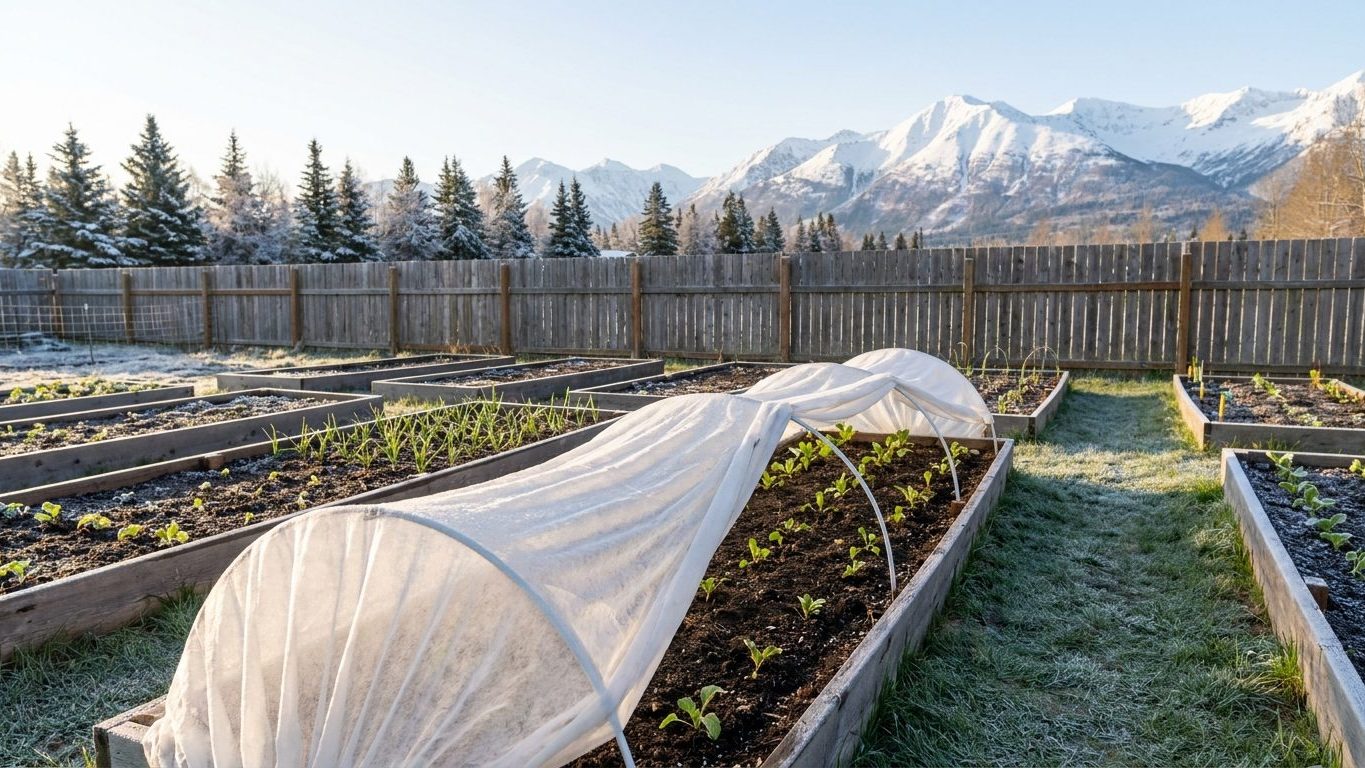

Cover cold-hardy crops in early spring, weeks before the average last frost. Keep tender transplants covered until the risk of frost has passed, which often means late May or early June. In fall, start watching the forecast in mid-September and cover on any night that threatens frost. On Prince Edward Island, covers matter at both ends of the season because the frost-free stretch is short and the dates swing from year to year.
The short answer for Prince Edward Island
Put covers on cold-hardy crops such as spinach, lettuce and peas as soon as the soil can be worked, and cover tender crops from transplanting until frost no longer threatens. At the Charlottetown A weather station, the average last spring frost is May 16 and the average first fall frost is October 17. Both dates are midpoints, and the weather can land well on either side of them.
Environment and Climate Change Canada calculated those dates from its 1981-2010 normals, which are older than the 1991-2020 figures used for US sites. Each date marks the 50 percent point. In one spring out of two, frost falls later than May 16. In one fall out of two, the first frost arrives earlier than October 17.
When should you cover in spring?
Hardy crops can go under a low tunnel or floating row cover from the first workable days of spring, usually April once the ground thaws and drains. Setting the cover on a bed a week or two before sowing also warms the soil, which speeds germination. Tender crops such as tomatoes, peppers, cucumbers, squash and beans should wait until after May 16 at the earliest. Keep frost cloth within reach through the first week of June, since frost lands after the average date about half the time.
When should you cover in fall?
Start checking the forecast in mid-September, a month before the average first frost. Cover tender crops on any night when the forecast low drops to around 0 °C (32 °F). Clear, calm nights can frost low spots even when the forecast low reads a couple of degrees above freezing. That first frost is often followed by weeks of milder weather, so a few nights of cover can add weeks of harvest. Hardy greens, carrots and kale need cover later, when hard freezes settle in.
| Crop group | Examples | Cover in spring | Cover in fall |
|---|---|---|---|
| Cold-hardy | Spinach, lettuce, peas, kale, radishes | From early spring, as soon as the soil is workable | Late, to extend harvest through hard freezes |
| Tender | Tomatoes, peppers, cucumbers, squash, beans | After transplanting, and keep cloth ready into early June | From mid-September on frost nights |
What will not work here
Waiting for the average date fails first. Planting tomatoes on May 16 with no cover on hand loses plants in the years when frost runs late. Waiting for October 17 to protect them loses the crop in the years when frost comes early. Either way, half the years go against you.
Why do long-season crops struggle even with covers?
A frost-free calendar sounds generous, but heat-loving crops need warm soil and warm nights, not only a frost-free calendar. Melons and sweet potatoes struggle on the island even under cover, and a long-season pumpkin sown directly in late May has to finish before an October frost that can arrive early. Packet days for direct-sown crops count from sowing, so choose shorter-season varieties. Tender transplants started indoors gain the weeks that cover alone cannot supply. The guide to Which Season Extenders Work in Prince Edward Island goes deeper on matching the tool to the crop.
Can you grow through winter under a cover?
Not with a single layer of row cloth. The mean daily minimum of the coldest month at Charlottetown is -12.1 °C (10.3 °F), and that is an average night, so the coldest nights run well below it. A light cover adds only a few degrees. A cold frame or unheated tunnel with a second layer inside can hold hardy spinach, kale and similar greens through winter, but at 46.29 degrees north the winter days are so short that growth nearly stops. Sow in late summer so the plants reach size before the light fades, then treat the cover as a place to store living crops and harvest from.
What goes wrong with covers on the island?
Wind is the first problem. The island is low and open to the Gulf of St. Lawrence and Northumberland Strait, and loose row cover will tear or blow off unless the edges are buried or pinned down. Humidity is the second. A closed plastic tunnel in damp coastal weather invites fungal disease on crowded plants, and on a sunny spring day the same tunnel can overheat seedlings within hours, so vent it in the morning. Wet snow is the third, because it can flatten low hoops unless they are braced or the cover is removed. Space plants a little wider under cover than in the open so air can move through.
What changes across Prince Edward Island
Charlottetown sits in Canadian hardiness zone 5b, according to Natural Resources Canada’s 1991-2020 normals. That is a Canadian zone, and it does not convert to a USDA zone. The Canadian system draws on seven climate variables and the USDA system on one. Natural Resources Canada notes that there are no simple conversions between them, and that Canadian zone 4a overlaps nine USDA zones, from 3a to 7a. A US reader should not match 5b to a USDA map.
The zone belongs to the reference city, not the whole province. The island is small, but coast, inland fields and higher ground behave differently, and districts in the north or on upland ground run weeks behind Charlottetown. The same goes for latitude: 46.29 degrees north is Charlottetown’s, and a reader near the island’s edges should check their own.
What should you shift in the north or on higher ground?
Move everything later in spring and earlier in fall. Leave tender transplants under cover longer into June, and begin fall frost watching in early September rather than mid-month. Favor shorter-season varieties for anything you sow directly, and add a second layer of cover for early crops. Gardeners in sheltered spots near the water often get the opposite benefit, because the surrounding sea slows both spring warming and the first fall chill. For a municipality-level zone, the Natural Resources Canada Plant Hardiness Site lets you look up your own municipality on the map. The broader overview in Extending the Growing Season in Prince Edward Island covers how the whole province fits together.
Where to check this for your own county
The Government of Prince Edward Island’s agriculture pages are the starting point for local advice. Look for a planting calendar written for your part of the island and for varieties that have been trialled in your county, whether Prince, Queens or Kings. Ask which frost dates apply to the nearest weather station and what cover weights growers use for early spring work.
A county recommendation beats a provincial one every time. A calendar built around one station in Charlottetown is a sound starting point, but it cannot see the cold hollow in a farm field in the north or the sheltered south-facing slope near the Northumberland shore. If a local grower or agricultural office tells you frost holds on later in your area, believe them over a province-wide date.
Checking this against your own garden
No date outranks what the garden itself shows you. Three observations tell you more about your microclimate than any average.
Soil warmth by feel. A handful of spring soil that feels cold, stays in a wet clump and chills your fingers is not ready for tender seed. Compare a covered bed with an open one on the same day. If the covered bed feels clearly warmer, your site is slow to warm, and the cover is earning its keep.
First true leaves. The first pair of leaves on a seedling are seed leaves. The next pair, the true leaves, show the plant is rooted and growing. When they appear on direct-sown crops, start venting the cover on mild days and harden the plants off. If they come late compared with a neighbor’s, your ground runs cold.
First male flowers. Squash and cucumbers open male flowers before female ones. When they appear, open or lift the cover on warm days so bees can reach the blooms. The date they show up also tells you how fast your site warms in early summer.
Write down the date frost first whitens your lawn each fall and the last date in spring. After a few seasons, your own notes will tell you more than any average, and they will show how far your garden sits from the Charlottetown dates.
Common questions
Is May 16 a safe date to plant tomatoes outdoors?
No. May 16 is the average last spring frost at Charlottetown A, which means frost arrives later than that in one year out of two. Plant after that date with frost cloth ready, and keep it available into early June.
How many frost-free days does Prince Edward Island get?
The Charlottetown A station has an average last spring frost on May 16 and an average first fall frost on October 17. Northern and upland districts get fewer.
Should covers stay on during the day?
Only on cold or overcast days. On sunny days, vent or lift plastic tunnels and row covers so seedlings do not overheat and air can circulate. Pull covers back completely once squash and cucumbers start flowering, so bees can pollinate.
Does zone 5b on Prince Edward Island match USDA zone 5b?
No. Canada’s zone 5b is calculated from seven climate variables, while the USDA map uses one, and the two systems do not convert. Use the Canadian zone only with Canadian plant advice.