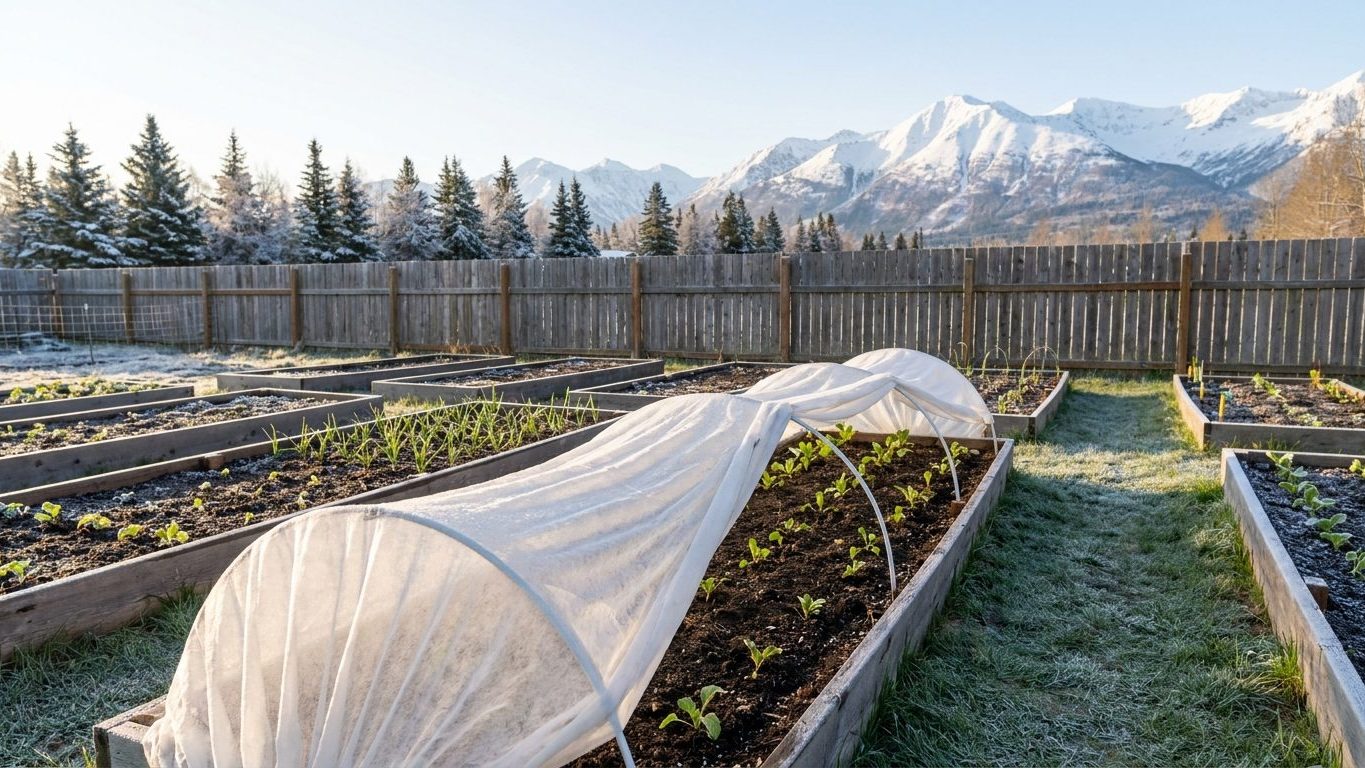

Cover tender plants any night the forecast low reaches 36°F or below, and cover hardy greens when it drops into the low 20s. In Rhode Island, that means watching the forecast from early April into mid-May, then again from mid-October on. The calendar tells you when to start watching. The forecast on a given evening tells you when to pull the cover out.
The short answer for Rhode Island
Start covering in early April and stop worrying about tender crops once May settles in. Start again in mid-October, and expect to cover hardy crops well into winter. The reference station at Providence (41.72 degrees north) puts the last spring frost at April 7 to April 17 and the first fall frost at October 24 to November 3. Those dates come from NOAA’s 1991-2020 climate normals and mark the stretch when the chance of a 32°F freeze sits between 30 and 70 percent. Inside that window, a freeze is close to a coin flip.
The Providence figures come from an airport weather station, and many gardens run colder. Suburban and rural plots usually see the last spring frost one to two weeks later and the first fall frost one to two weeks earlier, and hills and higher ground see a bigger gap. A garden away from the coast should treat the spring window as running later and the fall window as starting earlier.
What forecast low should make you cover plants?
Frost can settle on leaves when the forecast says 35°F or 36°F, because cold air pools near the ground on clear, still nights. Cloudy, breezy nights hold heat better. These are rules of thumb, and they work well in a state where spring nights swing widely.
| Plant group | Examples | Cover when the forecast low is |
|---|---|---|
| Tender | Tomatoes, peppers, basil, squash, cucumbers | 36°F or below, especially on a clear, calm night |
| Half-hardy | Lettuce, broccoli and cabbage transplants, beets | About 30°F or below |
| Hardy | Spinach, kale, mâche, overwintered garlic bed | Low-to-mid 20s, or when you want growth to continue |
What will not work here
The mean coldest-month minimum at the Providence reference station is 22.1°F. That figure is the average of the daily lows in the coldest month, so many nights run colder. It shapes what a cover can and cannot do.
Why won’t covers carry tender crops through winter?
A single layer of frost cloth buys a few degrees. Heavier fabric buys somewhat more. That is plenty for a 31°F night in late October. It is far too little for a January night in the teens. Tomatoes, peppers and basil are finished after the first hard freeze, however well wrapped. The season extenders that work in Rhode Island differ a lot in how much cold they hold off, and a low tunnel with two layers handles hardy greens far better than anything handles tender fruit.
Light is the other limit. At about 41.7 degrees north, days are short from roughly November into early February, and plants under a cover grow very little in that stretch. The cover keeps spinach and kale alive and holds them in good condition for picking. It does not make new leaves quickly. Sow for winter harvest in late summer, so the crop is nearly full-size when the light fades.
What goes wrong with spring covers and plastic?
Planting tomatoes or peppers on April 17 and counting on a cover to protect them usually disappoints. The cover can stop a frost, but it cannot warm cold soil, and tender roots sulk in soil that is still cold. Wait until the ground has warmed and nights stay mild, then use the cover as insurance for a stray cold night.
Clear plastic is the other spring trap. A sunny April day in the 60s can push the air under a closed tunnel past 90°F. Seedlings cook. Vent the ends or lift the sides in the morning, and close them again before sundown. In damp weather, leaving covers shut for days over wet lettuce invites gray mold.
Wind is the third. Rhode Island’s coast gets gusty fronts and nor’easters that lift light fabric and drag it across plants. Anchor all edges with soil, boards or landscape staples, and check the hold before a storm, not after.
What changes across Rhode Island
Rhode Island is small, but it does not have one growing climate. The USDA Plant Hardiness Zone Map (2023 edition, based on 1991-2020 data) puts the state in zones 6a to 7b. That is a spread of four half-zones, so there is no single answer. The zone system rests on one variable, the average annual extreme minimum temperature, so it measures winter survival and says little about how late the last spring frost will come.
Salt water does much of the sorting. Gardens near Narragansett Bay, along the south coast and on the islands are warmed by the water, so spring frosts end earlier and fall frosts arrive later. Interior and northwestern towns, especially on higher ground, lose that cushion. Their nights run colder, their frosts last longer into spring, and fall frost comes earlier. A grower in the northwest hills should treat the Providence dates as the earliest possible start, then add a week or two in spring and subtract a week or two in fall.
Small differences inside one yard matter too. A low corner where cold air drains gets frost first. A bed against a south-facing wall may skip a frost that hits the open lawn. Check the USDA map for your own ZIP code to find your zone, since a coastal address and a hill town a few miles inland can fall in different ones. Then use that, along with your own frost history, to move the dates earlier or later.
Where to check this for your own county
Start with University of Rhode Island Cooperative Extension. It is the state’s land-grant extension service, and its staff and Master Gardener volunteers answer exactly this kind of question for Rhode Island conditions.
Look for two things there. The first is a local planting calendar, which tells you when to sow and transplant for your part of the state. The second is a list of varieties that have been trialled nearby, since a variety that does well on the coast may struggle in the cooler interior. If a calendar gives a window for your town or county, use it in place of the statewide dates.
A county recommendation beats a state one, and everything above is the state view built from one reference station near Providence. A drive from the shore to the northwest corner can still shift the frost dates by a week or two, so check your own county. Extension staff know that pattern from years of local reports.
The wider guide to extending the growing season in Rhode Island covers the full set of methods and how they fit together across the year.
Checking this against your own garden
Your own beds outrank every date above. Three signs show you how your garden behaves, and none needs a gadget.
Soil warmth by feel. In spring, push your hand into the soil about 3 inches deep. If it feels cold and clammy, tender transplants should wait. Compare a bed against a south wall with one in an open or low spot. The bed that feels warm first is your early microclimate, and that is where covered tomatoes can go in first.
The first male squash flowers. Squash and cucumber plants open male flowers before female ones. When the first males appear, the plants have found enough warmth to grow. If they show up a week earlier in one bed than another, that bed runs warmer, and you can trust it with earlier sowings.
First true leaves. The first pair of leaves on a seedling are seed leaves, and the true leaves follow. When true leaves open on lettuce, spinach or kale, the roots have taken hold and the plant can cope with cooler nights. A bed where they open days ahead of the rest is a warm pocket, and a bed where they lag is a cold one. Note which bed leads, and adjust your cover dates to match.
Common questions
Do I need to cover plants if no frost is in the forecast?
On a clear, calm night, frost can form even when the forecast low is 35°F or 36°F, because the air near the ground runs colder than the official reading. For tender plants, cover at that threshold. Cloudy or windy nights are much safer.
When should I take the cover off in the morning?
Remove it once the air has warmed above freezing and frost has melted off the fabric. If the cover is a closed tunnel or plastic, vent it early on any sunny morning to avoid overheating. Take covers off squash and cucumbers on days when blossoms need pollinators.
Can I use old sheets or blankets to protect plants?
Yes, for a single night. Drape them over stakes or a frame so the fabric does not rest on the leaves, and remove them in the morning. Plastic sheeting laid right on foliage can transfer cold and trap moisture, so keep it off the plants.
Is it too late to cover the garden in November?
Not for hardy crops. Spinach, kale and mâche still benefit from a cover into winter. Tender crops like tomatoes and peppers are done after the first hard freeze, so pick mature green tomatoes beforehand and ripen them indoors.