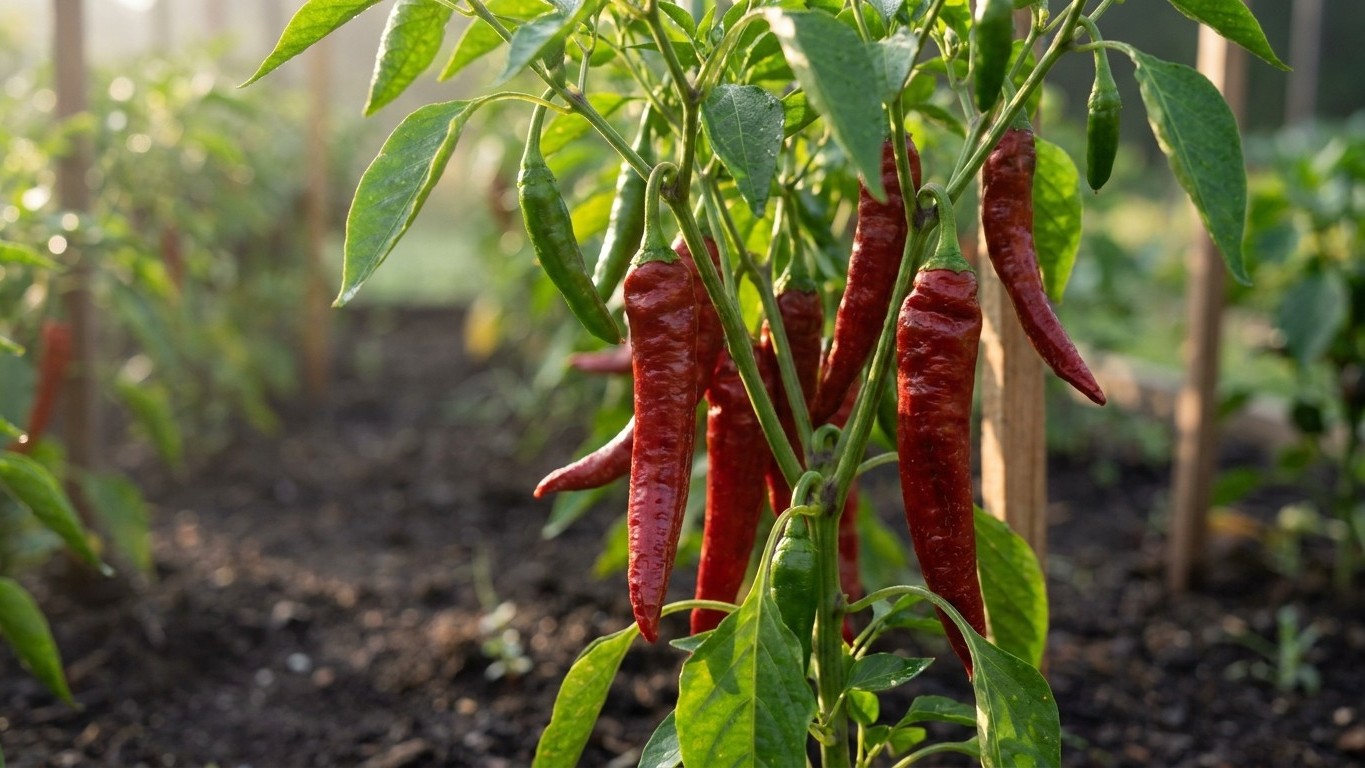

Pick peppers when they have reached full size and feel firm, which Clemson Extension puts at about 70 to 85 days after transplanting. Once picked, they keep best at 45 to 50 °F with 80 to 90 percent humidity, and that is warmer than a home refrigerator. Putting them in the fridge is the mistake most gardeners make. The cold pits and softens the skin within days, and a pepper that looked perfect on the plant turns slimy.
How do you know a pepper is ready to pick in Virginia?
The clock starts at transplanting, not at sowing. Seedlings need 8 to 10 weeks indoors first, and Utah State University Extension says to set them out when the soil reaches 60 F, after frost. Along the Virginia Beach coast, NOAA’s 1991-2020 normals put the last spring frost between March 20 and April 3. That is the mild end of the state. The Blue Ridge and southwest Virginia run weeks later in spring and earlier in fall, so the same plant has a shorter window there.
Soil warmth usually arrives well after the last frost, so count from the day the transplant goes in the ground. As an illustration, a plant set out on May 1 would be ready somewhere between July 10 and July 25. That puts the first harvest right as the hottest weeks begin. The coastal reference station averages 26.0 days a year that reach 90 F or more. Utah State notes that fruit set fails at both ends of the range, with nights below 55 F or days above 90 F. Blossoms that open during a hot spell often drop, so a plant can carry a gap in its fruit schedule that the packet days will not predict. Only your own thermometer can tell you about the cool end, since summer night lows vary from one yard to the next.
The packet number gets you close. The pepper itself tells you the rest. A ready fruit has reached the full size the variety is supposed to have, and the skin is glossy and firm when you squeeze it gently. Peppers can be picked green or left on the plant to turn red, yellow or orange. A colored pepper has simply been on the plant longer, and the color change takes extra weeks on top of the days to full size.
Cut the stem with pruners or a knife and leave a short piece attached. Pulling can snap a branch, and these branches are brittle. Frequent picking also encourages the plant to keep setting fruit. Inspect each one as you go. Chewed spots or soft patches mean the fruit will not store, and What Eats Pepper in Virginia, and When helps you tell what caused the damage. For the full season, from seed starting to frost, see Growing Peppers in Virginia.
Keeping them, and for how long
What temperature and humidity do peppers need?
Clemson Cooperative Extension’s Home & Garden Information Center gives the storage conditions plainly: “The optimal conditions for storage are temperatures of 45 to 50 °F and 80- to 90-percent relative humidity for two to three weeks.” The same factsheet says peppers should be ready for harvest in about 70 to 85 days after transplanting.
That duration is a ceiling. Two to three weeks describes a perfect pepper, picked at the right stage, undamaged, held at the right temperature and humidity the whole time. A pepper with a bruise, one picked after a long hot afternoon, or one stored in a room that drifts warm will not reach it. Plan on the short end, and eat the oldest ones first.
The humidity number matters as much as the temperature. Peppers lose water through the skin, and in dry air they shrivel and go leathery. At 80 to 90 percent humidity the skin stays taut. A loosely closed container or a perforated bag slows the moisture loss without trapping so much that the fruit sweats and rots. Dry the peppers off if they are wet from rain or washing, and leave the stem on until you use them.
Why does the refrigerator ruin them?
A home refrigerator runs colder than the 45 to 50 °F range. Below about 45 °F, peppers suffer chilling injury. The skin develops sunken pits, the flesh softens, and the fruit breaks down quickly once it warms up again on the counter. The damage often does not show until a day or two after the pepper leaves the fridge, so the pepper seems fine in the drawer and then collapses.
The crisper drawer is the usual place people store them, and it is still too cold. It holds humidity well, which helps, but humidity cannot make up for temperature that is a few degrees too low. If the fridge is your only option, plan to use the peppers within a few days, check them daily for pitting, and cook anything that has started to soften.
Whole, uncut peppers are the ones that need the 45 to 50 °F range. Once a pepper is cut open, it belongs in the fridge in a sealed container, because a cut surface spoils faster than any chilling injury would. Freezing is another route for a bumper crop, and it sidesteps the storage question entirely.
Where in the house that actually is
Which room comes closest to 45 to 50 °F?
Most houses have no room that sits exactly at 45 to 50 °F, but a few come near it. A heated living space is too warm, since it runs well above the range and dries the air, so peppers shrivel on the counter. A garage swings with the weather. In a Virginia fall it may sit in the 50s one week and in the 30s or 70s the next, and a freeze in the garage will destroy the fruit as surely as a freeze in the garden.
The best candidate is usually a basement, or an unheated interior room or pantry that stays cool but stays above freezing. Basements hold their temperature steadily through the seasons, and many are damp enough to supply some of the humidity the peppers want. Cool rooms in the north part of the house can work too. Early fall, when the days have cooled but the heat has not yet come on, is when the whole house sits closest to the range.
What should you check with a thermometer?
A guess about a room’s temperature is usually wrong by several degrees, so verify. Put a thermometer where you plan to store the peppers and read it over several days, morning and evening. A cheap indoor-outdoor model works. A single reading tells you little, because a basement can read 52 F at noon and 44 F after a cold night. If you skip this step, you may lose a basket of peppers to a spot that looked cool enough.
If the reading stays between 45 and 50 F, add a hygrometer or simply watch the fruit. Shriveling means the air is too dry. Condensation or mold means it is too wet, or too warm. Adjust the container before you move the peppers. Check them every few days and remove any that are soft, because one rotting pepper speeds up the decline of its neighbors.
Common questions
Can I store peppers in the crisper drawer?
You can, but only for a short time. The drawer is colder than the 45 to 50 °F range peppers prefer, and below about 45 °F they pit and soften from chilling injury. Use them within a few days and check for sunken spots.
Should I pick peppers green or wait for color?
Either works, and the choice is yours. A pepper picked once it is full size and firm is mature enough to eat green. Leaving it longer lets it turn red, yellow or orange, but the plant carries that fruit for extra weeks, and in a hot summer the plant may slow down. Picking some green and leaving others to color is a common compromise.
What if frost is forecast and peppers are still on the plant?
Pick every pepper that has reached full size before the frost arrives. Frost damages the fruit as well as the plant. Fall frost comes earlier in the mountains and the southwest than on the coast, so ask your county extension office what the usual date is in your area. Store the harvest at 45 to 50 °F, away from freezing.
Why are my plants blooming but not making peppers?
Fruit set fails when nights fall below 55 F or days climb above 90 F, and blossoms that open during either stretch tend to drop. Watch your own nights, since the cool end varies from yard to yard. Why Peppers Fail to Set Fruit in Virginia covers the causes and what to do about them.