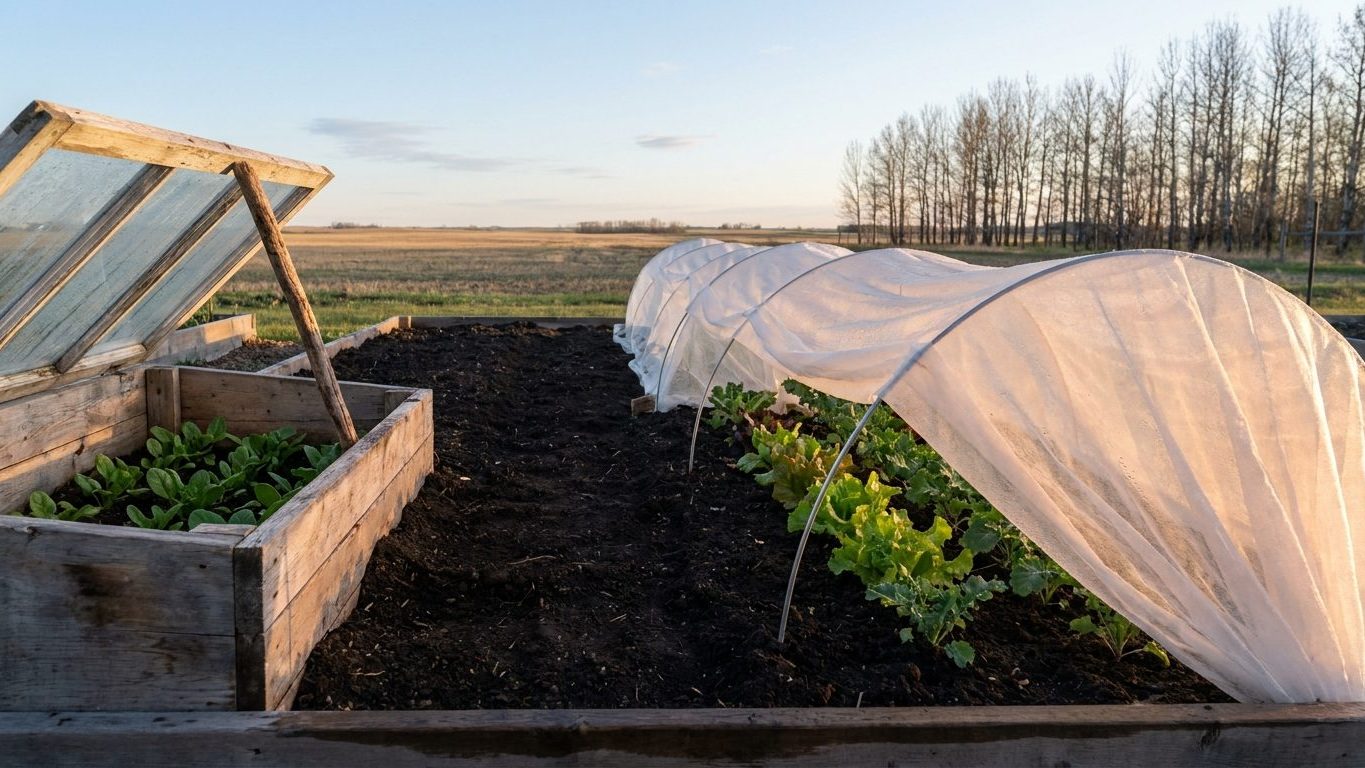

Floating row cover over low hoops, a cold frame, and an unheated hoop house cover nearly everything a Wisconsin gardener needs. Together they buy a few weeks at each end of the season for cool-tolerant crops like spinach, lettuce, kale, and carrots. A heated greenhouse isn’t required. The right choice depends on the crop and on how far north you garden.
The short answer for Wisconsin
Start with row cover on hoops for spring and fall, then add a cold frame or hoop house for hardy greens in late fall and winter. That trio handles frost nights, cold snaps, and the shoulder months better than any single gadget.
The reference dates come from Milwaukee’s 1991-2020 climate normals. The last spring freeze at 32°F falls between April 16 and April 29, and the first fall freeze falls between October 17 and October 29. Those dates mark the 30 to 70 percent probability band for a 32°F freeze. A freeze after April 29 or before October 17 is less likely, but it still happens in a real share of years. Season extenders protect against exactly those outlier nights.
Covers work by holding heat. The soil absorbs warmth by day and releases it at night, and the cover slows that release. The gain is a few degrees, enough to carry a crop through a light frost but not a hard freeze. Milwaukee’s coldest month has a mean daily minimum of 17.2°F, about 15 degrees below freezing, and a single fabric layer can’t close that gap. Winter protection needs a tunnel, a frame, or both.
What does each season extender do in Wisconsin?
| Extender | Best use | Limit |
|---|---|---|
| Floating row cover | Light frost protection in spring and fall, plus insect barrier | Gains only a few degrees, and wind will lift it if it isn’t pinned down |
| Low tunnel (hoops plus cover) | Early greens, root crops, and fall harvests extended past the first freeze | Needs venting on sunny days, and flat covers sag under wet snow |
| Cold frame | Hardening off seedlings and holding hardy greens into winter | Small footprint, and it overheats fast on sunny days |
| Unheated hoop house | Longest extension for cool crops, with room to work inside | Needs anchoring against wind and a snow plan |
| Water-filled cloches | Single transplants such as early tomatoes and peppers | Covers one plant at a time |
Most gardeners do well starting with low tunnels. They cost little, go over existing beds, and teach you how much warmth a cover really adds before you invest in a hoop house. For the broader picture, see Extending the Growing Season in Wisconsin.
What will not work here
A single sheet of fabric laid on bare ground won’t carry tender crops through a Wisconsin winter. With nightly lows averaging 17.2°F in the coldest month, only a tunnel inside a tunnel, or a hoop house with a frame, keeps hardy greens alive. Even then, growth mostly stops once the days get short. Covers protect what you’ve already grown. They don’t make new leaves in December.
Tomatoes, peppers, and other warm-season crops don’t gain much from covers set out in early April. The last spring freeze can still fall as late as April 29 in the reference band, and cold soil holds those plants back long after the air warms. A cover warms the air around the plant more than it warms the ground, and roots stall in cold ground. Plastic closed up on a sunny March afternoon can cook seedlings, then freeze them that night.
Late fall sowings are another weak spot. Seeds planted when the first-freeze band arrives won’t size up for harvest under any cover, because light fades faster than any fabric can compensate for. Fall crops need to be planted in late summer so they’re nearly full-size when the cold arrives. A cover then holds them in good condition. Timing the cover itself matters too, and When to Cover Your Garden in Wisconsin walks through it.
Wind and snow wreck weak setups. Open farmland and the lakeshore get steady gusts that lift unpinned fabric, so you need soil staples, sandbags, or buried edges. Flat covers and thin hoops collapse under wet spring snow, which is common in March and April. Sturdy hoops, steep curves that shed snow, and a broom for clearing heavy loads keep a tunnel standing.
Finally, a closed cover without ventilation does damage. A sunny day in the 50s can push the air under plastic well above what leafy greens like. Lift the ends or open the frame lid by mid-morning, and close it again in the afternoon.
What changes across Wisconsin
Wisconsin spans USDA hardiness zones 3b to 6a (2023 map, built on 1991-2020 normals). That is a wide spread, and no single recommendation fits all of it. The zone number reflects the average annual extreme minimum temperature, so it describes how cold winter gets, not when the first fall freeze arrives. To find your zone, use the USDA Plant Hardiness Zone Map and enter your ZIP code.
Milwaukee’s figures sit near 42.95 degrees north, and the state reaches several degrees farther north. Gardeners near the Michigan, Minnesota, or Lake Superior edges should check their own latitude, because day length shortens faster in the north each fall. That shift limits how late a hoop house keeps greens growing.
Lake Michigan also changes the calendar. The lake delays the first fall freeze along the shore, while inland southern Wisconsin typically freezes in early October. In the north, the first freeze comes far earlier than the Milwaukee band. A lakeshore gardener may get a few extra weeks without covers, while an inland or northern gardener will want covers on the beds sooner.
If you garden in the north, shift three things. Put covers on earlier in fall, even in September. Choose heavier fabric or double layers and sturdier hoops for snow. And wait longer in spring before treating any date as safe, because the last freeze there comes well after April 29. Southern gardeners can run lighter setups and often begin spring sowings under fabric a bit sooner.
Where to check this for your own county
Your county’s extension office has the most useful local numbers. The University of Wisconsin-Madison Division of Extension runs offices across the state, staffed by people who know your soil, your frost pockets, and your local weather quirks.
Look for two things there. First is the local planting calendar, which gives sowing and transplanting windows for your area. Second is the list of varieties trialled in your county. Cold-tolerant spinach, lettuce, kale, and carrots differ in how well they handle a winter tunnel, and local trials show which ones actually produce under cover in your region.
Ask the office about local frost timing too. Some counties have a long record of when the last spring freeze and first fall freeze fall, and a county planting guide may use different dates from the Milwaukee band above. A county recommendation beats a state one every time. Everything here is the statewide picture, which is a starting point.
If your county office offers a garden helpline or a Master Gardener program, use it. Volunteers often keep notes on which covers survived the past few winters and what snow loads did to hoop structures in your area.
Checking this against your own garden
Your own observations outrank every date above. Three signs are easy to watch and need no equipment.
Soil warmth by feel. Push your hand a few inches into the bed in spring. If it feels cold to your knuckles, seeds will sit and wait, even under a cover. Compare a covered bed and an uncovered one a few feet apart. The difference tells you how much your cover actually warms the ground, and which corner of the yard thaws first.
The first flush of male flowers. On squash and cucumbers, male blooms open before female ones. If they appear a week or two later in one bed than in another, that bed runs cooler, whether from shade, low ground, or wind. Treat it as the spot that needs the extra cover in fall.
First true leaves. The first pair that sprouts are seed leaves. The next set, the true leaves, shows a seedling is growing on its own. Spinach or lettuce sown in late summer that reaches true leaves before the cold arrives will hold under a cover. Seedlings still stuck at seed leaves when nights turn frosty probably won’t catch up. Note the date each year and adjust your next planting accordingly.
Common questions
Is row cover enough, or do I need a hoop house?
Row cover on hoops handles light frost and extends the season by a few weeks at each end. A hoop house gives more room, more warmth, and the ability to keep hardy greens going deeper into winter. Start with tunnels, then build up if you find yourself wanting more.
Does living near Lake Michigan change what to use?
The lake delays the first fall freeze at the shoreline, so you may need covers later than inland gardeners. Wind off the water can be strong, so anchor covers well. Spring can run cooler near the shore, so watch soil warmth before moving warm-season crops out.
When should I take the cover off in spring?
Remove or vent it on sunny days once the weather warms, and take it off entirely when frost danger passes. Squash, cucumbers, and other flowering crops need the cover off so pollinators can reach the blooms.
Can I really grow food through a Wisconsin winter?
Hardy greens can survive winter in a tunnel or hoop house, with nightly lows averaging 17.2°F in the coldest month at Milwaukee. Growth slows sharply as days shorten. Plan on harvesting what you planted in late summer rather than expecting new growth in the darkest weeks.