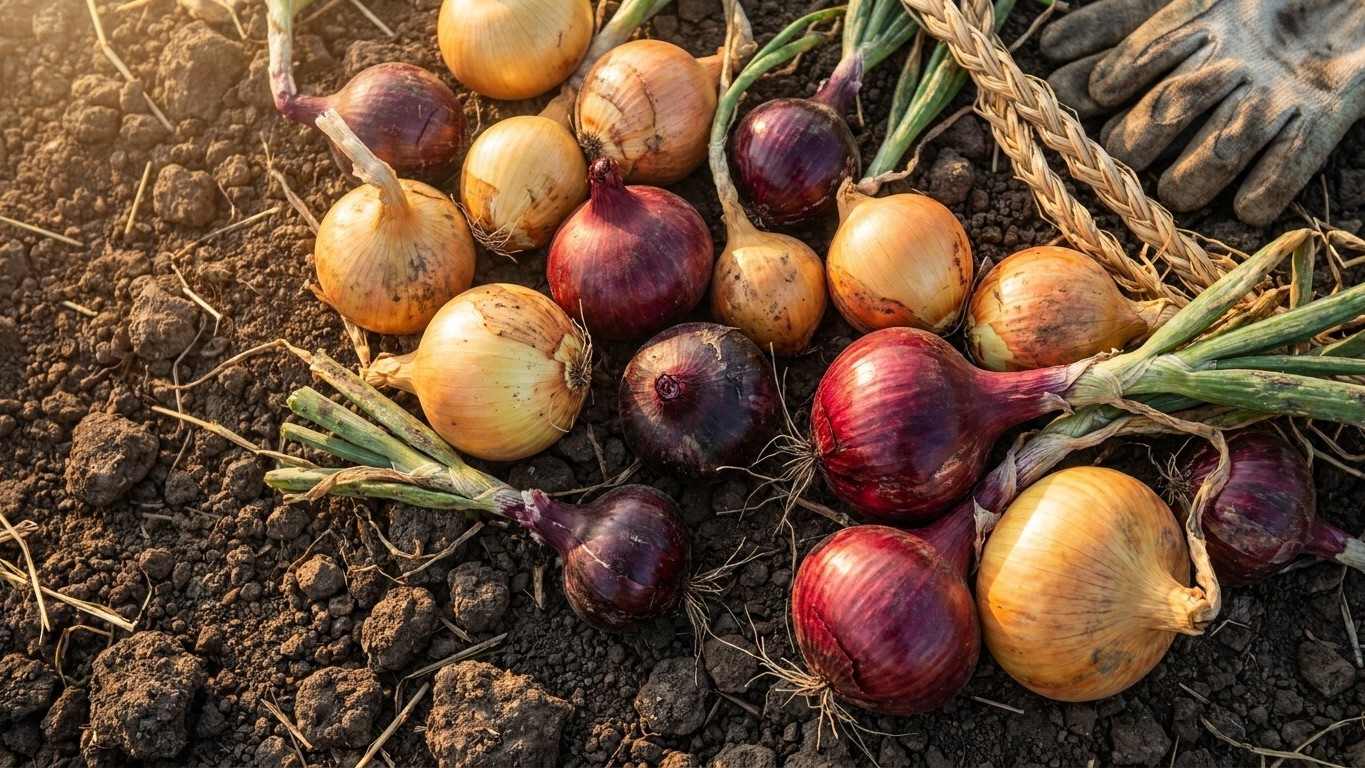

Lift onions once most of the tops have yellowed and flopped over and the necks have gone soft, usually in late summer or early fall and before a hard freeze. Then cure them in a dry, airy, sheltered spot until the necks are tight and the skins are papery. Only then do they go into storage. Skipping the curing step is the most common reason a good crop rots by midwinter.
When do you lift onions in Yukon?
The calendar matters less than what the plant is doing. An onion sets its bulb in response to day length, and the number of leaves it has made by then decides how big the bulb can get. Whitehorse sits at 60.71 degrees north and gets 18 h 45 of daylight on the longest day. That is far more than the roughly 12 hours at which short-day varieties start to bulb, so those bulb early and stay small. Long-day types wait for 14 to 16 hours and have plenty of room to grow here. Gardeners farther north than Whitehorse should check their own latitude, because the day gets even longer there and the season gets shorter. The best onion varieties for Yukon are the ones that finish bulbing before fall cold arrives.
Once bulbing is done, the plant gives clear signs. The leaf tips yellow, the necks soften and the tops fall over on their own. When most of the row is down, you can lift. Easing off watering when the tops first start to yellow helps the necks dry down instead of staying fat and green.
Pick a dry day. Slide a garden fork under the row, loosen the soil and pull the bulbs by hand. Handle them like eggs, since a bruise becomes a soft spot in storage. Leave the tops on and shake off loose soil without washing anything.
Don’t leave mature bulbs in the ground waiting for a perfect day. A hard freeze can damage bulbs that sit near the surface, and wet soil in a cold fall invites rot. Mark any bulbs with thick, green, stiff necks, or with nibbled or soft spots. Those go in the kitchen first, and the notes in What Eats Onion in Yukon, and When will help you work out what damaged them. The full growing season is covered in Onions in Yukon.
How do you cure onions after lifting?
Curing dries the neck and the outer layers so they seal the bulb. Spread the onions in a single layer on screens, slatted crates or a rack, with air moving underneath. The spot should be dry and sheltered from rain, with bright but indirect light. A covered porch, a vented greenhouse or a clean garage can all work.
Fall nights can turn cold and damp, and a bulb that gets wet while curing is a bulb that rots later. If the forecast is poor, bring the trays indoors at night and put a small fan on low during the day.
Curing takes as long as the weather makes it take. Test the bulbs instead of counting days. The neck should be tight and dry, and when you squeeze it nothing should feel moist or hollow. The outer skins should be papery and rustle when you handle them. When all of that is true, trim the roots, cut the tops to leave a short stub of neck and brush off any dry dirt. Don’t peel off the skins, since they are the bulb’s armor.
Keeping them, and for how long
Once the bulbs are cured, the storage conditions are simple, and the target is narrow. Clemson Cooperative Extension’s Home & Garden Information Center puts it this way in its onion, leek, shallot and garlic factsheet: “Ideal conditions are between 45 °F and 55 °F, and 50 to 60 percent humidity.” The span to write down is 45 °F to 55 °F with 50 to 60 percent humidity. Below that range, bulbs risk chilling injury and can start to break down. Above it, they begin to sprout.
Notice what that humidity figure says. Onions want dry air, which is the opposite of carrots, beets and other root crops that keep best in cold, damp conditions. One cellar cannot hold both well. If the onions share a room with the carrot crate, either the carrots go limp or the onions get clammy and start to rot at the neck. Keep them in separate spots, and keep onions away from potatoes too, since a potato bin gives off moisture.
How long they keep is never a promise. Any storage duration you read is a maximum under ideal conditions, and your own onions will usually fall short of it. Variety makes the biggest difference. Pungent, tight-skinned storage onions hold the longest, while mild, sweet types are better eaten within a few weeks or months. Your growing season matters too. A bulb that was bruised, sunburned, poorly cured or still fat-necked at lifting will not last as long as a sound one from the same row.
Store them in containers that let air move through, such as mesh bags, slatted crates or baskets, and keep the layers shallow. A paper bag with holes punched in it works if you only have a few. Avoid sealed plastic bins and bags, because trapped moisture builds up fast.
Check the stored onions every few weeks. One rotting bulb can spoil its neighbors, and a quick sort costs little. Remove anything soft, sprouting or sour-smelling and use it right away. If bulbs begin to sprout in the middle of winter, the room is probably too warm.
Where in the house that actually is
Few spaces in a house fall inside 45 °F to 55 °F with humidity at 50 to 60 percent, so the best choice is usually the closest one. A domestic refrigerator runs colder than onions like, and its crisper drawer is damp by design. A heated living space is too warm, and onions kept there sprout early and soften. An attached or detached garage swings with the weather. In a Yukon winter that means frozen bulbs on cold snaps, and in an early fall it can mean a warm spell that starts sprouting.
The best spot is usually a cool, unheated interior room. Look at an unfinished basement room away from the furnace and the water heater, a cold pantry, a closet on an inside wall of a spare room or a heated-but-cool mudroom. Basements often run damp, so measure before you commit. A shelf with good airflow near an interior wall beats a corner on a concrete floor.
Put a thermometer and a hygrometer in the spot for a week before you move the onions in, and read them in the morning and again in the evening. Garage and basement spaces change with outdoor weather, so one reading can mislead you. If the room is too warm, try a different spot. If it runs damp, add airflow, run a small dehumidifier or move the onions to a better room. If you skip the check, you won’t find out about the problem until the onions are soft.
If no room in the house comes close, split the crop. Keep a small working supply in the kitchen and put the rest in the best spot you have. Plan to eat the poorest keepers first and the strongest last.
Common questions
How do I know my onions are ready to lift?
Look at the tops. When most of them have yellowed and fallen over, and the necks have gone soft, the bulbs are done growing. A neck that is still thick, green and upright means the onion is not finished, and it will not store as well.
Can I store onions with my carrots and potatoes?
It is better not to. Onions want 50 to 60 percent humidity, while carrots and other roots keep best in damp conditions. Potatoes give off moisture, which makes onions spoil faster. Give the onions their own dry shelf or room.
What if a hard freeze is coming and the tops haven’t fallen?
Lift the bulbs anyway. Cure them indoors with some airflow, and use the thick-necked ones first, because they will not keep as long. A frozen bulb turns soft and watery, so do not leave onions at the soil surface through a hard freeze.
Can I keep cured onions in the refrigerator?
A refrigerator is colder than the 45 °F to 55 °F range and the crisper is humid, so it is a poor place for whole cured onions. Once an onion is cut, wrap the unused half and keep it in the fridge for a few days. For uncut bulbs, choose a cool, dry, airy room.