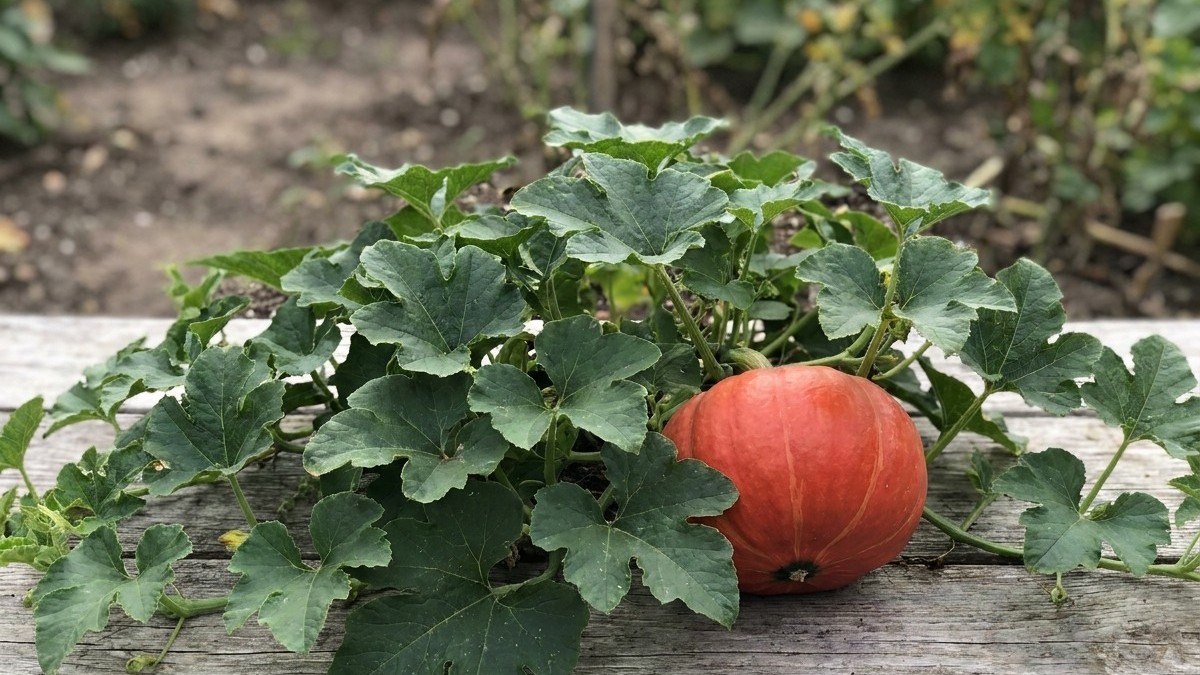

Two numbers decide this: how many days a pumpkin needs after its flower opens, and how cool it stays once it is cut. The first sets the harvest, the second sets the shelf life. In Nunavut the harvest has to beat a first fall frost that averages September 13 at Rankin Inlet. A whole pumpkin kept cool and dark can then last three to six months at best. This guide to Growing Pumpkins in Nunavut covers the timing, the temperature and the right room in the house.
When pumpkins are ready in Nunavut
A pumpkin is ready to cut when the rind is hard enough that a thumbnail will not dent it, the color is even and the stem has dried and gone corky. In Nunavut that points to a window built from frost dates rather than a single day to circle on the calendar.
Environment and Climate Change Canada’s climate normals for the Rankin Inlet A station put the average last spring frost on June 19 and the average first fall frost on September 13. That leaves about 86 frost-free days between them. Both dates are averages, and an average is a midpoint. In one year out of two the first fall frost lands earlier than September 13, so treat that date as the middle of the window, never as a safe deadline. It is also one station. Communities farther north, or on higher and more exposed ground, run colder and have a shorter season.
How many days do pumpkins need after flowering?
Utah State University Extension gives the clock: pumpkins take 45 to 55 days after flowering to mature. The count starts when the flower opens. It does not start at seeding or transplanting, so the weeks between sowing and first bloom come before it. Utah State also says to harvest with the stem attached and before frost.
Count back from the average frost date and the answer is tight. A flower that opens around July 21 to July 30 yields a ripe fruit by September 13. A flower that opens in August gives a green pumpkin when frost arrives. Since frost comes before that date in half of years, a flower that opens too late gives a green fruit. Pinching off late blooms sends the plant’s energy into fruit that can still finish. When frost is forecast and the fruit is still green, Will Pumpkins Ripen Before Frost in Nunavut? explains what can still be done.
Does the last frost date tell you when to sow?
No. Utah State advises sowing when the soil reaches 65 F, and that moment is not the average last frost of June 19. Soil lags behind the air by weeks, so a bed can still be cold after the last frost has passed. A cheap soil thermometer pushed into the bed settles the question. Sowing into soil that is still too cool delays germination and pushes the first flower later, and the flower date is the one that has to fit inside the frost window.
Keeping them, and for how long
University of Illinois Extension states that a whole pumpkin keeps for three to six months in a cool, dark location between 45-50 F. That duration is a ceiling reached under ideal conditions. A fruit that was cut with its stem broken off, nicked by a tool, or kept in a warm room will go soft well before three months. A fruit that hits six months got everything right.
The stem matters at harvest. Cut it with a few inches of stalk attached, as Utah State advises, and carry the pumpkin by its body. A stem that snaps off leaves an open wound where rot gets in.
Illinois Extension adds a second rule that most people miss: keep pumpkins away from any ripening fruit or vegetables, such as apples, potatoes or tomatoes. Ripening produce gives off a gas that ages the pumpkin faster. That makes the shelf beside the apple crate or the fruit bowl one of the worst places in the house to park it.
What shortens the time a pumpkin keeps?
Freezing is the first one. Utah State’s only storage instruction is to keep pumpkins where they will not freeze, and a pumpkin that freezes does not recover. Warmth is the second, because a pumpkin held above the cool range ages faster. Light is the third, and the guidance calls for a dark spot.
Damage is the fourth. Rind that was gnawed or punctured in the garden is an entry point for decay, and it will not wait out a long winter. If chewed fruit turned up in your patch, What Eats Pumpkin in Nunavut, and When covers who is responsible. Sort the damaged pumpkins out and cook or use them first.
The 45-50 F range is for a whole, uncut pumpkin. Once a pumpkin is carved, that guidance no longer applies and its life is far shorter.
Check the stored pumpkins regularly. Look for soft spots, weeping or a sunken patch of rind. Pumpkins in a pile spoil unevenly, and one bad fruit is easier to remove early than to clean up after.
Where in the house that actually is
A domestic fridge runs colder than the 45-50 F range and is also too small for most pumpkins. A heated living space is too warm. A garage, porch or entry swings with the weather, and in a Nunavut winter an unheated one drops well below freezing. That is exactly what Utah State says to avoid.
The room that comes closest is a cool, interior spare room or closet with the heat turned down and the door kept shut. A utility room can also work if it stays away from the furnace or boiler and any stove. The cool spot has to be made indoors rather than found underground. A shelf off the floor keeps the pumpkins clear of the coldest air and away from damp.
How do you check a storage spot with a thermometer?
Rooms feel cooler or warmer than they are, so measure. Put a thermometer where the pumpkins will sit and read it before moving them in, ideally across a cold night. A min-max model is even better because it records the extremes while you sleep. You want a steady reading near the 45-50 F range. A spot that holds that on a mild day but dips below freezing during a cold snap will cost you the whole crop, and you will not know until the pumpkins thaw.
Check for darkness and neighbors at the same time. A closet with the door shut is dark enough. Keep the pumpkins well away from any store-bought apples, potatoes or tomatoes in the same room.
Common questions
Is September 13 a safe date to cut?
No. It is the average first fall frost at the Rankin Inlet A station, and in one year out of two the frost arrives earlier. Cut the pumpkins before frost, with the stem attached, and watch the forecast through late August and early September. Colder districts should plan earlier still.
Should I cut the stem off?
No. Utah State University Extension says to harvest with the stem attached. Cut a few inches of stalk with clean pruners and carry the pumpkin by its body, never by the stem.
Can pumpkins share a room with apples or potatoes?
It is better to separate them. University of Illinois Extension advises storing pumpkins away from ripening fruit and vegetables such as apples, potatoes and tomatoes. The gas that ripening produce gives off ages the pumpkin, which shortens its keeping time.
How long does a carved pumpkin last?
Far less than a whole one. The 45-50 F range and the three-to-six-month duration apply only to an uncut pumpkin. Carve close to the day you plan to display it and keep the whole fruit in storage until then.