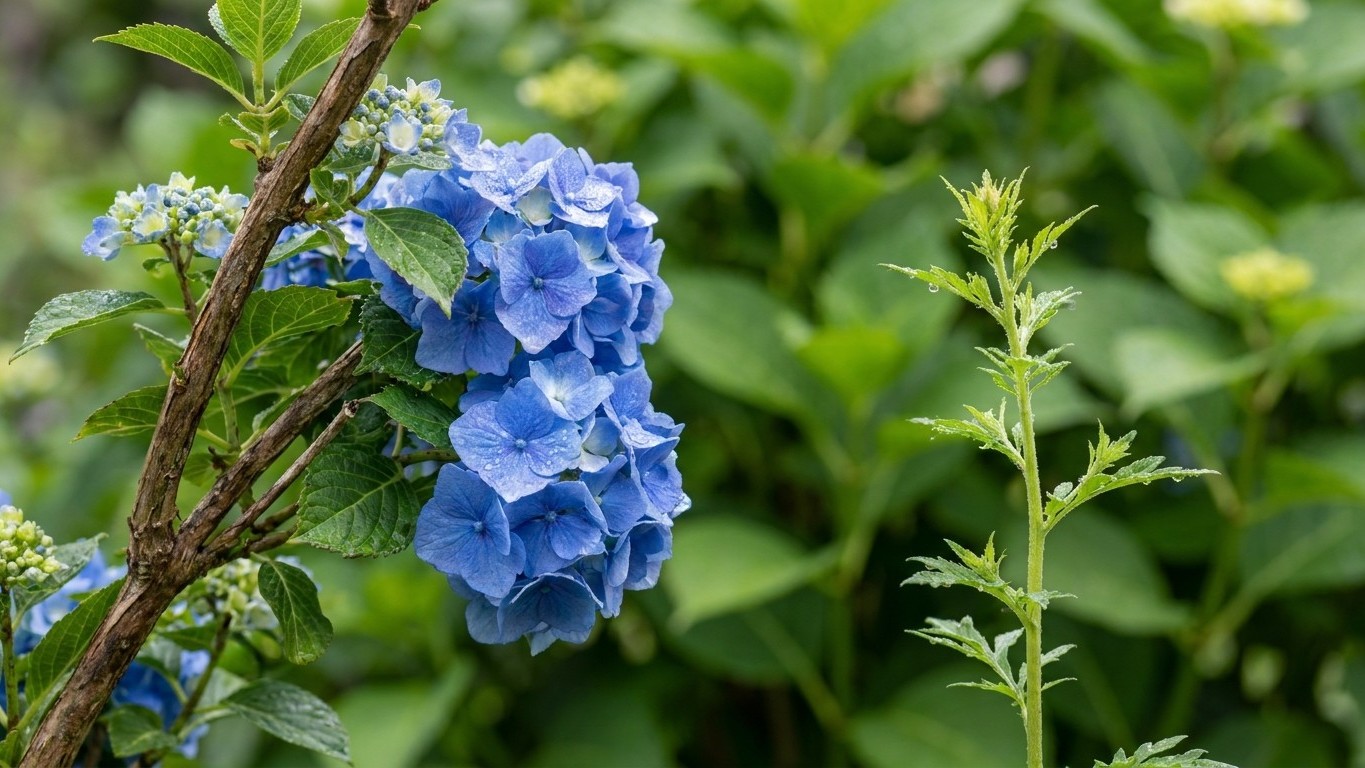

Plant container-grown hydrangeas in West Virginia in spring after the last freeze (mid-April around Charleston, later in the mountains) or in early fall, at least six weeks before the ground freezes. Panicle and smooth hydrangeas bloom dependably almost anywhere in the state. Bigleaf types give the blue and pink mopheads many people want, but a hard winter or a late freeze can take their flower buds. Soil pH decides whether those mopheads come out blue or pink.
When to plant Hydrangeas in West Virginia

The planting window is set by two dates. The NOAA NCEI 1991-2020 Climate Normals for Charleston put the typical last spring freeze (32°F) between April 9 and April 23, and the typical first fall freeze between October 18 and November 1. Charleston sits in a river valley. Northern counties and higher ground run later in spring and freeze earlier in fall, so move every date in this section forward in spring and back in fall as the elevation climbs. The general rules for the genus are in How to Grow Hydrangeas: The Complete Guide.
When is the best time to plant hydrangeas in spring?
Hydrangeas are woody shrubs, so the roots tolerate cool soil, and a plant can go in as soon as the ground is workable. The leaves are the weak point. Bigleaf and oakleaf types push out soft new growth in April, and a freeze after that can blacken it. Around Charleston, late April through mid-May is the comfortable stretch. At higher elevations, wait until mid-May. If you plant earlier, keep an old bedsheet handy and cover the shrub whenever the forecast shows 32°F or lower.
Can you plant hydrangeas in fall in West Virginia?
Yes, and many gardeners prefer it. Warm September soil lets roots grow while the top of the plant slows down. Aim to finish at least six weeks before the first fall freeze. At Charleston that means timing your planting by the fall frost dates, and a few weeks earlier on a ridge. Water weekly until the ground freezes, then mulch. Summer planting works too, but it means watering almost daily through July and August.
Can you grow hydrangeas from seed or cuttings?
Seed is a poor route. Seedlings rarely match the parent plant and take years to bloom, so nearly everyone buys a container plant or roots a cutting. Take 4- to 6-inch softwood cuttings in June or early July, strip the lower leaves, and root them in damp potting mix under a clear cover. Rooting takes six to eight weeks. Keep the young plants in pots, in a sheltered spot, through their first winter.
Anything raised under cover needs hardening off before it goes in the ground. That includes nursery plants that sat in a greenhouse and your own rooted cuttings. Give them 7 to 10 days outside: shade for the first few days, then morning sun, then a full day. To plant on May 1, start hardening off a few weeks before.
Soil and site preparation
Most hydrangeas want morning sun and shade from the hot afternoon hours. Bigleaf, smooth and oakleaf types scorch and wilt in all-day summer sun, especially on a south or west wall. Panicle hydrangeas are the exception and bloom best with six or more hours of direct sun, as long as the soil stays moist. Keep new shrubs out from under big maples and similar trees, whose shallow roots take the water first.
How do you check drainage before planting hydrangeas?
Hydrangeas like steady moisture but rot in soil that stays soggy. Dig a hole about a foot deep, fill it with water, and let it drain. Fill it again the next day and watch. If water is still standing a full day later, pick another spot or plant in a raised bed or low berm. Slopes drain well. Low pockets and compacted clay do not.
What should you do in the weeks before planting?
Start a month or more ahead with a soil test through your county extension office. The result gives you pH, which drives bigleaf color, and tells you whether the soil needs lime or sulfur. Both work slowly, so fall is the best time to apply them for a spring planting. About three weeks out, spread 2 to 3 inches of compost over the bed and work it into the top 8 to 12 inches. Hold off on fertilizer until the plant is growing.
On planting day, dig a hole two to three times as wide as the root ball and no deeper. Tease circling roots loose with your fingers. Set the top of the root ball level with the soil, or an inch high in heavy clay. Backfill, water in slowly, and lay 2 to 3 inches of shredded bark around the plant, pulled back from the stems.
Spacing depends on the type. Bigleaf and smooth hydrangeas need about 3 to 5 feet between plants, and oakleaf and panicle types need 5 to 8 feet. Keep every one at least 3 feet from the house so roof runoff and air flow don’t cause trouble.
Varieties that suit West Virginia
The trait that matters most here is which wood carries the flower buds. Bigleaf and oakleaf hydrangeas set buds on the previous year’s growth, so a winter that kills stems back also kills that summer’s blooms. Smooth and panicle hydrangeas bloom on new wood and flower after almost any winter. Gardeners in the colder mountain counties, or on exposed ridges, get the most dependable show from those two groups. Neighbors to the west can compare notes in Growing Hydrangeas in Kentucky: Types, Colour and Winter.
| Type | Widely available varieties | Blooms on | Good for |
|---|---|---|---|
| Smooth | ‘Annabelle’, ‘Incrediball’ | New wood | Shade to part sun, dependable blooms after cold winters. ‘Incrediball’ has sturdier stems than ‘Annabelle’. |
| Panicle | ‘Limelight’, ‘Little Lime’, ‘Quick Fire’ | New wood | Full sun, heat, strong stems. ‘Little Lime’ stays compact and ‘Quick Fire’ opens earlier in summer. |
| Bigleaf, reblooming | Endless Summer series | Old and new wood | Blue or pink mopheads, with a second chance at flowers if winter kills the old-wood buds. |
| Oakleaf | ‘Snow Queen’ | Old wood | Dry shade, red fall color, peeling winter bark. |
Stem strength is the second trait. Heavy mopheads on thin stems fall over after a summer thunderstorm, and that is the usual complaint about ‘Annabelle’. Panicle types handle heat and a bit of dryness better than the others, and oakleaf tolerates dry shade better than any of them. Before buying, check the plant tag for the type, mature size and sun rating, since two shrubs sold as hydrangeas can have very different needs.
What to plant alongside
Good neighbors for hydrangeas share their taste for moist, humus-rich soil and partial shade. Hostas, ferns, astilbe, coral bells and hellebores all fit. Their leaves cover the ground and keep the soil cool under the shrub. They also hide the bare lower stems that bigleaf and panicle types often have. Spring bulbs such as daffodils flower and fade before hydrangea leaves open, so the bed stays interesting from March to September.
For pollinators, lacecap and oakleaf hydrangeas have small fertile flowers that bees visit. Many mophead types are mostly showy sterile florets with little to offer. Add a nearby planting of coneflower or bee balm if bees matter to you, but give those plants more sun on the bed’s sunnier edge.
The plants to avoid are the ones that compete for water. Big shade trees with shallow roots, and thirsty turf grass running right up to the stem, take moisture away from a hydrangea. Keep a mulched ring 2 to 3 feet wide around each shrub. Black walnut is common across the region, and its roots release juglone, which stunts some garden plants. Hydrangeas are often reported as moderately tolerant, but a new planting right under a walnut is a gamble.
Some popular pairings have thin evidence behind them. Coffee grounds do not turn blooms blue, because aluminum availability in acidic soil does that. Strongly scented companions such as garlic and marigolds are often said to repel hydrangea pests, but that claim has little backing.
Watering, feeding and support
How much water do hydrangeas need?
About an inch a week, delivered slowly at the base, is the usual target. A new shrub needs that through its first two summers, because the roots have not yet spread. Deep soaking works better than frequent sprinkles, since it pulls roots downward into cooler soil. Check by pushing a finger 2 inches into the soil. If it feels dry, water. Afternoon wilting on a hot day is normal if the leaves perk up by evening.
Mulch does half the work. A 2- to 3-inch layer of shredded bark or leaf mold holds moisture and keeps roots cooler. Leave a few inches of bare soil around the stems so bark doesn’t stay damp against them.
When should you fertilize and prune hydrangeas?
Feed once as growth begins in spring, with a slow-release fertilizer made for shrubs, and follow the label rate. A second light feeding in early summer is optional. Stop by mid-July. Late feeding pushes soft new growth that has no time to harden before frost. Heavy nitrogen also produces leaves at the expense of flowers.
Pruning follows the bloom wood. Smooth and panicle hydrangeas can be cut back in late winter, before growth starts, and bloom on the new stems. Bigleaf and oakleaf hydrangeas bloom on old wood, so prune them right after flowering, by the end of July or early August, and only to remove dead stems or shape. Cutting them in fall or early spring removes next summer’s flowers.
Do hydrangeas need staking?
Some do. Smooth hydrangeas and tall panicle types can flop when blooms are heavy with rain. A grow-through ring or three bamboo stakes with soft twine, set in spring before the stems fill in, keeps them upright without looking staked. Sturdier varieties often need nothing at all. Suckers, the shoots that rise from the roots around the base, can be dug and replanted as new shrubs or removed if the clump is spreading.
Common problems

Start with leaves. Brown, crispy edges on a hot afternoon usually mean sun scorch or dry soil. Yellow leaves with dark green veins point to iron chlorosis, which shows up when soil pH is too high for the plant to absorb iron. A soil test confirms it, and sulfur lowers the pH over time. Small tan or purple spots on the leaves are usually a leaf spot disease, and they spread in wet weather. Water at the base, clear fallen leaves in autumn, and the shrub will usually leaf out again in spring. Powdery mildew leaves a white film on the upper surface in humid weather. It looks bad but rarely threatens the plant.
Why is my hydrangea wilting?
Check timing first. Wilting that appears at midday and recovers by evening is heat stress, and a deeper soak solves it. Wilting that persists in the morning on moist soil suggests the roots are rotting from poor drainage. Wilting on dry soil after planting means the root ball dried out. Dig down, feel the soil, and look at the roots before deciding.
Why won’t my hydrangea bloom?
There are four common causes. The first is pruning at the wrong time, which removes the buds on bigleaf and oakleaf types. The second is cold, either a hard winter or a late spring freeze that kills buds already formed. The third is too much shade, where flowers thin out below about four hours of sun. The fourth is too much nitrogen, which grows lush leaves and few flowers. Sort the cause by looking at the shrub: healthy leaves with no blooms suggest buds lost to cold or pruning, while thin growth in deep shade suggests light.
Why are the flowers brown or floppy?
Brown edges on petals usually come from heat and dry spells. Flopping comes from weak stems under rain-loaded heads, and it improves with support, a stronger variety, or less nitrogen. Blooms that fade from blue to pink may be reflecting a shift in soil pH after liming or heavy compost.
Pests that actually show up in West Virginia
WVU Extension lists a handful of insects that matter for home gardens. Not all of them bother hydrangeas, and some hit vegetables hard. Several do real damage to hydrangeas, and the list is not exhaustive. Pressure varies from county to county, and your county office can identify anything unfamiliar.
Slugs and snails
Ragged holes chewed in leaves, plus silvery slime trails in the morning, appear first. They are active from April, when the new leaves are tender, and feed mostly at night in damp weather. Iron phosphate bait scattered around the base of the plant is the most reliable control. It is safe around pets and wildlife when used as directed.
Japanese beetles
You will see metallic green and copper beetles clustered on the foliage, and leaves chewed down to lacy skeletons. Japanese beetles arrive in June. Knock the beetles into a bucket of soapy water in the early morning, when they are sluggish. Do this every day or two during the flush.
Aphids
Look for clusters of small soft-bodied insects on the underside of new leaves and tips of shoots, with leaves that curl and feel sticky. June is the usual onset. A firm spray of water from the hose knocks most of them off. Repeat every few days until the colony is gone.
Brown marmorated stink bug
Shield-shaped, mottled brown bugs gather on stems and flower heads from July. The visible harm is limited on hydrangeas, mostly pitting on leaves and flower bracts. Hand-pick them into soapy water, which works for a few shrubs.
Harvest and end of season
Hydrangeas are cut for drying rather than eating. Cut panicle and smooth blooms when the flower heads feel papery and the color has shifted, usually late summer into early fall. Bigleaf blooms are ready when the petals feel like thin paper rather than silk. Cut stems at least 12 inches long in the morning, strip the leaves, and hang bunches upside down in a dry, dim, airy room for two to three weeks. Another method is to stand stems in 2 inches of water and let the water evaporate, which keeps the shapes fuller. Stored away from humidity and sun, dried blooms last a year or more.
What should you do before the first fall freeze?
Around Charleston, the first freeze typically arrives between October 18 and November 1, and higher ground can freeze well before that. Water the shrubs deeply if fall has been dry, since a plant going into winter with moist roots handles cold better. Do not fertilize or prune. After the leaves drop, add another 3 to 4 inches of mulch over the root zone.
Bigleaf hydrangeas deserve more protection. Wrap a cage of chicken wire or hardware cloth around the shrub and fill it loosely with shredded leaves. Leave the old stems standing, since they shelter the buds. In spring, wait until trees leaf out in May to judge winter damage. Scratch a stem with a thumbnail. Green underneath means it is alive. Gardeners in another state with sharp winter swings can compare notes in Growing Hydrangeas in Missouri: Types, Colour and Winter.
Local help
County-level planting dates, soil tests and pest identification are free or low cost through West Virginia University Extension. Take a soil sample and a bag of affected leaves to your county office, and the agents can tell you the pH, the problem and the best planting date for your elevation. More state-specific advice is collected in the West Virginia guides.
Common questions
What is the easiest hydrangea to grow in West Virginia?
Smooth hydrangeas such as ‘Annabelle’ and panicle types such as ‘Limelight’ are the easiest. Both bloom on new wood, so a hard winter or late freeze rarely costs flowers. Smooth types like shade and moisture, and panicle types accept more sun.
Why won’t my bigleaf hydrangea bloom?
The usual cause is lost flower buds. Cold winters, spring freezes, or pruning in fall or early spring all remove them, because bigleaf hydrangeas set buds on old wood. Too much shade and too much nitrogen also reduce flowers. A reblooming variety is a safer choice.
How do I change hydrangea color?
Bigleaf hydrangeas turn blue in acidic soil, roughly pH 5.5 or lower, and pink in soil near or above 6.5. Test the soil first, then adjust slowly with garden sulfur for blue or garden lime for pink. Smooth, panicle and oakleaf hydrangeas do not respond this way.
Should I cut back hydrangeas in fall?
Mostly no. Leave bigleaf and oakleaf stems standing, since they carry next year’s buds and protect the crown. Smooth and panicle types can be pruned in late winter. Fall is fine for removing dead stems, but not for shaping.
Can hydrangeas grow in full sun?
Panicle hydrangeas can, if the soil stays moist. Bigleaf, smooth and oakleaf types do better with morning sun and afternoon shade, and often wilt and scorch in all-day sun in West Virginia summers. Mulch and deep watering help any hydrangea in strong sun.