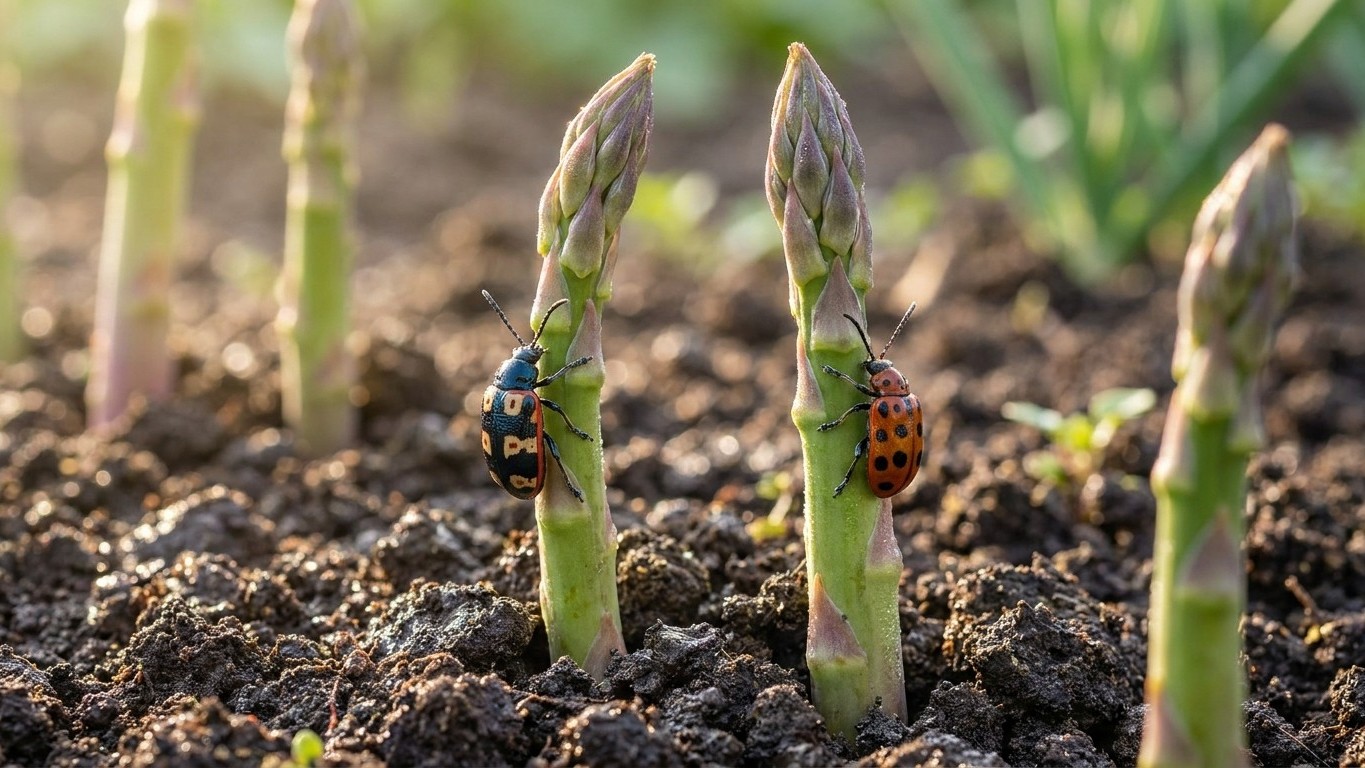

Insects that eat asparagus in Utah sort into three groups by where they feed. Some chew the spears in spring, some chew or suck on the ferns in summer, and some work in the soil around the crowns. Utah State University Extension is the authority on which species are in your county. The timing follows the garden’s last spring freeze, and the first clue is where on the plant the damage sits.
Which pests attack asparagus in Utah
Utah State University Extension is the service that documents the insects feeding on garden asparagus in the state. Its asparagus guidance is the reference for the bed itself. A species list reads best when you sort it by the part of the plant under attack, because that is what you can see from the garden path. Asparagus is a perennial: crowns go into 8-inch furrows in early spring, and nothing is harvested until year 3. Each insect threatens a different stretch of that long timeline.
Which groups of insects feed on asparagus?
- Spear chewers. They feed on tips and sides of emerging spears, which matters most once harvest begins.
- Fern feeders. They chew or scrape stems and fine foliage after the picking season ends. The ferns feed the crown for next year’s spears, so losing them costs you future harvests.
- Sap feeders and soil dwellers. Small sucking insects gather on ferns in summer, while larvae in the soil work at the crown or cut stems near ground level.
Ask the county extension office for the exact species names in your area. Staff can usually identify an insect from a clear photo or a specimen in a jar.
Which garden insects can you cross off?
Plenty of pests in garden books have no business in an asparagus bed. Borers of fruit and shade trees need wood to live in, and asparagus has none. Pests that live on apples, peaches or ornamental shrubs depend on fruit or woody leaves the plant never makes. The caterpillars that shred cabbage-family leaves want a leaf that asparagus does not have. If a source lists any of these under asparagus, set it aside. A neighbor’s infested apple tree says nothing about your spears.
When each one shows up, and what it does first
Start the calendar with the last spring freeze. At the Salt Lake reference station, the 32°F freeze probabilities put the last spring frost between April 12 and April 29. Salt Lake sits in a mild valley, though. Most of Utah is higher and colder, so spring starts later there, and southern Utah is warmer, so it starts earlier. Count from the freeze at your own place, because the insects follow the plant’s growth. The calendar does not care what the date on the wall says. For planting dates, see When to Plant Asparagus Crowns in Utah.
What do you see first, spring through summer?
Gardeners arrive with a symptom, so here is the sequence by symptom.
- Spear chewers: they appear as soon as spears push through warming soil, around the freeze window. The first sign is ragged or scarred tips, or spears that bend and scar on one side as they lengthen.
- Soil dwellers: they show up in the first weeks after crowns go in, in early spring. A furrow where few or no spears come up is the first sign, along with young stems cut off at the soil line.
- Fern feeders: they arrive after the last harvest, once the spears open into ferns. Look for scraped, discolored stems and ferns that thin out or turn pale well before fall.
- Sap feeders: they build up in summer heat. The first sign is sticky or curled growth on the fern tips, usually before the plant looks truly sick.
In a mature bed, the harvest window shapes what matters when. Stop picking when most spears are thinner than a pencil. From then on the ferns are rebuilding the crown, and every insect that eats fern is eating next spring’s spears. Spear damage costs you a few meals, while fern damage costs you the bed’s strength.
Telling the damage apart from everything else
How do you tell insect damage from frost, drought or a hoe?
Plenty of things in a Utah bed look like insect work. Spring freezes can come late, summers are dry, and the ground in much of the state drains fast. The soil Utah’s USDA State Soils programme lists as representative, the Mivida series, is a sandy Aridisol with 72 percent sand, 9 percent clay and 19 percent silt. It is well drained, and its organic matter is about 1.5 percent. Those are mapped values for a series, not a reading of your bed, so a soil test gives your real numbers. Sandy ground dries quickly, and a thirsty fern can look like a chewed one. Look for the insect itself, or its leavings, before you blame one.
| What you see | Other likely causes | What settles it |
|---|---|---|
| Ragged or scarred spear tips | Insect chewing, wind or hail, a hoe or trowel slip | Chew marks with droppings or insects present on the spear point to insects. Clean, one-sided cuts or bruises point to mechanical damage. |
| Water-soaked or blackened spear tips | A freeze after emergence | Check whether a freeze came in the days before. All spears in the bed are hit at once, and new spears come up undamaged afterward. |
| Yellowing or pale ferns in summer | Water stress, sap-feeding insects, disease | Dig a few inches near the crown: dry sand means thirst. Sticky residue or visible small insects on the fern tips point elsewhere. |
| Few, thin spears in a young bed | Weak or shallow crowns, dry soil, soil-dwelling insects | Look at the crown’s depth and the moisture around it, then ask the county extension office. |
| Browning that starts low on stems | Disease | Photograph it and send it to the extension office, since a plant disease needs lab-level confirmation. |
Spread matters. Damage in one corner often has a different cause than damage over the whole bed. Whatever pattern you see, the county extension office is the place to confirm a diagnosis. Guessing from a photo online is how people end up treating the wrong problem.
What actually works here, and what is a waste of time
What works on a short, dry season?
Timing does more than any treatment. Crowns go into furrows in early spring, and the furrow is backfilled gradually across the year, 2 inches every other month. That gradual fill keeps the crown from being buried all at once, and it gives young shoots less to push through. Strong growth outpaces light insect damage in a way a weak crown never will.
Physical steps also beat chemistry. Walk the bed at the same time each week during spear season and remove insects by hand. Cut and clear the old ferns once they have fully browned, so there is less shelter for whatever overwinters. Ask your county office what cleanup timing fits your elevation. Keep the harvest windows too: an over-picked bed has less fern to feed the crown. Water matters because summers are dry. June brings about 0.95 inches of rain, July 0.49 and August 0.58, and those are normals for the reference station, not a forecast for your plot. A rain gauge on your own bed gives the true number. For ground that drains this fast, the drainage side of the question is covered in Will Utah Soil Hold an Asparagus Bed for Fifteen Years?
What wastes your time?
Spraying anything over damage you have not identified is the most common waste. It can kill the insects that eat pests, and it does nothing if frost or thirst caused the damage. Cutting the harvest short to “protect” a bed does not fix a pest problem, and picking in the first two years to get a head start weakens the crowns. Which products are registered for home asparagus is a question for Utah State University Extension, since labels and state registrations decide what is legal and what is safe for edible spears.
Where to check this for your own county
Utah State University Extension has a county office, and that office is the right first call for a specific question. Statewide documentation says what has been recorded across Utah. It does not say what is feeding in your garden this month. Presence of any pest varies a great deal inside the state, between the valley floors and the high benches, between irrigated beds and dry ones, and between a young bed and one that has stood for a decade. A Salt Lake valley bed and a high-elevation bed do not share a calendar.
If you are still planning the bed, Growing Asparagus in Utah covers the whole 10 to 15 year timeline. Otherwise, take the notes above, collect one specimen, and call your county extension office this week.
Common questions
Can I keep harvesting while insects are feeding on the spears?
Only if the bed is old enough. Nothing is harvested until year 3. Stop when most spears are thinner than a pencil, so the ferns can rebuild the crown.
Does a late freeze hurt asparagus spears?
It can. A freeze after emergence leaves water-soaked, then blackened tips. At the Salt Lake reference station the last spring frost falls between April 12 and April 29, and higher ground runs later.
Should I water more in July if the ferns look pale?
Check first. July is the driest summer month at the reference station, with 0.49 inches of rain, and sandy ground sheds water fast. Dig a few inches down beside the crown, because dry sand means thirst, and then check for insects.
Which pesticide should I use on asparagus?
That depends on the pest and on what is registered in Utah. Take a photo or a specimen to your county Utah State University Extension office before you buy anything.