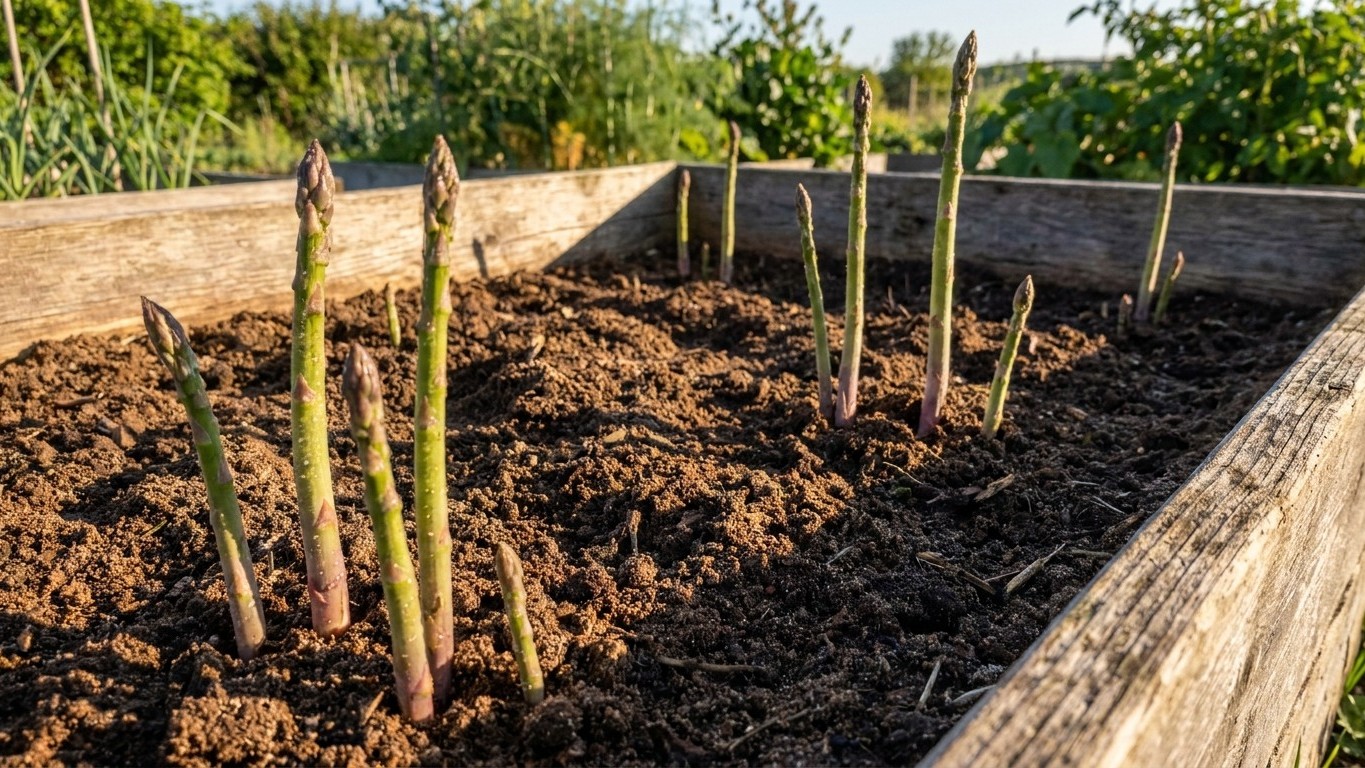

Asparagus in Wyoming loses spears and fern to a short list of chewing and sap-feeding insects, plus animals that clip shoots. The surprise is how late the damage shows up. A bed planted as crowns is not harvested until year 3, so for two seasons the ferns are the only thing there is to eat. Which species are in your garden depends on your county, and the University of Wyoming Extension office there is the one to ask.
Which pests attack asparagus in Wyoming
The service that documents garden insects in the state is University of Wyoming Extension, working through its county offices. Its entomology guidance is organized by the plant and the symptom, which is also how a gardener meets the problem. For asparagus, the useful way to sort what turns up is by where the plant gets hurt: the spears, the ferns, or the crown at ground level. I won’t hand you a species name to match against your bed. A confident guess at the wrong insect is how people end up treating the wrong thing.
Which insects can you rule out for an asparagus bed?
Plenty of insects show up in Wyoming conversations that have no business in a vegetable bed. Anything that bores into wood, such as the pests of pines, spruce and aspen, lives and feeds on trees. Asparagus is an herbaceous perennial with soft stems that die back every winter, so there is no trunk to tunnel. Lawn pests that chew turf roots are likewise a poor fit unless the bed sits in a lawn, and even then the crown is a different target.
Which damage in an asparagus bed comes from insects?
Three patterns are worth knowing. Chewing insects leave ragged edges, notches or scarring on spears and on the green fern. Sap feeders do less visible chewing and more weakening, so you see off-color, speckled or sticky fern. Animals and soil-level chewers tend to remove whole spears or clip them at the dirt line. A mature bed (year 3 and later, producing for 10 to 15 years) can shrug off a lot of fern nibbling. A young bed cannot, because the ferns are feeding the crown that will produce for a decade or more.
When each one shows up, and what it does first
Count from the weather, not the calendar. The last spring frost at the reference station falls between May 7 and May 18, and the station has about 130 frost-free days at 6,000 feet. Frost is possible in any month at higher elevations. Crowns go into 8-inch furrows in early spring, so the first spears push up around the time the soil warms. Higher or colder gardens run later, lower ones earlier. The first damage window opens when spears emerge, and the second opens as ferns leaf out after the last frost. If you want the planting side of that timing, When to Plant Asparagus Crowns in Wyoming covers it.
What shows up on the spears first?
In spring, the earliest symptom is usually on the tip. Spears with chewed or scarred tips, or with brown streaks along the sides, point to something feeding right as the shoots emerge. A spear that is simply gone, clipped near the surface, suggests an animal or a soil-level chewer. In a bed not yet being harvested, many gardeners never see this, because unharvested spears open into ferns and the damage looks like thin fern a few weeks later.
In a harvested bed, the first sign is often at the picking itself: spears with marks you can’t wash off. Stop when most spears are thinner than a pencil. A bed stressed by insects reaches that point sooner, and cutting past it takes from reserves the crown needs.
What shows up on the ferns, and when?
Once the picking stops, or from the start in a bed under three years old, the spears open into tall feathery ferns. This stretch runs through the frost-free season and is when sap feeders and leaf chewers get going. Ferns that look sparse, speckled, yellowed or sticky are the first clue. Look at the underside of the fine branches and along the main stem, where small insects hide. Damage near the base of the stalk matters more than damage at the top, because the stalk is the feeding line to the crown.
Late in the season, as nights cool toward the first fall frost, ferns turn gold and die back on their own. That yellowing is the plant finishing its year, and it is easy to mistake for insect injury. Yellow fern in midsummer, while the crown still needs it, is a different story.
Telling the damage apart from everything else
Many things that look like insect injury are weather, water or soil. Rain across June, July and August totals about 5.8 inches, with 2.16 in June, 2.11 in July and 1.52 in August, so August is the driest summer month. Those are normals for the reference station, not a forecast for your plot. A rain gauge in the bed tells you what actually fell.
The state’s representative soil, the Forkwood series, is a well-drained, loam to silt Aridisol. Dry-climate soils like it are often alkaline and can carry salts. Your own bed may differ, and a soil test gives your number. The table lists what to compare before you decide an insect did it.
| What you see | Other likely cause | What settles it |
|---|---|---|
| Ragged edges or notches on spears or fern | Hail, wind whipping, or a tool nick | Insect chewing leaves irregular bites and sometimes droppings. Hail and wind damage runs in one direction across many plants at once. |
| Whole spears missing or clipped at the surface | Animals, or a cutting tool at harvest | Look at the stub. A clean slanted cut points to a tool or sharp-toothed animal. A ragged stub points to something else. |
| Dark, limp, collapsed spear tips in spring | Frost | Frost hits a whole area of the bed at once, often the low spots first, and follows a cold night. |
| Yellow, thin or speckled fern in midsummer | Drought stress, or salts in the soil | Check how dry the soil is a few inches down. Salt trouble tends to show as scorched fern edges and a white crust on the surface. |
| Fern browning and dying back | A plant disease, or normal fall dieback | Dieback in fall is uniform and follows cooling weather. Disease spots or lesions appear earlier and unevenly. |
| Stunted, sparse spears from a mature bed | Crowded or declining crowns, or overharvest | Check whether most spears are already thinner than a pencil, and how long you picked. |
When a symptom fits more than one row, take a photo and a sample to the county Extension office before you spray anything. Staff there can tell a feeding injury from a cultural one and know what has been turning up locally. If drainage keeps coming up, Will Wyoming Soil Hold an Asparagus Bed for Fifteen Years? covers what to do about it.
What actually works here, and what is a waste of time
On a short season, timing beats chemistry. Floating row cover is the usual physical barrier. Put it on before the first spears break the surface, and lift it when you harvest or when ferns need room. It earns its place twice, because the same cover that blocks insects also takes the edge off a cold snap.
Other steps that cost little and help:
- Look over spears and ferns often, especially in the weeks right after emergence and after the last frost, when damage starts.
- Remove the old, browned fern at the end of the season so insects that overwinter in it have less shelter.
- Water the bed steadily through the dry stretch, since stressed ferns attract trouble and August is the driest month.
- Backfill the furrow gradually as the crowns grow, rather than all at once.
- Never harvest in the first two years, and stop each season when most spears are thinner than a pencil.
Some common habits waste effort. Spraying on a hunch kills helpful insects along with the bad ones and can leave residue on spears you are about to eat. Which products are legal for asparagus in Wyoming is a question for the county Extension office. Planting more crowns to outpace losses does not work either, because a new crown takes until year 3 to give a harvest. And treating yellow fern with an insecticide when the cause is dry soil only adds cost.
Where to check this for your own county
Start with your county’s University of Wyoming Extension office. Staff there see local samples and know which insects have been active in your area this season. Pest presence varies inside the state: a garden on a river bottom, one on a ridge, and one in a town yard can have different insects and different frost dates.
Before the visit, take clear daylight photos of the damage, both close up and of the whole plant. Note where it started in the bed and how many plants it covers. If you can, bring a damaged spear or a piece of fern in a sealed bag. Also note when it appeared relative to the last frost and to spear emergence, since that timing narrows the possibilities more than a month name does.
For the full picture of growing the crop from crown to harvest, see Growing Asparagus in Wyoming. This week, put a rain gauge in the bed and a note on the calendar for the day the first spears appear. Those two records are what the Extension office will ask you for first.
Common questions
Do insects kill asparagus plants in Wyoming?
A healthy, mature bed rarely dies from fern damage alone. Young beds are more at risk, because the ferns feed a crown that is still building its reserves.
Why are my asparagus spears chewed before I can pick them?
Something is feeding as the shoots emerge. Look at the stub and the surrounding soil for clues, take a photo, and bring a sample to the county Extension office.
Is yellow asparagus fern always an insect problem?
No. Yellowing can come from dry soil, salts, disease or normal dieback as fall cools. Check soil moisture a few inches down and whether the whole bed is changing at once, then ask the Extension office if it is still unclear.
Should I spray my asparagus bed?
Not before you know what is feeding on it. Physical barriers and good timing come first, and the county Extension office can tell you what is approved for asparagus in Wyoming if a treatment is still needed.