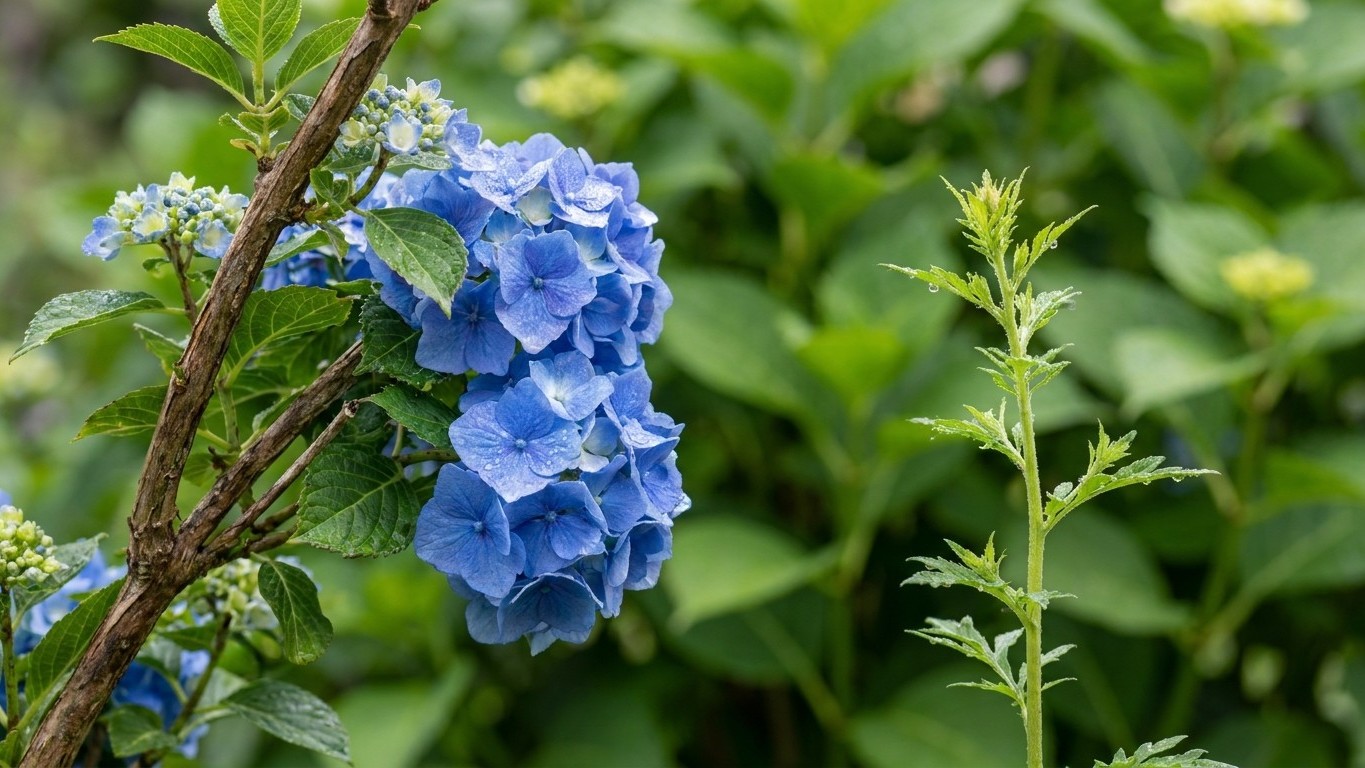

Hydrangeas in Kansas get pruned on two different schedules, and the right one depends on the type. Panicle and smooth hydrangeas are cut in late winter. Bigleaf and oakleaf hydrangeas are cut in summer, right after the flowers fade. Prune a bigleaf in March and you remove the flower buds already sitting on its stems, which means no blooms that year.
What this comes down to in Kansas

Late winter is the pruning window for hydrangeas that bloom on new wood, because NOAA NCEI’s 1991-2020 Climate Normals put the last spring frost at the Wichita airport station between April 4 and April 18. Hydrangeas that bloom on old wood get their one pruning window in the weeks after flowering. Everything else follows from when each type forms its flower buds.
Old-wood types set next year’s buds in late summer and carry them through winter on the stems. The first fall frost at the same Wichita station arrives between October 23 and November 2, well after those buds have formed. A cut made in fall, winter or spring takes buds off with it. New-wood types grow fresh stems each spring and make their buds on that growth, so trimming dormant stems costs nothing.
Which hydrangeas bloom on new wood?
Panicle hydrangeas, with cone-shaped flower clusters, and smooth hydrangeas, with big round white heads, both flower on the current season’s growth. Prune panicles in late winter, taking off some of the height to keep the shrub tidy and the stems sturdy. Smooth hydrangeas can be cut back much harder, which helps keep the heavy flower heads from flopping.
Which hydrangeas bloom on old wood?
Bigleaf hydrangeas (the mopheads and lacecaps) and oakleaf hydrangeas, with their lobed leaves shaped like oak leaves, carry buds on last year’s stems. Their pruning is light: clip spent flowers and thin a few of the oldest stems at the base soon after bloom ends. Spring is for removing winter-killed wood only.
What about reblooming bigleafs?
Reblooming bigleafs, the Endless Summer series being the best known, flower on both old and new wood. That helps in a winter that kills stems back to the ground, because the new growth can still bloom. Treat them like other bigleafs: deadhead lightly, remove dead stems in spring, and skip any heavy cutting.
| Type | Flower buds form on | When to prune in Kansas |
|---|---|---|
| Panicle | New wood | Late winter, before buds swell |
| Smooth | New wood | Late winter, before buds swell |
| Bigleaf | Old wood | Right after bloom; dead wood in spring |
| Oakleaf | Old wood | Right after bloom; very little else |
| Reblooming bigleaf | Old and new wood | Light cuts after the first flush; dead wood in spring |
Working it out for your own garden
How do you know which kind of hydrangea you have?
Start with the flower shape and the leaf. Cone-shaped clusters point to a panicle. A big, round, usually white ball on a thinner, floppier stem points to a smooth hydrangea. Glossy, rounded leaves with mop or flat-topped flowers mean bigleaf. Leaves cut into lobes like an oak’s mean oakleaf. If the plant came without a tag, prune only dead wood for one season and watch when it blooms, then write the type on a plant stake so the question stays answered.
How do you set the date for new-wood types?
Count backward from the frost window. The Wichita reference range for the last spring frost is April 4 to April 18. Subtract about six weeks and you get roughly February 21 to March 7. Subtract four weeks and you get roughly March 7 to March 21. Pruning anywhere in that stretch, while stems are still dormant and buds are tight, works well. The method carries to other places and cold years: pick your own local last-frost range and count back four to six weeks.
Gardens outside the airport usually see the last spring frost later, often by one to two weeks, so a rural or suburban gardener can shift the whole window later by the same amount. Wait a few more days if buds look swollen early. A warm spell in March can start growth that an April freeze will burn.
How do you set the date for old-wood types?
Here the clock starts at bloom, not at frost. Prune within a few weeks after the last flowers fade. That leaves the shrub weeks to set buds before the first fall frost range of October 23 to November 2. For spring cleanup, wait until leaves open on the stems. Scratch the bark on a doubtful stem with a thumbnail: green underneath means it is alive, brown and dry means cut it back to the lowest pair of healthy buds.
What changes across the state
The reference range comes from Wichita, in south-central Kansas, and the state does not share one climate. Its hardiness zone runs from 5b to 7a on the USDA Plant Hardiness Zone Map, which rates a place by its average annual extreme minimum temperature. That is a wide spread for one state, and it explains why one neighbor’s bigleaf blooms every June while another’s gets cut to the ground most winters.
Moving north and west, winters get colder, spring freezes linger later, and wind and dry air add stress. Gardeners in those areas wait longer in spring before pruning new-wood types and should expect more dead wood on bigleafs after hard winters. In the southeast, where winters are milder, buds on old wood survive more often, and the late winter window opens sooner. Elevation in the western part of the state pushes frost dates in the same direction as distance north does.
Cold hardiness matters here as much as timing. Where bigleafs regularly die back, the sensible move is to lean on types that bloom on new wood, so a bad winter does not erase the season. The guide to Which Hydrangeas Survive a Kansas Winter covers which types hold up in each part of the state.
The mistakes this state punishes

The most expensive error is the spring cleanup of a bigleaf. A warm March makes it tempting to cut everything to tidy up, and the flower buds go with the stems. Wait until leaves open, remove only what is clearly dead, and leave the rest.
The second is the fall tidy. Kansas autumns can stay mild into November, and cutting in October takes off buds on old-wood types. On any type, it can also prompt new growth that the first hard freeze then kills. Leave stems standing through winter. The dried flower heads also give some protection to buds beneath them.
The third is pruning new-wood types too early or too hard after a warm stretch. If you cut in February and a warm spell wakes the plant, an April freeze between the April 4 to April 18 reference range can damage tender new shoots. When buds are swelling, hold off until the freeze danger has passed.
Last, pruning will not fix flower color. Pink or blue comes from soil chemistry, and the article on why hydrangeas are pink in Kansas, and how to turn them blue explains the cause. Cutting a shrub to change its color only costs you blooms.
Checking this against your county
The dates above come from the Wichita airport station, so treat them as a starting point. Your own garden may run one to two weeks off, especially if it sits in the country, on a hill or in the western or northern part of the state. Your county office of Kansas State University Research and Extension can tell you the local frost range and what winters have done to hydrangeas near you. For the rest of the growing basics, see growing hydrangeas in Kansas.
Common questions
Can I prune hydrangeas in fall in Kansas?
Avoid it. Fall cutting removes buds on bigleaf and oakleaf types, and on any hydrangea it can push soft growth ahead of the first frost, which at the Wichita reference station arrives between October 23 and November 2. Wait for late winter or for after bloom, depending on the type.
Why did my bigleaf hydrangea not bloom this year?
Either a hard winter killed the buds on the old wood or the shrub was pruned in fall or spring and the buds went with the cuttings. If the stems died to the ground, the plant may still bloom later from new growth, especially a reblooming type.
How hard can I cut back a panicle hydrangea?
Cutting it back each late winter keeps it in shape and strong. Cutting much harder can make larger flower heads on weaker stems that bend in rain. Remove dead or crossing branches first, then shorten the rest.
When should I cut off dead-looking stems?
Wait until leaves have opened in spring, typically after the last frost range at your location. Bigleafs often leaf out late, and a stem that looks dead in March may have living buds. Scratch the bark, and if it is green underneath, leave it.