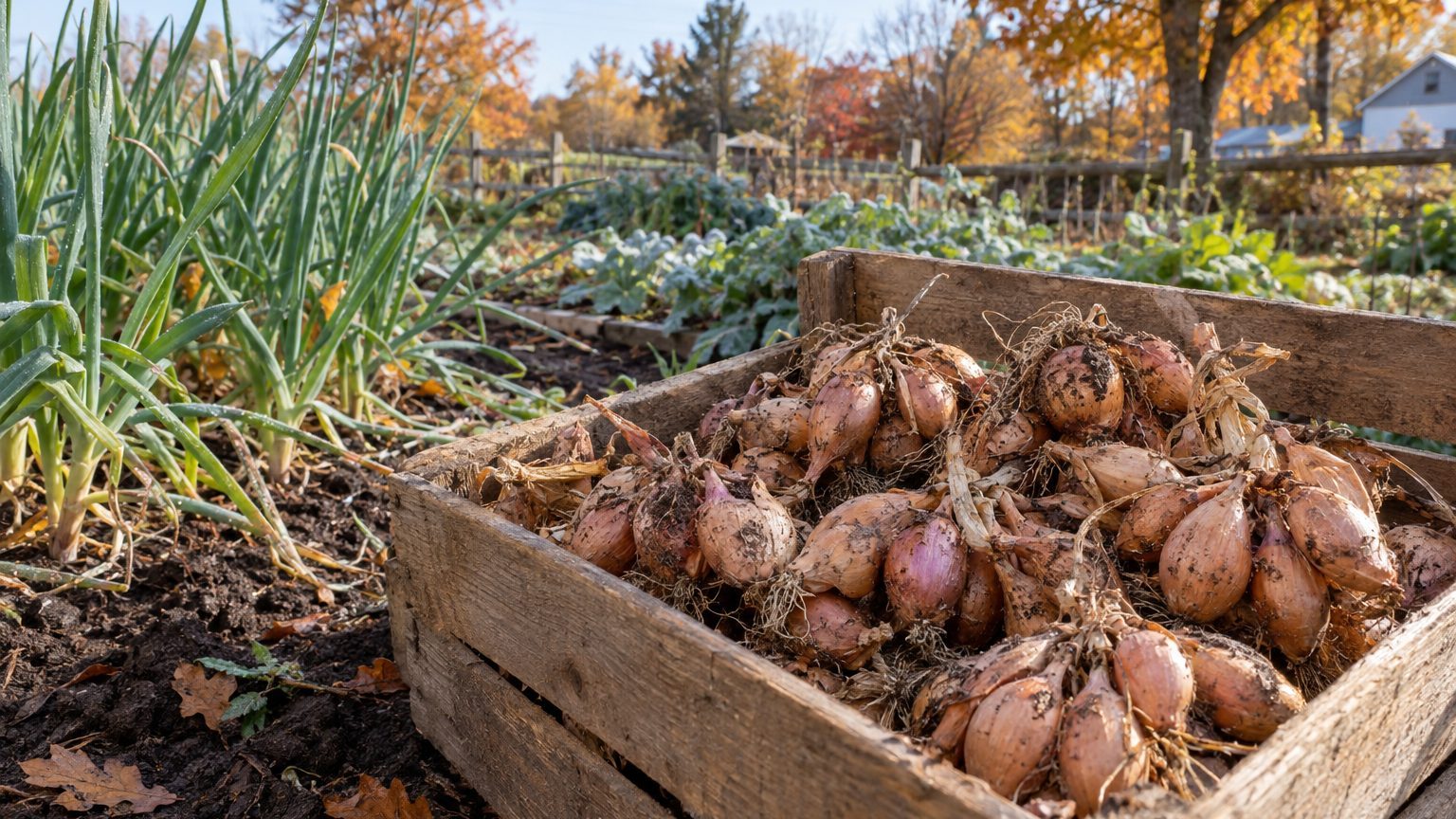

Plant multiplier shallots, the kind grown from a bulb or set that splits into a cluster, and treat seed-grown shallots as a second choice for gardeners willing to start them indoors. Vermont’s short, cold season rewards fast, hardy types. The type you buy and the week it goes in matter more than any variety name on a catalog page.
The short answer for Vermont
Multiplier shallots from sets or bulbs are the best bet for nearly every Vermont garden. They are the quickest route to a cured bulb, and they shrug off cold. Seed-grown shallots come second, and only when seedlings go out as early as the soil allows.
The calendar explains why. At Burlington, the reference station, the last spring freeze at 32°F falls between April 30 and May 10, and the first fall freeze between October 3 and October 13. Those dates mark the middle band (30 to 70 percent probability) of a 32°F freeze, so a freeze can still show up after them. Burlington also sits on Lake Champlain, the mildest corner of the state. The Green Mountains and the Northeast Kingdom run substantially shorter. Winter is the other half of the story: the mean daily minimum of the coldest month at Burlington is 12.9°F.
Which type of shallot suits which Vermont gardener?
| Type | How it is grown | Fit for Vermont |
|---|---|---|
| Multiplier, spring-planted | Sets or small bulbs, planted as soon as the soil is workable | Best default for most gardens, especially in the hills and the north |
| Multiplier, fall-planted | Bulbs set in the ground weeks before it freezes, then mulched deeply | Good where snow cover is dependable; gives earlier, larger bulbs |
| Seed-grown, transplanted | Seed started indoors in late winter, seedlings set out in spring | Workable if started early; cheaper than buying bulbs |
| Seed-grown, direct-sown | Seed sown straight into the bed | Weakest choice; the season is tight for it |
Within a type, shop for stock sold as a good keeper, with firm, tight skins. Ask the supplier whether the bulbs were grown in a cold climate. Northern-grown stock has already proven it can finish before a short season closes. For the planting window itself, see When to Plant Shallots in Vermont.
What will not work here

Slow shallots lose in Vermont. Anything that needs a long, warm run to size up its bulbs will still be filling out when October frost arrives. At Burlington the stretch between early May and early October is as generous as the state gets, and it shrinks quickly in the hills. Seedlings started indoors too late, or transplanted well into June, will give you small bulbs that store poorly.
Can you plant shallots in fall in Vermont?
You can, but not carelessly. With a mean coldest-month minimum of 12.9°F at Burlington, and zones reaching 3b in colder areas, bare bulbs sitting in open soil are exposed to deep cold and repeated freeze and thaw. Frost heave pushes shallow bulbs up out of the ground, and a mild spell in November can coax green tops that the next cold snap burns off. Fall planting works when bulbs go in a few weeks before the ground freezes, with a thick layer of straw or shredded leaves on top. Where snow cover is thin and the ground freezes hard, spring planting is the safer call.
Why does close spacing fail in wet summers?
Vermont summers are mild, but they are not reliably dry. A shallot set splits into a cluster of bulbs, and a crowded cluster holds moisture around the necks and leaves for hours after a rain. That is the setup for fungal leaf disease and rot at the base. Packing sets a few inches apart to squeeze in more bulbs usually backfires. Give each set a little room in every direction, and a bit more in heavy soil.
Drainage matters just as much. Clay beds that stay soggy after snowmelt will rot sets before they root. Raised beds or a ridge of loose, amended soil solve most of that. And shallots from a grocery store make poor planting stock: you do not know how they were grown or whether they carry disease, and many are not suited to a northern season.
What changes across Vermont
Vermont is not one garden. The USDA Plant Hardiness Zone Map (2023 edition) puts the state across zones 3b to 5b, two full zones, so there is no single answer. That system rests on one variable, the average annual extreme minimum temperature. It says how cold the winter gets but nothing about how long the summer lasts. Both matter for shallots.
The Champlain Valley sits at the milder end. Gardeners there have the best odds with fall planting, a longer spring window, and seed-grown shallots started indoors. Move up into the Green Mountains or across to the Northeast Kingdom and everything shifts. Spring thaw comes later, the soil stays cold longer, and the first fall freeze can arrive well before the early-October dates above. Altitude does this inside a single county, since a valley floor can hold cold air while a slope just above it stays a few degrees warmer on clear nights.
If you garden in the north or at elevation, lean toward spring-planted multipliers set out the moment the soil can be worked. Mulch more heavily if you do plant in fall. Start any seed-grown shallots on the early side, because every week of delay comes out of an already short season. You can also lean on Growing Shallots in Vermont for the full season, from bed prep to curing.
To find your own zone, enter your ZIP code into the USDA Plant Hardiness Zone Map instead of guessing from a neighbor or a nursery tag. Treat the result as a guide to winter survival, then adjust for local frost dates.
Where to check this for your own county
The best next stop is University of Vermont Extension, the state’s land-grant extension service. Look for two things. The first is a local planting calendar that gives frost dates and planting windows closer to your town than a Burlington reference station can. The second is any list of varieties trialled in your county, since a bulb that does well in the Champlain Valley may struggle two hours east.
Shallots are often covered alongside garlic and onions in extension guidance, so if a search for shallots turns up little, try those crops. The extension’s Master Gardener program is also a practical way to ask someone who knows local soils and weather. Questions like when the ground thaws in your area and which growers nearby have good luck with fall planting are exactly what they field.
A county recommendation beats a state one every time. What you are reading is the state-level picture: it draws on one reference station and a hardiness range that covers two full zones. Your county office can tell you how your valley, slope, or ridge differs from that picture.
Checking this against your own garden
Your own observations outrank any date printed here. Three things are worth watching each spring and fall.
- Soil warmth by feel. Push a hand into the bed. If the soil crumbles instead of clumping and no longer chills your fingers right away, it is ready for sets. A bed that reaches this point weeks before your neighbor’s tells you it has good drainage and sun.
- First green growth. Note when planted sets send up shoots, or when seedlings show their first true leaves after the thin, grass-like starter blades. Early shoots mean a sheltered, warm spot. Late shoots point to a cold pocket where you should plant later and mulch more.
- The first leaf damage in fall. Watch when frost first blackens tender plants such as basil or squash vines. If that happens in your yard before early October, your growing season is shorter than the Burlington dates suggest.
Jot the dates down each year. After two or three seasons, those notes will tell you more about your microclimate than any map.
Common questions
Should I plant shallots in fall or spring in Vermont?
Spring is the safer choice for most gardens, particularly in the hills and the north. Fall planting works best in milder spots with dependable snow cover, and it needs a thick mulch.
Can I grow shallots from seed in Vermont?
Yes, if you start them indoors in late winter and transplant them in spring. Direct sowing is a poor bet because the growing season is short, especially away from Lake Champlain.
How far apart should shallots be planted?
A little room in each direction works for most sets. In wet summers or heavy soil, a little extra room helps the foliage dry out between rains.
When are shallots ready to harvest?
When the tops turn yellow and fall over. Pull the bulbs, then cure them for a couple of weeks in a dry, airy, shaded place before storing.