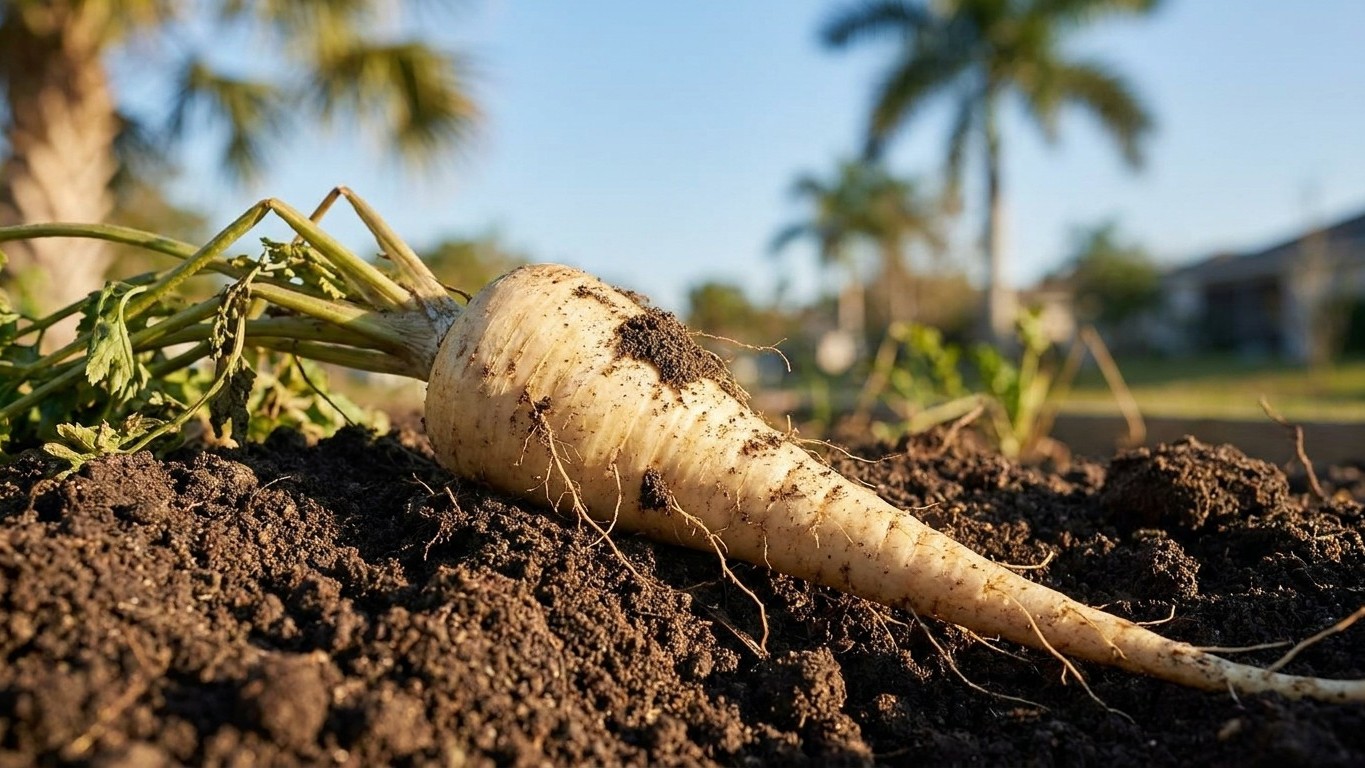

Lift parsnips after several weeks of frosty weather, not before. Once dug, a parsnip can keep four to six months, but only at 32 to 34 °F with very high humidity and no ripening fruit nearby. Most kitchens fall short of that, so the garden row is often the better storage room. For the full growing picture, start with Growing Parsnips in Virginia.
The short answer
The question that decides it is whether your ground delivers several frosty weeks in a row. At the Virginia Beach reference station, the mean daily minimum of the coldest month is 31.6 °F (NOAA NCEI Climate Normals). That is an average night that barely slips under freezing, which means plenty of nights stay above it and cold snaps tend to be short.
On the coast, then, a parsnip will grow without trouble. Whether it turns sweet depends on how many frosty weeks that particular winter hands you. Utah State University Extension puts it this way: parsnips taste best after several weeks of cool, frosty weather, which converts stored starch to sugar. A mild winter gives you a fine, pale, perfectly edible root that never gets there.
Keep the two ideas apart. A comfortable hardiness zone tells you the plant will survive the winter. It says nothing about whether the sweetening, which comes from exposure to frost, will happen. Coastal Virginia is the mild end of the state. The Blue Ridge and southwest Virginia run weeks later in spring and earlier in fall, so roots there spend more time in frosty ground. The longer version of that question is covered in Will Parsnips Sweeten in Virginia?
When should you dig parsnips in Virginia?
The first fall frost at the reference station falls between November 10 and November 24. Several weeks after that puts the first digging in December on the coast, and earlier in the mountains. Pull one root and taste it, raw in a thin slice or roasted. If it is starchy, leave the rest in the ground and test again in a couple of weeks. Keep digging as needed through the winter, and finish before the tops start growing again in spring.
How long do lifted parsnips keep?
USDA Agricultural Handbook 66 says parsnip roots can be stored 4 to 6 months at 32 to 34 °F with 98% relative humidity (USDA Handbook 66). That figure assumes those conditions are held steady, which almost no house manages. Expect less from a garage, a basement or a crowded refrigerator.
Cold is not the danger, since parsnips are not chilling sensitive. Ethylene is. Even at the right temperature, a parsnip stored near apples or any ripening fruit turns bitter, because low levels of ethylene in cold storage cause bitterness. Give the roots their own space. Top them after harvest, but do not trim into the crown.
Does the season fit?
It fits with room to spare. The real wait is for frost, not for size. Here is how the calendar runs at the coastal reference station:
- Sow in place from late February to mid-March, two to three weeks before the last spring frost, which falls between March 20 and April 3. Parsnips are never transplanted, so the clock starts at seeding.
- Germination is slow, and gardeners often dig up what looks like bare soil and re-sow. Mark the row and keep the surface evenly moist until seedlings show.
- Count 100 to 120 days from seeding.
- Look at the fall end. The first frost arrives between November 10 and November 24, so the growing season leaves a long cushion for the roots to finish.
- Wait for the frost to do its work. Several frosty weeks after the first fall frost point to the first dig on the coast. The roots will have been ready for months by then, and they hold in the ground.
The Blue Ridge and southwest Virginia shift the whole schedule. The last spring frost comes weeks later, so sowing waits until the soil can be worked. First frost comes earlier, so the cushion at the fall end is thinner. The 100 to 120 days still fit, but a sowing that slips into late spring leaves little margin. Your county extension office can tell you the local frost dates, and they matter more in the mountains than on the coast.
The upside of the mountain schedule is more time under frost. A root sown on time in the cold country is likelier to see the several frosty weeks it needs before the ground freezes hard.
What goes wrong here
Most parsnip disappointments in Virginia come from one of five causes. Soil varies from sandy ground near the coast to heavier clay farther inland, so a spade test beats any general rule. If the spade will not go a foot deep without a fight, the roots will not either. Chewing damage from insects and animals is a separate matter, covered in What Eats Parsnip in Virginia, and When.
- Forked or stubby roots in heavy or stony ground. A root that meets a clod or a stone splits around it. Utah State University Extension recommends deep sandy soil, and says heavy soil must be double dug. Dig the bed to a full spade depth twice, take out the stones, and break up the lumps before sowing.
- Forked roots from overwatering. This has a different cause and can happen even in loose soil. Keep the surface moist while seeds germinate, then ease off. Water when the top inch or two of soil has dried, and do not keep the bed soggy.
- A season that runs out. A sowing that slips late leaves roots small when the cold arrives, especially in the mountains. Sow in the late-winter window and plan on the full 100 to 120 days from seeding.
- A winter too mild to sweeten. On the coast, some winters give too few frosty weeks. Leave the roots in the ground as long as you can and taste one before judging the row. A root that stays mild is still good roasted or mashed. Some gardeners chill dug roots in the refrigerator for a few weeks as a workaround, which is worth a try but no replacement for frost.
- Bitter roots from storage. Ethylene from apples or other ripening fruit makes parsnips bitter, even at the right temperature. Store them alone, topped but with the crown left uncut.
Common questions
Can parsnips stay in the ground all winter in Virginia?
Yes. Parsnips are not chilling sensitive, and the ground is a good place to keep them. On the coast, where the soil rarely stays frozen for long, you can dig as needed. In the mountains a thick mulch makes winter digging easier when the soil freezes. Lift the rest before new top growth starts in spring.
How soon after the first frost can I dig?
Wait several weeks. Frost converts starch to sugar over time, so one cold night does not do it. With the first frost falling between November 10 and November 24 near the coast, December is the usual starting point. In the Blue Ridge and southwest Virginia, where frost comes earlier, you can start sooner.
Can I store parsnips with apples?
No. Parsnips produce very little ethylene themselves, but low levels in the air around them cause bitterness. Apples and other ripening fruit give off plenty. Keep parsnips in their own bag or bin, away from the fruit bowl.
Should I cut the tops off before storing?
Yes, top them after harvest, but do not trim into the crown, the shoulder where the leaves joined the root. Do not trim into the crown.