
Spinach gets cut in cool weather and eaten fast. In Virginia that means two windows: one opening around the last spring frost, one running up to the first fall frost, with a gap in between when summer heat shuts the crop down. Once the leaves are cut, the clock starts. Even under ideal storage conditions, spinach holds good quality for no more than two weeks, and an ordinary kitchen fridge shortens that. Here is how to read the plant, the calendar, and the refrigerator shelf.
When spinach is ready in Virginia
Cut when the outer leaves are about the size of your hand and the center of the plant is still a tight, low rosette. At the coastal reference station in Virginia Beach, the last spring frost falls between March 20 and April 3, so spring cutting runs through the weeks after that date, and the first fall frost arrives between November 10 and November 24, which closes the fall window.
Those dates describe the mild end of the state. The Blue Ridge and southwest Virginia run weeks later in spring and earlier in fall, so a garden there gets a later start and an earlier finish. Count from your own last frost, or ask the county extension office what dates apply to your ZIP code. For the whole season from seed to bed, see Growing Spinach in Virginia.
The plant is a better calendar than any date. Common varieties include Bloomsdale, Melody, Teton and Olympia, and the same signal applies to all of them. Days to maturity on a seed packet count from sowing, so use that number as a rough guide and let the leaves make the final call.
When does spring spinach stop being worth cutting?
Spinach grows best where temperatures stay at or below 75°F, and that same number is where the leaves turn bitter. Coastal Virginia averages 26 days a year at 90°F or hotter, so the cool stretch in spring is short and ends once warm afternoons settle in.
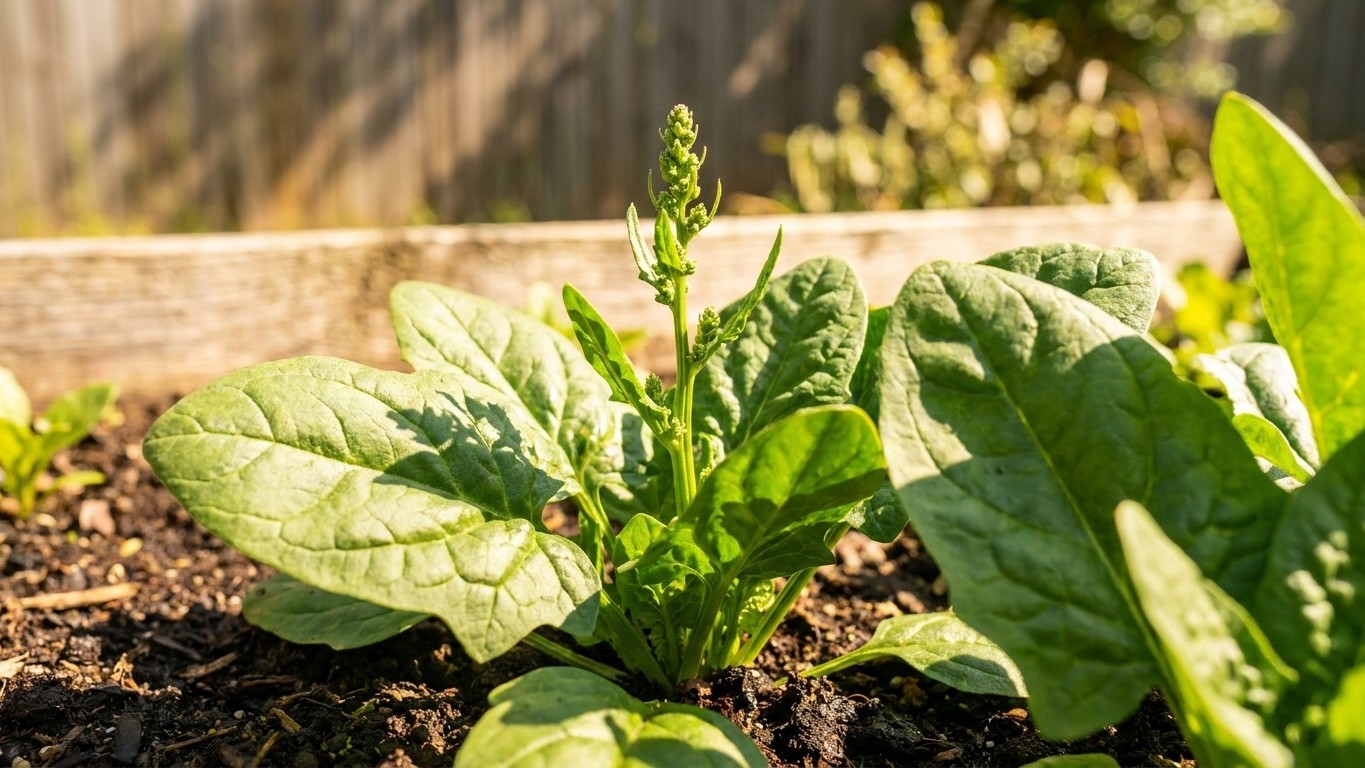
Day length adds a second push. The longest day at the reference city has 14 h 32 of daylight, and long days trigger flowering in spinach along with warmth. A cool summer does not rescue the crop where the days are that long. The plant reads the light and sends up a seed stalk anyway. The details are in Will Spinach Bolt Early in Virginia?. These are the signs that the cutting is over:
- The center of the rosette lengthens into a stalk.
- New leaves turn narrow and pointed instead of broad and rounded.
- Even young leaves taste sharp or bitter.
When should you sow spinach for a fall cutting?
Work backward from the harvest you want, and check the days to maturity on your seed packet before you plant. Counting back from the November frost dates points to late summer or early fall. Soil temperature decides the real start, because seed germination drops when the soil is above 80°F. The sowing window opens when the soil cools below that, and that can lag behind the first cool-feeling mornings by a week or more. A hand pushed a few inches into the bed tells you more than the air does.
Keeping it, and for how long
The UC Davis Postharvest Technology Center gives the optimum for spinach as 0°C (32°F) with a relative humidity of 95 to 98 percent. Its produce fact sheet calls spinach highly perishable and says it will not maintain good quality for more than 2 weeks. That is a ceiling reached only under ideal conditions, a plan nobody’s kitchen can fully meet.
| Condition | What UC Davis reports |
|---|---|
| Optimum temperature | 0°C (32°F) |
| Optimum relative humidity | 95 to 98 percent |
| Best-case shelf life | No more than 2 weeks of good quality |
| After 10 to 14 days | Wilting, yellowing and decay are likely to increase |
| Common distribution conditions, 5 to 10°C (41 to 50°F) | Quality declines faster |
Spinach leaves are thin and have a large surface for their weight, so they lose water quickly. Air near saturation slows that loss, which is why the humidity figure sits so high. Cold slows the leaves’ own breakdown. Take either one away and the leaves go limp and yellow sooner than the fact sheet’s two-week ceiling.
The 41 to 50°F range in that table matters most for home cooks. It matches where a refrigerator door often sits, and the sheet says quality drops faster there. A bunch that could last the better part of two weeks at 32°F may be yellowing within days in a warm spot.
What goes into storage counts as much as where it goes. Bruised or chewed leaves tend to break down first and spread the damage to their neighbors, so sort them out at harvest. If insects have been working your planting, What Eats Spinach in Virginia, and When explains who shows up and what the damage looks like. Cut leaves that sat in warm afternoon sun have already used up part of their keeping time before they reach the fridge.
Where in the house that actually is
A domestic refrigerator runs warmer than 32°F in its main compartment, and the door runs warmer still because it swings open with every trip for milk or juice. Cold air sinks and collects at the back, so the best match for the optimum is the back of the bottom shelf. A crisper drawer helps if you close it and set the humidity control to high. If the leaves look dark and glassy, they have frozen against the back wall, so move the bag forward an inch or two.
High humidity in practice means keeping moisture around the leaves without drowning them. Any of these three setups works:
- A loosely closed bag with a small opening for air.
- A damp paper towel or cloth laid around the leaves inside the bag.
- Whole bunches with cut stems standing in an inch of water, covered loosely with a bag.
Give spinach the back of the bottom shelf, never the door. Skipping that costs you days of shelf life, and the leaves yellow and go slick while the rest of the fridge looks fine. Wash only what you plan to use, right before you use it, because standing water on leaves stored dry can spoil them from the surface in. Eat the freshest, most tender leaves first and save sturdier ones for cooking, where a little wilting hardly matters.
Common questions
Can I cut spinach more than once from the same plant?
Yes, as long as the plant is still growing leaves. Take the outer leaves and leave the center intact, and the plant keeps producing until heat or day length pushes it to flower. After that, pull it and clear the bed for something else.
Are bolting leaves safe to eat?
Leaves from a bolting plant are edible but taste bitter, and the bitterness grows as temperatures climb above 75°F. Most gardeners pull the plant once the center stalk rises, since the remaining leaves rarely improve.
Do these dates change in the mountains?
They do. The Blue Ridge and southwest Virginia run weeks later in spring and earlier in fall than the coast. The spring window opens later and the fall window closes sooner, so check dates with your county extension office.
How can I tell stored spinach has gone past its limit?
Look for wilting, yellowing and slimy or decayed spots. UC Davis reports these become likelier after 10 to 14 days, and faster in warmer storage. If a bag smells sour or the leaves have turned to mush, discard it rather than picking through.