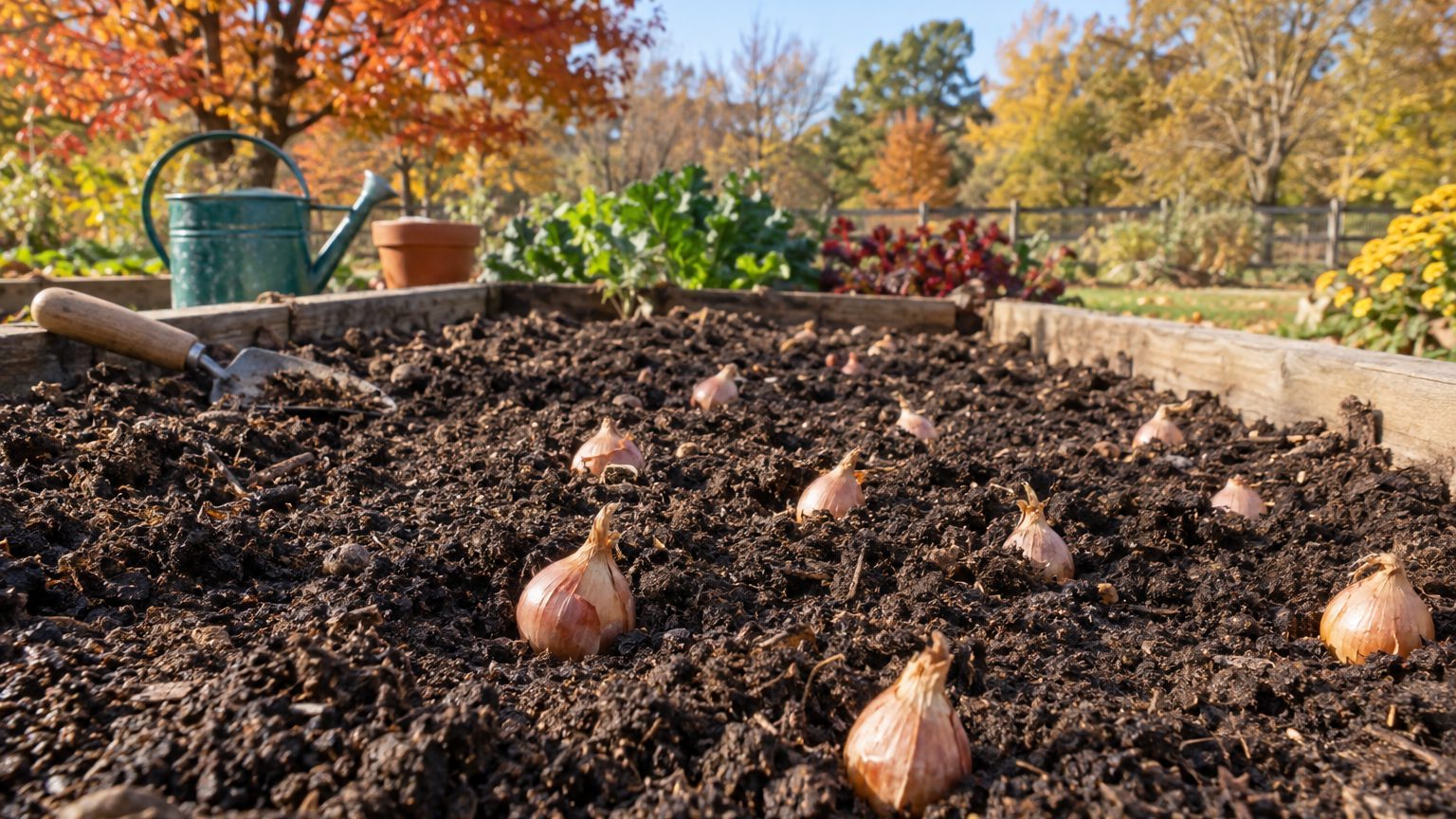

Shallots go in the ground in fall or in late winter, and Virginia’s wide climate range moves both windows by weeks. Fall planting gives the biggest bulbs and the earliest harvest. Spring planting works when fall slips by. In both cases the sets want cool soil to root in, and the bulbs need to be finished before midsummer heat and humidity arrive.
The short answer for Virginia
Plant fall shallots in the weeks before the first fall frost, and spring shallots as soon as the soil can be worked, around the last spring frost. At the coastal reference station (NAS Oceana, in Virginia Beach), the last 32°F freeze of spring falls between March 20 and April 3. That is the 30 to 70 percent probability band for the last freeze, from the NOAA NCEI 1991-2020 Climate Normals. The first fall freeze falls between November 10 and November 24 in the same band.
Those dates are odds. They are not guarantees. Inside the band, a freeze on any given date is more or less likely than not. After it, a freeze gets less likely, but it can still happen. A shallot set tolerates that. It is a hardy bulb, and a light frost on young green tops does little harm.
When is the best fall planting window on the coast?
For the coast, aim for October into early November, a few weeks ahead of the November 10 to 24 fall freeze band. The set needs time to grow roots but should not push much top growth before winter. The coldest month there has a mean daily minimum of 31.6°F (NOAA 1991-2020 normals, Virginia Beach reference). Winter nights hover right around freezing, so the cold itself will not kill a planted set. Roots keep working slowly through the mild stretches.
When should you plant shallots in spring?
The spring window opens in late winter, as soon as the soil is no longer frozen or soggy. On the coast that means the weeks leading up to and just across the March 20 to April 3 band. Shallots do not need to wait for the freeze danger to end. Waiting past mid-spring just shortens the cool growing time they need before heat arrives.
If you are weighing which kind to buy, The Best Shallots to Grow in Virginia covers choices that suit the state’s seasons. For the full growing picture from bed prep to curing, start with Growing Shallots in Virginia.
What will not work here

Planting in May fails. A shallot is a cool-season crop that bulbs up as days lengthen and warm. Sets that go in after the spring frost band has long passed get a few weeks of growth before the heat of a Virginia summer, and they come out small, thin-necked and slow to cure.
Why does a humid summer punish close spacing and heavy mulch?
Virginia summers are hot and humid, and shallots form clumps. Sets packed a couple of inches apart hold moisture among the leaves, and fungal diseases move in. Give each set about 6 inches, and pull back any thick, wet mulch as the bulbs swell so the soil surface dries between rains. Planting depth matters too. Set the bulb so the tip sits just at or barely under the surface. Burying it deep in heavy, wet clay invites rot over a mild, damp winter.
What goes wrong with planting too early in fall?
The coastal winter is mild, with its coldest month averaging a 31.6°F nightly low. A set planted in September can put up so much green before winter that a hard cold snap burns the tops, and large plants are more likely to run to seed in spring. Wait for the soil to cool before planting. If you can still feel real warmth in the top few inches in early October, hold off a week or two.
Using coastal dates inland also fails. The coast is the mild end of the state. The Blue Ridge and southwest Virginia run weeks later in spring and earlier in fall. A gardener in those places who waits for the Virginia Beach calendar will plant into frozen or waterlogged ground in spring, or plant in fall too late for roots to settle before the ground locks up. Use the coastal dates as the late edge for fall and the early edge for spring, and shift from there.
What changes across Virginia
Virginia has no single hardiness zone. The USDA Plant Hardiness Zone Map (2023, built on 1991-2020 normals) places the state anywhere from 5a to 8b. That spread covers four full zones, from mountain ridges that see deep winter cold to tidewater counties where winter lows are mild. The zone system is built on one variable, the average annual extreme minimum temperature. It tells you about cold survival and says nothing about summer heat or rainfall.
Shallots survive across that whole range. What shifts is the calendar. In the mountains and at altitude, move fall planting earlier so roots establish before the ground freezes hard. A thicker straw mulch after the ground starts to freeze helps keep sets from heaving out of the soil during freeze-and-thaw cycles. In spring, expect the planting window to open weeks later than on the coast, and expect the soil to stay wet and cold longer, so a raised bed or a well-drained slope pays off.
Central Virginia sits between the two extremes, and its dates fall between the coast and the mountains as well. Growers there can plant fall shallots and spring ones, but local conditions swing the timing by a week or two either way. A north-facing yard and a south-facing one on the same street can differ by that much.
To find your own zone, use the USDA Plant Hardiness Zone Map and look up your ZIP code. Do not assume your zone from a neighbor’s county or from the state’s reputation. Nearby towns can fall in different half-zones.
Where to check this for your own county
The state’s land-grant extension service is the best next stop. Virginia Cooperative Extension runs offices in counties and cities across the state, staffed by agents and Master Gardener volunteers who know local soil and frost patterns. Two things are worth looking for there: the planting calendar for your area, and any shallot or onion-family varieties tried in your county or a neighboring one.
A county recommendation beats a state one. The dates in this article cover a state that stretches from sea level to Appalachian ridges, and they use a coastal station as the reference point. An extension agent in your county can tell you the typical fall freeze date for your town, what the soil does in March, and which diseases are active in local beds that season. If a local office publishes a vegetable planting guide, use its fall and spring dates for shallots, or for garlic and onions if shallots are not listed. They share nearly the same window.
Soil testing is another service worth using while you are there. Extension offices can explain how to send a sample to the state lab and read the results. Shallots prefer loose, well-drained soil, and the test shows whether lime or fertilizer is needed before you plant.
Checking this against your own garden
Your own beds outrank every date above. Three observations tell you more about your microclimate than a regional average can.
- Soil feel in late winter. Squeeze a handful. If it crumbles and does not form a sticky ball, it is ready for spring sets. If your hand still aches after a minute in the soil, wait. A bed that dries early is a warm, well-drained spot.
- Green shoots on fall-planted shallots. The date the first green tips show reveals how quickly your bed wakes up. A bed against a south wall may sprout weeks ahead of a shaded corner.
- The first frost on tender plants. Note the morning your basil or tomato leaves blacken. If it is before the regional fall band, your yard is a frost pocket, and fall planting should shift earlier.
Write the dates down in a notebook or on a calendar. After two or three seasons, you will have a planting schedule built from your own ground.
Common questions
Can I plant shallots in Virginia in the fall and spring both?
Yes. Many gardeners plant a fall batch and a spring batch to spread out the harvest and hedge against weather. Fall plantings generally give larger bulbs. Spring sets work well if planted early.
What is the last frost date for shallots in Virginia?
At the Virginia Beach reference station, the last 32°F freeze of spring falls between March 20 and April 3 in the 30 to 70 percent probability band. Inland and mountain areas run weeks later.
Will a Virginia winter kill shallots?
Not on the coast, where the coldest month’s mean low is 31.6°F. In the mountains, where winters are colder, a layer of straw mulch protects planted sets from freeze-and-thaw heaving.
How do I know which hardiness zone I’m in?
Look up your ZIP code on the USDA Plant Hardiness Zone Map. Virginia spans 5a to 8b, so the answer depends on your location.