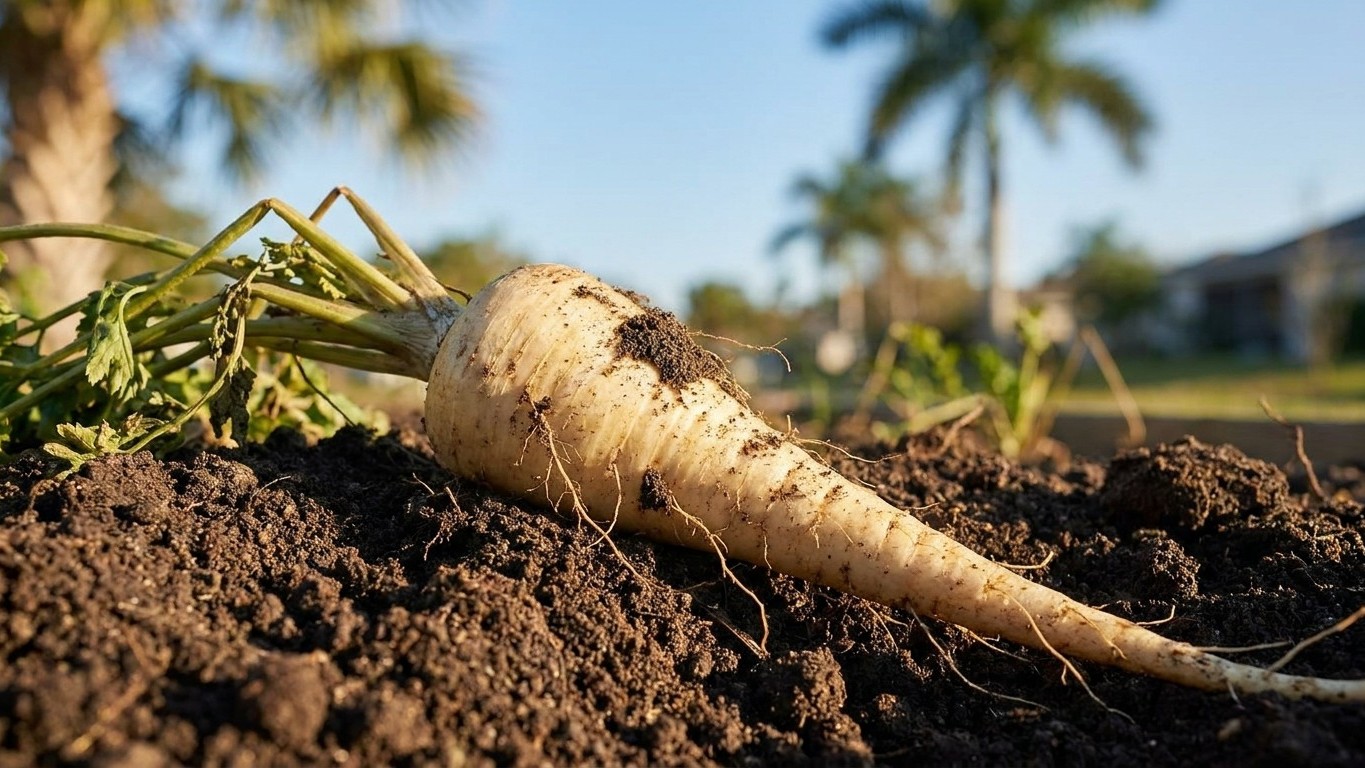

Lift parsnips in western Washington from late autumn through winter, once the first frosts have come, and finish before the roots send up new growth in spring. Held at 32 to 34 °F and very humid, they keep four to six months. Flavor is the open question. West of the Cascades winters are mild, so a parsnip grows easily but does not always turn sweet. East of the mountains the calendar is different, and local dates matter.
The short answer
The question that decides it is whether the garden gets several frosty weeks. Parsnips need 100 to 120 days from seeding and taste best after several weeks of cool, frosty weather, which converts stored starch to sugar (Utah State University Extension). In western Washington, the mean daily minimum of the coldest month is 37.1 °F at the Seattle reference station, according to NOAA NCEI Climate Normals. That is above freezing. The mean daily minimum of the coldest month stays above 32 °F.
Frost still arrives, but in scattered nights during cold snaps and not in an unbroken run. At the same station, the mean last spring frost falls between February 27 and March 18, and the mean first fall frost between November 13 and November 30. So a parsnip grown here will grow well, and in a cold winter it will sweeten partway. In many winters, expect a mild root rather than the candy-sweet one the cookbooks describe. A low, open garden that collects cold air will do better than a sheltered city lot. The hardiness zone says whether the plant survives winter, but it does not say how many frosty nights the roots actually sit through. For the full picture, see Will Parsnips Sweeten in Washington?
Eastern Washington, beyond the Cascades, is high desert with a far shorter growing season. The Seattle window does not apply there. Cold comes earlier and stays longer, so frosty weeks are easier to get, but the days available for sowing and growing are tighter. The county extension office can give dates for your valley.
When should you dig parsnips in western Washington?
Start once the roots have reached a usable size and a few frosts have touched the tops. Because the soil here seldom locks up hard, parsnips can stay in the ground and be dug as needed through winter. Three things should send you out with a fork. One is a run of heavy rain that leaves the bed waterlogged. Another is the end of the coldest weeks. The last is the first flush of new green growth in spring, after which the roots turn woody. Loosen the soil wide of the row before you pull, because a parsnip snaps easily.
How long do lifted parsnips keep?
USDA Agricultural Handbook 66 puts the figure at 4 to 6 months at 32 to 34 °F with 98 percent relative humidity (USDA Agricultural Handbook 66). That assumes both numbers are held steady, which almost no house does. Cold itself does no harm, since parsnips are not chilling sensitive. The real danger is ethylene, the gas that ripening fruit gives off. Even low levels in cold storage make parsnips bitter, so keep them away from apples, pears and anything ripening on the counter. Top the roots after harvest, but do not trim into the crown.
Does the season fit?
It fits comfortably in western Washington. Here is how the timing runs, step by step.
- Sow in place. Parsnips are not transplanted. The seed goes into the row where the roots will grow, and the 100 to 120 days are counted from the day it goes in.
- Choose the date by the soil. The usual advice is to sow 2 to 3 weeks before the last frost. Here that would mean February, when the ground is cold and soaked and the light is weak. Seed sitting in that soil can rot before it sprouts. A mild frost date does not mean an early planting date, so wait for spring soil that has warmed and drained.
- Allow for slow germination. Watch the seedbed for seedlings to appear. Gardeners who dig up what looks like bare soil after a week often re-sow for nothing. Keep the seedbed evenly moist and be patient.
- Count forward. A spring sowing reaches full size in 100 to 120 days, which lands in summer. The mean first fall frost at the Seattle station does not arrive until November 13 to November 30, so even a sowing pushed into late spring finishes well ahead of it.
- Use the spare weeks. The crop does not run short of time here. The roots simply wait in the ground through autumn and winter, collecting whatever cold the season delivers. A very late sowing still fits on paper, but shortening days and chilly soil slow the roots in fall, so do not push it.
In eastern Washington the same arithmetic gets tighter, because the frost-free stretch is shorter. Sow as soon as the soil can be worked and check local dates with the county extension office. For the full growing calendar, see Growing Parsnips in Washington.
What goes wrong here
- Forked roots from heavy or stony ground. A root that meets clay or a stone splits around it. Parsnips want deep, loose, sandy ground. Where the soil is heavy, double dig the bed, and pick out stones to the full depth of the root before sowing.
- Forked roots from overwatering. This is a separate cause, and it can happen in good soil. Constant wet encourages the root to branch and can invite rot. Water deeply, then let the surface dry before watering again, especially through the dry summer months when you are irrigating by hand.
- Bare rows that are not really bare. Seed comes up slowly, and cold wet spring soil can stretch it. Mark the row, keep the surface moist, and wait before you re-sow.
- A winter too mild to sweeten. A fine, edible parsnip that stays bland is the most common disappointment west of the Cascades. Leave the roots in the ground through the coldest weeks instead of lifting early. Dig from the most exposed part of the bed last, and accept a mild flavor in a warm winter.
- A season that runs short. This is rare in the west and a real risk east of the mountains, or after a very late sowing. Sow as early as the soil allows, and thin early so the roots are not competing for room.
- Bitter roots in storage. Parsnips stored near apples or other ripening fruit pick up ethylene and turn bitter, even at the right temperature. Keep them in their own container, away from fruit.
- Tunneled or chewed roots. Damage below ground points to pests rather than soil. What Eats Parsnip in Washington, and When covers who is responsible and when to watch for them.
Common questions
Can parsnips stay in the ground all winter in western Washington?
Yes. With a coldest-month mean minimum of 37.1 °F at the Seattle station, the ground rarely freezes hard, and the roots hold well. Lift sooner if the bed is waterlogged, and finish before spring regrowth turns them woody.
How long do parsnips keep once they are dug?
Four to six months at 32 to 34 °F and 98 percent humidity. An ordinary house does not hold those conditions, so expect less. A cool, humid spot works better than a warm kitchen, and the roots should be kept away from fruit.
Do parsnips need frost to be edible?
No. They are edible whenever they reach size. Frost improves them because several frosty weeks convert starch to sugar, so a mild winter gives a good root that tastes less sweet.
How long until parsnip seedlings come up?
Watch the seedbed for germination. Keep the seedbed evenly moist for the whole stretch, and do not dig or re-sow until seedlings are up.