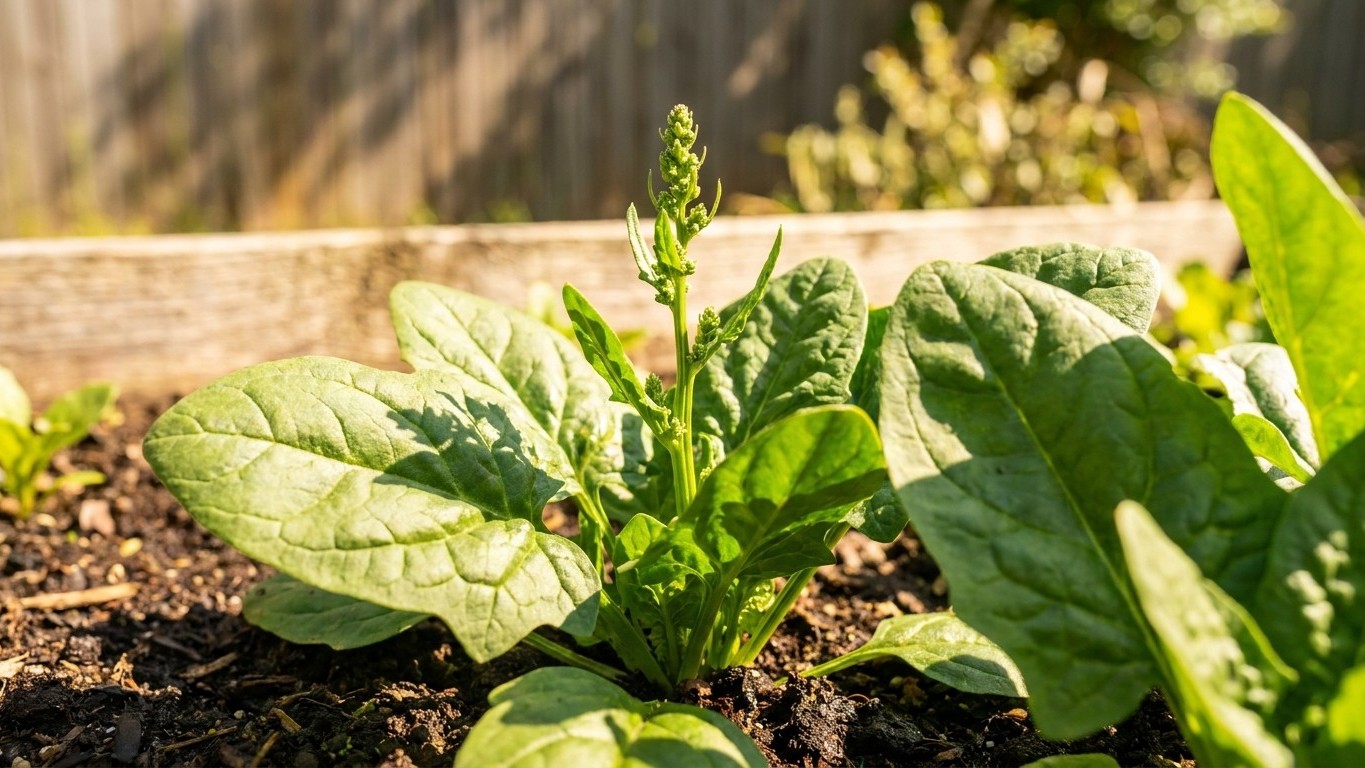

Cut spinach when the outer leaves are about as long as your hand and still tender, before a thick stalk starts to rise from the center. West of the Cascades, that gives you a spring crop and a second one in fall. Once cut, the leaves keep best at 32°F in very humid air, and even then for two weeks at most. In a home fridge, plan on days. For sowing and care, see Growing Spinach in Washington.
When spinach is ready in Washington
Spinach is ready when the outer leaves are hand-length and soft, well before a stalk climbs from the center. Your local county or provincial extension office can advise on timing, and the plant itself is a better guide than a packet date.
How do you know spinach is ready to cut?
Look at the outer ring of leaves. Once they are big enough for a salad, snip them an inch or two above the soil and leave the small center leaves to keep growing. You can also cut the whole plant just above the crown. Morning is the best time, while the leaves are cool and full of water.
Don’t wait for giant leaves. Growth is best where temperatures stay at or below 75 F, and above that the plant slows down and the leaves turn bitter. The same number works as a growth ceiling and as the point where flavor suffers, so a hot week is a reason to cut early.
What do western Washington’s frost dates say about timing?
The NOAA NCEI climate normals for the Seattle station put the last spring freeze between February 27 and March 18 (the 30 to 70 percent probability band). The first fall freeze falls between November 13 and November 30. Those dates describe the mild, maritime side of the state.
A mild frost date does not mean an early planting date, though. Cold, wet soil and low light hold spring sowings back well past the last freeze, so the first cuttings come later than the dates suggest.
East of the Cascades is high desert with a much shorter growing season. Don’t apply the Seattle window there. Your county extension office can tell you the local dates.
Fall sowing has its own obstacle, and it is warm soil, not cold. Germination drops when soil is above 80 F. If a bed is still hot in early September, wait for it to cool before you sow. A September sowing then aims at a November harvest, timed by watching the plants rather than by a set count of days.
Does Washington’s long summer day make spinach bolt?
Yes, and a cool summer does not change that. The longest day at the reference city has 15 h 45 of daylight, and spinach flowers in response to long days as well as warmth. A spring sowing that runs into those lengthening days will send up a seed stalk even in mild weather.
Heat adds to it. The reference station reaches 90 F on only about 3 days a year, but spinach starts struggling at 75 F, long before that. Cut spring plantings while the days are still lengthening. Will Spinach Bolt Early in Washington? covers the warning signs.
Waiting for bigger leaves also gives pests more time on the crop. What Eats Spinach in Washington, and When lays out who shows up and in which months.
Keeping it, and for how long
The UC Davis Postharvest Technology Center gives the optimum for spinach as 32°F at 95 to 98% relative humidity. It calls spinach highly perishable and says it “will not maintain good quality for more than 2 weeks.” That is the longest it can last under ideal conditions, and nothing in that statement promises it.
Is two weeks a realistic expectation?
No. The same fact sheet says wilting, yellowing and decay are likely to increase once storage runs past 10 to 14 days. It adds that the decline is faster at the 41 to 50°F (5 to 10°C) typical of common distribution conditions. A home fridge falls in that warmer band, especially in the door.
So treat two weeks as the outer edge. Home-grown spinach is best used within a few days of cutting. Any leaves still good at the end of the first week are a bonus.
The humidity number matters as much as the temperature. Spinach leaves are thin and have a large surface, so they lose water fast in dry air. At 95 to 98 percent humidity, wilting slows. A fridge shelf with open air around the leaves works against you.
What happens to spinach after it is cut?
The clock starts at the cut. A basket left on the porch in warm sun is already using up days. Harvest in the morning, bring the leaves inside right away, and get them cold before you do anything else.
Sort as you go. Yellowing leaves and any with soft spots should come out before storage, because decay spreads through a bag of leaves that touch. The source lists wilting, yellowing and decay as the three signs of age, and all three show up first in leaves that were damaged or warm when stored.
For a Washington garden, this timing connects back to the season. Spring cuttings often come as the weather warms, and a warm kitchen counter speeds spoilage. A fall harvest in November comes with cool air that is closer to the optimum, so leaves cut then and moved straight indoors start out in better shape.
Where in the house that actually is
No home fridge matches the 32°F optimum. Household units are set above freezing, usually well above the optimum, and the door runs warmest of all. It can sit in the 41 to 50°F band where spinach yellows within days. That makes the door the worst place for it, even though the bins there look convenient.
Which fridge shelf comes closest?
The back of the bottom shelf. Cold air settles low, and the back of the fridge sees fewer temperature swings from the door opening. A crisper drawer set to its high-humidity setting works too, as long as it is not crammed full. If you find ice crystals on leaves pressed against the back wall, slide the bag forward a few inches.
What does high humidity mean in a home fridge?
A fridge is dry air by nature, and you have to build the 95 to 98 percent humidity yourself. Spinach needs moisture around the leaves, but not pooled water sitting on them. Any one of these will do the job:
- A loosely closed plastic bag with a folded, damp paper towel inside.
- A container lined with a damp towel, with the lid left slightly ajar.
- Whole plants cut at the base, with the cut ends standing in an inch of water and a bag draped over the leaves.
Shake off excess water first. Leaves sealed tight and dripping wet will rot faster than leaves left out in the dry air. The towel should feel cool and damp, never soaked. Swap it out when it dries or smells sour.
The routine to remember is a damp towel in a loosely closed bag on the bottom shelf, toward the back. Skip it, and a bunch that could have lasted most of a week goes limp in two or three days. Spinach left in the door yellows quickest of all.
Common questions
Can you cut spinach more than once?
Yes. Take only the outer leaves and leave the center growing, and the plant keeps producing until it bolts. Cutting a plant down to the crown can also bring new leaves, but the second flush is smaller. Once a seed stalk appears, the harvest is over.
How can you tell spinach is about to bolt?
Watch the center of the plant. A stalk that starts rising, with leaves that turn narrow and pointed, means flowering has begun. Long days and warmth trigger it, so a cool summer does not prevent it. Harvest everything you can when you see it, and read Will Spinach Bolt Early in Washington? for more detail.
Which spinach varieties are worth growing?
Utah State University Extension lists suitable varieties for the garden. Your county extension office can say which suits your site and season, particularly if you are east of the Cascades.
How can you tell stored spinach has gone bad?
Look for the three signs the UC Davis Postharvest Technology Center lists: wilting, yellowing and decay. Limp leaves can sometimes be rescued by cooking, but slimy or yellow ones belong in the compost. When in doubt, check the bottom of the bag, where moisture collects and decay starts.