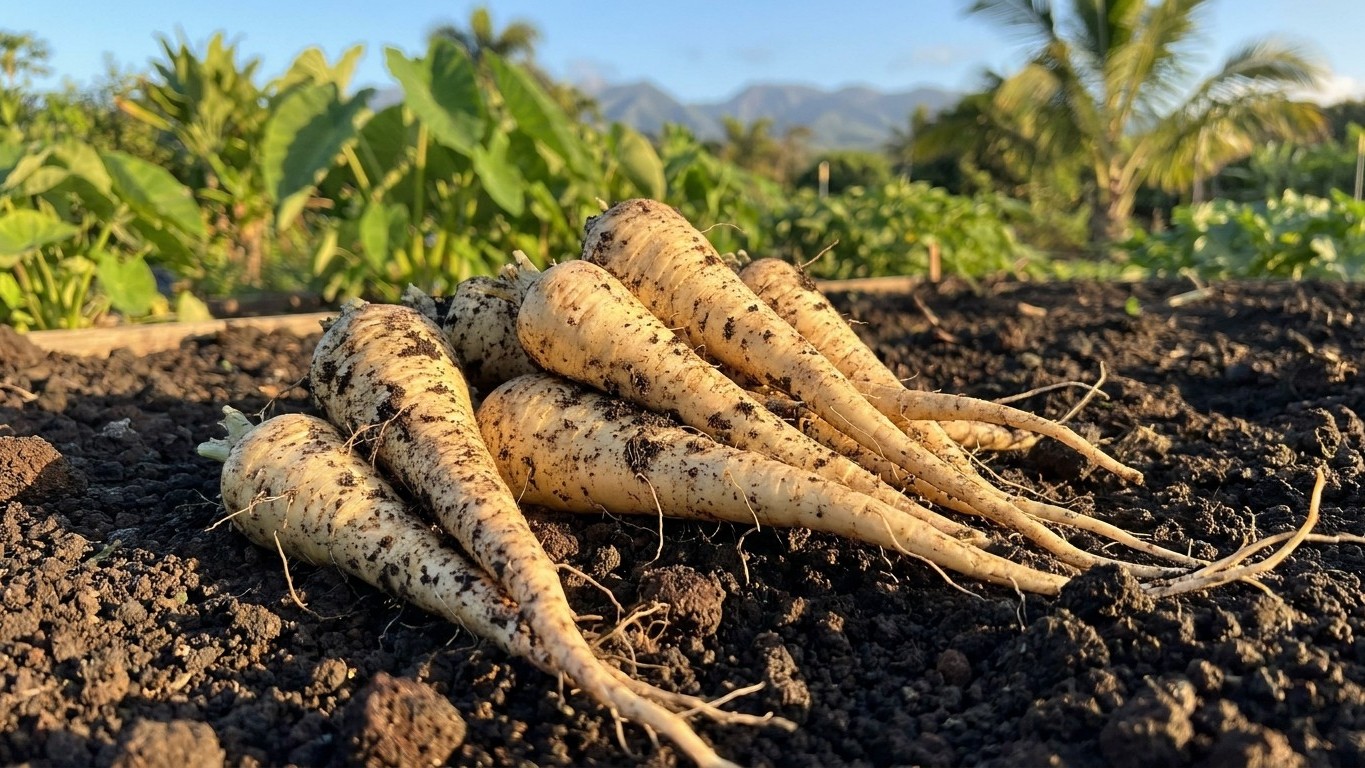

Lift parsnips after several frosty weeks, not on the day the packet’s days run out. In Massachusetts that means late fall into winter, a few weeks past the first fall frost, which at the Boston reference station falls between November 3 and November 14. Roots can stay in the ground and be dug whenever the soil isn’t frozen solid. Once lifted and stored cold, they keep four to six months, with one catch about apples. The details follow.
The short answer
Does Massachusetts deliver several frosty weeks? It does. The mean daily minimum of the coldest month is 23.1°F at the Boston reference station, below freezing on an average night. That station is a waterfront urban site and the mildest spot in the state. Inland suburbs and the Berkshires get frost earlier in fall and keep it later in spring, so their roots spend more time in cold ground.
Will parsnips sweeten here?
They will. Parsnips need 100 to 120 days from seeding, and they taste best after several weeks of cool, frosty weather, which converts stored starch to sugar. A winter that stays mild would give a fine-looking root that never turns sweet. Massachusetts winters don’t do that. The sweetening comes from how many cold nights the roots actually sit through, so the practical move is to leave them in the ground and wait. The full mechanism is in Will Parsnips Sweeten in Massachusetts?, and the basics of the crop are in Growing Parsnips in Massachusetts.
For timing, count a few weeks past that first fall frost before you dig the first root. Pull one and taste it raw or roasted. If it’s still starchy and plain, give it another week or two. The roots are not hurt by the cold, and the tops can be flattened by hard freezes without harming what’s underneath.
To keep digging through winter, mulch the row with a thick layer of straw or shredded leaves before the ground freezes hard. The mulch holds the soil open so a garden fork can get in. Any roots still in the ground when spring warms up should come out early, before they send up new top growth, because they turn woody once they start regrowing.
How long do parsnips keep after lifting?
Four to six months is a long keeping time by any standard. USDA Agricultural Handbook 66 gives that figure for parsnip roots held at 32 to 34°F with 98% relative humidity. Those conditions have to hold steady, and almost no house provides them. A refrigerator crisper is cold enough but dries roots out unless they are wrapped or packed in damp sand, and a garage swings too much. Expect less than the full six months from ordinary kitchen storage.
Cold itself is not the problem, since parsnips are not chilling sensitive. The problem is ethylene. Parsnips make almost none of it, but low levels in cold storage make them bitter. That means a crisper drawer next to apples, pears or any ripening fruit can ruin a batch even at the right temperature. Keep them in their own drawer or bin.
Top the roots after harvest, but do not cut into the crown. Trimming into the crown opens the root to rot and shortens storage life. Leave a short stub of stem and a clean crown.
Does the season fit?
Yes, and comfortably. The reference station sees its last spring frost between April 1 and April 8 and its first fall frost between November 3 and November 14, a long window for a crop that needs 100 to 120 days from sowing. Parsnips are sown in place, so the clock starts the day the seed goes into the ground.
- Sow 2 to 3 weeks before the last spring frost. Near the coast that means roughly mid-March, as soon as the soil can be worked. Inland, where spring comes later, sow in early to mid April.
- Wait for germination, keeping the seedbed moist. Parsnip seed is slow, and the row can look bare for three weeks. Don’t dig it up or re-sow. Mark the row and keep the seedbed evenly moist.
- Count 100 to 120 days from seeding. A mid-March sowing reaches size in late June or July. An April sowing reaches it in August. Either way the roots are full size long before fall.
- Let them sit through the first frost. The first fall frost arrives November 3 to November 14 at the mildest reference point, and earlier inland. The roots are already mature by then, and the weeks that follow do the sweetening.
- Lift after several frosty weeks. Start tasting a few weeks after that first frost, and dig as the roots are needed through winter.
What changes inland and in the Berkshires?
The Boston dates are the mildest in the state, so treat them as the most generous case. In inland suburbs and the Berkshires, spring frost lingers later and fall frost arrives earlier. Sowing moves later, but the season still fits, because the roots mature in summer and the extra cold only adds sweetening time. The one risk is a very late sowing, in May or beyond, which can leave roots small when the ground freezes. If you are unsure of your local frost dates, the county extension office can tell you what your town sees.
What goes wrong here
Parsnips are forgiving about weather and fussy about ground. Most failures start in the soil or the watering can, and each has a fix.
- Forked roots from heavy or stony ground. Much of the state has glacial soil full of stones and clay. A parsnip taproot that hits a stone or compacted layer splits into two or three legs. Utah State University Extension recommends deep sandy soil, and says heavy soil must be double dug. Remove stones, loosen the bed to a full spade and fork depth, and don’t amend with fresh manure, which also causes branching. The state’s mapped soil type is a starting point, so dig a test hole in your own bed.
- Forked roots from overwatering. This is a separate cause. Constant wetness lets side roots form and the main root stalls. After the seedlings are up, water deeply but less often, and let the top inch dry between waterings. Keep the seedbed moist only while the seeds are germinating.
- A season that runs out. A late or failed sowing leaves small roots when the ground freezes. Sow as early as the soil can be worked, and if the row is still bare at three weeks, check for a crust on the surface before re-sowing. Crusted soil blocks the slow seedlings, so lay a board or burlap over the row until sprouts show, then remove it.
- A stretch of mild weather that delays sweetening. Some Massachusetts winters, especially near the coast, bring warm spells that interrupt the cold. Don’t judge by the calendar. Leave the roots in the ground, taste one every week or two, and dig when it is clearly sweet. A good mulch also keeps the ground workable for digging.
- Pest damage to the roots and foliage. Tunneling and chewing show up in some seasons. What Eats Parsnip in Massachusetts, and When covers what to look for and when.
How do you lift parsnips without breaking them?
Loosen the soil a few inches from the row with a garden fork, working down the full length of the root, then lever it up gently. Pulling by the tops snaps the root, especially in cold, firm ground. Brush off the soil, top the leaves, and leave the crown intact for storage.
Common questions
Can parsnips stay in the ground all winter in Massachusetts?
Yes. The cold doesn’t harm them, and the soil acts as free storage. A thick mulch keeps the ground diggable. Lift whatever remains in early spring, before the roots send up new growth and turn woody.
How do I know the seed came up?
Keep the row marked and moist. Re-sow only if nothing shows after three weeks.
Why did my stored parsnips taste bitter?
Ethylene is the likely cause. Even at the right temperature, parsnips stored near apples or other ripening fruit turn bitter. Keep them in a separate drawer, bin or box of damp sand.
Should I cut the tops off before storing?
Top them, but don’t trim into the crown. Leave a short stub so the root stays sealed and keeps well. Cutting into the crown invites rot and shortens storage time.