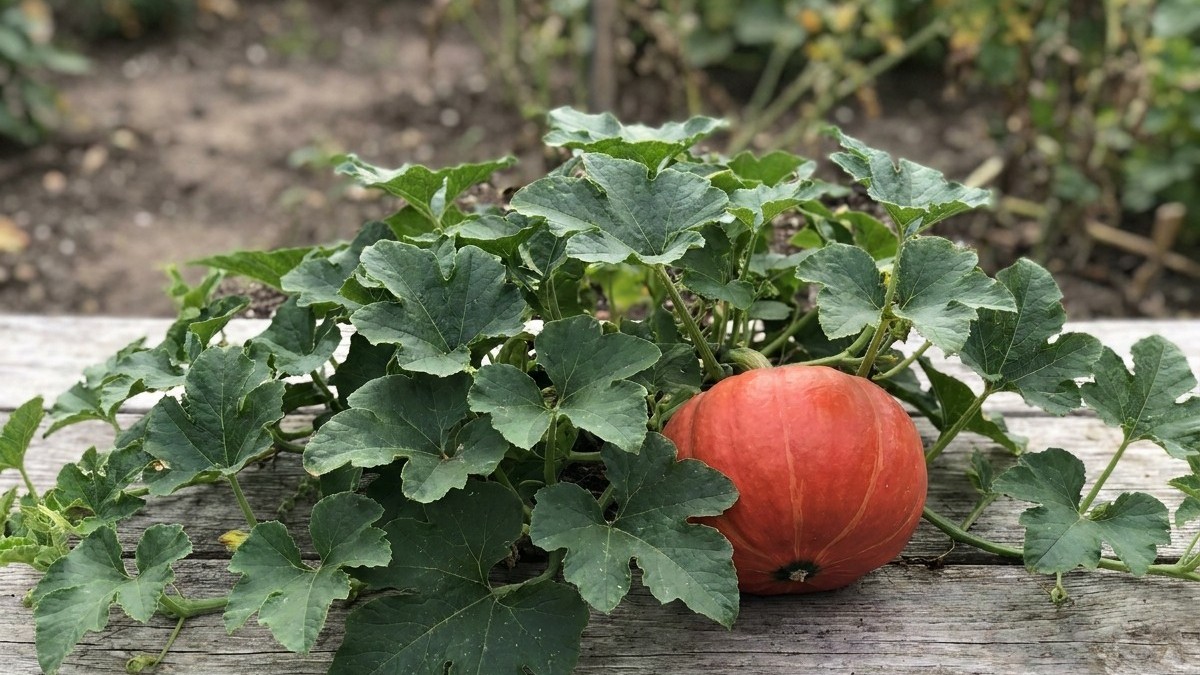

Cut a pumpkin once the rind resists a thumbnail and the stem has dried out, and do it before the first hard frost. Stored whole at 45-50 F, it can keep three to six months at best. The calendar matters less than the plant, because a late planting or a cool summer can push ripeness weeks past the usual dates.
When pumpkins are ready in Massachusetts
A pumpkin is ready when the color has gone deep and even, the rind is too hard to dent with a thumbnail, and the stem has turned woody and dry. Across most of Massachusetts that happens from late September through October, ahead of a first fall frost that reaches Boston’s Logan Airport between November 3 and November 14. A fruit needs 45-55 days after flowering to mature, according to Utah State University Extension, so the count starts when the blossom opens and not on the day the seed went into the ground.
How can you tell a pumpkin is ripe?
Press the rind with a fingernail. A ripe one holds firm, and a green one scratches or dimples. Look at the underside too: the spot that sat on the soil should have shifted from pale green or white toward a deeper yellow or orange. The tendril nearest the fruit often browns and the vine begins to die back, which tells you the plant has stopped feeding the fruit. Cut with pruners and leave the stem attached, as Utah State University Extension advises. Carry the pumpkin by its body. A pumpkin that loses its stem leaves an open wound right where rot likes to start.
How late is too late for a pumpkin flower?
Work backward from frost. NOAA’s 1991-2020 Climate Normals put the 32 F freeze at Logan between November 3 and November 14. Subtract 45 to 55 days and the last flowers that can still make a ripe fruit open somewhere between about September 9 and September 30. Anything that blooms after that is likely to end up a green pumpkin. Logan is a waterfront urban station and the mildest spot in the state, so inland suburbs and the Berkshires frost noticeably earlier, and their cutoff for flowers comes earlier too. Your own town’s cutoff may fall well before the Logan range.
Spring sets the whole clock in motion. The last spring frost at Logan falls between April 1 and April 8, but pumpkins are sown when the soil reaches 65 F, and soil lags the air by weeks. Seeds planted on the strength of a warm April afternoon sit in cold ground. If vines are being stripped early by insects, the fruit may stall long before the calendar says it should, and the guide on What Eats Pumpkin in Massachusetts, and When covers what to look for. Gardeners still working out planting dates can start with Growing Pumpkins in Massachusetts. A fruit that is still green as frost approaches is a separate question, and Will Pumpkins Ripen Before Frost in Massachusetts? takes it up.
Keeping them, and for how long
University of Illinois Extension says a whole pumpkin keeps three to six months in a cool, dark location between 45-50 F. Treat the six months as a ceiling reached only when everything goes right: a sound pumpkin, a steady temperature and no frost. A pumpkin cut at the front edge of the harvest window, with a firm rind and an intact stem, has the best shot at the long end. One with a soft spot, a gash or a missing stem is more likely to give out in weeks than months.
How long does a whole pumpkin keep?
The range is wide because storage is never uniform. Temperature drifts, a pumpkin’s condition varies, and the light that reaches the shelf changes with the season. Dark matters because the Illinois guidance calls for it. Utah State University Extension adds the other boundary: keep pumpkins where they will not freeze. A frozen pumpkin thaws into a soft, watery mess, and no amount of careful handling afterward brings it back. Check each one every week or two and use the first one that starts to go soft. A single rotting pumpkin can spoil the one beside it.
What should a stored pumpkin never sit next to?
Ripening fruit. University of Illinois Extension says to store pumpkins away from apples, potatoes and tomatoes, and the reason is a gas that ripening produce gives off, which ages the pumpkin faster. That makes the porch beside the apple crate one of the worst places to put it. Massachusetts has plenty of apple country and plenty of root cellars with a bin of potatoes in the corner, so the warning is practical here. Give pumpkins their own shelf, or their own room, well away from the produce.
Those numbers apply to a whole pumpkin. Once it is carved, the flesh is exposed and it breaks down much sooner, so the three-to-six-month range is no guide at all. Carve a jack-o’-lantern close to the day you plan to display it, and keep any uncarved pumpkins in storage until you need them.
Where in the house that actually is
A temperature of 45-50 F sounds easy until you go looking for it indoors. Most rooms are a poor match. The trick is to find the one that comes closest and then confirm it with a thermometer instead of a guess.
Which room is closest to 45-50 F?
A living area is far too warm, and a kitchen is worse. A refrigerator runs well below that range, and a whole pumpkin rarely fits in one anyway. An attached garage swings with the weather: mild enough in October, then well below freezing on a January night, which is exactly what Utah State University Extension says to avoid. The best candidate in most Massachusetts houses is an unheated or barely heated basement, especially a corner away from the furnace. Next best is a spare room or closet on an outside wall with the heat turned down or the register closed, as long as it stays dark. Whichever space you choose, keep it clear of the apples and potatoes.
How do you check the temperature before storing?
A thermometer settles it, and a min-max model is better than a basic one because it records the overnight low. Put a thermometer where the pumpkins will sit and read it for several days before you move them in, because a spot that looks right at noon can be colder by morning. Skipping that step is how a garage shelf ends up holding a tray of frozen pumpkins by mid-winter.
If the number reads above 50 F, expect the keeping time to fall toward the short end of the range. If it dips to 32 F, move the pumpkins that day. A basement window can also let in more light than it seems to, so cover it or choose a different corner. When the reading is steady and the space is dark, pumpkins can ride out the winter there without much attention beyond a quick weekly look.
Common questions
Can I cut a pumpkin that is still partly green?
You can, but it may not finish ripening off the vine. A pumpkin cut well before it matures often has a thin rind and tends to rot sooner in storage. Wait for the hard rind and the dried stem whenever frost allows, and read Will Pumpkins Ripen Before Frost in Massachusetts? for the cases where it does not.
Should I wait until frost kills the vines?
No. Utah State University Extension advises harvesting before frost, with the stem attached. Vines that die back from age are a ripeness signal. Vines killed by a freeze mean you waited too long, and the fruit itself may be damaged.
How long will a pumpkin keep on the porch?
Less than the three to six months quoted for storage, since a porch is neither steadily cool nor protected from frost. Frost in the Berkshires and inland towns arrives earlier than the Logan dates, so a porch pumpkin there is at risk sooner. It is fine for display through October. Move it indoors when freezing nights appear in the forecast.
Do I count the 45 to 55 days from planting?
No, count them from flowering. Seeds go in when the soil reaches 65 F, and the blossoms open some time after that, so the harvest comes well past a simple count from sowing. Marking the date the first fruit-bearing flowers open gives you a far better estimate. The county extension office can tell you how local frost dates compare with the Logan range.