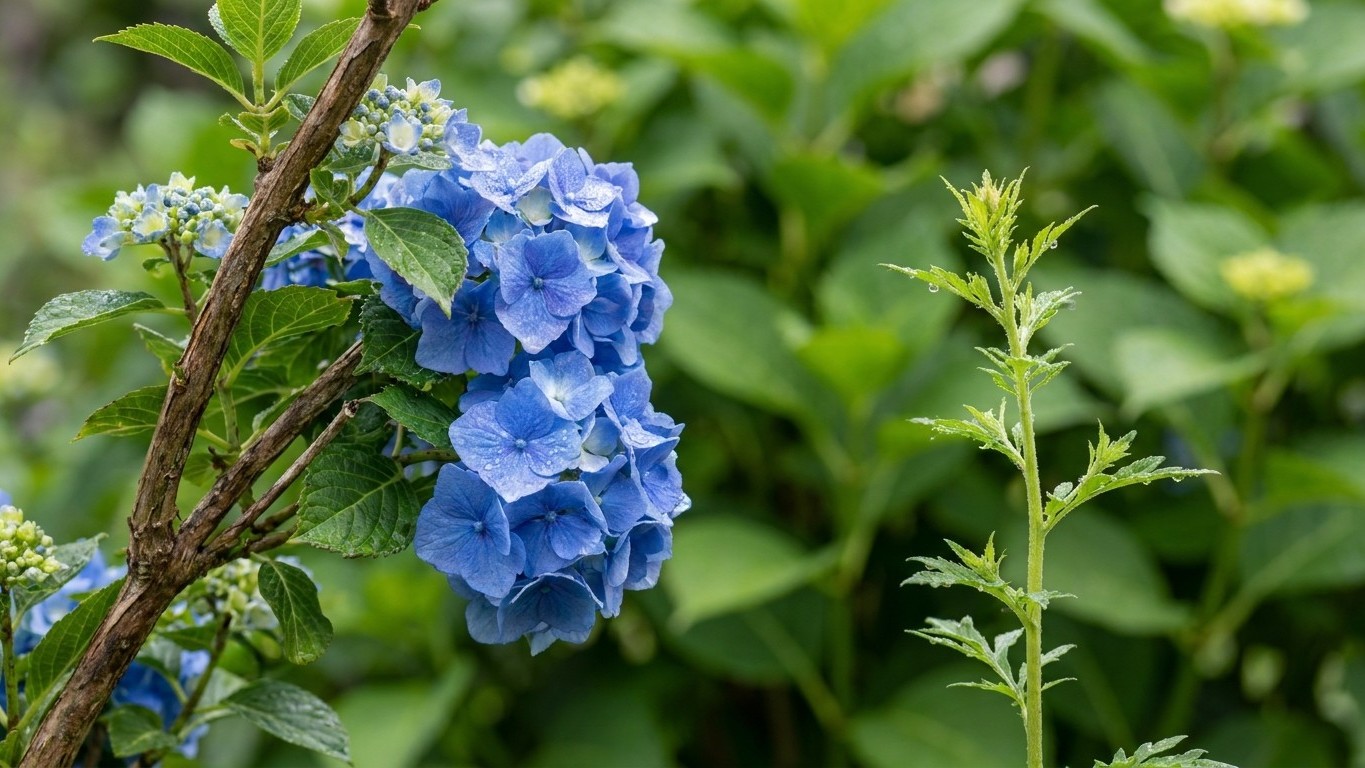

Panicle and smooth hydrangeas come through a Maine winter in nearly every garden in the state. Oakleaf and bigleaf types are a gamble that pays off mostly along the coast and in sheltered yards. The deciding factor is where each plant carries its flower buds, since a stem that freezes to the ground takes old-wood buds with it. Seven cultivars below show where the line falls, ordered from the tenderest to the toughest.
What this comes down to in Maine

At the Portland reference station, NOAA NCEI climate normals put the last spring freeze between April 22 and May 1 and the first fall freeze between October 9 and October 21. Coastal Portland is the mild end of the state, so inland and northern gardens get a later spring and an earlier fall, and the safe choices there are the hydrangeas that flower on new wood.
Maine spans USDA hardiness zones 3b to 6a. That system rests on one variable, the average annual extreme minimum temperature, so it tells you how cold the worst night gets and nothing about when spring freezes arrive. Both matter. Winter cold kills stems outright. A freeze after buds swell in spring can wipe out a season of flowers on a plant that survived the winter without a scratch.
Hydrangeas that bloom on new wood do not care much about either one. They push fresh stems each spring and flower on them by midsummer, even if everything above ground died back. The ones that bloom on old wood have to get last year’s buds through winter and through April.
Snow Queen
An oakleaf hydrangea with upright white flower cones and deep red fall foliage. Nurseries rate it for cold winters, which in Maine means the southern coast and protected spots. Farther inland the stems often die back to the snow line and the old-wood buds go with them, leaving a handsome foliage plant with few flowers.
Endless Summer
A bigleaf hydrangea, with mophead flowers that run blue in acidic soil and pink in sweeter soil. It blooms on old and new wood, so a hard winter delays the show instead of canceling it. In colder or windy yards, expect flowers late in summer, close enough to the October freeze window to risk the last blooms.
Quick Fire
A panicle hydrangea sold as hardy in cold winters. It opens white earlier than most panicles and fades to pink and red, so the flowers are well along before fall freezes arrive. It suits short-season gardens where later panicles come into color just as the weather turns.
Limelight
The best-known panicle, with lime-green cones that age to cream and pink. It blooms on new wood. Its stiff stems hold up under wet snow and wind, which is a real advantage on open Maine properties.
Bobo
A dwarf panicle, compact in habit, with white flowers that turn pink. It is also rated to zone 3. Its small size means snow often buries the whole plant, and that blanket softens the coldest nights.
Annabelle
A smooth hydrangea with big white globes, blooming on new wood. It has been a New England fixture for generations because it regrows from the base after almost any winter. The weak point is floppy stems when the heads fill with rain.
Incrediball
A smooth hydrangea with sturdier stems and larger white heads. It shares Annabelle’s habit of flowering on new growth. For the coldest and most exposed Maine yards, it is among the surest choices.
Working it out for your own garden
A plant tag and a hardiness map are enough to make this call yourself, and the method still works after a move or a freakishly cold year.
How do you check a hydrangea’s rating against your zone?
Look up your garden’s USDA zone, then compare it with the zone number on the tag. Subtract one zone if the spot is windy, low-lying, or open to the north. A Snow Queen rated for zone 5 planted in a zone 4 garden is a full zone short, and the usual result is dieback and few flowers. A Limelight rated for zone 3 in that same garden has a full zone of margin and will flower on new wood no matter how the winter went.
Then sort by where the buds form:
| Type | Flower buds form on | After a hard Maine winter |
|---|---|---|
| Panicle | New wood | Flowers even after dieback |
| Smooth | New wood | Flowers even after dieback |
| Bigleaf | Old wood (reblooming types also new) | Fewer or later flowers |
| Oakleaf | Old wood | Often no flowers, foliage survives |
Will a late freeze still catch a hardy hydrangea?
Yes, if it has leafed out. Take the Portland spring window of April 22 to May 1 as the earliest date you can relax. A bigleaf that wakes up during a warm spell in mid-April can lose its new shoots and flower buds in one frosty night. Keep a sheet or burlap handy through that window, and later inland.
The fall end needs no action. The first fall freeze, October 9 to October 21 at the reference station, ends bloom on late panicles and smooth types but does no harm to the plant itself.
Judge winter damage late. Wait until neighboring shrubs have leafed out, then scratch a stem with a thumbnail. Green underneath means it is alive. Brown and dry means cut it back to the nearest living wood. Cutting early often removes buds that were still good, which is why when to prune hydrangeas in Maine matters as much as the variety.
What changes across the state
Maine is not one climate. The coast, particularly the southern coast, is warmed by the Gulf of Maine, which holds heat into early winter and delays the first fall freeze. That is why Portland sits at the mild end, and why oakleaf and bigleaf hydrangeas do best within a few miles of salt water.
Moving inland, the buffer disappears. Winter lows drop, spring arrives later, and fall freezes come earlier. A yard in the western mountains or the Kennebec valley can sit a full hardiness zone or more below the coast. Hills matter too: cold air drains downhill on still nights, so a hollow at the bottom of a slope often freezes when the hilltop stays above the line.
Northern Maine, toward the top of the 3b to 6a range, is the other extreme. Panicle and smooth hydrangeas still grow there. Bigleaf and oakleaf types are a poor use of money, since the winter kills them back more often than not.
Snow cover works in the north’s favor. A steady blanket insulates the base of the plant, so a dwarf like Bobo can fare better under reliable snow than in a milder yard with bare, windy winters. Wind exposure often does more damage than raw temperature, and a shrub tucked against a south-facing foundation or a fence can outperform the same plant in the open by a wide margin.
The mistakes this state punishes

The costliest one is buying a bigleaf for its blue flowers and planting it where the winter does not allow it. Garden centers sell them everywhere in spring, regardless of what a given yard can support. Check the tag against your zone before you buy, and pick a panicle or smooth hydrangea if the margin is thin.
Pruning old-wood types in fall or early spring is the second. Bigleaf and oakleaf hydrangeas set their buds the summer before, and cutting them back removes the flowers. Panicle and smooth types can take a spring cut because they bloom on new growth.
Third, planting too late. A shrub set out after mid-fall has little time to root before the ground freezes, and frost heave can push it half out of the soil. Spring planting, or early fall at the latest, gives roots a season to settle.
Fourth, uncovering plants too soon. Protection that comes off during a warm week in April leaves swelling buds exposed to the freeze that can still arrive before May 1 at the coast and later inland. For wrapping and mulching timing, see protecting hydrangeas through a Maine winter.
Finally, fertilizing late in summer. Nitrogen after midsummer pushes soft new growth that has no time to harden before the first freeze, and that growth is the first to die back.
Checking this against your county
The Portland dates and the state’s zone range are a starting point for your own yard. Your county’s elevation, distance from the water, and local cold pockets can shift both. Your University of Maine Cooperative Extension county office can tell you what has been surviving in your area, and its staff know which local winters were the cold ones. For the wider picture of site, soil and care, go back to the state guide on growing hydrangeas in Maine.
Common questions
Which hydrangea is the most dependable in Maine?
Smooth hydrangeas such as Annabelle and Incrediball, and panicle types such as Limelight, are the most dependable. All bloom on new wood and are sold as hardy to zone 3, so they flower even after severe dieback.
Can bigleaf hydrangeas grow in Maine?
Yes, along the southern coast and in sheltered yards, and the reblooming types give the best odds. In colder inland areas and the north they often die back and flower late or not at all.
Do hydrangeas that die back to the ground still bloom?
Panicle and smooth types do, because they flower on stems grown that season. Bigleaf and oakleaf types that lose their old wood lose most of their flowers for the year, though reblooming bigleafs will flower later on new growth.
Do hydrangeas in Maine need winter protection?
Panicle and smooth types usually do not, beyond a layer of mulch over young plants. Bigleaf and oakleaf types benefit from a wrap or a mound of leaves around the stems, and from cover during spring freezes after they start to leaf out.