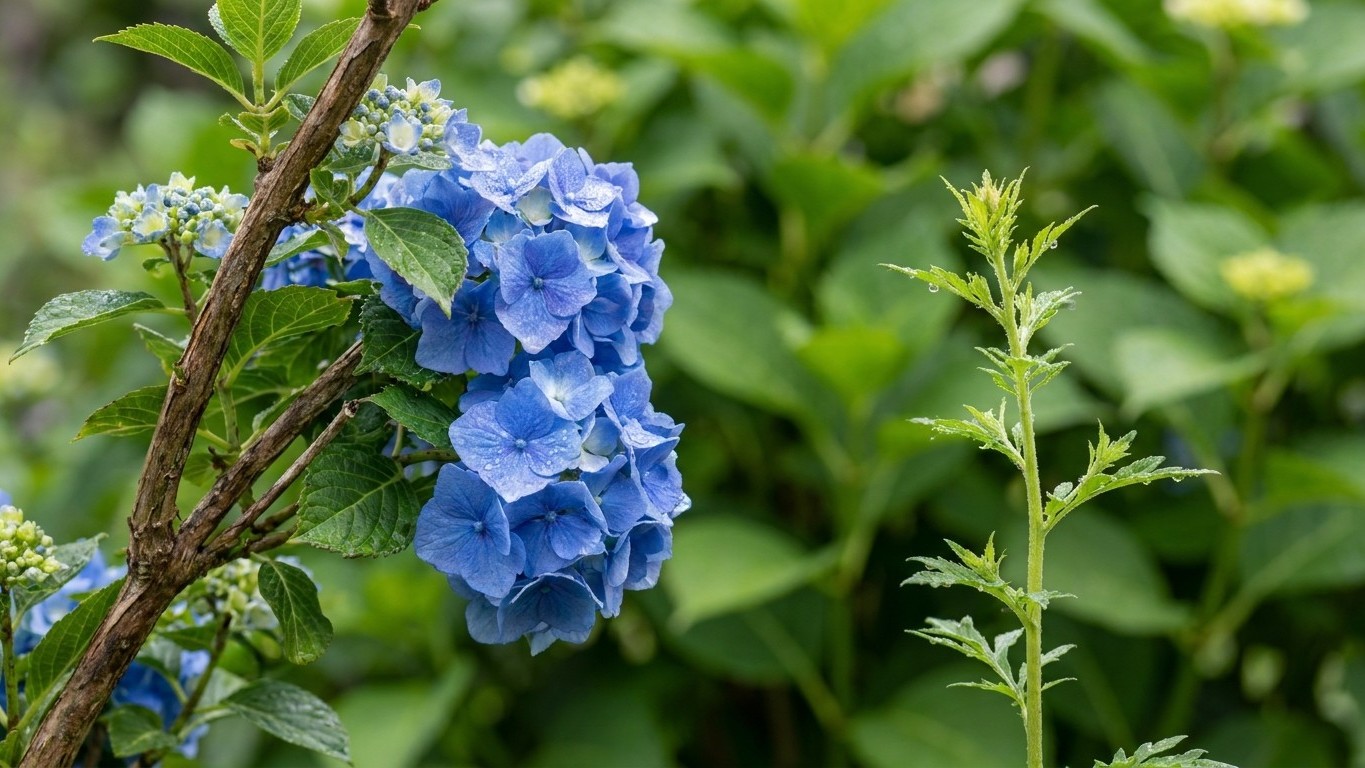

Prune panicle and smooth hydrangeas in early spring while the buds are still tight. Leave bigleaf and oakleaf types alone until you can see which stems survived the winter. On the Prairies, the buds are a better guide than the calendar. Winter dieback, a late frost and a short fall all move the date, and the right cut for one hydrangea is the wrong cut for another. Here is how to read your shrub and pick the week.
What this comes down to in Manitoba

Around Winnipeg, prune panicle and smooth hydrangeas after the snow leaves the beds and before the buds open, and wait on bigleaf types until the leaves show which stems lived. The reference for the frost window is the Winnipeg Richardson airport station, where Environment and Climate Change Canada’s normals put the mean last spring frost at May 23 and the mean first fall frost at September 22. Those are midpoints. In one year out of two, frost arrives after May 23 in spring and before September 22 in fall.
The reference station has about 122 frost-free days between those two mean dates. The city sits in Canadian hardiness zone 3b, according to Natural Resources Canada. That is a Canadian rating built on several climate variables, and it does not convert to a USDA zone.
The window matters for pruning because a cut tells a shrub to grow. A hydrangea trimmed in a mild spell will push shoots, and those shoots can meet a frost that falls after the mean date. Whether that matters depends on where the plant sets its flower buds.
Which hydrangeas bloom on new wood?
Panicle hydrangeas (the ones with cone-shaped blooms) and smooth hydrangeas (the ‘Annabelle’ type with big round white heads) make their flowers on shoots grown this season. A hard cut in early spring costs them nothing. A frost that nips the first shoots only delays things, because the plant sends up more from lower buds. These are the forgiving group, and they are the ones most gardeners in this climate end up growing.
Which hydrangeas bloom on old wood?
Bigleaf hydrangeas, the pink or blue mopheads and lacecaps, and oakleaf hydrangeas form flower buds the summer before. Where winters are long and cold, the stems often die back to the snow line, and the buds on them die too. Cut those stems off in March and you may remove the only flower buds that made it. The plants that bloom here usually do so on the lower stems that sat under snow. For the full list of which types come through a Manitoba winter, see Which Hydrangeas Survive a Manitoba Winter.
Working it out for your own garden
You do not need a fixed date. You need three things: which kind of hydrangea you have, which stems are alive, and whether the buds have started to move. Work through them in that order and the timing sorts itself out, in a cold year or a warm one.
How do you tell which hydrangea you have?
Look at last summer’s flowers, or at the dried heads still on the plant. Cone-shaped clusters point to a panicle hydrangea. Large round white heads on thin, floppy stems point to a smooth hydrangea. Round pink or blue heads, or flat lacecaps with a ring of showy florets around a center of tiny ones, point to bigleaf. Lobed leaves shaped like oak leaves mean oakleaf. If a plant came without a tag and has never bloomed, treat it as the cautious type (old wood) until it proves otherwise.
How do you know a stem is alive?
Scrape a little bark with a thumbnail. Green underneath means alive, and brown and dry means dead. Bend a stem as well. A live one flexes, and a dead one snaps. Do this at several heights, because a stem can be alive at the base and dead at the tip. Cut dead wood back to the first healthy pair of buds, or to the ground if the whole stem is gone.
How do you pick the week?
For panicle and smooth types, start once the snow has gone and the ground is no longer frozen, and finish before the buds open into leaves. The sign is buds swelling and showing a hint of green. If a stretch of warm days arrives early, the shrub may wake before you are ready. A cut made at that point still works for these types, though the new shoots are then exposed to any frost that follows.
For bigleaf and oakleaf types, wait longer. Let the leaves open on the stems that lived, usually into late spring, then cut away the bare, brittle stems. If you want to shape the plant at all, do it right after flowering, and stop well before late summer so that new growth can harden before fall frost. The mean first frost of September 22 is a midpoint, and half of years bring it sooner.
Basic technique does not change. Use clean, sharp bypass pruners. Cut just above a pair of buds. Take out thin, crossing or weak stems first. On an established panicle, shortening the stems keeps the heads from flopping under rain. A smooth hydrangea can be cut to a few inches above the ground if the stems die back every winter anyway, and it will flower on the new growth.
What changes across the state
Winnipeg is one reference point in a province that stretches a long way north and has very different ground. The Red River Valley around the city is flat and open, with plenty of wind and, in most winters, reliable snow cover. Moving north and into higher, wooded country, springs arrive later and falls come sooner, so the pruning window opens weeks behind the city’s. A gardener at the edge of the boreal forest should expect to wait longer for buds to swell, and to see more dieback on any bigleaf that is attempted.
How do lakes and uplands shift the timing?
Large lakes slow the spring warm-up near their shores and soften the first fall frost. A garden close to Lake Winnipeg or Lake Manitoba may wake later than one inland, then hold on longer in autumn. Upland districts such as the Riding Mountain area and the Pembina hills run cooler than the valley floor, and cold air pools in low spots on still nights. A hollow can hold frost that a slope a few hundred feet away escapes.
Snow depth also varies from place to place. A bed that is sheltered by a house, fence or evergreen hedge collects deeper snow, and that blanket protects the lower stems that old-wood types rely on. The same shrub in an exposed front yard may lose far more wood.
The practical effect is that your own buds beat any regional date. Use the Winnipeg figures as a starting point, and let the swelling buds on your own shrub confirm the week. If your garden sits in a cold hollow or well north of the city, give it extra time before you cut.
The mistakes this state punishes

The most expensive one is cutting a bigleaf hydrangea to the ground in early spring because the stems look dead. Some are. But the buds on the lower, snow-covered stems may be fine, and pruning them off wipes out that summer’s flowers. Wait for leaves, then cut what stayed bare.
A second error is pruning in fall. It looks tidy, but standing stems trap snow around the crown, and that snow is the best winter protection a hydrangea gets here. Cutting also invites new growth that has little time to harden before freezing weather. Leave the stems up and tidy in spring.
Warm spells in March or April fool many gardeners. A few mild days make the shrub look ready, and the pruners come out too early, or the plant breaks bud and then meets a hard frost. Since half of years see frost after May 23 at the reference station, treat any early leaf-out as at risk and be ready to cover small shrubs on a cold night.
Late-summer pruning is another trap. Trimming in August on any type pushes soft growth that the first fall frost will burn, and it removes the flower buds that old-wood types are already forming. If a plant needs shaping, do it by early summer.
Last, avoid shearing every shrub into a ball. Heads on a panicle grow bigger and stronger when you thin the stems and cut back to buds. A flat-topped shear leaves a dense cluster of weak stems that bend under snow and rain.
Checking this against your county
A frost date from a single airport station is a starting point. Your own garden may run earlier or later depending on its slope, its shelter and how far it sits from Winnipeg. Manitoba Agriculture can point you to local staff and regional growing information for your district. For the broader picture of choosing, planting and caring for these shrubs, see growing hydrangeas in Manitoba.
Common questions
Can I prune hydrangeas in fall in Manitoba?
It is better not to. Standing stems catch snow that insulates the crown, and a fall cut can trigger tender growth that frost kills. Leave the stems up and do the work in spring, once you can see what survived.
Why did my hydrangea not bloom after I pruned it?
Most often it is a bigleaf or oakleaf type that was cut in spring, removing flower buds formed the previous summer. Winter dieback can have the same effect. Panicle and smooth hydrangeas bloom on new growth, so a missed bloom on those usually points to a very late frost, heavy shade or too little sun.
How far back should I cut a smooth hydrangea?
If the stems die back most winters, cut them to a few inches above the ground in early spring and the plant will flower on new shoots. If the stems come through alive, you can cut lightly to shape it. Either approach works for this type.
Does pruning change my hydrangea’s color?
No. Color on bigleaf types depends on soil acidity and available aluminum, not on how or when you cut. For the pink and blue story, see Why Hydrangeas Are Pink in Manitoba, and How to Turn Them Blue.