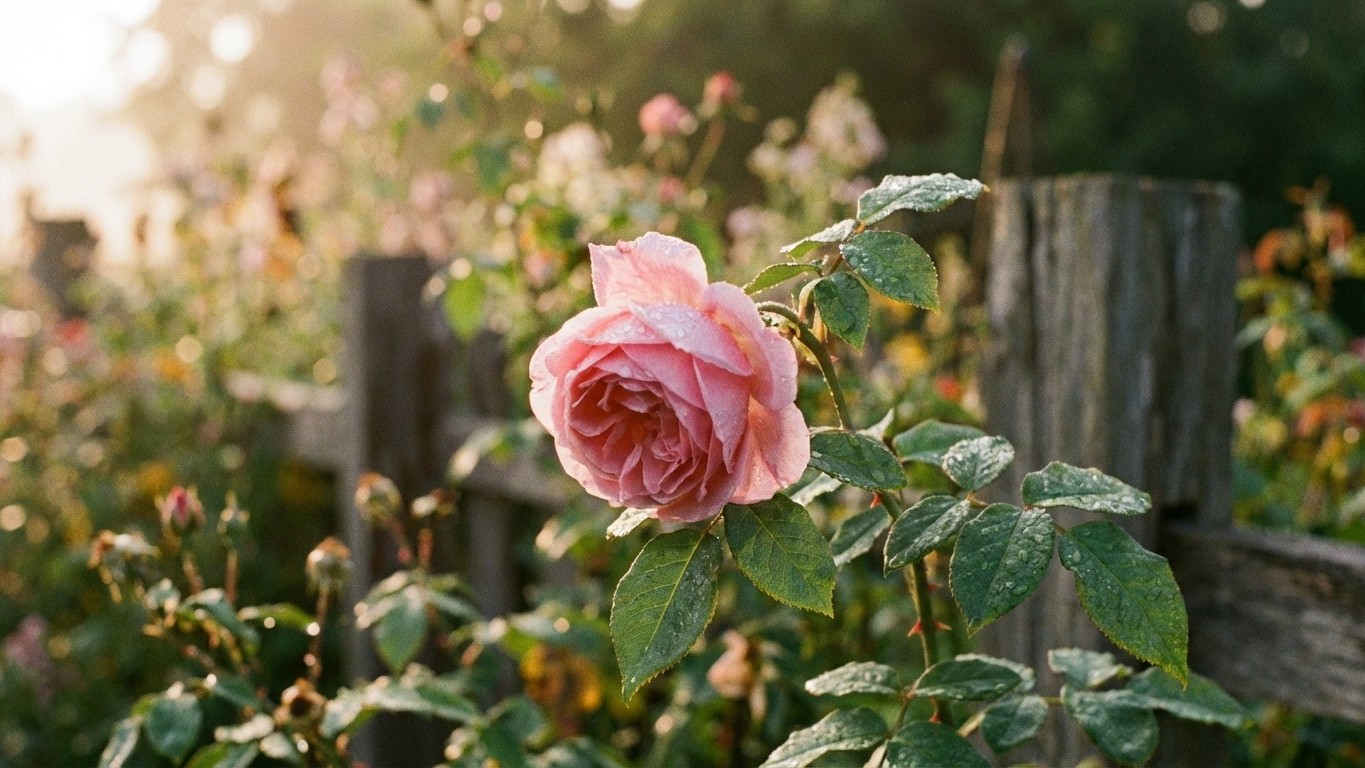

Rugosa roses, Canadian Explorer climbers, Knock Out shrubs and the old climber New Dawn come through a Maryland winter with little or no help. Hybrid teas, tree roses and florist-style potted roses are the ones that fail, and garden centers sell plenty of them. Three things decide the outcome: your USDA zone, whether the rose is grafted, and how the plant was grown. This is a short list of what to buy and what to avoid, for anyone already growing roses in Maryland or about to start.
Which roses survive a Maryland winter
The USDA Plant Hardiness Zone Map places Maryland in zones 5b to 8a. That system rests on a single measurement, the average coldest night of the year. The mountains of Garrett and Allegany counties sit at the cold end, while the Eastern Shore and the southern counties sit at the warm end. A rose that is safe in Salisbury can be a gamble in Oakland, so check which zone your own address falls in before you shop.
The frost dates for the Baltimore reference station show the other half of the picture. According to NOAA’s NCEI climate normals, the last spring freeze there falls between April 3 and April 16, and the first fall freeze between October 26 and November 5. Those are ranges, and in the mountains the last spring freeze comes weeks later and the first fall freeze comes earlier. A rose that pushes soft new growth before the last spring frost is exposed to cold nights.
Which rose types clear the cold end of the range?
Rugosas sit at the top. They come from the coast of northern Asia and handle cold, wind and poor soil better than most other garden roses. The Explorer series, bred in Canada for prairie winters, is close behind. Some shrub roses sold as “landscape” or “shrub” roses are hardy too, but check each one’s rating. Rugosas and Explorers are generally rated for far colder places than western Maryland, so check with your local extension office about winter care.
Hybrid teas are the opposite case. In zone 6 and colder they need help every winter, and in zone 7 they still benefit from it. In the milder parts of zone 7 and in zone 8, they often come through with only a mound of soil or mulch. They are also grafted, which adds a second weak point at the base of the plant.
Does the zone number alone decide survival?
It doesn’t. Wet clay that stays soggy through winter kills roses rated for colder zones. A late feeding of nitrogen keeps canes growing into fall, and soft canes die back even in mild winters. Warm spells in February that swell the buds, followed by a hard freeze, injure the canes of otherwise hardy plants. The zone sets the baseline, and drainage, timing and the plant itself decide the rest.
Named roses that hold up here
Buy by cultivar name. A tag that says “shrub rose, pink” tells you nothing about the cold. These five come up repeatedly in northern and mid-Atlantic gardens, and each has a track record in this climate.
| Rose | Type | What it comes through | Watch for |
|---|---|---|---|
| Hansa | Rugosa | Every Maryland zone, including the mountains, with no protection | Suckers that spread; heavy thorns |
| Therese Bugnet | Rugosa hybrid | Every Maryland zone, including the mountains, with no protection | Leggy growth; prune lightly after flowering |
| William Baffin | Explorer climber | The coldest winters in the state | Needs a sturdy support |
| Knock Out | Shrub | Most of the state; some tip dieback in the mountains | Rose rosette disease |
| New Dawn | Climber | Zone 5b winters, though canes may die back partly | Needs tying to a trellis or fence |
Hansa is the one to plant where nothing else has lasted. It carries double magenta-purple flowers with a strong clove scent, then orange-red hips in fall. Therese Bugnet is a softer pink with reddish canes and fewer thorns, and it repeats its bloom through the season. Both ignore winter.
William Baffin is the Explorer pick for a fence or arbor in the colder western counties. It is a vigorous climber with clusters of deep pink flowers, and it is very cold-hardy.
Knock Out is one of the best-known easy roses. It blooms from late spring until frost and tolerates the humid summers here better than most. Cold is not its weakness in Maryland, but rose rosette disease is, and that is worth reading about in Rose Diseases in Maryland: What the Climate Here Actually Brings before you plant a row of them.
New Dawn is a pale pink climber that has long been sold. It reblooms, tolerates some shade and survives zone 5b winters, though the tips of the canes may die back in the coldest spots. If you see brown tips in spring, wait for leaf-out before pruning, because the live wood shows itself once the buds open.
Sold here, but not for this zone
Garden centers buy from national growers, and the same truckload that goes to Georgia goes to Maryland. The tag may carry a hardiness rating that is accurate for the plant but optimistic for a mountain winter. These are the roses on the shelf here that need work to last through it:
- Hybrid teas and grandifloras. They are grafted and bloom on the long stems florists use. They are a common loss in the colder counties.
- Tree roses, also called standards. A hybrid tea is grafted on top of a straight trunk, so the whole structure is above ground and unprotected. Without wrapping or burial, they rarely survive a hard winter.
- Potted gift roses, forced into bloom under glass for holidays. They were never hardened off and often arrive in tiny pots with a thin graft.
- Tea roses, Noisettes and Lady Banks. These are warm-climate roses that belong in zone 8 and the mildest parts of zone 7.
None of these is impossible to keep. The graft union, the swollen knob where the named rose joins the rootstock, is the part that matters. If you do plant a grafted rose, mound soil over the graft union after the ground begins to freeze and leave it there until the last spring freeze has passed. The full routine is in Protecting Roses Through a Maryland Winter.
The tea and Noisette types deserve a separate warning. Their catalog photos are lovely, and the plants may flourish through summer on the Eastern Shore. Take them to the mountains, or even to the colder northern counties, and a single winter can end them.
What to check on the label before buying
The tag and the plant itself tell you most of what you need. Read them before you reach the register:
- The cultivar name, spelled in full, so you can look up its hardiness yourself.
- The grade. Packaged bare-root roses are often graded, and the higher grade means the heavier plant with the thickest canes.
- Whether it is own-root or grafted. A grafted rose has a visible knob at the base. An own-root rose has a straight, even stem rising from the soil line.
- The hardiness rating, checked against your own zone rather than the state’s.
Own-root matters more the colder the site. When a grafted rose freezes to the ground, the cultivar dies with the canes above the graft and whatever the rootstock sends up takes over. Gardeners often end up with a thorny, once-blooming rose in a color they never chose. An own-root rose that freezes back regrows as the same rose, because the roots belong to the cultivar. In the western mountains, buy own-root roses and treat any grafted plant as a short-term purchase.
Own-root roses are slower to bulk up in their first year and sometimes cost a little more. That is a fair price for a plant that can lose its top and still come back true.
Checking this against your own county
Maryland has a wide climate spread for such a small state, and no general guide can tell you what a given hillside does in January. University of Maryland Extension has an office in every county, and the staff there know the local soils, microclimates and which roses locals have lost. Ask for your zone by address and for the cultivars that have held up nearby. Confirm your zone with your county office before spending money on anything grafted.
Common questions
Do Knock Out roses die back in Maryland winters?
In most of the state they come through with little damage. In the western mountains, canes can die back partway, and the plants regrow from live wood in spring. They are far more likely to be lost to rose rosette disease than to cold.
Can I grow hybrid tea roses in Maryland at all?
Yes, with work. In zone 8 and the milder parts of zone 7 they often survive with a mound over the graft union. Elsewhere in zone 7, plan on protecting them too. In zone 6 and colder, plan on yearly protection and expect some winters to take the plant anyway.
Why did my rose come back with different flowers?
The graft died and the rootstock grew in its place. Rootstock roses usually bloom once a year in a single color and look nothing like the cultivar you bought. Replace the plant with an own-root rose if you want the original back.
Is a rose rated zone 5 safe in western Maryland?
Garrett County includes zone 5b, so a zone 5 rating covers the average winter low there but leaves little margin for a colder-than-average winter or an exposed site. Rugosas and Explorer roses rated colder than that are the safer choice there. Your county extension office can say what has lasted in your area.