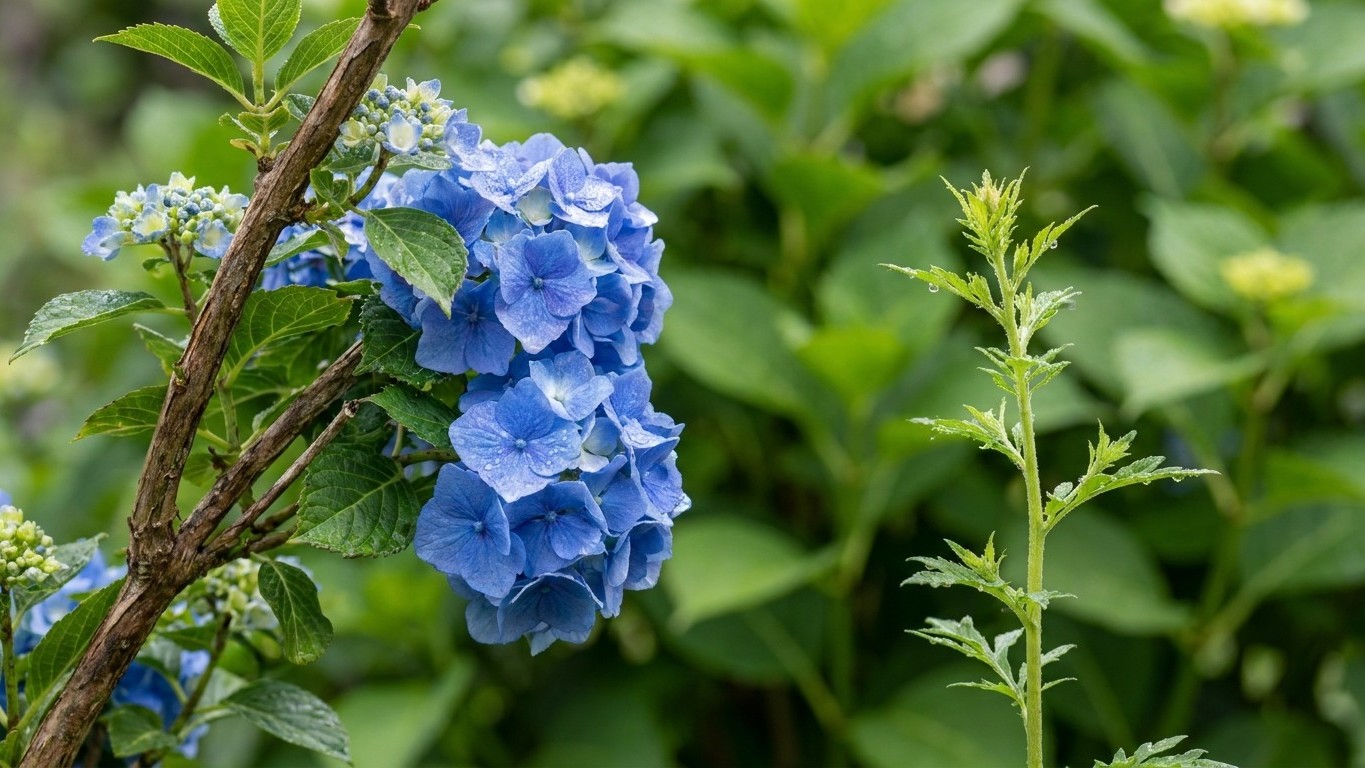

Bigleaf hydrangeas turn pink when the soil is not acidic enough for the plant to take up aluminum, and blue when it is. Lowering soil pH and keeping phosphorus modest moves a pink plant toward blue. The change takes a full growing season, sometimes two, and it works only on bigleaf and mountain hydrangeas. White-flowered cultivars mostly stay white, and other species do not respond to soil chemistry.
What this comes down to in Mississippi

Pink hydrangeas in Mississippi are a soil chemistry result you can adjust, and the best time to start is late winter, just ahead of the last spring frost. At the Jackson reference station, NOAA NCEI climate normals put that frost between March 6 and March 22. Gardens in the country usually see it a week or two later, so treat the Jackson window as a starting point.
What makes a hydrangea pink or blue?
The same pigment sits in both flowers. When aluminum reaches the sepals (the colorful petal-like parts), it binds to the pigment and shifts the color from pink toward blue. Without aluminum, the flowers stay pink or red.
Aluminum is not scarce in Mississippi. The state’s clay soils are full of it. But aluminum dissolves into a form roots can absorb only when the soil is acidic, roughly pH 5.5 or lower. Around pH 6.0 to 6.5 and above, it stays locked in the soil and the flowers come out pink. In between, you get purple or a mix of both colors on one plant.
Phosphorus adds a second lever. A fertilizer high in phosphorus can affect flower color, so check with your county extension office before applying it. Lawn fertilizers and all-purpose blends often carry a lot of it.
Why do so many Mississippi hydrangeas end up pink?
Much of the state’s native soil is acidic, so a hydrangea can be blue when planted and drift pink within a few years. The usual causes are close to the house. Lime from concrete foundations and walkways leaches into the nearby bed. Lime spread on the lawn washes in. Bagged topsoil and compost used to build a bed are often near neutral. Irrigation water in some areas is alkaline and raises pH a little with every watering.
In the Delta and the prairie soils of the Black Belt, the ground itself is closer to neutral or alkaline, and pink is the usual result.
Which hydrangeas can change color?
Bigleaf hydrangeas (Hydrangea macrophylla) and mountain hydrangeas (Hydrangea serrata) respond to soil chemistry. Panicle, smooth, and oakleaf hydrangeas do not, whatever you add to the soil. A white bigleaf cultivar usually stays white, though some show a faint pink or blue eye. If you are unsure what you have, look at the leaves: bigleaf types have large, glossy, rounded, toothed leaves, and the flower heads are mopheads or lacecaps. For the basics of siting and care, see growing hydrangeas in Mississippi.
Working it out for your own garden
A recipe from a neighbor may not fit your bed. The method below does, because it starts from your own soil.
How do you test soil pH for hydrangeas?
Guessing from flower color is unreliable, and cheap pH probes sold at garden centers can be unreliable too. Take a sample from the root zone of the hydrangea and send it through your county extension office to the state university’s soil lab. The report gives a pH and recommends how much sulfur or lime to apply. Pull samples from several spots around the plant and mix them, since pH can differ between the foundation side and the lawn side of one bed.
How do you turn pink hydrangeas blue?
Say the test comes back at pH 6.6. A blue flower needs something near 5.5 or below, so the bed has to drop by a full point or a little more. Three things do the work.
- Elemental sulfur lowers pH slowly as soil microbes convert it. It needs months, so apply it in fall or late winter.
- Aluminum sulfate acts faster and supplies aluminum directly. It can burn roots if applied heavily or to dry soil, so follow the label and water it in.
- A low-phosphorus fertilizer helps keep the plant from tying up aluminum again.
Start as growth resumes. Around Jackson that means early March, and a week or two later for gardens farther out. Retest after a few months to see whether the pH moved. Flowers already open will not change much. The buds that form over the summer carry the new color, so expect blue the following season, and watch for purple as a sign you are partway there.
Now take a bed that tests at pH 7.5 or higher, as chalky prairie clay can. Pulling that down in the ground is a losing fight, because the soil pushes back toward alkaline every time you water. A large container filled with an acidic potting mix, or a raised bed with a mix you control, will give you blue flowers where the native ground never will.
What changes across the state
Mississippi is not one climate or one soil. The USDA Plant Hardiness Zone Map, which rates zones by the average annual extreme minimum temperature, runs from 7b to 9a across the state. Colder winters and later spring freezes in the north, and milder conditions toward the Gulf, change when a gardener can start amendments and how likely a late freeze is to take the buds.
Soil matters more for color than climate does. Here is the general pattern.
| Area | Typical soil tendency | Usual color outcome |
|---|---|---|
| North Mississippi hills | Silty, usually acidic | Blue or purple possible, pink after liming |
| Delta | Heavy alluvial clay, often near neutral | Pink common, blue needs amending |
| Black Belt prairie | Chalky, alkaline clay | Pink; blue is easiest in containers |
| Piney woods and Gulf Coast | Sandy, acidic | Blue easy to get, can drift pink with lime or hard water |
Sandy coastal soil changes pH quickly in both directions. A small dose of lime or sulfur goes a long way there, so measure before you add. Heavy clay resists change and needs patience. In both cases, the Jackson frost window is a reference. Gardeners in the northern hills often see the last freeze later, and the first fall freeze earlier, by one to two weeks or more at higher elevation.
The mistakes this state punishes

A common mistake is amending without a soil test. Piling on aluminum sulfate to a bed that is already acidic can injure roots, and so can overdoing sulfur. Add too little to a bed at pH 7 and nothing changes. The test saves a season.
The second is feeding with the wrong fertilizer. A general lawn or all-purpose blend can carry enough phosphorus to push a plant back toward pink, even after you have acidified the soil. Choose a low-phosphorus product for hydrangeas.
Third, liming or fertilizing the lawn right up to the bed. Lime spreads with rain, so a hydrangea beside a freshly limed lawn or a concrete edge can swing pink. Keep lime products off the bed and watch the runoff from the foundation.
Fourth, losing the buds and then blaming the soil. Mississippi often has a warm spell in February that wakes the plants, then a freeze in March that kills the new growth. A plant with no flower buds shows no color at all, which looks like a failed treatment. Cutting the old stems at the wrong time has the same effect. Review When to Prune Hydrangeas in Mississippi and Protecting Hydrangeas Through a Mississippi Winter so you have flowers to judge.
Last, expecting a quick change. Color follows the buds, so one application in June will not turn this summer’s blooms blue. Plan the work for fall or late winter instead.
Checking this against your county
A frost window measured at one airport and a general pH target are starting points. Your own soil, water, and microclimate decide the result. Your county extension office can arrange a soil test and tell you what local soils and well water usually do. Mississippi State University Extension publishes the state’s own hydrangea guidance, including how bloom color relates to soil pH and how to take a soil sample.
Common questions
Can I turn a pink hydrangea blue in one season?
Usually not. Flowers that are already open keep most of their color. The buds that form after the soil changes carry the new color, so expect results the next bloom cycle, and sometimes the one after in heavy clay.
Do coffee grounds or rusty nails turn hydrangeas blue?
Neither is reliable. Coffee grounds change soil pH very little, and nails do not supply aluminum in a form the plant can use. Use a soil test and a sulfur or aluminum sulfate product matched to the result.
Can I turn a blue hydrangea back to pink?
Yes. Raise the pH with garden lime based on a soil test, and use a fertilizer with more phosphorus. The same slow timeline applies. Keep the amounts moderate, because pushing pH far above neutral can cause yellow leaves from nutrient problems.
Will pine bark or pine needle mulch turn hydrangeas blue?
Any effect on soil pH is small, and on its own it will not move a neutral or alkaline bed. Mulch does help hold moisture, so treat it as a supporting step after the pH has been lowered.