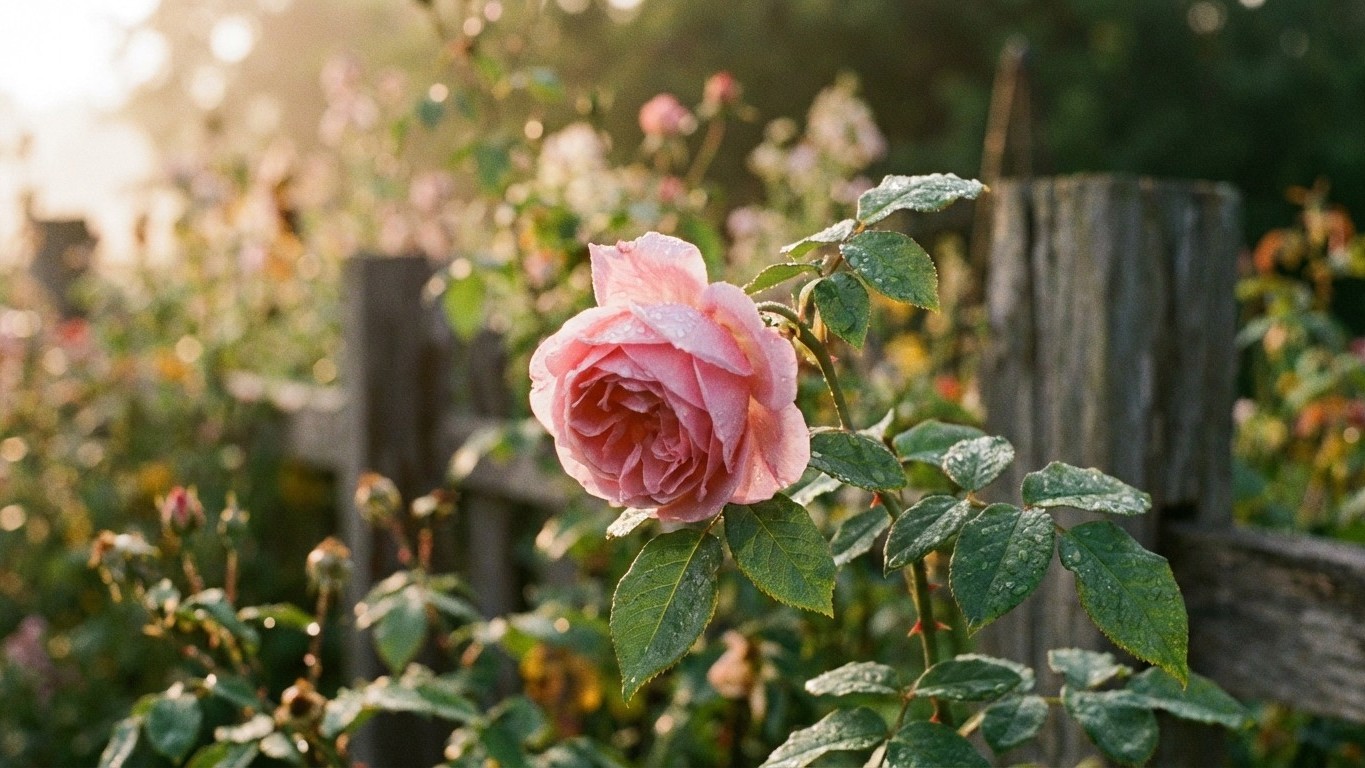

Black spot is one of the rose diseases Missouri gardeners most often fight. Summers here are hot and humid, and frequent rain keeps leaves wet. Powdery mildew is also common, and downy mildew appears in cool, damp spells. Rose rosette is the outlier: a virus with no cure, and the only remedy is removing the plant. The rest can be managed with airflow, dry leaves and good timing, and each disease below is tied to the weather that brings it.
Which rose diseases Missouri’s climate brings
A few fungal diseases and a virus account for most sick roses in the state. Each answers to a particular kind of weather, and a Missouri year runs through all of them: wet springs, hot humid summers and cool, damp falls.
Which disease do warm, wet summers bring?
Black spot. The fungus overwinters on fallen leaves and infected canes, and spores splash up onto new foliage whenever rain or sprinklers hit the soil. It needs leaves to stay wet for several hours to take hold. Heavy dew, thunderstorms and humid nights give it exactly that. The first sign is a round black spot with feathery, fringed edges, usually on the lowest leaves. A yellow halo spreads around it, then the whole leaf drops. A rose that loses most of its leaves by August has less energy to bloom and to harden off before winter, so it often comes through the cold with more cane dieback. One of the most useful habits is to rake up and bag every fallen leaf, because that litter is where next season’s spores wait.
What do powdery mildew, downy mildew and rust need?
Powdery mildew behaves differently from black spot. It does not need wet leaves. It thrives where days are warm, nights are cool and the air is humid, especially in shade or crowded plantings. A white, dusty coating appears on young shoots, buds and new leaves, which then curl and distort.
Downy mildew is the cool-and-wet disease. It produces purplish-red to brown blotches with angular edges, and a gray fuzz forms on the underside of the leaf. Leaves can yellow and fall within days, which is why it gets mistaken for black spot. The blotches are the clue: black spot makes crisp black circles with fringed edges, while downy mildew makes irregular purple-brown patches.
Rust is less common. It shows up as orange pustules under the leaves during cool, damp stretches in spring and fall. Rose rosette is a separate matter and gets its own section further down.
When each one shows up here
Roses leaf out as the last freezes pass, and the diseases follow the new growth. Around Kansas City, the average last spring frost falls somewhere between early and late April, depending on how much frost risk you accept. Northern Missouri generally runs later, and southern Missouri is milder still. The USDA Plant Hardiness Zone Map puts the state anywhere from zone 5b to 7b, so a rose in the Bootheel and one near the Iowa line are on different schedules, sometimes by several weeks. Take the dates below as a sequence, and slide them earlier or later with your own spring.
What shows up in spring?
Cool, wet weather in April and early May brings downy mildew and rust first, when they appear at all. Look for purple-brown blotches on the new red-tinged leaves. Powdery mildew often follows in May, when warm afternoons meet cool nights. The first thing you notice is a white film on the soft tips of the canes or on flower buds. Black spot usually starts quietly in May, with a few spotted leaves near the bottom of the plant after a stretch of rain. Pull those leaves off and bag them, then watch for more.
What do summer and fall look like?
Black spot peaks from late June through September, when warm nights and storms keep the foliage damp. A rose can look fine on the Fourth of July and be half bare by Labor Day. Powdery mildew often eases during the hottest weeks, when nights stay warm. It comes back in September and October as nights cool. Downy mildew can return in the same cool, damp fall spells.
The season winds down when the first fall frost arrives, which around Kansas City typically falls between mid-October and early November. Spores do not disappear then. They sit on leaf litter and canes through winter, which is why fall cleanup matters. In late winter, check canes for dark, sunken patches. Those are cankers, and they often follow cold injury. Cut them out to clean, light wood when you prune.
What this changes about spacing and watering
Air movement and dry foliage are a big part of the defence. Black spot and downy mildew spores need water on the leaf to germinate, and the longer leaves stay wet, the more infections take hold. Powdery mildew is the exception, but it too favors humid, crowded plantings. Shortening wet time helps, and it makes any spray schedule work better.
How far apart should roses be planted?
Plant hybrid teas and floribundas with enough room for good air circulation, and give larger shrub roses more space. Crowding is a common mistake. Roses planted shoulder to shoulder hold humidity inside the canopy, and powdery mildew loves that. Keep roses at least a couple of feet from walls, fences and dense hedges, and plant where they get morning sun, since early light dries the dew quickly. For a full run-through of siting and soil, see growing roses in Missouri. Variety choice matters as well, and Roses That Hold Up in Missouri covers which ones shrug off the humidity. Pruning also opens the plant up. An open, vase-shaped center lets air pass through, and the timing is covered in When to Prune Roses in Missouri.
When should you water roses?
Water early in the morning so any splash dries in the sun. Aim at the soil with a soaker hose or drip line, and avoid wetting the leaves. Evening watering is a poor choice, because foliage stays damp all night, exactly when black spot spores are germinating. For most established roses, one deep soaking a week, counting rainfall, is enough, rather than daily sprinkles.
A layer of mulch keeps rain from splashing spores up from the soil. Keep it a few inches back from the canes. Replace it in spring if the old layer was spread under diseased plants the year before.
Rose rosette: the one that means digging the plant up
Rose rosette is present in Missouri, and it is one of the most important things to know on this list. It is a virus spread by a microscopic eriophyid mite that rides the wind from plant to plant. Wild multiflora rose, which grows in fencerows, pastures and along roadsides across much of the state, is a common source. A garden rose can pick it up even when nobody nearby has an infected plant. No spray, fungicide or pruning cuts cures it. An infected plant declines over a year or two and then dies, and while it is alive it can serve as a source for nearby roses.
How do you recognize rose rosette?
The signs are distinct from fungal disease. New growth comes in unusually red and crinkled, canes are thicker than normal, and the shoots are covered in far more thorns than the rest of the plant. Branches bunch into a dense, twiggy cluster called a witches’ broom. Flowers are often deformed or fail to open. Fungal leaf spots dot the leaves but leave the shape of the shoot alone. Rosette changes the growth itself. If you see these symptoms on a plant that was healthy last season, suspect rosette and have it confirmed before deciding what to do, since herbicide drift can cause similar distortion.
How do you remove a plant with rose rosette?
Cut the plant down, bag it, and dig out the whole plant, roots included, because root pieces left in the ground can resprout with the virus. Put it all in the trash, not the compost pile. Pull any wild multiflora rose growing nearby. Wait to replant in the same spot until you are sure the roots are out.
Checking this against your own county
Frost dates, disease pressure and even rosette risk shift from the Iowa line to the Arkansas border. University of Missouri Extension has an office in every county, and the staff there can tell you what is moving through gardens near you. If a rose shows odd symptoms, especially red, thorny, bunched growth, take a fresh shoot to your county extension office before you decide what to do. They can confirm whether it is rosette, black spot, downy mildew or something else, and advise on next steps.
Common questions
Can you cure black spot once leaves are spotted?
Spotted leaves do not heal. Fungicide applied at the first sign, before many leaves are infected, protects new growth. Pick off and bag infected leaves, clean up fallen ones and keep the foliage dry. Rain-splashed spores do the rest of the damage, so a protective routine started in spring works far better than a rescue in July.
Does powdery mildew need rain to spread?
No. It spreads on dry, windy days as long as the air is humid and nights are cool. Shade and poor airflow make it worse. Wider spacing and a more open plant often reduce it noticeably, even without spraying.
Should you strip all the leaves off a diseased rose in summer?
Remove only the infected leaves, and leave the healthy ones. Stripping the whole plant forces it to spend stored energy on regrowth, which weakens it going into fall. Bag what you remove and keep it out of the compost.
Can you plant a new rose where one died of rose rosette?
Yes, once every piece of the old plant, roots included, is out of the ground. A rose left with live roots can resprout and carry the virus. Watch the new plant closely for red, thorny, distorted growth during its first seasons.