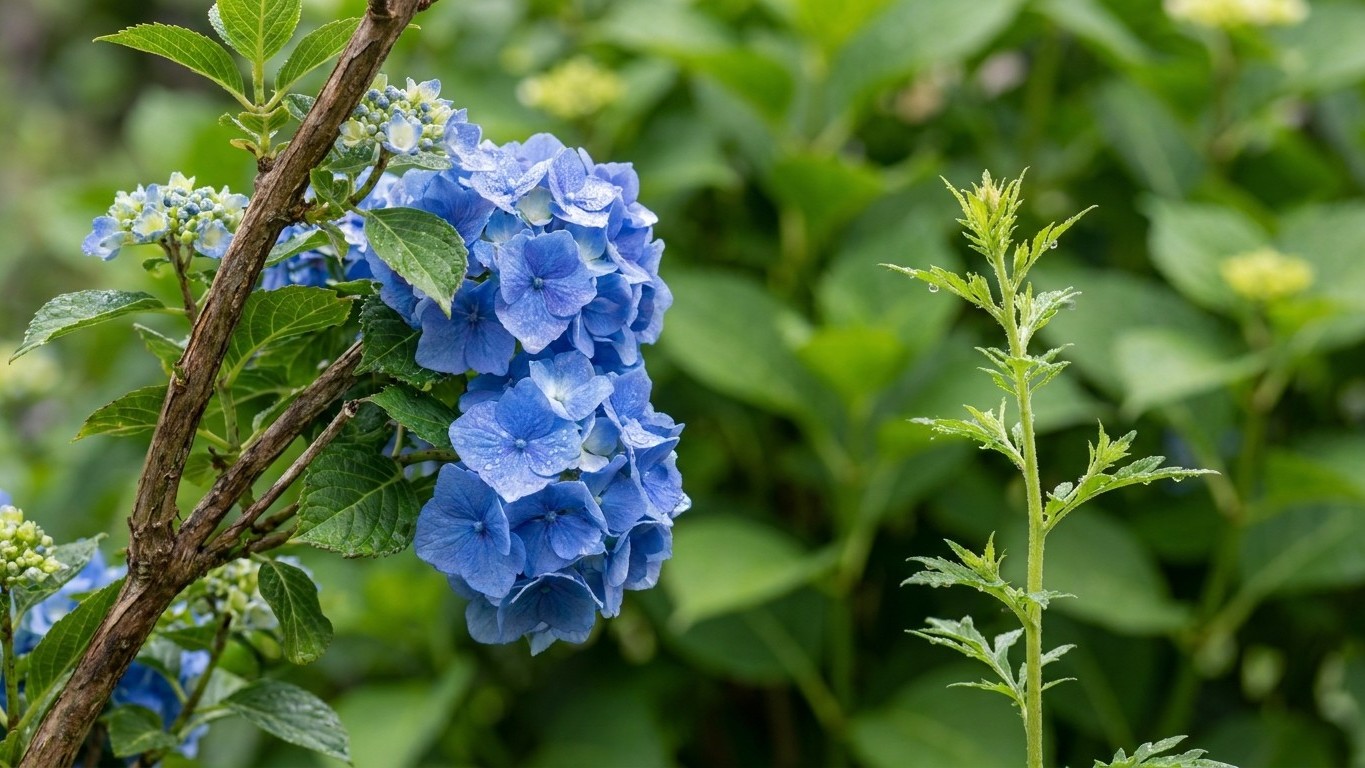

Pink hydrangeas in New Hampshire usually mean the aluminum in the soil is locked up. Bigleaf hydrangeas make blue pigment only when their roots can take up aluminum, and that happens in acidic soil, roughly pH 5.5 or lower. Lime near the foundation, a lawn program, hard water or a phosphorus-heavy fertilizer pushes the soil the other way. Turning a plant blue takes a soil test, an acidifier, and one full growing season.
What this comes down to in New Hampshire

Color change is a spring-to-fall job here, and the window is workable: at Concord, the reference city for these numbers, the last spring frost typically falls in the first half of May, and the first fall frost around the end of September or the first days of October. Gardens in the suburbs and the country usually see the last spring frost one to two weeks later than the airport and the first fall frost one to two weeks earlier, and more so at elevation. That span is when roots are active and when you can adjust the soil chemistry.
Plenty of New Hampshire ground is naturally acidic, especially forest soils under pines, oaks and hemlocks. So pink flowers often point to something a person added. Old farm fields that were limed for decades, lawns that get yearly lime, beds along concrete foundations and walkways (concrete leaches lime into the soil beside it), and wood ash from a stove all raise pH. Well water drawn from granite country is often soft, but water from some wells carries enough minerals to nudge the soil upward over the years.
Which hydrangeas can change color?
Some hydrangeas shift between pink and blue. White hydrangeas stay white. That includes smooth types like ‘Annabelle’ and panicle types like ‘Limelight’, whose blooms may age to pink or green on their own schedule without any link to soil. If your pink flowers sit on a shrub with large, glossy, rounded leaves and a mophead or lacecap shape, color is something you can steer.
Why does soil acidity control the color?
The pigment in the flower is the same in pink and blue plants. When aluminum is available, it binds to the pigment and the sepals turn blue. In soil near or above neutral, aluminum becomes insoluble, and the same pigment reads as pink. Phosphorus makes it worse because it ties up whatever aluminum is present. A rough guide:
| Soil pH | Typical bloom color |
|---|---|
| Below about 5.5 | Blue |
| About 5.5 to 6.5 | Purple, or a mix of blue and pink on one shrub |
| Above about 6.5 | Pink to red |
Some cultivars lean pink or red no matter what you do, because they were bred for it. Others turn a clean blue easily. Expect a muddy purple from a plant that sits in the middle.
Working it out for your own garden
The method matters more than any single product, because soil, water and weather differ from yard to yard. Start by finding out where you stand, then change one thing at a time and watch one bloom cycle.
How do you test the soil under a hydrangea?
Test before you add anything. A home pH kit gives a rough reading, and a lab test through your county Extension office gives a number you can act on, plus a recommendation for how much acidifier to use. Take samples from several spots within the root zone of the shrub and mix them. Sample in spring or fall, away from fresh lime or fertilizer. If the reading is already near 5.0 to 5.5 and the flowers are still pink, the issue is probably phosphorus or a cultivar that stays pink, and extra acid will not help.
How do you turn pink hydrangeas blue?
Two products do the job. Elemental sulfur lowers pH slowly, over months, and lasts. Aluminum sulfate acts faster because it adds aluminum directly and acidifies the soil at the same time. Apply the product to moist soil around the plant, but follow the package and your soil test. Too much burns roots. A mulch of pine needles or shredded oak leaves helps keep the soil acidic. Switch to a fertilizer with a low middle number, since that number is phosphorus.
Will the plant bloom in time to show the new color?
Work the calendar backward from the frost window. Say the last spring frost at your place lands in the first half of May. Roots and new leaves start moving around then, so that is when treatments begin, with repeat applications through late spring and early summer. Bloom opens in midsummer. The color you see then reflects what the roots took up over the spring. Treatments given after the buds have formed, or after the first fall frost around the end of September or early October, change nothing until the following year.
Here is where it can go wrong. An old-wood bigleaf, one that sets flower buds the previous summer, can lose them to a hard winter or a spring pruning, and a plant with no flowers has no color to change. The reblooming bigleafs flower on both old and new wood, so a late frost or cold snap costs them less, and they usually show the new color in the same summer you correct the soil. Timing for pruning is covered in When to Prune Hydrangeas in New Hampshire, and bud survival through the cold months in Protecting Hydrangeas Through a New Hampshire Winter.
What changes across the state
A reading from Concord does not describe the White Mountains, the North Country or the Seacoast. The USDA Plant Hardiness Zone Map, which rates a place by its average annual extreme minimum temperature, puts New Hampshire anywhere from about zone 3b to zone 6. That is a wide range, and it matters for color because a bigleaf can only show you a color if it survives to bloom.
Along the Seacoast, the ocean tempers winter lows and delays the first fall frost, so buds on bigleafs come through more reliably and the color-change season runs longer. In the Merrimack Valley and the southern tier, conditions are similar to the reference city. In the hills, the Lakes Region and north of the notches, springs arrive later, fall frost comes earlier, and winter lows can kill flower buds outright. There, a gardener may get leaves every year and flowers only in mild ones.
Soil shifts too, in ways that have nothing to do with latitude. Wooded lots on glacial till tend toward acidic. Former pastures and hayfields, and yards whose lawns have been limed for years, run closer to neutral. Your lot may differ from the neighbor’s in soil pH. Check the ground under your own shrub, because a regional guess will not tell you which direction to push.
The mistakes this state punishes

Adding aluminum sulfate to cold, wet soil after a warm week in March is a common one. Roots are barely active, a late frost often follows, and the acid washes through the soil with snowmelt and spring rain before the plant uses it. Wait until leaves have opened and the soil is workable and thawing is finished. Frosts at reference-city dates run into the first half of May, and later inland.
Skipping the soil test is another. Gardeners who add acidifier to soil that is already acidic can push pH low enough to damage roots, and iron and manganese can build to toxic levels. Overdosing is also a risk with aluminum sulfate even in moderate soil. Stay with the label rate and the lab’s advice.
A third mistake is treating a shrub that cannot change color. Panicle and smooth hydrangeas will not turn blue, and trying wastes a season. Likewise, a shrub that gets cut back hard in spring will lose its old-wood buds, and the only color you get is green.
Feeding with a high-phosphorus fertilizer, such as a general lawn or bloom booster, keeps blue plants pink. Wood ash from the stove does the same by raising pH. Planting right against a concrete foundation puts the roots in lime-rich soil, so give the shrub a few feet of clearance or build the bed with acidic soil mix. Finally, expecting a change in a few weeks sets people up for disappointment. One season is the norm, and a stubborn, limed bed may take two.
Checking this against your county
The dates and pH ranges here are starting points. Your own county can differ by a couple of weeks on frost and in soil pH. Your county office at University of New Hampshire Cooperative Extension can point you to a lab test and to local advice on timing. For the general care of the shrub, see the state guide on growing hydrangeas in New Hampshire.
Common questions
How long does it take to turn a hydrangea blue?
Plan on a full growing season. Aluminum sulfate can shift color in the next bloom cycle, and sulfur takes months to change pH. Plants that start in strongly alkaline soil may need two seasons of steady treatment.
Can I turn a white hydrangea blue?
No. White varieties, including smooth and panicle hydrangeas, do not respond to soil chemistry. Only bigleaf and mountain hydrangeas with pink or blue flowers can change.
Do coffee grounds or vinegar work?
Neither is reliable. Used coffee grounds are close to neutral and have little effect on pH, and vinegar acidifies the soil only briefly before it rebounds. A soil test followed by sulfur or aluminum sulfate gives a measurable result.
Why is my hydrangea purple or two colors at once?
Purple and mixed blooms mean the soil pH sits in the middle range, or that pH varies among the roots of one shrub. Roots near a foundation or lawn edge may draw from limier soil than those on the other side. Moving the pH in one direction across the whole root zone evens it out.