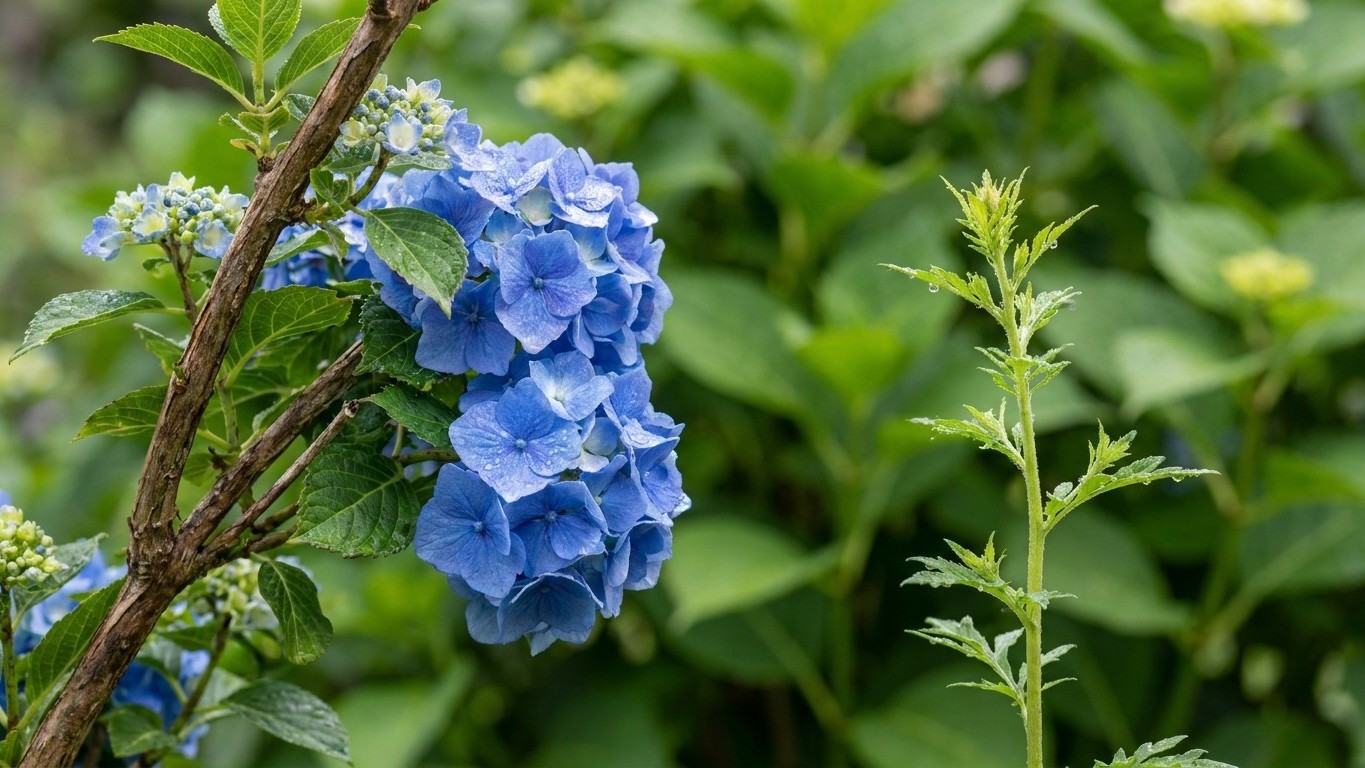

Most hydrangeas in New Jersey get through winter on their own. The ones that need help are the bigleaf types, whose flower buds sit on last year’s stems and can be lost to a hard cold snap, or to a warm spell followed by a freeze. Protection goes on after the leaves drop and the first fall frosts have come, then comes off in stages before the last spring frost window closes. Mulch, a leaf-filled wire cage, and some patience cover most yards.
What this comes down to in New Jersey

At Newark, a convenient reference station, the first fall frost typically arrives between November 4 and November 16, and the last spring frost between March 29 and April 6, based on the NOAA NCEI U.S. Climate Normals. Winter protection belongs between those two windows. It goes on once frost has arrived and the leaves have dropped, and it comes off gradually as the spring window approaches.
Newark sits in the urban core, next to an airport. Suburban and rural gardens typically see the last spring frost later and the first fall frost earlier, often by one to two weeks, and more at elevation. Treat the Newark dates as a starting point and shift them for your own yard.
What is winter protection actually guarding against?
Roots are rarely the problem. The state’s USDA hardiness zones run from 6a to 7b, and that system is built on a single variable, the average annual extreme minimum temperature. A normal winter seldom kills the crown of an established hydrangea. What gets hurt is above ground: stem tips, and the flower buds tucked into them.
Three things do the damage. One is deep cold in an exposed, windy spot. Another is a midwinter or March thaw that starts the buds swelling, followed by a hard freeze that catches them soft. The third is weight, since wet snow and ice snap branches. Mulch evens out soil temperature and slows the thaw-and-freeze cycle at the roots. A cage or wrap shelters the stems from wind and cushions them against snow load.
Which hydrangeas need protection, and which can be left alone?
Bigleaf and mountain hydrangeas bloom on old wood, meaning the buds form the summer before. Kill those stems and you lose that year’s flowers. Oakleaf hydrangeas also carry buds on old wood but are tougher in practice. Panicle and smooth hydrangeas flower on new wood, so a cold winter that kills stem tips still leaves them free to bloom the following summer. For zone ratings by type, see Which Hydrangeas Survive a New Jersey Winter. Put your effort into the old-wood bloomers, and a young plant of any type in its first two winters deserves a layer of mulch too.
Working it out for your own garden
A fixed calendar date will fail in a cold year or in a different part of the state. Anchor the work to the plant and to the frost window instead, adjusted for your yard.
When do you put protection on?
Start with the reference window: first fall frost at Newark between November 4 and November 16. If your garden is suburban or rural, assume frost comes one to two weeks sooner, which puts it around late October into early November. Then watch the plant. Mulch goes on after a few frosts have yellowed the leaves and the ground has begun to cool, but before it freezes hard. Cages and wraps go on after the leaves have fallen. Wrapping while leaves are still green holds moisture against the stems and invites rot.
For a bigleaf, the routine looks like this. Pile 3 to 4 inches of shredded leaves or bark mulch over the crown, keeping it a few inches off the stems. Drive three or four stakes around the plant, wrap chicken wire or hardware cloth in a loose ring, and fill it with dry oak or other leaves that do not mat down. A shrub left to stand about 3 feet tall carries its buds higher than the mulch, so the cage is what protects them.
When do you take it off?
Work backwards from the spring window. Newark’s last frost falls between March 29 and April 6. A yard that frosts one to two weeks later than that pushes the window toward mid-April. Begin opening the cage on a mild day around the start of that window, pull the mulch back from the crown a little at a time, and leave the wire close by for the next cold night. Remove everything once nights have settled and buds show green. A warm March spell is not the signal, because the late freezes that follow it are the ones that burn new growth.
How do you tell winter damage from a dead plant?
Wait until the shrub has had time to leaf out, usually into May. Then scratch a stem with a fingernail. Green underneath means the stem is alive. Brown and dry means it is dead. Prune only what is dead, cutting to the first pair of healthy buds. A plant that leafs out but never flowers has lost its old-wood buds, while a plant that blooms in the wrong shade has a soil question, covered in Why Hydrangeas Are Pink in New Jersey, and How to Turn Them Blue. Fresh shoots from the base on a plant with dead upper stems mean the roots survived, and a panicle or smooth type will still bloom on that new growth.
What changes across the state
New Jersey is small, yet its winters are not uniform. The USDA hardiness range of 6a to 7b already says so: the colder end belongs to the northwest and the milder end to the coast and the south.
Does north and south Jersey need different protection?
In the hills of the northwest, in Sussex, Warren and Morris counties, elevation does the work. Nights are colder, the first fall frost comes earlier and the last spring frost lingers later than in the Newark reference. Bigleaf hydrangeas there benefit from the full routine of mulch, cage and a sheltered spot out of the wind, and the removal date shifts well into April. Gardeners in that part of the state sometimes stick to panicle and smooth types because the old-wood bloomers are a gamble.
Along the Shore and in the southeast, the ocean slows temperature swings, so winters are milder and the frost window opens a little later in fall and closes a little earlier in spring. Salt wind can be the bigger threat there, and a windbreak of fencing or evergreens does as much as a cage. In the sandy interior of South Jersey, including the Pine Barrens, soil drains fast and cold air pools in low spots on clear nights, so a hydrangea in a hollow can freeze while one on a rise nearby stays untouched. Dense suburbs around Newark and Trenton hold heat and run a bit warmer than their surroundings. The only way to know where your yard falls is to watch it for a season: note when the first frost kills tender annuals and when the last one touches new growth.
The mistakes this state punishes

Which timing errors cost the most buds?
Wrapping too early comes first. A warm October tempts people to cover plants before they are dormant, and a damp, still-leafy wrap breeds rot and gives mice a nest. Pulling protection too early is the opposite error. A string of mild days in March wakes the buds, the cage comes off, and a freeze arrives right when the window runs through the first week of April, later in suburban and rural yards. Pruning a bigleaf in fall is a third. Every stem cut then removes next summer’s flowers, so leave pruning until the new leaves show what survived.
What materials and habits backfire?
Plastic sheeting traps moisture and bakes stems on a sunny winter afternoon, so use burlap or breathable fabric if you wrap at all. Leaves that mat into a wet slab around the crown smother it, which is why oak leaves and shredded bark work better than whole maple leaves. Late feeding is another one. Fertilizer in fall pushes soft new growth that has no time to harden before frost, so stop feeding by midsummer. Deer are a problem in much of New Jersey and browse hydrangea stems through winter, taking the very buds you worked to protect. A tall wire cage or a netting ring does double duty there. And a young plant, in its first two winters, needs at least a layer of mulch (the full routine if it is a bigleaf), even when an older neighbor does fine without it.
Checking this against your county
The dates here come from Newark, and your garden may differ by a week or two in either direction. Your county’s Rutgers Cooperative Extension office can tell you how local frost timing compares with the reference station, and it can answer questions about your soil and your particular shrubs. Start with Rutgers Cooperative Extension to find your county office. For the broader picture on siting and care, the state overview, growing hydrangeas in New Jersey, covers the rest.
Common questions
Do hydrangeas need winter protection in New Jersey?
Panicle and smooth hydrangeas generally do not, beyond a layer of mulch on young plants. Bigleaf and mountain types, which bloom on old wood, benefit most, especially in the colder northwest or in an open, windy site.
Is burlap better than a leaf-filled cage?
A wire cage stuffed with dry leaves insulates more and keeps its shape under snow. Burlap alone mostly blocks wind and sun, so it suits mild sites or a quick fix. Both beat plastic.
When should I remove the mulch and cage in spring?
Open the cage in stages as the last frost window approaches, which at Newark runs from March 29 to April 6 and falls later in colder yards. Take it all off after nights have settled. Pull mulch back from the crown gradually.
Can a potted hydrangea stay outside all winter?
Containers expose the roots to cold from every side, so a potted plant is far less hardy than one in the ground. Move it to an unheated garage or shed once it goes dormant, water it lightly now and then, and bring it out after the spring frost window has passed.