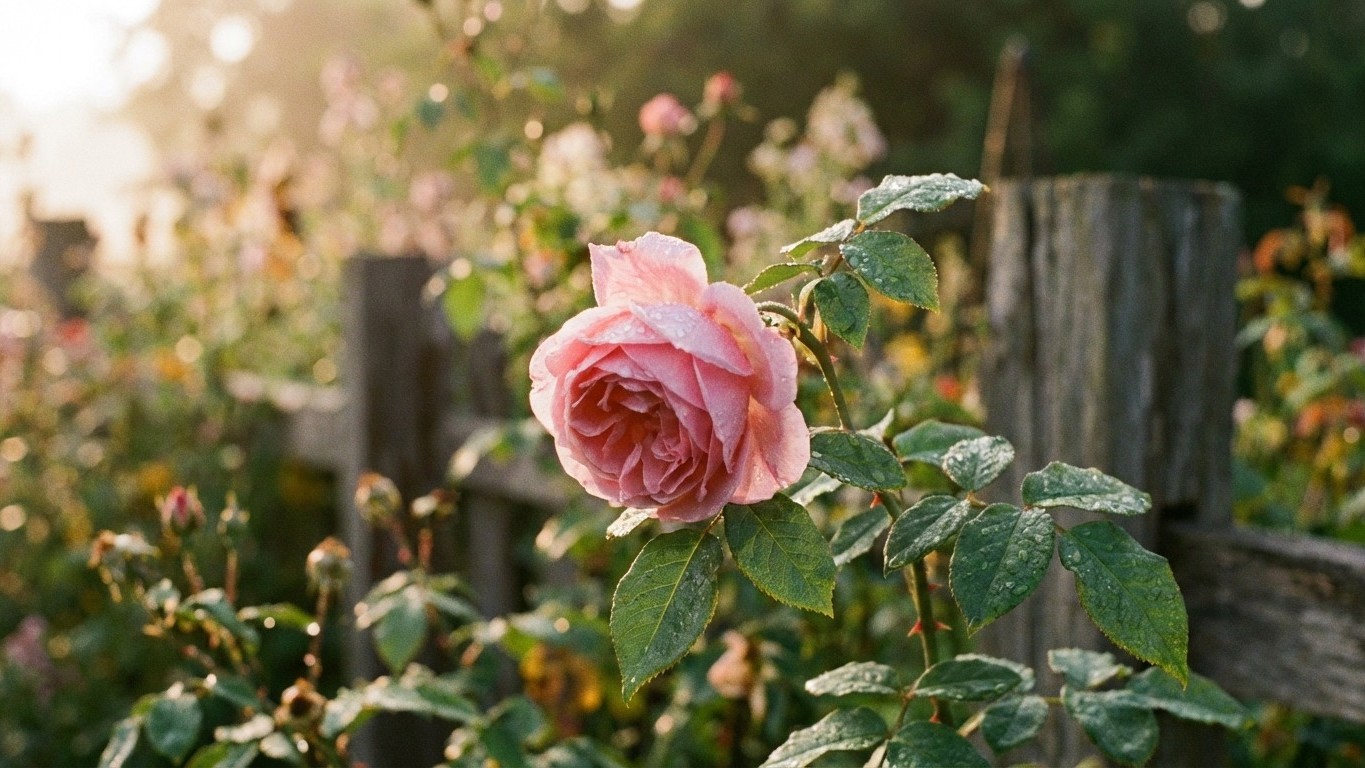

Rugosa roses and the Canadian-bred Explorer series are the safest bets in Newfoundland and Labrador. A few tough shrub roses and one non-Explorer climber, New Dawn, will also do well on a sheltered site. Hybrid teas, tree roses and many pot-grown florist roses are a gamble that usually needs winter work. Below you will find what each group survives, which popular roses on the shelf need help, and what to read on the label before you pay.
Which roses survive a Newfoundland and Labrador winter
The reference city of St. John’s sits in Canadian hardiness zone 6a, according to Natural Resources Canada’s plant hardiness map. That is a Canadian zone, not a USDA zone, and the two do not convert. The Canadian system blends seven climate variables, while the USDA system uses one: the coldest winter night. A rose tag that says zone 5 may mean either system, so read it carefully.
The number is also the reference city’s, not the province’s. Inland, northern and upland districts are colder, and Labrador is colder still. Treat 6a as the mild end of what you will meet.
Two groups of roses were bred for much harder winters than that. Rugosas (Rosa rugosa and its hybrids) come from the cold coasts of northeast Asia and shrug off wind, salt spray and sandy, poor soil. They already grow wild along parts of the Atlantic shoreline. The Explorer series came out of Canadian breeding programs aimed at prairie and Ottawa Valley winters, so a Newfoundland winter is well inside their range. Both groups are usually listed as hardy well below 6a Canadian.
Do hybrid teas make it through?
Sometimes, in a mild spot. A hybrid tea in a sheltered St. John’s yard can come through an average winter. The same plant inland, on an open slope, or anywhere that sees long cold snaps will usually die back hard or die outright. Hybrid teas and their close relatives sit at the edge of their hardiness even at 6a Canadian, so any colder district needs real protection. Expect to mound soil over the crown each fall.
Season length matters too. The St. John’s airport station has about 140 days between its mean last spring frost (May 30) and its mean first fall frost (October 17). Those are midpoints, not guarantees. In half of all years the last spring frost lands after May 30, and the first fall frost can come before or after October 17. Northern and upland districts run weeks behind the station.
A short, cool season gives canes less time to harden before winter. That is one more reason to choose roses that ripen their wood quickly and to stop feeding them by midsummer.
Named roses that hold up here
Start with the ones you can actually buy at a nursery or order by mail. The table lists what each does best in a cold, windy, damp climate.
| Rose | Type | What it survives |
|---|---|---|
| Hansa | Rugosa hybrid shrub | Hard cold, wind and salt spray. Double magenta flowers, strong scent, large red hips. |
| Therese Bugnet | Rugosa hybrid shrub | Prairie-grade cold. Pale pink flowers in early summer, red canes that show up in winter. |
| F.J. Grootendorst | Rugosa hybrid shrub | Hard cold and exposed sites. Small red flowers with fringed petals, in clusters. |
| Henry Hudson | Explorer, rugosa hybrid | Cold winters. Compact, with white flowers and a clove scent. |
| William Baffin | Explorer climber | Hard winters. Vigorous pink climber that needs space and a sturdy support. |
| John Cabot | Explorer climber | Hard winters. Deep pink flowers on long arching canes. |
| Knock Out | Modern shrub | Average winters on a sheltered site, with strong disease resistance. |
| New Dawn | Climber | Mild winters against a wall. Pale pink, repeat-blooming. |
Which of these is the toughest?
Hansa is among the toughest. It is a rugosa through and through, with the thick, wrinkled leaves that shed disease and salt, and it spreads slowly by suckers into a dense hedge. Therese Bugnet, bred in Alberta, is the other long-standing choice for a cold garden. It blooms heavily in early summer and then repeats lightly.
Where do Knock Out and New Dawn fit?
Both are good roses, but they ask for a gentler site than the rugosas. Knock Out is bred for resistance to blackspot and other leaf diseases, a real help in a damp climate (the Rose Diseases in Newfoundland and Labrador: What the Climate Here Actually Brings page covers what the weather does to leaves). It usually comes back from the base after a cold winter, though exposed plants can lose most of their top growth. Once buds swell in spring, cut dead canes back to green wood and let the plant rebuild.
New Dawn is a dependable repeat-blooming climber. Even so, its canes can die back in colder winters, and it flowers on that wood, so you lose bloom when they go. Give it a south- or west-facing wall out of the wind and expect to trim it each spring.
If you are starting from scratch, the broader growing roses in Newfoundland and Labrador guide covers the basics of siting and care.
Sold here, but not for this zone
Garden centers stock roses nationally. A tray of hybrid teas in May was grown for the whole country, not for your frost pocket, and nothing on the pot says that it needs work to survive here. Several types turn up regularly and deserve a second look.
- Hybrid teas, grandifloras and floribundas. Familiar names with large, classic flowers. They are grafted, borderline in hardiness and prone to dying back to the ground in a hard winter.
- Tree roses. A rose grafted on top of a bare trunk. The graft sits high in the wind with nothing to protect it, and a single severe winter will often finish it.
- English-style shrub roses. Some are tougher than their reputation, but many are bred for mild British winters, so check each variety before you buy.
- Miniature and potted gift roses. Often grown as indoor or greenhouse plants. Outdoors they may not survive even a mild winter.
A winter here is wet as well as cold. Mild spells followed by hard freezes are hard on roses, because they break dormancy and then lose that early growth. Wind off the water dries canes that cannot take up moisture from frozen ground.
If you love a tender rose, you can still grow it, but plan the work. Plant it in the most sheltered spot you have, then in late fall, once the ground has begun to freeze, mound soil over the crown and cover the canes with a wrap that breathes. In spring, take the mound off in stages so that the buds are not damaged by a late frost. Many gardeners treat the most tender roses as short-lived plants and replace them when they fail. Others keep them in large pots and move them into an unheated, frost-free shed for winter.
What to check on the label before buying
Three things on the tag matter more than the photo. Start with the grade. Bare-root roses are sold in grades, and No. 1 is the top one, with the thickest and most numerous canes. A heavier plant stores more energy for its first winter. Potted roses are rarely graded in the same way, so judge them by cane thickness and a firm, well-rooted pot.
Next, find out whether the rose is grafted or grown on its own roots. A grafted rose is a bud of the variety joined to the roots of a different, vigorous rose. The swollen join is the graft union. An own-root rose is the same plant top to bottom. If the label does not say, ask the staff, or look at the base. A graft shows as a knob where the canes meet the roots.
The colder the climate, the more own-root matters. If a hard winter kills a grafted rose down to the ground, what regrows is usually the rootstock, not the variety you paid for. It makes wild, single-flowered canes and takes over the plant. An own-root rose that freezes to the ground regrows as itself. Most rugosas and Explorer roses are sold on their own roots already, which is part of why they last here. So choose own-root plants whenever you have the choice.
Finally, check which zone system the tag uses. Many tags carry a USDA zone, and some carry a Canadian one. Neither maps cleanly onto the other, so look for the word Canadian or Agriculture Canada and compare it with 6a, adjusted for your own district.
Checking this against your own county
Newfoundland and Labrador does not run on counties, and a province-wide zone hides a lot of difference. For local advice, contact the provincial Department of Fisheries, Forestry and Agriculture, which is the nearest thing here to a county extension service. Its agriculture staff may be able to point you to local growing advice or other sources of help.
You can also look up your own municipality on Natural Resources Canada’s plant hardiness map. Look up your own municipality rather than relying on the St. John’s figure, then ask a nearby nursery which of its roses have wintered in your neighborhood.
Common questions
What is the toughest rose for Newfoundland and Labrador?
Rugosa roses are among the toughest all-round choices. Hansa and F.J. Grootendorst handle cold, wind and salt spray, and they keep their leaves healthy in damp summers. Explorer roses such as Henry Hudson and William Baffin are close behind.
Will Knock Out roses survive here?
Usually, yes, on a sheltered site. Knock Out often dies back in colder winters but regrows from the base. In exposed or colder districts, plan on cutting back dead canes in spring and expect a late start to flowering.
Can I grow hybrid teas in Newfoundland and Labrador?
You can, but they need protection. They are marginal even in the mildest part of the province. Plant in a sheltered spot, mound soil over the crown in late fall, and accept that some plants will be lost in harsh winters.
Is a rose labeled zone 5 safe here?
Not automatically. Check whether the tag uses the Canadian system or the USDA one, because the numbers do not correspond. If the label does not say, ask the nursery or look the variety up before planting.