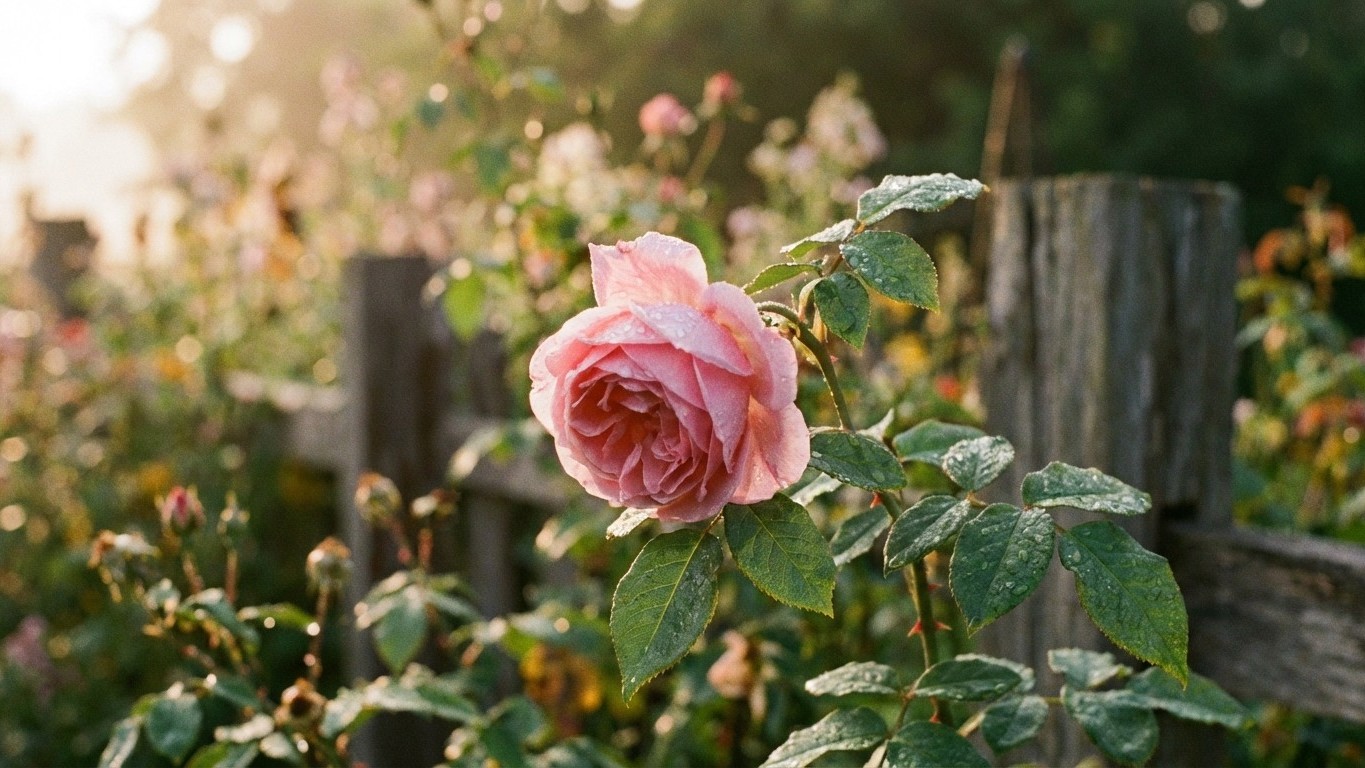

Rugosas, Explorer series roses, Knock Out and other modern shrub roses, and tough climbers like New Dawn come through New Jersey winters without special protection. Grafted hybrid teas, tree roses, and anything bred for the South need real work, and garden centers sell both groups side by side. The sections below sort them by name and show what to read on the tag so you can tell them apart in the aisle. For care basics, see growing roses in New Jersey.
Which roses survive a New Jersey winter
New Jersey runs from zone 6a to 7b on the USDA Plant Hardiness Zone Map. That system rests on a single variable, the average annual extreme minimum temperature, so it describes the coldest night of a typical winter and says nothing about summer humidity. The cold end sits in the northwest highlands. The warm end runs along the southern shore. Newark and much of central Jersey land in between, and a single county can hold two zones. Look up your own ZIP code before trusting any tag that says “hardy.”
Which types of rose clear a zone 6 winter?
Rugosas are among the toughest roses grown anywhere. They take far colder winters than New Jersey produces, ignore road salt and ocean spray, and grow wild along the coast. The Explorer series comes next. Canadian breeders developed those roses for prairie winters, so a New Jersey January is mild by comparison. Modern shrub roses such as Knock Out and the low, spreading Drift roses sit in the middle. They are dependable in both zone 6 and zone 7, though they may lose a few inches of cane tips in a hard winter. Old garden roses (Gallicas, Albas, Damasks) are also tough, but they bloom once a year.
Do hybrid teas survive New Jersey winters?
Sometimes. In zone 7 along the southern and coastal edges, a hybrid tea with a mound of mulch over its base usually returns. In the 6a and 6b pockets of the north and west, a hard winter can kill the canes to the ground. Cold alone is only part of the problem. Late-winter warm spells wake the plant early, and wind dries out exposed canes. A rose that looked fine in February can be dead by April.
On a grafted plant, a cane that dies to the ground often means the named rose is gone for good. Whatever sprouts below the graft is the rootstock, a different rose with different flowers.
Named roses that hold up here
A short list covers most New Jersey yards. Each of these is sold at garden centers and by mail-order nurseries, and each has a long record in cold Northeast gardens.
| Rose | Type | What it handles |
|---|---|---|
| Knock Out | Shrub rose | Zone 6 and 7 winters with little more than tip dieback; blooms from late spring until frost |
| Hansa | Hybrid rugosa | Cold, wind, road salt, and sandy soil; double magenta-purple blooms with a strong clove scent, followed by hips |
| Therese Bugnet | Hybrid rugosa | Hard freezes without cover; pale pink double blooms on red-tinged canes |
| New Dawn | Climber | Zone 6 and 7 winters when tied to a wall or fence; pale pink flowers that repeat through summer |
| William Baffin | Explorer climber | Severe cold; tall, deep pink blooms |
Hansa and Therese Bugnet are reliable choices for exposed sites, such as an open lot in Sussex or Warren County or a salt-sprayed yard near the Shore. Both are rugosa hybrids and form dense shrubs. New Dawn is the pick for an arbor or fence. It is vigorous and one of the more disease-tolerant climbers sold, though canes can tip back in the coldest northern counties.
Knock Out earned its reputation because it asks so little. It repeats from late spring to frost and holds its leaves well through humid summers.
What winter damage should you expect from these roses?
Even the tough ones may show brown, shriveled canes in spring, especially after a winter with swings between thaw and deep cold. Hold off on pruning. Dead-looking wood sometimes leafs out lower down, so wait until the buds swell and then cut back to green tissue. Prune too early and you may remove canes that would have recovered. Rugosas and Explorers rarely show this damage at all.
Sold here, but not for this zone
Garden centers stock nationally. The rose in the pot may have been bred, grown, and priced for a state where winters never test it. In New Jersey, many popular roses need a plan before they go in the ground.
Which roses on the garden center shelf are risky here?
- Grafted hybrid teas and grandifloras. Classics like Peace and Mister Lincoln are sold everywhere. They can live here, but the graft union is vulnerable to cold and needs covering each winter.
- Tree roses. A rose grafted on top of a straight trunk exposes both the trunk and the graft to wind and cold. Most do not make it through a zone 6 winter unwrapped, and they are a gamble even in zone 7.
- English roses. Many do well in zone 7 and are marginal in zone 6, where they often lose canes.
- Tea, China, and Noisette roses. Most are bred for mild-winter regions. Lady Banks, a Southern favorite, is unlikely to make it through a New Jersey winter outdoors.
Miniature roses sold in grocery stores around Valentine’s Day and Mother’s Day deserve a mention too. They are forced in greenhouses, and most are not hardened off for a winter outside.
Why do garden centers sell them anyway?
Rose stock moves through national distribution, and much of it is grown in warmer regions. A big-box store in Bergen County gets the same catalog as one in Georgia. Potted roses also show up fully leafed out in March, ahead of the frost-free window, and that early growth is the tender kind.
If you want a grafted rose anyway, plan the protection before you plant. In late fall, mound soil or mulch over the base once the ground starts to freeze, and cover the graft union completely. Tree roses need the whole plant wrapped or tipped and buried. Tender types are better grown in a container and moved to an unheated garage.
What to check on the label before buying
Two details on the tag or in the catalog tell you more than the photograph does. The first is the grade. Bare-root roses are sold in grades, and the higher grade means the thickest canes and the strongest root system. A lower grade costs less and takes longer to establish, which matters when winter is the first test.
The second is whether the plant is grafted or grown on its own roots. A grafted rose has a swollen knob near the soil line where the named variety was joined to a different, tougher rootstock. Tags often say “own root” or “grown on its own roots” for the other kind. If the tag says nothing, ask, or check the base of the plant for that knob.
Why does own-root matter more in colder zones?
The graft union is a vulnerable point on a rose. In cold regions, canes die back more often, sometimes to the ground, and the plant has to rebuild from whatever survives below the soil. An own-root rose rebuilds as the same variety. A grafted rose can come back as the rootstock, usually a vigorous rose with plain flowers, and the one you paid for is gone. Most rugosas, Explorers, and shrub roses like Knock Out are sold on their own roots. For anything marginal in your zone, choose own-root plants when the variety is offered that way.
Checking this against your own county
Frost dates vary within the state. NOAA’s NCEI climate normals put the average last spring freeze at the Newark airport station in early April and the first fall freeze in early November (station data). Those are reference-city figures. Suburban and rural gardens can freeze later in spring and earlier in fall than Newark, and the gap is larger at higher elevation.
Rutgers Cooperative Extension has an office in each county, and its staff and Master Gardener volunteers know which roses perform in local soil and weather. Call your county office before you buy anything you are unsure of, and ask for the Rutgers New Jersey Agricultural Experiment Station rose recommendations for your zone.
Common questions
Do Knock Out roses die in a New Jersey winter?
Rarely. They usually come through zone 6 and 7 winters with some dieback at the tips of the canes. Wait for spring buds to swell, then trim back to healthy green wood.
Can I grow hybrid tea roses in New Jersey?
Yes, with work. Mound mulch or soil over the graft union every fall. They are more dependable in zone 7 than in the colder zone 6 pockets of the north and west, where a hard winter can kill the canes to the ground.
Is New Jersey zone 6 or zone 7 for roses?
Both. The USDA Plant Hardiness Zone Map runs from 6a to 7b across the state. Northwest highlands are colder, southern and coastal areas are milder, and your ZIP code gives the zone for your yard.
Do rugosa roses work near the Jersey Shore?
They are one of the best choices there. Rugosas tolerate salt spray, sandy soil, and wind, and they grow wild on dunes along the Atlantic coast. Hansa is a dependable named variety.