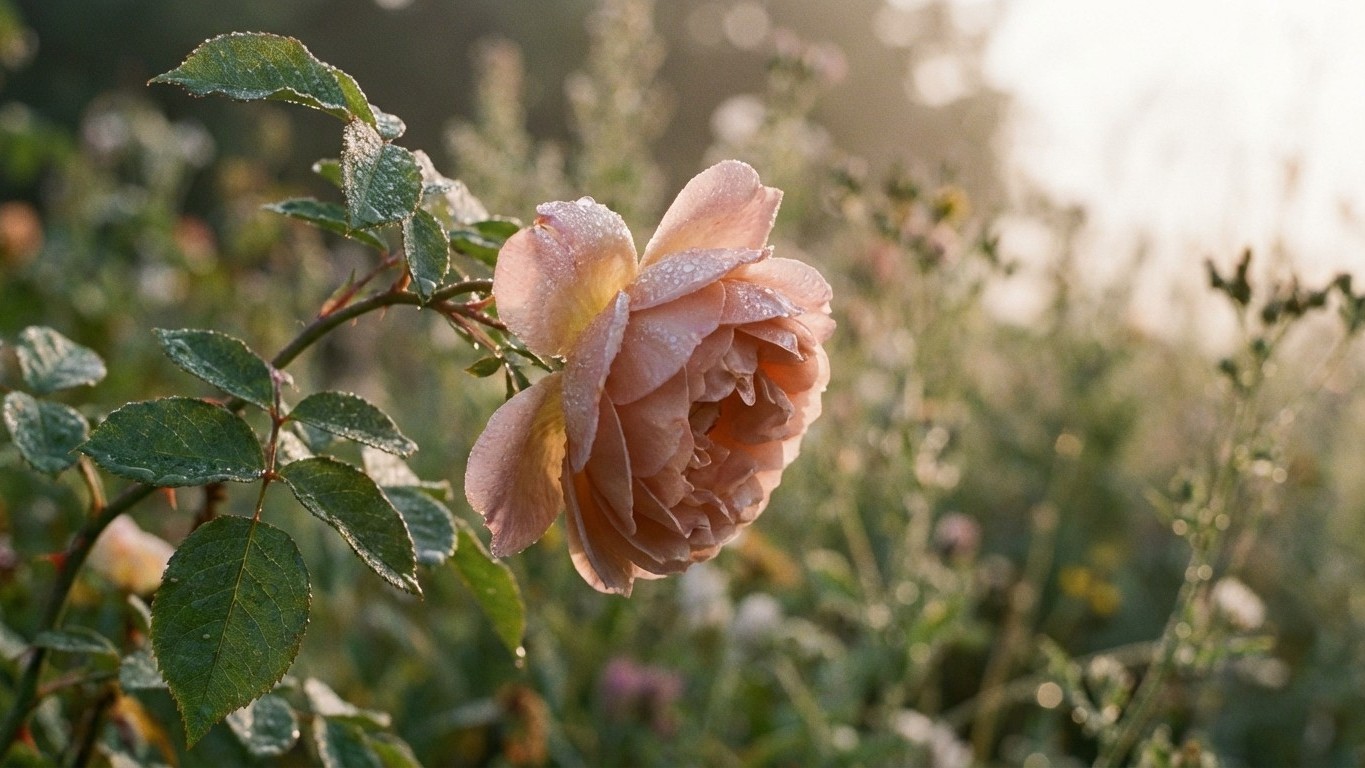

Rugosas, Explorer climbers, Knock Out shrubs and New Dawn handle New Mexico winters with little fuss. Hybrid teas, tree roses and most of the delicate garden-center favorites need protection or a warmer spot. The dividing line follows the state’s USDA zone range, which runs from 4b in the high country to 9a in the warmest low-desert pockets. Below are the roses that hold up, the ones sold here that often don’t, and what to read on a label before you pay. For the full routine, see growing roses in New Mexico.
Which roses survive a New Mexico winter
The state spans USDA hardiness zones 4b to 9a. That system rests on a single number, the average annual extreme minimum temperature, so it tells you how cold the worst night of a typical winter gets. It says nothing about summer heat or dry air. A garden in a Rio Grande valley town and one in a mountain town a couple of hours away can sit several zones apart, which is why the same rose gets different results across the state.
Which types clear the cold end of the range?
Rugosa roses and the Explorer series. Rugosas are generally rated to zone 2 or 3, and their wrinkled leaves and thorny canes shrug off wind. The Explorer roses were bred in Canada for brutal winters, and many climbers and shrubs in the series are rated to zone 3 or colder. Either group is a safe bet at 4b, where a typical winter low can reach the extreme minimum temperature of that zone.
Where do hybrid teas need help?
Hybrid teas, grandifloras and floribundas are generally rated to zone 6 or warmer, with zone 5 possible when you protect them. In colder gardens they need soil mounded over the base each fall, and even then the canes often die back. In the warm low desert winter lows rarely threaten them, so cold is not the limiting factor there.
Frost timing matters as much as the minimum. At Albuquerque’s airport weather station, NOAA NCEI’s U.S. Climate Normals for 1991-2020 put the 30 to 70 percent probability band for a 32F freeze between March 31 and April 12 in spring. In fall the band runs from October 29 to November 9. Those are reference-city figures. Gardens away from the airport, especially on the valley floor and at higher elevation, often see a later last spring frost and an earlier first fall frost.
A late spring freeze burns tender new shoots after the buds break. An early fall freeze catches canes that haven’t hardened off. Hardy types stop growing early and toughen their wood in time. Dry winter wind and warm afternoons that thaw frozen canes add a second kind of damage that the zone number doesn’t capture. Planting on the east side of a building, out of the afternoon winter sun, helps with that.
Named roses that hold up here
A handful of names come up again and again with good reason, and each handles a different slice of the state’s climate. The rugosas and Explorer climbers cover the cold, Knock Out suits zone 5 and warmer, and New Dawn covers the fence line.
Which roses take the coldest gardens?
Therese Bugnet is a rugosa hybrid rated to about zone 2 or 3. It bears fragrant, double pink blooms on tall, arching, nearly thornless canes (unusual for a rugosa), and it flowers in flushes through summer. Hansa is a true rugosa rated to about zone 3. It has magenta-purple double flowers with a strong clove scent, and it follows with large red hips. Both handle the 4b end of the state with no winter wrap.
William Baffin is an Explorer climber, rated to about zone 3, and a good pick for a trellis where the cold is serious. John Cabot, another Explorer, has similar toughness. The native Woods’ rose, a wild species of mountain slopes, is hardy as well, though its single pink blooms are modest compared with garden varieties.
Which roses suit the middle and warmer zones?
Knock Out is rated to zone 5 and handles heat well. In the colder parts of its range the canes may die back to some degree each winter, but the plant regrows and blooms the same year. This is the rose to pick if you want little maintenance. In the warm valley and low desert, it blooms over a long season.
New Dawn is a pale pink climber rated to about zone 5. It tolerates poor soil and some shade, and it recovers well after a hard winter. If the canes die back, the plant often reblooms from lower wood. In any garden where a cold snap has browned the canes, wait for the buds to swell before cutting out dead canes. Canes that look dead in February sometimes leaf out in April, and cutting too early removes living wood.
Several of the roses above are sold on their own roots at many nurseries, which comes up again below. Check the tag, because a grafted plant of the same name behaves differently after a freeze.
Sold here, but not for this zone
Garden centers stock roses nationally. The same shipment that supplies a warm, humid garden in Georgia lands on shelves in Santa Fe, Taos and Ruidoso. A rose sitting in a New Mexico store was often chosen for its blooms and not tested against a New Mexico winter. The mismatch is largest at the cold end of the state, and most of the trouble comes from a handful of categories.
Hybrid teas are a major one. Classics such as Peace, Mister Lincoln and Double Delight are on shelves across the state every spring. They are generally rated to zone 6 or warmer, so gardens in zones 4b to 5 lose canes most years and sometimes lose the plant. Grandifloras and many floribundas follow the same pattern.
Tree roses, also called standards, are riskier still. A hybrid tea is grafted onto a tall trunk, which puts the graft union and the whole crown up in the open air. There is no way to mound soil over a trunk that high, so in cold gardens people dig the plant up, lay it down and bury it, or tip it over and wrap it. Most buyers don’t know that when they pick one up in May.
Potted miniature roses sold in grocery stores around Valentine’s Day, along with the gift roses forced into bloom indoors, usually have a hard time after planting outside. They were grown for a short indoor display and have not been hardened off. Some English-style shrub roses fall in the same gray area, with ratings near zone 5 that depend on shelter.
If you already own one of these, mound soil over the graft union before the ground freezes, and water during dry winter spells when the soil is not frozen. In the warm parts of the state, winter protection matters much less and most of the shelf is fair game.
What to check on the label before buying
Three details on the label or the packaging tell you more than the photo does. The first is the grade, which applies to bareroot roses sold in bags or boxes. Grade No. 1 is the top, with the thickest and most numerous canes. No. 1½ and No. 2 fall below it, with fewer or thinner canes. A thin Grade 2 plant has less stored energy to recover from a cold winter, so in the colder zones the top grade is worth the extra dollars.
The second detail is whether the rose is grafted or grows on its own roots. A grafted rose has a swollen knob at the base, called the bud union, where the named variety was joined to a separate rootstock. Own-root plants are often labeled “own root” outright, and they show no knob.
The difference matters more the colder the garden gets. When a grafted rose freezes to the ground, the variety you paid for may be dead. What regrows from below the union is the rootstock, which usually has different, plainer flowers, and gardeners often don’t catch the switch until blooming time. An own-root rose that freezes back regrows from its roots as the same variety. On an own-root rose, shoots that come up from the roots are true to the label, so in zones 4b to 6 choose own-root plants whenever you have the choice.
The third detail is the zone rating on the tag. Compare it with your own USDA zone and not the national average, and treat a rating one zone warmer than yours as a plant that needs winter protection.
Checking this against your own county
Zone maps and the airport frost bands above are starting points. Local conditions shift them by a zone or more, and a county extension agent knows how your valley, slope or mesa behaves. The Cooperative Extension Service, part of the NMSU College of Agricultural, Consumer and Environmental Sciences, has an office in each county. Call yours before you buy, and ask which roses did well locally and what the typical last spring and first fall frost dates are for your elevation.
Common questions
Can I grow hybrid teas in New Mexico?
Yes, in the warmer valleys and low desert, where winters are milder. In zone 5 and colder gardens, expect to mound soil over the base each fall and accept some cane dieback. Where winters are harsher, rugosas or Explorer roses are a better use of the space.
Is Knock Out rose hardy in northern New Mexico?
It is rated to zone 5, so it grows in much of the northern part of the state. In the coldest high-country gardens at 4b it may die back to the ground. It often regrows, but you may lose a season of bloom. A rugosa is the safer pick there.
How do I tell if a rose is grafted or own-root?
Look at the base of the plant just above the soil line. A grafted rose has a knobby swelling where the variety meets the rootstock, with a visible line or bump. An own-root rose has smooth canes that come straight out of the roots. The tag or catalog listing usually says which one it is.
What should I do if my rose looks dead after winter?
Wait until spring growth starts, then scratch a cane with a fingernail. Green wood underneath means the cane is alive. Brown and dry means it is dead. Cut dead canes back to green tissue, and if a grafted rose regrows with different flowers than before, the original variety died and the rootstock took over.