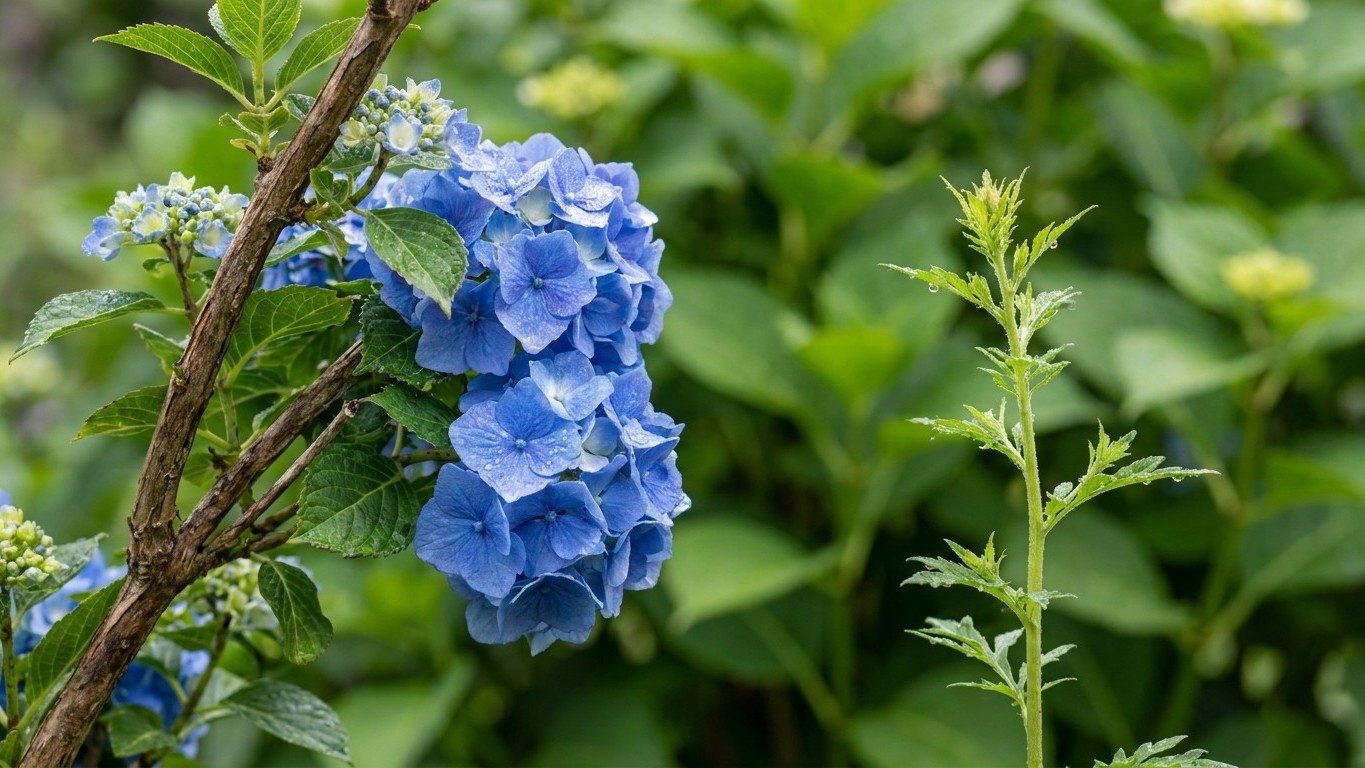

Few hydrangeas survive a Northwest Territories winter without help, and the ones that do share one trait: they bloom on wood grown in the current year. Smooth and panicle types qualify. Bigleaf types, including the blue and pink mopheads, usually lose their flower buds to the cold and rarely bloom. Even the tough ones die back to the snowline, so the goal is a shrub that regrows and flowers before the first fall frost.
What this comes down to in Northwest Territories

At Yellowknife A, the reference station for these numbers, Environment and Climate Change Canada’s climate normals put the average last spring frost on May 25 and the average first fall frost on September 18. That leaves about 115 frost-free days, and every variety on this list has to leaf out, grow flower buds and open them inside that stretch. Both dates are means. In one year out of two the last spring frost lands after May 25, and in one year out of two the first fall frost arrives before September 18.
Natural Resources Canada places Yellowknife in Canadian plant hardiness zone 1b. That system draws on seven climate variables and does not convert to a USDA zone. The zone ranges below come from nursery catalogs, which use the USDA scale, so read them as a ranking of toughness and not as a match to 1b. The cultivars run from shortest season to longest. For the wider basics, see the guide to growing hydrangeas in Northwest Territories.
Quick Fire
A panicle hydrangea rated by catalogs at about zone 3 to 8. It blooms on new wood, opens white and ages to pink and rose. It is among the earliest panicles to flower, which makes it a strong fit for a short season. Expect the upper stems to die back, with bloom coming from regrowth.
Annabelle
A smooth hydrangea, catalog zone about 3 to 9, with big white round blooms on new wood. After a hard winter it sprouts from the base, so dieback costs it little. Flowering comes a bit later than Quick Fire, but it is a dependable choice here.
Incrediball
A smooth hydrangea like Annabelle, rated about zone 3 to 8, with white blooms on new wood. Its stems are stiffer, so the flower heads stay upright after summer rain. It has the same regrow-from-the-base habit and similar timing.
Bobo
A dwarf panicle, around 3 feet tall, rated about zone 3 to 8. White blooms age to pink on new wood. Its low size lets snow bury much of it, which is a real advantage in a winter this long, though bloom comes somewhat later than Quick Fire.
Limelight
A panicle rated about zone 3 to 8, with lime-green blooms that turn pink, produced on new wood. It is hardy enough, but it flowers in mid to late summer in most climates. A short season squeezes that timing, so it blooms in some years and is caught by frost in others.
Tardiva
A late panicle, catalog zone about 3 to 8, with white blooms on new wood. The wood is hardy, but the flowers open late summer into fall. With the mean first frost on September 18 and half of years earlier, the buds often freeze before they open.
Endless Summer
A bigleaf hydrangea rated about zone 4 to 9, blue or pink depending on soil acidity. It blooms on both old and new wood. The old-wood buds rarely survive the cold here, and new-wood bloom needs a longer season than most years give. Treat it as a foliage plant, or as a container shrub moved indoors for winter.
Working it out for your own garden
Start with the frost window and count backward from fall. The table shows the arithmetic for a spring planting.
| Step | Range |
|---|---|
| Average last spring frost | May 25, later in half of years |
| Earliest sensible planting | Early to mid June, once soil has thawed and nights settle |
| Average first fall frost | September 18, earlier in half of years |
| Weeks from planting to first frost | About 13 to 15 |
Now run a real cultivar through it. Quick Fire is rated about zone 3 to 8 and blooms on new wood, with flowers opening early in a typical catalog summer. Planted in early to mid June, it has roughly 13 to 15 weeks before the average first frost. Allow the first several weeks for leafing out and root settling, and the shrub still has most of the summer to build buds. Flowers by August are a fair expectation, so it blooms before winter in an average year. A cold spring or an early September frost can trim that margin.
Tardiva fails the same test. It is hardy enough, but its flowers open late, and a catalog bloom time of late summer into fall assumes a frost-free stretch longer than 115 days. Anything that opens after mid-September has about even odds, or worse, of freezing in bud. Endless Summer fails earlier, because its flower buds were set the previous year on stems that did not survive the cold.
The same method works for any cultivar. Take the catalog bloom time, push it later by a few weeks for a short northern season, and see whether it still lands comfortably before mid-September. If it lands inside the final two weeks, expect a flower in a warm year and not in a cool one.
What changes across the territory
Yellowknife’s numbers describe one spot on the north shore of Great Slave Lake, and the territory is huge. Latitude and distance from the lake are two of the biggest factors moving the season. Communities in the southern part, such as Fort Smith and Hay River, tend to run longer, warmer seasons than Yellowknife. Places far to the north, including the Beaufort Delta around Inuvik, run shorter ones, with spring arriving weeks behind the reference station.
Large lakes slow the spring warm-up and hold some warmth into fall, so a site close to open water behaves differently from one inland. Permafrost matters too. In the north, ground stays cold deep into summer, so shrubs wake up and root slowly. Farther south, where the ground is not frozen year-round, soil warms sooner.
Inside any one town, the differences are smaller but real. A south-facing wall, a windbreak, and a spot where snow drifts and stays all add protection. A bare, windy rock outcrop offers none. Early on, plant the same cultivar in two places and see which one reaches leaf-out first.
The mistakes this territory punishes
- Planting into cold soil after a warm spell in May. A week of mild weather before the mean last frost of May 25 tempts people to plant, but frost comes later in half of years. Wait until the soil has thawed and the frost danger has passed, early to mid June.
- Choosing a long-season cultivar such as Tardiva or Endless Summer. The buds freeze before they open. Pick from the first four cultivars above.
- Cutting stems back in fall. Standing stems catch snow, and snow insulates the crown. For new-wood bloomers, when to prune hydrangeas in Northwest Territories comes in spring, after you can tell dead wood from live.
- Feeding with nitrogen in late summer. It pushes soft growth that the first fall frost kills.
- Leaving the crown bare. Mulch and a snow blanket matter as much as the choice of cultivar, and the guide to winter protection for hydrangeas covers how.
Checking this against your community
A reference-station figure is a starting point, not an instruction for your lot. Frost dates shift by weeks between communities, and a lakeside yard differs from one inland. Contact the Northwest Territories Department of Industry, Tourism and Investment for local advice on what survives where you live. Then read the full guide to growing hydrangeas in Northwest Territories for the rest.
Common questions
Can bigleaf hydrangeas grow in Yellowknife?
They can leaf out in summer, but flower buds on old wood rarely survive winter, and new-wood bloom comes too late. Most gardeners get green plants and few flowers. Kept in a container and brought indoors for winter, one might flower.
What hardiness zone is Yellowknife for hydrangeas?
Natural Resources Canada places Yellowknife in Canadian zone 1b. That is not a USDA zone, and the two systems cannot be converted. Catalog zone ratings are a rough ranking of toughness, so choose from the cultivars rated for the coldest zones.
When is it safe to plant hydrangeas?
The average last spring frost at Yellowknife is May 25, and in half of years the last frost comes later. Wait for the soil to thaw and for frost danger to pass, usually early to mid June. Then watch the forecast and cover new plants on cold nights.
Will a hydrangea that dies back to the ground still bloom?
Smooth and panicle types will, because they flower on new wood and regrow from living roots. The shoots need enough summer to form buds, so early-blooming cultivars such as Quick Fire have the best odds. Check for green under the bark in June before giving up on a stem.