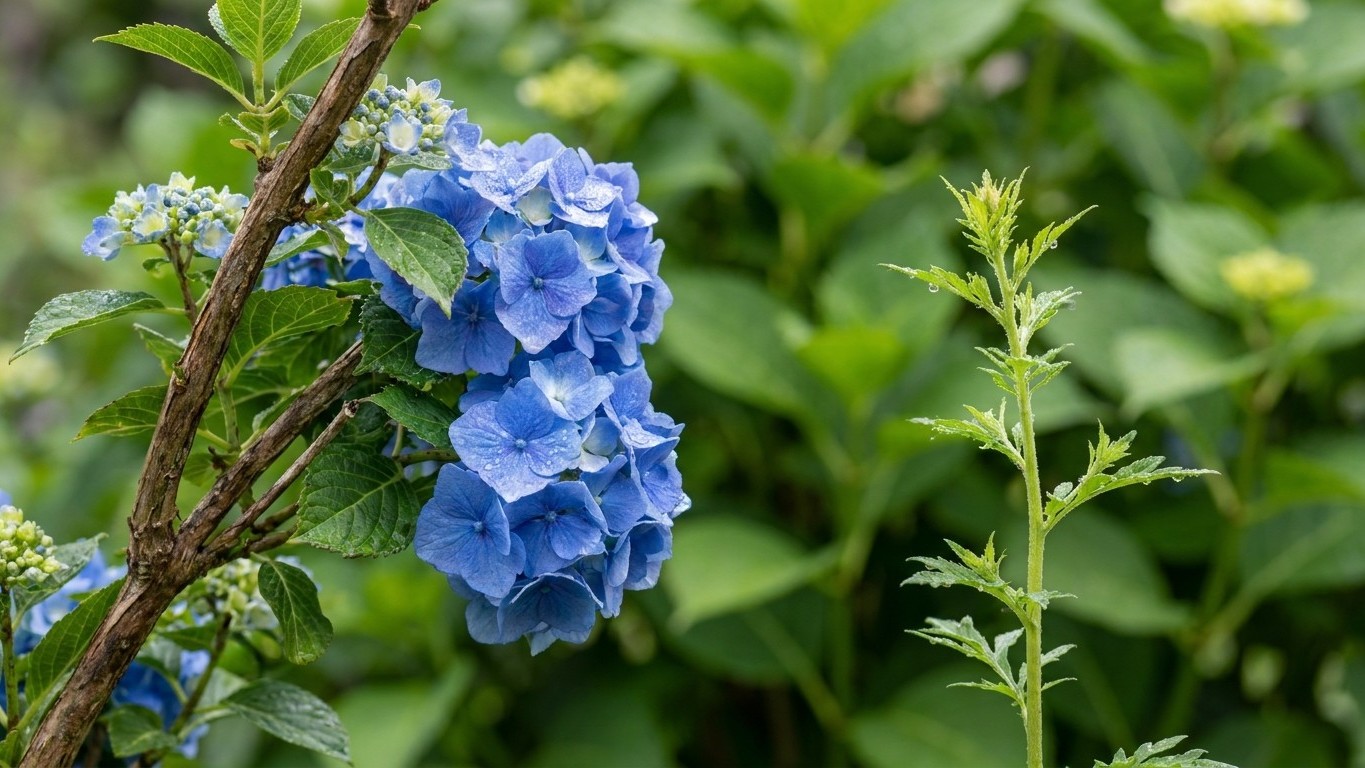

Almost every hydrangea sold in the Southeast lives through a South Carolina winter. The USDA Plant Hardiness Zone Map puts nearly all of the state in zones 7a to 9a (a small coastal strip reaches 9b), and the species gardeners buy are rated for zone 5 or colder, with a few bigleaf types rated for zone 6. The cold itself rarely does the damage. A warm spell in February wakes the buds, a freeze follows, and the flowers are gone. Which hydrangea you pick decides whether that freeze costs you a season of bloom.
What this comes down to in South Carolina

At the Charleston reference station, the last spring frost falls between February 28 and March 17, and the first fall frost between November 20 and December 5 (NOAA NCEI Climate Normals, 32 F freeze probabilities in the 30 to 70 percent band). Every hydrangea below survives the winter itself. What separates them is how exposed their flower buds are to a freeze that arrives after the plant has started to wake up.
They run from the most forgiving, which bloom on new wood and shrug off a late freeze, down to the bigleaf types whose buds depend on a mild late winter.
Annabelle
A smooth hydrangea (H. arborescens) rated for zones 3 to 9, with white blooms on new wood. Its flower buds form on growth made in spring, so a March freeze cannot take them. In hot summers the stems tend to flop under the heavy flower heads.
Limelight
A panicle hydrangea (H. paniculata) rated for zones 3 to 9. Blooms open lime green in midsummer, turn white, then blush pink as fall arrives, all on new wood. It handles both cold winters and Southern heat, which makes it one of the safest choices in the state.
Snow Queen
An oakleaf hydrangea (H. quercifolia) rated for zones 5 to 9, with white cone-shaped blooms that age to pink. It flowers on old wood, but oakleaf buds are tougher against cold than bigleaf buds. The species is native to the Southeast, and the leaves turn burgundy in fall.
Tuff Stuff
A mountain hydrangea (H. serrata) rated for zones 5 to 9. Blooms are blue in acid soil and pink in alkaline soil, and they come on both old and new wood. If a freeze kills the old-wood buds, the new growth can still flower later.
Endless Summer
A bigleaf hydrangea (H. macrophylla) rated for zones 4 to 9, blue or pink depending on soil acidity. It flowers on old and new wood, so it reblooms after a lost first flush. That makes it a more forgiving bigleaf for a state with uneven late winters.
Nikko Blue
A classic bigleaf rated for zones 6 to 9, blue in acid soil and pink in alkaline soil. It blooms on old wood only. When a freeze hits swollen buds, the shrub leafs out green and healthy and never flowers that year.
| Cultivar | Type | USDA zones | Flowers on |
|---|---|---|---|
| Annabelle | Smooth | 3 to 9 | New wood |
| Limelight | Panicle | 3 to 9 | New wood |
| Snow Queen | Oakleaf | 5 to 9 | Old wood |
| Tuff Stuff | Mountain | 5 to 9 | Old and new wood |
| Endless Summer | Bigleaf | 4 to 9 | Old and new wood |
| Nikko Blue | Bigleaf | 6 to 9 | Old wood |
Working it out for your own garden
Three things decide the outcome for any hydrangea: the last-frost range where you live, the first-frost range, and whether the variety sets its flower buds on old wood or new wood. Check the wood first. A new-wood bloomer only has to leaf out and grow, so the frost window matters little. An old-wood bloomer has carried its buds through winter, and the last-frost range is the test it has to pass.
Will a Limelight planted in spring bloom before the first fall frost?
Yes, with room to spare. Set a container plant out once the last-frost range has closed, so after about March 17 at the Charleston reference station. Limelight opens its first blooms in midsummer, which leaves more than three months of growth before the first flowers. The blooms hold into fall, until the November 20 to December 5 range arrives. Counting back from the first fall frost, nothing in that schedule is tight.
Why might a bigleaf like Nikko Blue not finish?
Its buds form on stems made the previous summer and fall, so they must get through the whole winter and then the last-frost range. If a warm February starts the buds swelling, they sit exposed from the end of February to as late as March 17 in a typical year, and later in a cold one. A Nikko Blue planted in early September has the same problem in another form: it gets only about 11 to 13 weeks before the first fall frost range to put out roots, so it enters its first winter weakly anchored. A bad late freeze that year means no flowers.
How can you tell if a hydrangea died over winter?
Scratch a stem with a thumbnail. Green under the bark means the stem is alive, and brown and dry means it is dead. Bigleaf hydrangeas can wait until late April or even May to leaf out, so hold off on pruning until you see where new growth starts. If the top is dead but the base is sprouting, a new-wood variety like Limelight will still bloom that summer. An old-wood variety will not.
What changes across the state
The Charleston reference station sits near the coast, and the rest of South Carolina is not the same climate. Peninsular Charleston is milder still than the airport station, because the surrounding water holds heat. The Upstate, which climbs toward the Blue Ridge foothills, runs several weeks tighter at both ends of the frost window. Elevation does most of that work, and the state’s zones, from 7a in the northwest mountains to 9a on most of the coast, span the difference.
Does the Upstate need different hydrangeas than Charleston?
Mostly in how much risk you take. In the Upstate, the last freeze can arrive well after bigleaf buds have swelled, so a Nikko Blue is a gamble there. Annabelle, Limelight and Snow Queen are safer, and Endless Summer gives you a second chance when the first flush freezes. Near the coast, the cold is milder and the plants are all hardy, but the early warmth is the trap. Buds can break in February and meet a freeze later.
What about the Midlands and the coast?
The Midlands sit between the two, with heavy clay in many yards and long, hot summers that tire large-headed types like Annabelle. Along the coast, sandy soil drains fast and salt spray can scorch leaves close to the water. Oakleaf and panicle hydrangeas generally take heat and lean soil better than bigleaf types, which sulk when dry. None of these differences change which species survive the winter. They change which ones bloom reliably once it is over.
The mistakes this state punishes

Planting a bigleaf in February during a warm stretch is the classic one. The soil feels workable and the garden center has stock, but the last-frost range runs until as late as March 17 and a freeze on a newly planted shrub is hard on it. Wait until the range closes, then plant. In the Upstate, wait longer.
Pruning at the wrong time costs flowers too. Bigleaf, oakleaf and mountain types carry next year’s buds on old wood, so cutting them back in fall or late winter removes the bloom. Prune them right after flowering, and save hard pruning for the new-wood types such as Annabelle and Limelight.
Pulling winter mulch early is another. A warm week at the end of February tempts gardeners to rake it off, and the buds start moving. Leave the mulch until the last-frost range has passed.
Relying on one old-wood bigleaf in the Upstate is a choice that often fails. A reblooming type such as Endless Summer, or a new-wood type, gives you flowers in a year when a freeze takes the first set.
If a freeze is forecast after buds have swollen, cover the shrub that evening with a bedsheet or frost cloth that reaches the ground, and take it off the next morning. Plastic touching the leaves transfers the cold, so use fabric, or prop plastic on stakes.
Checking this against your county
A frost range from one reference city is a starting point for a state with this much elevation change. Your county’s real numbers can run weeks off it, particularly in the Upstate. Clemson University Extension has an office in every county, and the staff there know the local last-freeze pattern and which cultivars have held up in your soil. For soil, light and watering, see growing hydrangeas in South Carolina.
Common questions
Can hydrangeas stay outside all winter in South Carolina?
Yes. In South Carolina’s USDA zones, every cultivar listed here stays in the ground through winter without protection. The only risk is a freeze after the buds have started to swell.
Why did my bigleaf hydrangea leaf out but never bloom?
The flower buds were most likely killed by a late freeze, or removed by pruning in fall or winter. Old-wood bigleafs such as Nikko Blue are the usual victims. The shrub is fine and will grow normally, but it has no flowers that year.
Do panicle and smooth hydrangeas need winter protection?
No. Limelight and Annabelle bloom on new wood, so a late freeze cannot take their flower buds. Established plants need nothing beyond normal mulch.
Should I cover hydrangeas when a late freeze is forecast?
Cover old-wood bloomers if their buds have already swollen or leaves have started to open. Use a sheet or frost cloth that reaches the ground, and remove it in the morning. New-wood types in early growth are rarely worth the effort.