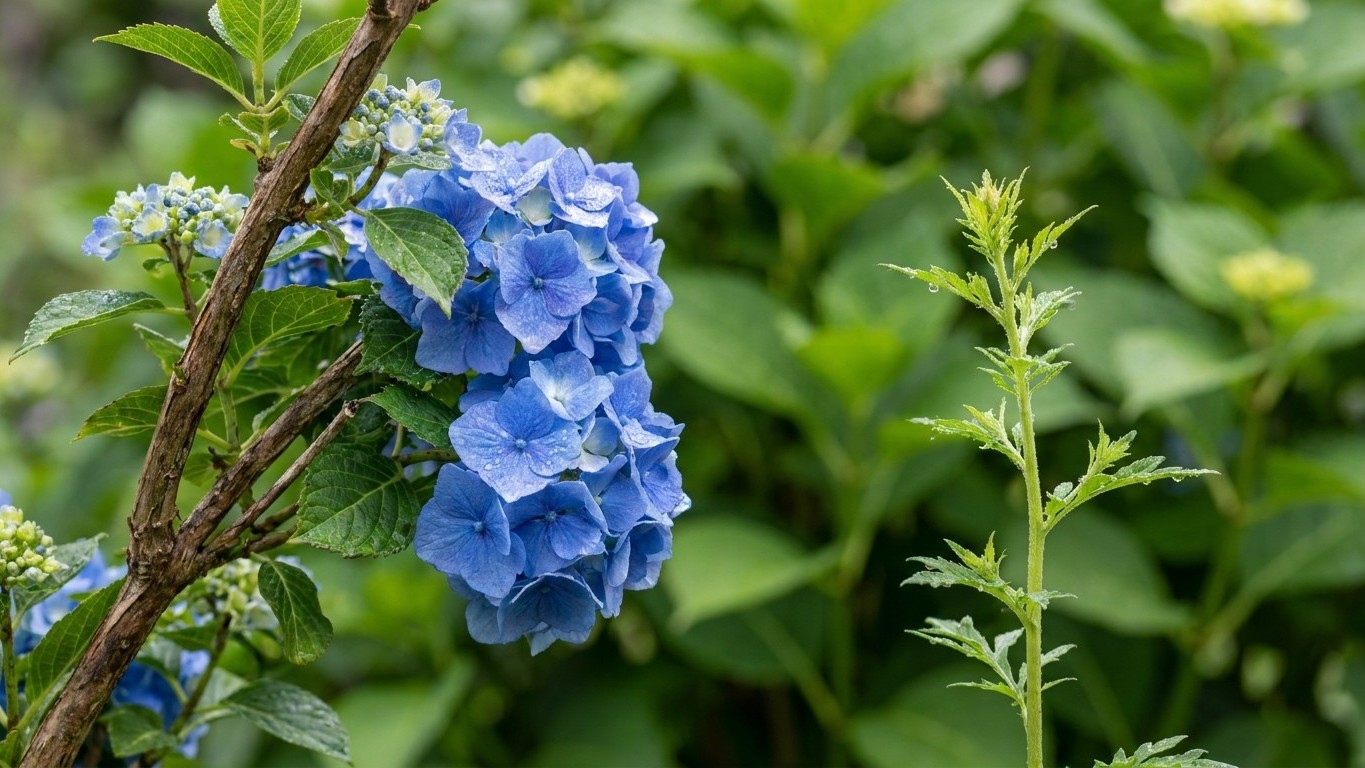

Prune hydrangeas by bloom type, not by the calendar. Bigleaf, mountain, and oakleaf hydrangeas flower on stems grown the year before, so they get trimmed right after the flowers fade in summer. Panicle and smooth hydrangeas flower on stems that grow this spring, so they take their cut in late winter. In Tennessee, the late-winter cut belongs ahead of the spring frost window. The summer cut has to come early enough that next year’s buds stay on the plant.
What this comes down to in Tennessee
At Nashville, NOAA’s 1991–2020 climate normals put the typical last spring freeze at roughly March 31 to April 12, and the first fall freeze at roughly October 28 to November 8, depending on the probability level and station used. So panicle and smooth hydrangeas should be cut back in late winter, before that spring window opens, while bigleaf and oakleaf types are cut only after they bloom, well ahead of the fall one.
The reason is where the flower buds sit. Bigleaf, mountain, and oakleaf hydrangeas form next year’s buds in late summer and carry them through winter on the stems. Cut those stems in fall, winter, or early spring and you cut off the flowers. Panicle and smooth hydrangeas do the opposite. They grow new shoots in spring and set buds on that fresh growth, so a late-winter cut only shapes the shrub and triggers strong new stems.
| Type | Flowers on | When to prune in Tennessee |
|---|---|---|
| Bigleaf (mophead and lacecap) | Old wood (some rebloom on new wood) | Right after flowering in summer; remove only dead stems in spring |
| Mountain | Old wood | Right after flowering |
| Oakleaf | Old wood | Right after flowering, and lightly |
| Panicle | New wood | Late winter, before buds swell |
| Smooth | New wood | Late winter, before buds swell |
The fall frost dates matter for a different reason. By the time Nashville sees its first freeze, the old-wood types already have their buds set at the stem tips and upper nodes. Any cutting after midsummer takes some of next year’s show with it. Leave those stems standing through winter, since they also protect the lower buds from cold.
The spring frost window matters most for bigleaf hydrangeas. Their stems often look dead in March, and a hasty gardener cuts them to the ground. Much of that wood is often still alive, so wait until leaves open on the shrub, then remove only what stays brown and brittle. For everything else about the plant, see our guide to growing hydrangeas in Tennessee.
Working it out for your own garden
Start with the wood type, then anchor the date to the frost window. For new-wood bloomers, aim to finish cutting four to six weeks before the last spring frost. Counting back from March 31 to April 12 gives roughly mid-February to mid-March. That puts the cut at a point when the shrub is still dormant but the hardest winter weather has passed.
Old-wood bloomers work the other way. Wait until after the frost window closes, then add two to three weeks to give stems time to leaf out. Two weeks past March 31 and three weeks past April 12 gives mid-April to early May. That is when a dead stem shows itself, because live ones have leaves and dead ones do not. Summer shaping comes after the blooms fade, and it should be finished before late summer, when the next round of buds starts forming.
How do you tell which kind of hydrangea you have?
Check the plant tag first. If it is gone, look at the leaves and flowers. Bigleaf hydrangeas have glossy, thick, toothed leaves and round or flat flower heads, often blue or pink. Oakleaf hydrangeas have deeply lobed leaves shaped like an oak’s and cone-shaped white flowers. Panicle hydrangeas have cone-shaped blooms that open white or green and age to pink, on upright, woody stems. Smooth hydrangeas have large, round, mostly white heads on soft stems that die back hard in winter.
If nothing matches, treat the shrub as an old-wood bloomer for one season. Prune nothing but dead wood in spring, and note when it flowers. A shrub that flowers in early summer on last year’s stems has told you what it is.
Will your hydrangea bloom after you prune it?
Take a named example. Limelight, a panicle hydrangea, blooms on new wood and is rated hardy in zones 3 to 8. Tennessee runs from about zone 6a to 8a on the 2023 USDA Plant Hardiness Zone Map (with a few small, colder pockets in the high Smokies), which rates plants by the average yearly lowest temperature, so Limelight sits inside that range everywhere in the state. Cut it back by about one-third in mid-February to mid-March and it will bloom reliably in summer, long before the first fall freeze arrives between October 28 and November 8. A late frost after the cut only nips the tips of new shoots, because the flower buds have not formed yet.
Now take the opposite case, a classic mophead bigleaf that flowers only on old wood. Shear it to a foot tall in March and it will leaf out beautifully and bloom not at all that summer. The Endless Summer bigleaf line is more forgiving. It also flowers on new growth, so a mistaken cut costs you the early flush but not the whole season, though the new-growth flowers open later in summer.
If a shrub refuses to bloom, work through the likely causes in order. Did you cut it in fall, winter, or spring if it is an old-wood type? Did a hard freeze after a warm spell kill the buds? Does it get fewer than about four hours of direct sun? Pruning errors leave a tidy, healthy plant with no flowers. Freeze damage leaves blackened tips or bare stems where buds should be.
What changes across the state
The Nashville window is a reference point, not a statewide rule. Tennessee runs from the Mississippi River bottomlands in the west to the Appalachian ridgelines in the east, and the climate shifts a lot along the way. East Tennessee and the Cumberland Plateau are cooler and run later in spring than Nashville, so the last freeze there comes later and your late-winter pruning window shifts later with it.
Elevation is a major factor. Higher ground in the Smokies and on the Plateau is colder in winter and slower to warm in spring, which is why the state spans roughly zones 6a to 8a. A shrub at a mountain elevation may still be dormant when one in the lowlands is leafing out. Cold air also drains into valleys on clear nights, so a low spot can freeze when the slope above it does not.
West Tennessee and the southern tier near the Alabama line are warmer. Buds there swell earlier, and a warm February can pull growth forward just before a freeze. The same rule holds everywhere: let the plant’s own behavior confirm what the calendar suggests. Watch for swelling buds on new-wood types and leaf-out on old-wood types, and adjust your cutting date by a week or two in either direction.
The mistakes this state punishes
A common and costly mistake is pruning a bigleaf hydrangea in fall or early spring because the stems look bare. Those bare stems are carrying the flower buds. Cut them off and you get leaves and no blooms until the following year. Wait for leaf-out, then remove only dead wood.
The second mistake is reacting to a warm spell. Tennessee often gets a run of mild days in February, and buds begin to swell. Then a freeze comes back. If you cut a new-wood hydrangea during the warm spell, the tender regrowth is exposed. Pruning at the start of the late-winter window, while buds are still tight, is safer than waiting for the first warm week. And do not trim frost-damaged tips right away. Wait until new growth shows where the live wood ends.
Third, pruning an old-wood shrub too late in summer. Once the buds for next year begin forming, every cut removes some of them. Finish summer shaping soon after the flowers fade. If a bigleaf has grown too large, shorten it by a third at most each year rather than cutting it hard once.
Last, cutting oakleaf hydrangeas back to a stump. They need little pruning, and a hard cut sets them back for a couple of seasons. Thin out old stems and shape lightly after flowering, and leave the rest.
Checking this against your county
A frost window from one weather station is a starting point. Your yard may be earlier or later, depending on elevation, slope, and how much cold air pools there. Your county office of University of Tennessee Extension can tell you what the local frost pattern looks like and when gardeners nearby are cutting back. For the rest of the growing picture, the state’s hydrangea guide covers planting, soil, and care.
Common questions
Can I prune hydrangeas in fall in Tennessee?
Only to remove dead or damaged wood. Fall pruning of bigleaf, mountain, and oakleaf hydrangeas takes off flower buds already set for next summer. Panicle and smooth types will tolerate a fall cut, but it is better to wait until late winter and let the dried flower heads sit through the cold months.
What happens if I cut back a hydrangea that blooms on old wood?
The shrub grows back healthy but skips most or all of its flowers that year. Leave it alone, let it grow, and prune after bloom next summer. A reblooming bigleaf may flower later in the season on new growth.
How hard can I cut panicle and smooth hydrangeas?
Panicle types respond well to a cut of about one-third of their height in late winter, and they can be cut harder if they have outgrown their space. Smooth hydrangeas can be cut back to a low framework, or nearly to the ground, in late winter, and they will still bloom on the new stems.
How do I know a stem is dead on a bigleaf hydrangea?
Wait until nearby shrubs have leafed out. A stem with no buds opening, brittle wood, and a dry, brown inside when you scratch the bark or snap a twig is dead. Cut it back to where the green wood starts, or to the ground if the whole stem is dead.