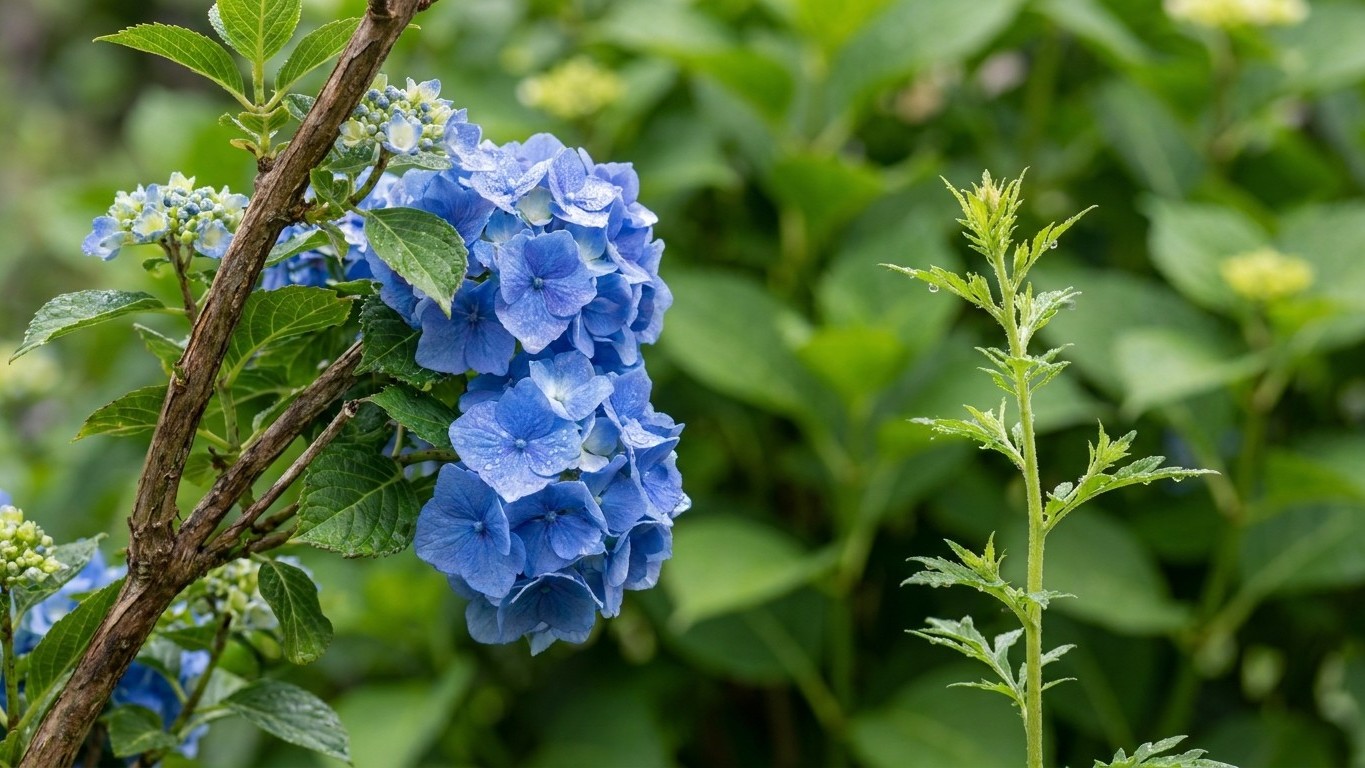

Most hydrangeas grown in Tennessee get through winter without help. The stems and roots are tougher than the flower buds. What needs protecting is the bud, mainly on bigleaf types, which carry next summer’s flowers on stems that grew the year before. Mulch the root zone after the first hard freeze, hold off on pruning, and be ready to cover plants when a freeze follows a warm spell. Panicle and smooth types need much less.
What this comes down to in Tennessee
Around Nashville, the median last spring freeze (32°F) falls around March 31 and the median first fall freeze around November 3, based on NOAA NCEI 1991–2020 climate normals for Nashville International Airport. Freezes after the spring date or before the fall date are common. Winter protection runs inside those bookends: it goes on after the first hard freeze and comes off once the danger of hard freeze has passed.
The reason timing matters more than temperature is that a hydrangea’s cold tolerance changes through the season. As days shorten and nights cool in fall, stems and buds harden. During a mild February that hardiness drains away, and a plant that shrugged off a January freeze can lose its buds to a much milder one in March. Tennessee winters swing between mild stretches and hard freezes, so the swing can do more damage than the deepest cold.
Which hydrangeas need winter protection in Tennessee?
It depends on where the plant makes its flower buds. Old-wood bloomers set buds in late summer, so a winter-killed stem means no flowers. New-wood bloomers grow their buds in spring, so a freeze that kills the stems back only costs them size.
| Type | Flowers form on | Winter risk | What helps |
|---|---|---|---|
| Bigleaf | Old wood (some rebloomers also on new wood) | Buds killed by cold or a late freeze | Mulch, no fall pruning, cover after leaf-out |
| Mountain | Mostly old wood | Similar to bigleaf, usually somewhat hardier | Mulch, cover for late freezes |
| Oakleaf | Old wood | Buds usually come through; leaves may drop early | Mulch for young plants |
| Panicle | New wood | Stem dieback has little effect on bloom | Mulch for the first winters |
| Smooth | New wood | Stem dieback has little effect on bloom | Little beyond mulch |
If you are still choosing plants or fixing a bed, the general advice on growing hydrangeas in Tennessee covers siting and care. Here the focus stays on getting what you already have through the cold months.
When should you put winter protection on and take it off?
Put mulch down after the first hard freeze, not before. Early mulch holds warmth in the soil and keeps the plant growing when it should be shutting down. Pull covers off gradually once the spring window closes, which for the Nashville reference runs into April. Cooler parts of the state run later, so watch your own plants. Swelling buds and fresh leaves are the cue, and a few more days of covered caution cost nothing.
Working it out for your own garden
A date copied from Nashville will be wrong for a garden two hours east. The method travels better: find your own first fall freeze and last spring freeze, then fit the protection around them. The Nashville numbers give you a starting point. Your own yard moves it by a week or two in either direction, depending on elevation and how much cold air settles where the shrub sits.
Start with the plant, then the calendar. Check whether your hydrangea blooms on old wood, new wood, or both. Compare its listed hardiness zone to your own. USDA hardiness zones rest on a single number, the average yearly lowest temperature, and they say nothing about late freezes or winter swings. A shrub that is hardy on paper can still lose buds to one cold night after a warm week.
How does a worked example look for a bigleaf and a panicle?
Take ‘Nikko Blue’, a classic old-wood bigleaf hydrangea. It forms its flower buds in late summer and carries them bare through winter. In a mild Middle Tennessee yard, those buds usually survive and open in early summer. Plant the same shrub in a cold hollow or on higher ground in the east, and one hard freeze in the weeks after leaf-out can wipe out the whole season’s flowers. The plant lives. The blooms do not come.
Now take ‘Limelight’, a panicle hydrangea that blooms on new wood. Cold can cut its stems to the ground, and it will still push up growth in spring and flower that summer. It needs little protection. That is where the line falls: if flowers depend on buds that sat through winter, protect them. If flowers come from spring growth, mulch the roots and leave the rest alone. Reblooming bigleafs such as ‘Endless Summer’ sit in between, since they also flower on new wood and give you a second chance if the old buds fail.
How do you tell winter damage from other problems?
Wait for leaf-out before you judge anything. Then scratch a stem lightly with a thumbnail. Green underneath means alive. Brown and dry means dead, and you cut back to the first live bud or to the ground. Leafy shrubs with no flowers usually lost their buds to cold or were pruned too late the year before. Blackened, limp new leaves after a cold night in April point to a late freeze, and the plant will normally leaf out again. Healthy stems that bloom poorly in shade or after heavy nitrogen feeding have a different problem altogether.
What changes across the state
Tennessee is long and varied, and winter protection shifts with it. On the 2023 USDA hardiness map, most of the state falls in zones 6a to 8a, with a few colder pockets on the highest peaks, which is a wide spread for one state. Nashville’s window is one reference point, and everywhere else needs a mental adjustment.
How much colder is East Tennessee and the Cumberland Plateau?
Colder, and later in spring. The Cumberland Plateau and the mountains of East Tennessee run cooler than Nashville, which pushes the last spring freeze later and the first fall freeze earlier. For old-wood hydrangeas that is a double hit: less time for buds to form and harden before cold arrives, and more risk of a freeze after buds start to swell. In these areas, mulch is routine, a cover or a few sheets of frost cloth on hand is cheap insurance, and a panicle or oakleaf is often a safer choice than a bigleaf in an exposed spot.
What about lower ground and West Tennessee?
Lower, flatter ground generally runs milder, and West Tennessee toward the Mississippi River tends to start spring earlier. That brings a different risk. Buds wake up sooner, and a cold snap in March or early April catches them already swelling. Within any region, elevation on a single property matters too. Cold air drains downhill and pools in low spots, so a hydrangea at the bottom of a slope can see a hard freeze while one near the top of the same yard stays above it. A spot against a south-facing wall or under open tree cover is warmer than the middle of a lawn.
The mistakes this state punishes
Winter in Tennessee is forgiving until it is not, and the same handful of errors show up every year. Most come from treating a warm day as a signal.
Which timing mistakes cost the most flowers?
Pruning old-wood hydrangeas in fall or winter is a common one. Cutting back a bigleaf in November removes next summer’s flower buds along with the stems. Prune right after bloom in summer, or wait until spring growth shows which stems are alive. Fertilizing late in summer is another, because it pushes soft new growth.
Pulling mulch and covers too early is another. A string of warm days in March feels like spring, but the last freeze around Nashville can still come after the median date of about March 31, and it arrives later in the cooler parts of the state. Keep covers close until that window has passed, and leave a bedsheet or frost cloth ready for any forecast freeze after leaf-out. Plastic is a poor choice for winter protection.
What about planting and plant choice?
Planting a bigleaf in a cold, exposed spot because the label says it is hardy is how many gardeners lose a year of flowers. Pick a sheltered site, or choose a new-wood type where the site cannot be changed. New plants and potted hydrangeas are especially vulnerable. Young shrubs have shallow roots, and containers freeze through from the sides, so move pots against a house wall or into an unheated garage, and mulch new plantings generously for their first couple of winters. Keep mulch back from the stems so bark does not rot.
Dry soil heading into winter is a quieter problem. Water a stressed shrub before a hard freeze if fall has been dry, because well-hydrated plants handle cold better than thirsty ones.
Checking this against your county
A regional date range is a starting point, and your county can differ by a couple of weeks. Your local University of Tennessee Extension office can tell you typical freeze timing for your area, how cold air behaves in your terrain, and which hydrangeas have held up locally. Bring a photo of the plant and a note about where it sits in your yard. The extension’s own hydrangea guidance covers the rest.
Common questions
Do hydrangeas need to be covered every winter in Tennessee?
No. Panicle, smooth, and oakleaf types rarely need covers. Bigleaf and mountain hydrangeas benefit from a cover only when a hard freeze is forecast after buds have started to swell, usually in March or April.
When should I prune hydrangeas that bloom on old wood?
Right after they finish blooming in summer, and only lightly. Avoid fall and winter pruning, since that removes the buds for next year. In spring, remove only the stems you have confirmed are dead.
Is mulch enough to protect hydrangeas through winter?
For roots, yes. A layer of shredded bark or leaves around the base after the first hard freeze protects the crown and lower stems. It does not protect buds on upper stems, which is why bigleaf types may need a cover on a cold night in spring.
Why did my hydrangea leaf out but not bloom?
Most often the flower buds died over winter or in a late freeze, or the stems were pruned at the wrong time. If the plant is healthy and the stems are green, it should bloom the following year, particularly if you protect the buds this winter.