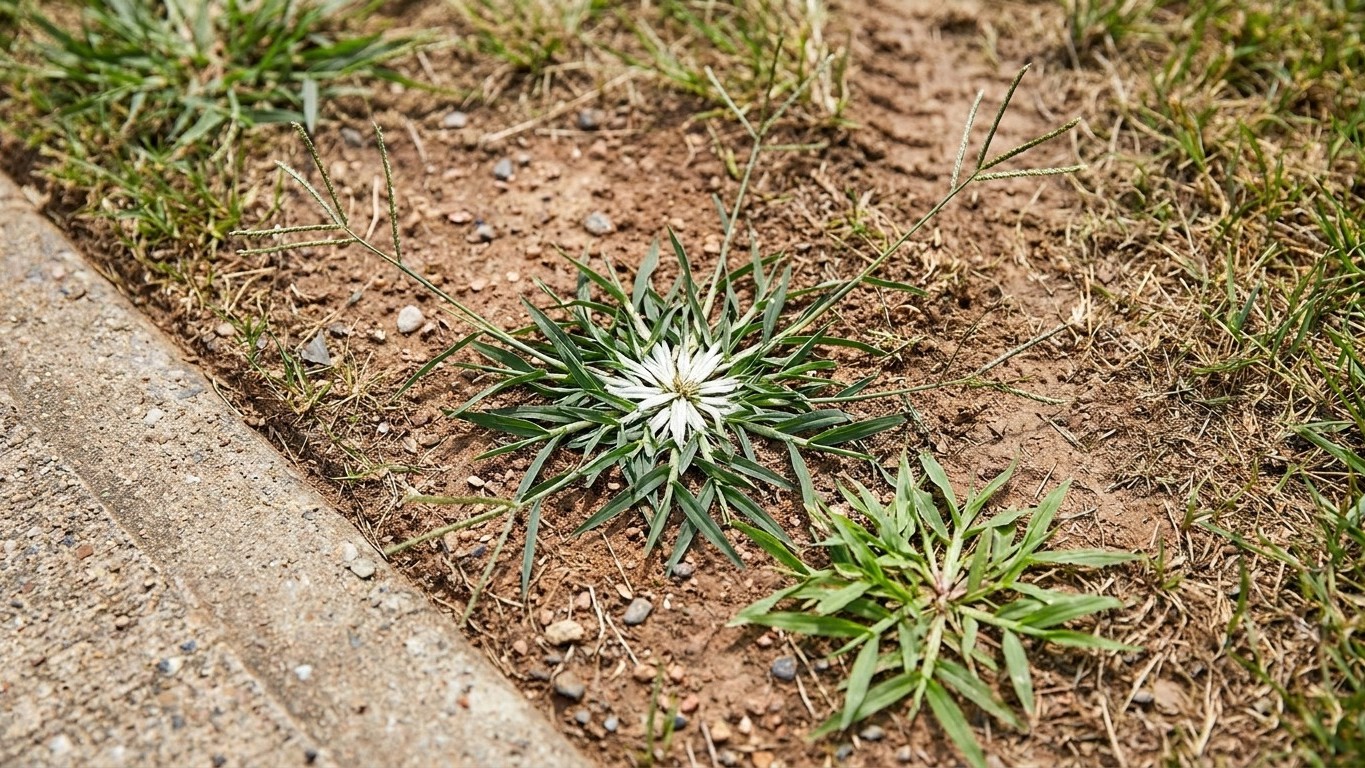

In Alabama, aerate in summer while the grass is growing at full speed, and not in fall. The state’s lawns are mostly warm-season grasses, which recover fastest from pulled cores when heat and sun drive growth. Fall is the cool-season calendar, and most aeration advice online comes from states that grow cool-season turf. The sections below translate that advice for Alabama. For the broader picture, start with Lawn Care.
When to aerate a lawn in Alabama
Aeration only pays off if the grass can fill the holes quickly. That is why the type of grass sets the calendar, and the month printed on your wall matters less.
Which grasses grow here, and why it matters
The Homestead Post places the reference city for these figures in the warm-season zone. It reached that call by reading the local climate normals against the season tolerances published by Clemson Cooperative Extension (HGIC 1214). The numeric thresholds are ours, not a published standard. A state is not a zone, either: higher ground and the far north of Alabama can sit in the neighboring zone, so treat the label as the reference city’s, not a statewide verdict.
Clemson Cooperative Extension lists the warm-season species that suit this region: bahiagrass, bermudagrass, carpetgrass, centipedegrass, seashore paspalum, St. Augustinegrass and zoysiagrass. Cool-season grasses such as Kentucky bluegrass do not hold here. They thin out through the long hot summer, which is exactly when the warm-season species peak. If your lawn is one of the seven above, it follows the warm-season rule. For help picking among them, see The Best Grass Seed for Alabama Lawns.
The extension rule, and whose months they are
The University of Nebraska-Lincoln Extension states the rule for cool-season lawns this way: “Cool season grasses, including Kentucky bluegrass, fescues, and perennial ryegrass, can be aerated in spring from early April through the end of May and again in fall from late August through the end of October.” For warm-season turf it says: “Warm season grasses, such as zoysia and buffalograss, should also be aerated when they are growing actively, which is late May though late August.”
Those months are Nebraska’s. Copying them onto an Alabama calendar would be a mistake, because Alabama’s growing season starts earlier and runs later. What transfers is the condition: aerate a warm-season lawn while it is actively growing in summer. That means after spring green-up is complete and the lawn needs regular mowing, and early enough that the grass can close the holes before it slows for fall.
NOAA NCEI’s 1991-2020 Climate Normals give a first fall frost window of November 2 to November 16 at the reference airport station (32F freeze probabilities, 30-70% band). Suburban and rural lawns typically freeze one to two weeks earlier than an airport, and elevation pushes it earlier still. Aerate a warm-season lawn in Alabama during summer active growth, finishing with a wide margin before the November 2 to November 16 frost window. Check First and Last Frost Dates in Alabama for your own county, and see The Alabama Lawn Care Calendar, Month by Month for where this job sits among the others.
Core aeration, not spikes
What the soil tends to do
Alabama’s official state soil, named by law in 1997, is the Bama series, an Ultisol. That is an old, heavily weathered and leached soil, naturally acid and low in nutrients. USDA NRCS Soil Data Access gives representative surface values of about pH 5.3 (strongly acid), 67 percent sand, 14 percent clay and 19 percent silt, with organic matter near 0.8 percent. It is well drained.
These are the figures for the soil that represents the state, not the soil under your lawn. Alabama spans hundreds of soil series. River bottoms, hill country and any lot a builder has scraped or filled will behave differently, and a graded subdivision lot can be packed hard no matter what the soil map says. Sandy, well-drained ground tends to shed water and compacts less than clay. Heavy traffic, mower wheels and construction can still pack it, and clay-heavy yards compact badly. A soil test will give you your own pH and nutrient numbers. Aeration does not correct acidity, so don’t expect it to.
Why cores beat spikes
A spike pushes a hole by shoving soil sideways, which can pack the walls of the hole tighter than before. The Nebraska extension article notes that solid-tine or spike aeration is “not effective in clay/silt soil,” and that core aeration is the method for compacted ground. A core aerator pulls out plugs and leaves room for air, water and roots to move. Rent or hire a core aerator, and skip spike tools and spiked shoes.
The cores should come out as intact cylinders of soil, lying on the surface in rows. Crumbled bits or tines that only scratch the surface mean the soil is too dry. Leave the plugs on the lawn, where they break down over a couple of rainfalls and mowing.
Moisture on the day matters as much as the machine. Soil that is moist but not wet lets tines penetrate and pull clean plugs. Bone-dry ground resists the tines, and saturated ground smears and clumps. If a screwdriver slides in easily, you are close. If you have to lean on it, water the lawn and wait a day.
Aerating and overseeding together
For cool-season lawns, fall aeration and overseeding make a natural pair. Cores open the soil, the seed drops into the holes, and it touches soil instead of sitting on thatch. The same trip also gets seed in during the season when cool-season grass grows best.
That pairing does not fit a warm-season lawn, which is what Alabama grows. Summer is the aeration window, and cool-season seed dropped into summer holes would fail in the heat. Most warm-season turf also fills holes by spreading, so a summer aeration helps it recover without any seed. Treat the two jobs as separate decisions on separate calendars. Aerate in summer and treat overseeding as its own job, timed by its own guide. Timing and species choices for sowing are covered in When to Overseed a Lawn in Alabama.
If a cool-season lawn is thinning out in your yard, aeration will not rescue it. The problem is the grass, and the fix is switching to one of the warm-season species that suit the region. Aeration then helps the new turf establish.
What goes wrong
Aerating a dormant lawn is the most common error. Warm-season grass that has browned after frost is not growing, so the holes stay open for months. Weeds, which don’t care about the season, move in first. Wait until the lawn has fully greened up in spring and you are mowing regularly.
Aerating too close to the first frost causes a similar problem. The reference station’s window is November 2 to November 16, and your own yard may freeze one to two weeks earlier, or earlier still on higher ground. Grass that slows for fall cannot heal the holes in time. Don’t aerate once the lawn begins slowing toward fall dormancy; wait for next summer.
Soil moisture can also ruin the job. Waterlogged soil smears into glazed, compacted walls, and the plugs come out as muddy rolls. Bone-dry soil lets the tines skip over the surface. Check the weather, irrigate a day ahead if needed, and let a soaked lawn drain before you start.
Finally, expecting spikes to fix clay is a trap. They look busy and leave the compaction in place, which is why the extension source says spike aeration is not effective in clay or silt soil.
Common questions
Can I aerate in fall in Alabama?
Not if your lawn is one of the warm-season grasses. Fall is the cool-season window, and a warm-season lawn is slowing toward dormancy then, with the first frost window of November 2 to November 16 at the reference station.
Does sandy soil need aeration?
Sandy, well-drained ground compacts less than clay, but traffic and construction can still pack it. If water runs off or a screwdriver won’t push in, aerate. Otherwise a soil test tells you more.
Does north Alabama follow a different schedule?
The colder, higher part of a state has a later last spring frost and an earlier first fall frost. Green-up comes later there, so the summer window opens later and has to close earlier.
Should I aerate during a dry spell?
Water first. Dry soil resists the tines and gives shallow cores. Aim for moist but not wet, and let the ground drain after heavy rain.