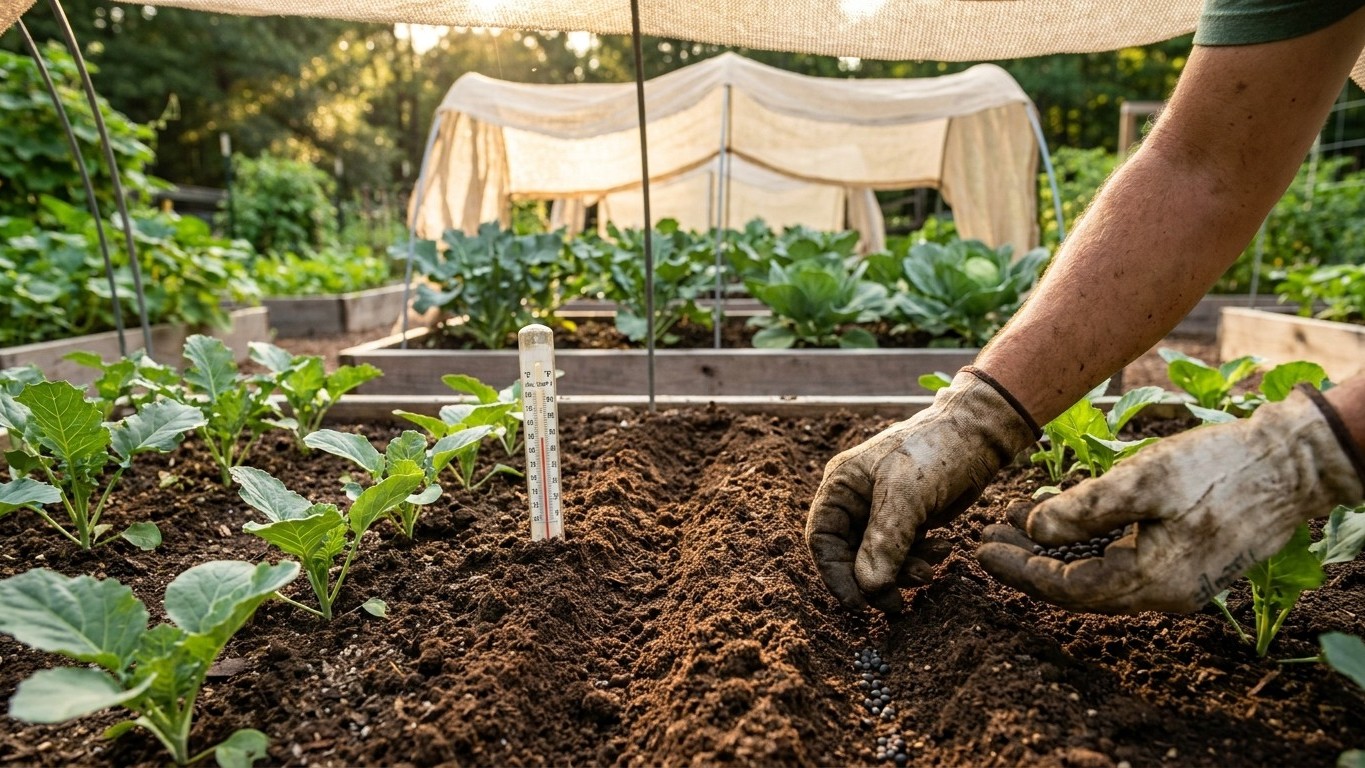

September in Alabama means one thing for the vegetable garden: it is fall-planting month, not the off-season. Direct-sow turnips, mustard, collards, kale, spinach, radishes and beets through the month, and set out broccoli, cabbage and cauliflower transplants in the first two weeks while soil is still workable. With the first fall frost typically landing between November 2 and November 16, there is enough runway for a full round of cool-season crops, provided the fastest growers go in throughout the month and the slower ones go in first.
What goes in the ground in September

The decision here is not the calendar, it is soil temperature and the frost window working together. Alabama’s first fall frost falls between November 2 and November 16 at the region’s reference climate station, which gives a working window of roughly 55 to 75 days from the start of September. That window decides everything: crops that mature faster than that are safe bets all month, crops that take longer need to go in during the first week or two, and anything slower than that is a gamble better saved for spring.
Soil is still warm, often uncomfortably so for early September, which actually favors germination of quick greens but stresses young transplants in full afternoon sun. A light shade cloth over new brassica transplants for the first week solves most of that problem without any extra equipment.
Safe direct-sow and transplant choices
Turnips, mustard greens, collards and kale can go in as seed right through the month, since their greens are edible well before full maturity even if a variety runs long. Radishes and beets tolerate the heat surprisingly well as long as they get consistent water. Lettuce and spinach do best sown from mid-month onward, once daytime highs start easing back. Broccoli, cabbage and cauliflower are best set out as transplants in the first half of the month, since they need the longest run to head up before growth slows in late fall.
| Crop | Method | Typical days to harvest |
|---|---|---|
| Radish | Direct sow | 25-30 days |
| Turnip greens | Direct sow | 30-40 days |
| Mustard greens | Direct sow | 30-45 days |
| Spinach | Direct sow (mid-late month) | 40-50 days |
| Collards, kale | Direct sow or transplant | 55-70 days |
| Broccoli, cabbage, cauliflower | Transplant early month | 60-85 days |
Garlic and shallots are a different story in Alabama. They go in later, generally October into November, once soil has cooled further, so hold seed stock rather than rushing it into September ground.
What to start under cover
Counting backward from the frost window is the only reliable method, and it works the same way regardless of which crop you are timing. Take the earliest likely frost date, November 2, subtract the days to maturity for a crop, then subtract another week or two for the plant to size up before you even think about transplanting. A cabbage that needs 70 days from transplant to harvest, started as a seedling that itself needs three to four weeks under cover before it goes in the ground, needs to be sown by roughly the middle of August to guarantee a harvest before frost hits the earliest homes in the state. By September, that math shifts to a narrower band: only quicker brassicas and greens still have room.
Lettuce and spinach are the better candidates for starting under cover in September itself, since Alabama’s early-month heat can cause both to bolt or fail to germinate outdoors. Starting them in trays in a shaded porch or under a cover for two to three weeks, then transplanting once nights cool, sidesteps that problem entirely and buys another two to three weeks of usable season.
The two ways this goes wrong are mirror images of each other. Start too early in the month’s lingering heat and seedlings sit too long in small cells, becoming rootbound and stressed before conditions are cool enough to plant them out. Start too late, past the third week of September, and the arithmetic simply runs out: even a fast grower needs its full days-to-maturity count before the first frost arrives, and there is no way to compress that once the plant is in the ground.
What is ready to pick
September is harvest month for the last of summer’s warm-season crops even as the fall garden is going in. Okra is at its peak, and the rule for tenderness is size, not color: pick pods at four inches or under, since anything longer turns woody fast in the remaining heat. Tomatoes and peppers still planted from spring continue ripening, though production slows as nights cool. Southern peas and the last plantings of summer squash are also finishing up, and sweet potatoes planted in spring are approaching harvest as their vines begin to yellow.
Muscadines and scuppernongs, the native grapes many Alabama home gardens carry on a fence or arbor, ripen through September, with fruit dropping cleanly from the vine when fully ready rather than needing to be pulled.
For anything stored from earlier in the season, this is a good month to check onions, winter squash and any early potatoes for soft spots or sprouting, since warm storage temperatures accelerate spoilage faster than most gardeners expect.
The jobs that matter this month
Soil preparation for the fall garden earns its keep now more than at any other point in the year. Working compost into beds before the second round of direct sowing gives quick greens the nutrient boost they need in a shorter season than spring crops get. A soil test taken now, with results back in a couple weeks, still leaves time to add lime or amendments before the ground cools further, which matters because lime takes weeks to adjust pH once applied.
Mulching does double duty in September, holding soil moisture through the tail end of summer heat while also moderating temperature swings for new brassica transplants. A two- to three-inch layer around new seedlings, kept a few inches back from stems, is enough.
Staking and support matter for a reason specific to this month: September sits at the peak of Atlantic hurricane season, and even inland Alabama gardens can see heavy wind and rain from tropical systems moving up from the Gulf. Trellised beans, tomato cages and any top-heavy fall transplants benefit from a check and a tighten now, before a storm does the staking test for you.
Succession sowing keeps the harvest coming: a new short row of radishes or turnip greens every ten to fourteen days through the month extends the picking window well into fall. Pest scouting on new brassica transplants is worth a few minutes each evening, since cabbage loopers and armyworms find tender new leaves fast, and catching an infestation in its first week is far easier than treating a full-blown one.
What not to do in September
The most common mistake is planting warm-season crops like a fresh round of tomatoes or peppers because the weather still feels like summer. The days-to-maturity math does not work in their favor this late; by the time fruit would set, the days are too short and frost is too close. Save that impulse for next spring instead.
Direct-sowing slow crops like carrots too late in the month is another version of the same error. Carrots need cool soil to germinate well and a long, steady season to size up, and a September 25th sowing simply runs out of runway before the first frost arrives.
Pulling mulch or shade cloth off new transplants too early after a stretch of cooler days is a mistake many gardeners make, since Alabama regularly swings back into another week of summer-like heat before settling into true fall. Keep protection in place until nighttime lows are reliably staying down, not just for a few days.
Heavy nitrogen feeding late in the month is worth avoiding too. It pushes soft, leafy growth on brassicas right when you want them building sturdier tissue to handle the season’s first cool snaps, and soft growth also draws more pest pressure. A balanced feed earlier in the month, tapering off as harvest approaches, serves the plants better.
Checking this against your own county
A state-wide frost window is a starting point, not an instruction. Alabama runs from the Tennessee Valley in the north, where hardiness zones sit closer to 7a and frost arrives earlier, down to the Gulf Coast near Mobile, where zone 9a conditions push frost back by weeks compared to the north of the state. Elevation in the state’s northern hill country shifts the timing further still.
The Alabama Cooperative Extension System publishes county-level guidance and a planting calendar built for these differences, and it is worth checking against the figures here before committing a full bed to any one planting date. Find it at aces.edu.
Common questions
Is it too hot in September to plant a fall garden in Alabama?
Early September soil is still warm, which can slow germination for some seeds and stress young transplants in full sun, but it does not rule out planting. Shading new transplants for their first week and watering consistently gets most crops through the transition.
Can tomatoes still be planted in September in Alabama?
A fresh planting is risky. With first frost expected between November 2 and November 16 at the reference station, there usually is not enough time left for a new tomato plant to set and ripen fruit before cold weather ends the season.
When should broccoli and cabbage transplants go into the garden?
The first two weeks of September give these slower crops the best chance to head up fully before growth slows in late fall. Transplants set out later in the month can still grow but may not reach full size before the season ends.
How many more weeks of harvest are left for summer crops like okra and peppers?
That depends on local frost timing, which varies across the state by weeks depending on region and elevation. Checking the Alabama Cooperative Extension System’s county-level calendar gives a closer estimate than the state-wide window alone.