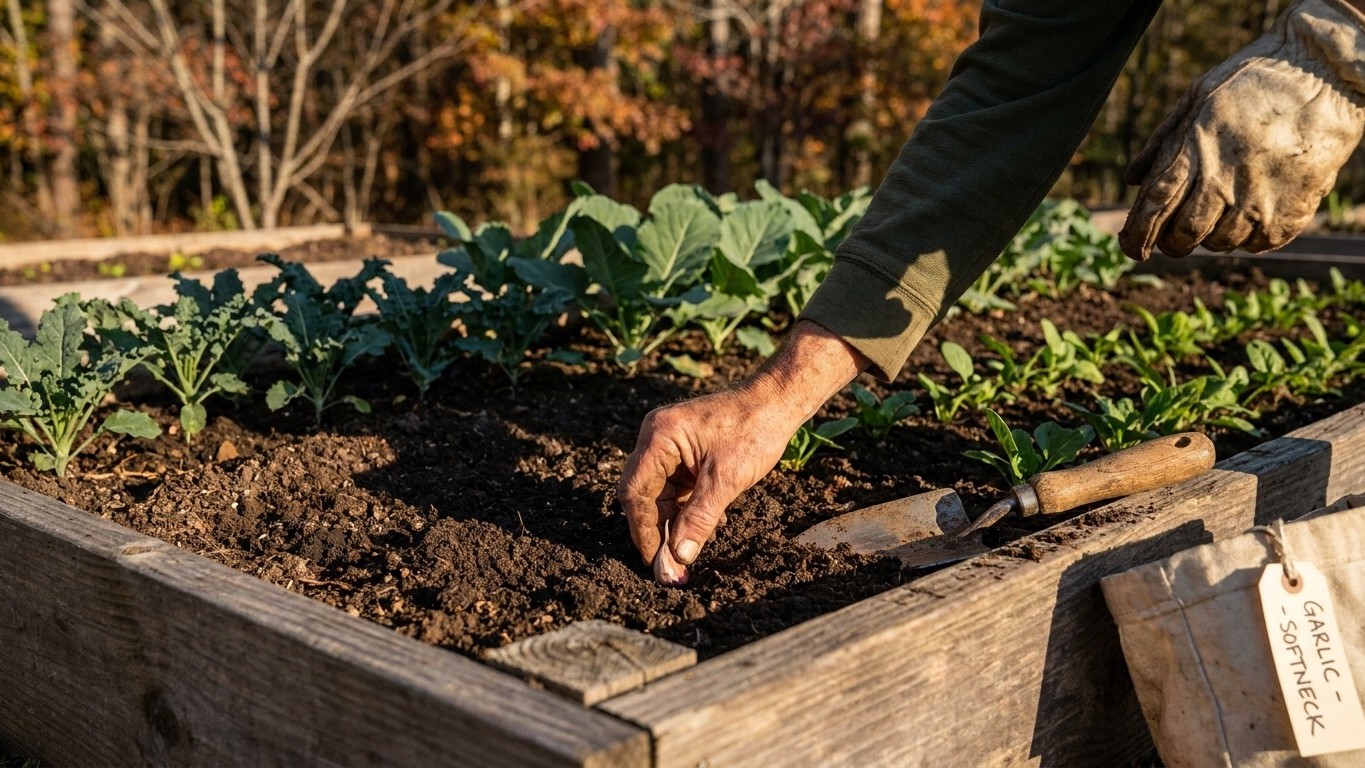

October is prime time to plant in Alabama. The first fall frost at the reference climate station doesn’t typically arrive until November 2 to November 16, which leaves a real window of mild weeks for cool-season crops to root, size up, and start producing before any freeze risk shows up.
What goes in the ground in October

Soil temperature, not the date on the calendar, decides what survives the next six weeks. Warm-season crops like tomatoes, peppers, and squash need soil holding in the 60s to germinate and grow well, and Alabama’s October soil is sliding the other direction as nights lengthen. Cool-season crops work the opposite way: many germinate fine in soil in the 40s and 50s, and they actually taste better after a light frost touches the leaves. That’s the mechanism behind everything below.
Given the first frost window of November 2 to November 16, direct-sown crops need to be fast growers or frost-hardy ones, or both. Garlic and shallots are the exception that plays the long game: cloves planted now use the cool months ahead to build root systems before pushing top growth in spring.
| Crop | Method | Why October works |
|---|---|---|
| Collards, kale, mustard greens | Direct sow or transplant | Tolerate light frost and sweeten after a cold snap |
| Turnips, radishes, beets | Direct sow | Mature fast enough to beat a hard freeze |
| Spinach, lettuce | Direct sow or transplant | Struggle to germinate in summer heat, thrive in cooling soil |
| Garlic, shallots | Plant cloves directly | Need the cold months ahead to size up bulbs |
| English peas, snap peas | Direct sow | Set pods better in cool nights than in spring heat |
Skip the gamble crops this month. Beans, cucumbers, and summer squash sown now will barely sprout before a frost cuts them down, and that’s true even in the milder pockets of south Alabama. If a nursery display tempts you with tomato starts in October, that’s a fall novelty crop for a warm microclimate, not a reliable planting for most of the state.
What to start under cover
The backward math matters more than any fixed date. For crops you want harvest-ready before the first frost window opens, count back from November 2, the earlier edge of that range, not the later one. A fall broccoli or cabbage transplant needing six to eight weeks to reach setting-out size should have been started under cover in August or early September, so by October that particular train has left the station for most gardeners.
What still makes sense under cover in October is the slower, longer game. Seed for spring bulbing onions, the short-day types favored in the Deep South, benefits from an early start indoors or in a cold frame, since those seedlings need roughly ten to twelve weeks to reach transplant size before going into the garden around the turn of the year. Lettuce and spinach seed started in trays now, then moved under a cold frame or low tunnel, keeps a steady cut-and-come-again supply going even as outdoor beds slow down. Microgreens on a windowsill fill the gap with almost no lag time at all.
Two ways this goes wrong. Start too early under cover and the seedlings get leggy and rootbound in trays waiting for cooler weather to plant them out, weakening the roots before they ever see soil. Start too late, especially for anything that needs real size before a hard freeze, and short October daylight simply won’t push growth fast enough to catch up.
What is ready to pick
October in Alabama is a genuine transition month at the harvest end too. The last of the summer garden is winding down: okra, peppers, and eggplant keep producing until a frost actually touches them, so keep picking rather than assuming the season is already over. Sweet potatoes should come out of the ground before soil temperatures drop much further, since cold soil bruises and shortens the storage life of the tubers.
Fall crops sown in September are just starting to feed the table now. Radishes and baby turnip greens can be ready in three to four weeks from sowing, and cut-and-come-again lettuce and spinach can be harvested by the leaf well before the whole plant matures. Muscadine grapes are finishing their run in many parts of the state, and pecan trees begin dropping their crop this month, one of the more distinctly Alabama harvest events on the calendar.
Check anything already in storage. Winter squash and cured sweet potatoes from earlier harvests should be inspected for soft spots or a sweet fermenting smell, both signs that a piece needs to be used immediately rather than left to spoil and spread rot to the rest of the bin.
The jobs that matter this month
Bed prep now pays off twice: it gets fall crops off to a strong start and sets the stage for whatever follows in spring. Working compost into beds before the ground cools further gives soil microbes time to process it while they’re still active. A soil test done in October, rather than waiting until spring rush, gives lime time to adjust pH before the next planting cycle needs it.
Mulch newly seeded and transplanted crops to buffer the swings between warm afternoons and the season’s first chilly nights, a stress that can stall young greens before they establish. Taller brassicas like collards benefit from a stake or a cage now, before fall winds knock them sideways once they’ve put on size. Watering rhythm should shift too: less frequent, but deep, since cooler air slows evaporation and overwatering in cool soil invites root rot.
Keep succession sowing fast crops like radishes and salad greens every two to three weeks to avoid a harvest gap. Pest scouting doesn’t stop just because summer’s over: cabbage loopers and harlequin bugs stay active on fall brassicas well into the month, and a quick check under leaves saves a planting that pest pressure could otherwise wipe out. Dig sweet potatoes and cure winter squash before a surprise early frost in the northern part of the state catches them in the ground. And if garlic goes in this month, mulch it right after planting rather than waiting, since exposed cloves are more vulnerable to an early cold snap than established ones.
What not to do in October
The most common mistake is holding onto summer crops too long out of optimism. Tomatoes and peppers can keep producing into October in a warm stretch, but in the northern part of the state a frost inside that November 2 to November 16 window can arrive with little warning, and unprotected plants go from productive to mush overnight. Have a plan to cover or harvest them rather than assuming the mild weather will hold.
Direct sowing large warm-season seeds like beans or squash this late is a losing bet almost everywhere in the state; the soil is already cooling in the wrong direction for reliable germination, and even a fast-growing variety won’t outrun the calendar. Heavy nitrogen feeding is another trap: pushing soft, tender new growth on greens right before a cold snap makes that growth more likely to be damaged by frost, not less. A light, balanced feeding supports steady growth without forcing it.
Don’t uncover cold frames on a warm October afternoon and forget to close them once the sun drops, since the temperature swing inside an open frame at night can be harsher than open ground. And resist thinning fall greens too lightly. Crowded turnips, radishes, and lettuce compete for light and moisture, producing weak, spindly plants that bolt or rot before they’re worth harvesting.
Checking this against your own county
A statewide October guide is a starting point, not an instruction sheet. Alabama’s hardiness zones run from 7a in the higher, northern parts of the state down to 9a along the Gulf Coast, according to the USDA Plant Hardiness Zone Map, and that spread alone can shift a safe planting window by several weeks. Elevation, local cold-air drainage, and how close a property sits to open water all move frost timing further, and suburban or rural gardens tend to see their first fall frost earlier, and their last spring frost later, than the airport weather station this page’s frost figures come from.
For county-level guidance, the Alabama Cooperative Extension System publishes planting calendars and frost data tailored to specific regions of the state.
Common questions
Can you still plant tomatoes in Alabama in October?
Not as a reliable outdoor planting. Soil is cooling and the first frost window opens November 2 to 16 at the reference station, which doesn’t leave enough time for a tomato transplant to establish and produce before cold weather arrives.
What vegetables can I direct sow in Alabama in October?
Turnips, mustard greens, radishes, beets, spinach, lettuce, and garlic cloves all go into the ground well this month, since they tolerate cooling soil and light frost better than warm-season crops.
When should garlic go in the ground in Alabama?
Cloves can go in through October and into November, giving them the cool months ahead to establish roots before the ground gets cold enough to slow growth entirely. Mulch right after planting to protect against an early cold snap.
Is it too late to start a fall garden in October in Alabama?
No. With the first frost window not opening until early to mid-November at the reference station, there’s still a solid stretch of mild weeks for fast cool-season crops like radishes, turnip greens, and lettuce to get established and produce a harvest.