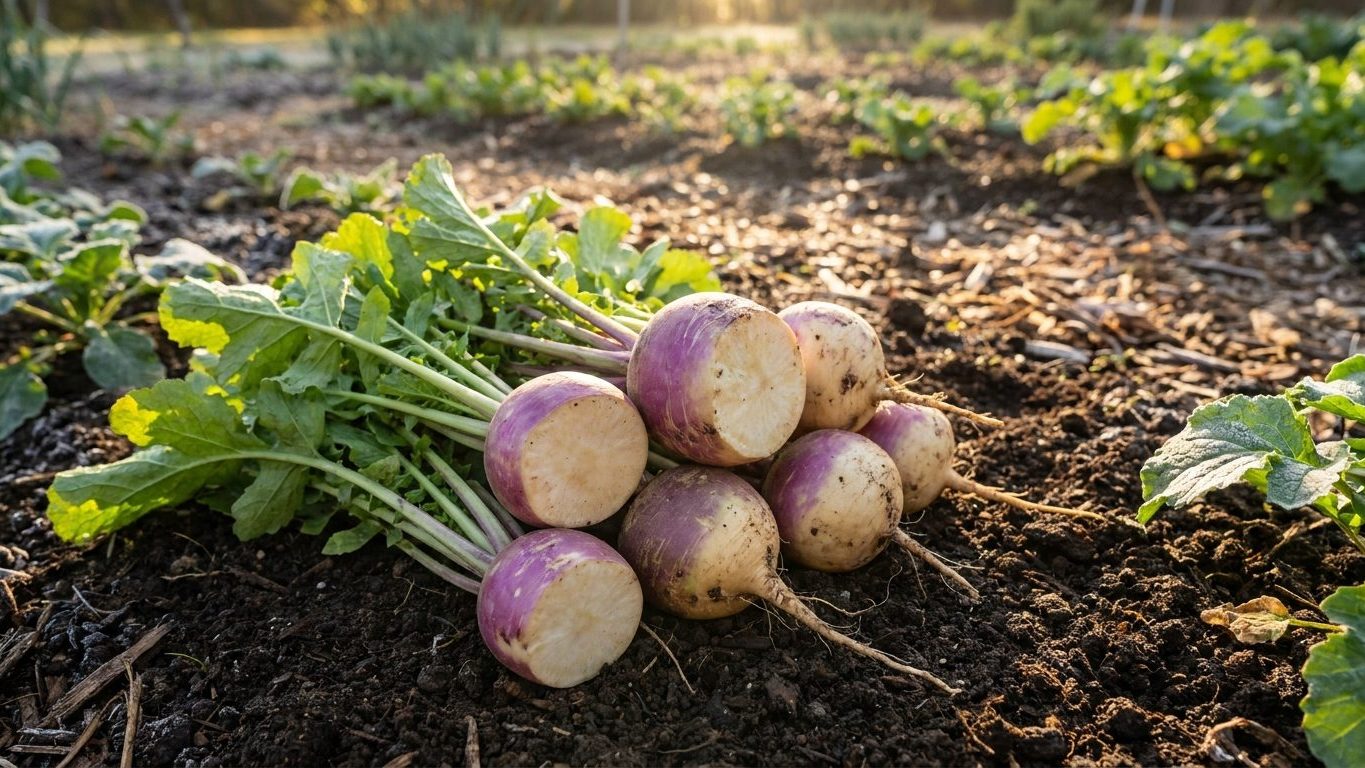

In most of Alabama, Turnips and Rutabaga are grown as a fall crop, not a spring one: seed goes into the ground from late July through early September so the roots size up in the cool, shortening days of autumn, when flavor turns sweet and pest pressure drops off. A spring sowing is possible too, but it is the fall planting Alabama gardeners lean on for both storage roots and a steady cutting of greens.
When the soil is warm enough in Alabama

The question gardeners actually ask is when it is safe to put seed in the ground, and the honest answer starts with frost. At the reference station used by NOAA, USW00003856, the last spring frost falls somewhere between March 19 and April 3, based on the 1991-2020 Climate Normals and their 30-70% freeze probability band. That is a probability, not a promise, and it is worth saying only once: some years the last cold snap arrives earlier, some years it lingers past the window.
Frost is really a stand-in for what the plant cares about, which is soil temperature. Turnip and rutabaga seed will germinate in soil that is still on the cool side, but the roots only put on real size once the ground has shed the raw chill of late winter, which happens after the frost risk has passed, not the moment the calendar hits the average date. That lag is why gardeners who sow the week of the last frost sometimes get slow, stalled seedlings compared to those who wait ten more days.
Suburban and rural gardens away from the airport station typically see that last frost run later in spring and the first fall frost run earlier, sometimes by one to two weeks, more at elevation. Treat the March 19 to April 3 window as a city reference point, then check your own county’s typical dates before committing a whole bed to it.
Rotation and early pest pressure
Turnip and rutabaga are brassicas, in the same family as cabbage, kale, and mustard, and they share the same soil pests and diseases: clubroot, flea beetles, and root maggots don’t distinguish between them. A bed that grew cabbage last season and turnips this season has not been rotated at all, even if the crop name on the seed packet changed. Working these roots into a proper rotation plan matters more here than the exact sowing date.
Early-season damage is usually flea beetles peppering the leaves with small holes. The practical response is a floating row cover set at planting and lifted only for weeding, not a chemical fix applied on a schedule. If roots are being stored later in the season, the safety check has nothing to do with how they look on the outside: a soft patch, a weeping spot, or a moldy crown means that root is done, regardless of how firm the rest of it feels.
How long the season lasts here
Put the two frost dates together and the growing window at the reference station runs from that March 19 to April 3 start through a first fall frost falling between November 2 and November 16. Worked out both ways, early-to-early and late-to-late, the frost-free stretch comes out to roughly 227 to 228 days, call it about seven and a half months.
That is a long window by national standards, and it changes the strategy. A gardener working with only ten or twelve frost-free weeks has one shot: sow once, hope the timing lands, and live with the result. Seven and a half months allows something different, a spring sowing for early roots and greens, followed by the main fall planting that most Alabama gardens are really built around, with room in between for other crops to cycle through the same bed.
The length of the window also affects whether transplanting is worth the trouble. Turnip and rutabaga are usually direct-sown because their taproot resents disturbance, but where the season is generous, a gardener has the luxury of starting a batch indoors for an earlier spring harvest without risking the whole crop on one method. Anyone stacking a spring sowing against the fall main crop should check the succession sowing guide on this site before laying out bed space, since the spacing between plantings matters more than the calendar date alone.
Alabama’s frost-free stretch is generous enough that a missed spring window is not a lost season. There is time to regroup and aim the bulk of the crop at fall, which is the safer bet in most of the state anyway.
Heat and water in Alabama

It would be easy to reach for summer heat and rainfall numbers here, but for this crop they are close to beside the point. Turnips and Rutabaga are cool-season roots, and the smart move in Alabama is to skip the hottest stretch of the year entirely by timing the crop for fall rather than fighting through July and August. The two figures that actually decide how this crop performs here are both about cold, not heat.
The first is the coldest month’s average daily minimum, which at the Huntsville reference station sits at 33.1°F. That number matters because it is not the record low and not a seasonal average, it is what a typical night in the coldest month actually does, and 33.1°F means many nights are hovering right at the freezing line rather than dropping hard below it. That is the figure that decides whether roots can stay in the ground under a layer of mulch through winter or need to be lifted and stored indoors before the ground locks up.
The second is the USDA Plant Hardiness Zone rating, which covers Alabama in a range from 7a to 9a, built on the average annual extreme minimum temperature. That is a wide span for one state, and it is a territory-wide range rather than a single number, so a gardener in the northern part of the state is working with a colder baseline than one near the Gulf. Huntsville sits toward the cooler end of that range, and it is the city this page has hard figures for, but a garden further south should expect a milder winter than the numbers above describe.
Where winter minimums stay close to freezing rather than plunging well below it, roots left in place under mulch get a modest dose of frost sweetening, the process that converts starches to sugars and is the reason a turnip pulled after a light freeze tastes better than one pulled in warm weather. But that sweetening has limits: once the ground freezes hard, the harvest window closes, and a gardener relying on in-ground storage needs to watch the forecast rather than assume the mulch will carry the crop indefinitely.
Which turnips and rutabaga suit Alabama
None of this points to a single named variety, and it shouldn’t. The right choice depends on trials done at the county level, tracking which types actually hold up against local disease pressure and timing, and that data lives with the Alabama Cooperative Extension System, not with a general gardening page. Reaching for a cultivar name here would mean guessing, and a gardener who plants based on a guessed name is the one who notices the mistake first when the crop underperforms.
What the season length and climate do support is a set of general traits worth asking about when checking with extension staff or a local seed source:
- Earlier-maturing types, useful where a spring sowing has to squeeze in before summer heat builds or where a fall sowing goes in later than planned
- Types known locally for tolerating humid, close conditions, since airflow around the root shoulders reduces rot risk in Alabama’s damp stretches
- Types with better resistance to the foliar diseases that spread fastest in humidity, since disease pressure, not drought or cold, is usually the first thing that cuts a planting short here
The humidity point is worth underlining, because it is where a lot of home plantings actually fail in this state. Fungal issues on the leaves spread fast in warm, damp air, and disease resistance ends up mattering more here than in a drier climate where the same variety might perform differently.
The rotation rule from earlier applies with equal force to variety choice: whatever type is planted, it belongs in a bed that did not grow cabbage, kale, or mustard the season before, and it should not be the crop that goes into a cabbage bed the following year either. Extension offices tracking regional trial results, reachable through the Alabama Cooperative Extension System, are the source built for that decision, county by county, rather than a single statewide recommendation.