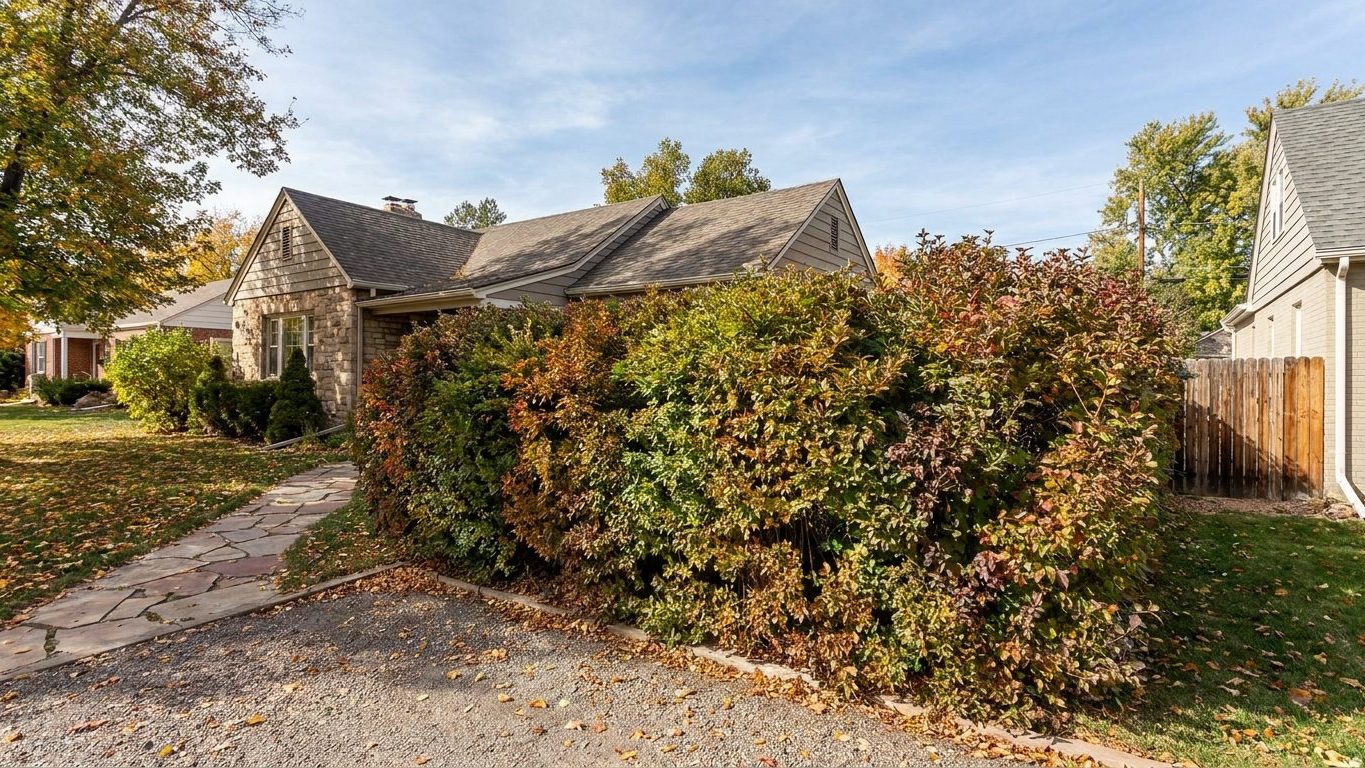

Search “hedge height law Alaska” and you won’t find a statewide number, because there isn’t one. Alaska has no state statute capping how tall a hedge can grow. Height limits, where they exist at all, come from city ordinances, and they differ from Anchorage to Juneau to Fairbanks to the smallest borough. The real answer depends entirely on which municipal code covers your address.
There is no Alaska hedge height law
This surprises a lot of homeowners, and it shouldn’t. Fence and hedge height is a land-use question, and land use in the United States is handled almost entirely at the local level. Alaska’s state legislature has never passed a statute setting a maximum hedge or fence height for residential property. Search the Alaska Statutes and you’ll find plenty on property boundaries, adverse possession, and easements, but nothing that tells you a hedge can be no taller than a specific figure.
What you will find, if your property sits inside an incorporated city or organized borough, is a zoning code. That code is where height limits for fences, walls, and sometimes hedges actually live, and it’s written and enforced by that municipality alone. A rule in Anchorage means nothing in Kodiak. A rule in Juneau means nothing in North Pole. Each city council or planning commission sets its own number, if it sets one at all.
That patchwork isn’t unique to Alaska. It’s how every state in the country handles this. Height limits for landscaping are treated the same way as setback requirements, garage size limits, or accessory structure rules: local, not statewide. The commercial sites that answer “how tall Can a Hedge Be in [state]” with a single confident number are wrong by design. They’re averaging or guessing at a figure that no single authority actually publishes, because no single authority sets it.
Why this matters more in a big, sparsely governed state
Alaska adds a wrinkle most states don’t have: a huge share of its land isn’t inside any municipality at all. Unorganized borough land has no local zoning authority the way a city does. If your property sits there, you may find there’s no hedge or fence height ordinance covering you whatsoever, not because the state overlooked it, but because no governing body with zoning power exists at that address. That’s a very different situation from living inside Anchorage’s municipal boundary, where a planning department, a zoning code, and an enforcement process all exist and apply to your yard.
So the honest starting point isn’t “what’s the limit,” it’s “does a limit even apply to me, and who wrote it.” That question has a real, findable answer. It just isn’t a number you can look up once for the whole state.
How to find the rule that actually applies to you
Most American cities, including a good number in Alaska, publish their full municipal code online through one of three services: Municode (library.municode.com), American Legal Publishing (codelibrary.amlegal.com), or eCode360. These aren’t government agencies themselves, they’re the publishers cities hire to host and index their ordinances, but the text on those sites is the actual legal code, word for word.
Once you’re on your city’s code, don’t search for “hedge” first. Go to the zoning chapter (sometimes labeled “Title 21,” “Land Use Code,” or simply “Zoning”), then look for a section on fences and walls or accessory structures. Height limits for yard structures almost always live there, not in a general nuisance or property maintenance chapter. Search the document for “height,” “fence,” and separately “hedge” or “vegetation,” since, as covered below, these can be regulated in completely different places or not at all.
Comparing the three code publishers
| Publisher | Web address | What to expect |
|---|---|---|
| Municode | library.municode.com | Searchable by city name; code organized by title and chapter, zoning usually under a dedicated title |
| American Legal Publishing | codelibrary.amlegal.com | Similar chapter structure; strong full-text search across the whole code |
| eCode360 | varies by city, hosted under General Code’s platform | Table-of-contents style navigation; good for jumping straight to a “Fences” section |
If your city isn’t listed on any of the three, check the city or borough’s own website for a “Municipal Code” or “Planning and Zoning” link, since some Alaska communities host their code directly rather than through a third-party publisher.
When the online code is unclear, ambiguous, or simply silent on hedges, call the planning or zoning department directly. Every incorporated Alaska city has one, even if it’s a single staff member covering multiple duties in a smaller borough. Ask specifically: “Does our fence height ordinance apply to living hedges, or only to built structures?” That one question resolves the ambiguity covered next, and a five-minute phone call is far more reliable than guessing from a code written for fences and applied loosely to plants.
The branches that cross the line
Here’s the detail that trips up a lot of homeowners: a hedge is often not treated as a fence in municipal code, even in cities that regulate fence height carefully. Many ordinances define “fence” as a built structure, wood, chain-link, vinyl, masonry, and simply don’t mention living plants at all. Others fold hedges into the same section as fences deliberately, treating a tall hedge as a wall for height purposes. You can’t assume either way. You have to check which word your specific code uses.
This distinction matters most at property lines near a street or driveway. Nearly every municipality, regardless of what it does or doesn’t say about general fence or hedge height, enforces some version of a sight triangle rule at corners and driveway entrances. The idea is simple: nothing, whether it’s a fence, a parked trailer, or a hedge, can block a driver’s line of sight where two streets meet or where a driveway crosses a sidewalk. The height limit inside that triangle is almost always far lower than the general yard fence limit, sometimes low enough that a mature hedge would violate it even if the same hedge would be perfectly legal ten feet further back on the same property line.
If your hedge sits anywhere near a corner lot, an intersection, or a driveway apron, check for this rule specifically, even if you’ve already confirmed the general height limit for hedges elsewhere on your property. It’s the one provision that shows up in some form almost everywhere, and it’s the one most often ignored until a neighbor complains or a driver has a close call backing out of a driveway.
Then there’s the separate question of branches that grow across the property line rather than up. In most states, the general legal principle, developed through court decisions rather than written into any statute, is that a neighbor whose airspace is invaded by overhanging branches or invasive roots may cut back that growth up to the boundary line, at their own expense, without needing permission. What they generally can’t do is go onto your side of the line to cut, or cut in a way that kills the plant. This is a broad common-law principle that varies by state and by the specific facts of a case, not a fixed statute you can quote a section number for, and it’s worth knowing exists before a disagreement with a neighbor turns into something more formal. If a dispute gets serious, that’s a conversation for a local attorney, not a DIY reading of case law.
What to check before you plant
The best time to research hedge height rules is before you put anything in the ground, not after a neighbor or a code enforcement officer raises the question. A young hedge is easy to relocate, prune back hard, or replace with a lower-growing variety. A ten-year-old hedge that’s already six feet over the code limit is a much more expensive problem.
Start with your property’s zoning district. Cities often set different fence and hedge rules for front yards versus side and rear yards, and different rules again for corner lots. A hedge along your back property line might face no height restriction at all, while the same hedge along the street-facing front yard could be capped at a much lower figure.
Next, confirm whether your property sits inside an incorporated city or an organized borough with zoning authority, or in unorganized borough territory where no local zoning code may apply. This single fact changes everything else about your research, since it tells you whether you’re looking for an ordinance at all or confirming that none exists.
If you’re near any of the following, treat the check as non-negotiable rather than optional:
- A street corner or intersection, where sight-triangle rules almost always apply regardless of the general hedge rule
- A driveway that crosses a public sidewalk, where the same sight-line logic applies at a smaller scale
- A shared property line with an existing hedge or tree line, where future growth could eventually cross onto a neighbor’s side
- A homeowners association, which can layer its own height and species rules on top of, or instead of, whatever the city ordinance says
That last point catches people off guard. An HOA covenant can restrict hedge height more tightly than city code allows, and HOA rules are enforced through the association itself, not the municipal zoning department. If you live under an HOA, its covenants are a separate document you need to read alongside, not instead of, the city code.
Common questions
Is there a statewide maximum hedge height in Alaska?
No. Alaska has no state statute setting a hedge or fence height limit. Any limit that applies comes from the ordinance of the specific city or organized borough where the property is located.
What if my property isn’t inside any city?
Land in Alaska’s unorganized borough often falls outside any municipal zoning authority. In that case, there may be no hedge height ordinance covering the property at all, since no local government with zoning power has jurisdiction there.
Does a fence height limit automatically apply to hedges too?
Not necessarily. Many municipal codes define “fence” as a built structure and treat living hedges separately, or don’t mention them at all. Check the exact wording of your city’s code, or call the planning department, before assuming the fence rule covers your hedge.
Can my neighbor cut branches from my hedge that cross onto their yard?
In most states, general legal principle allows a neighbor to trim overhanging branches back to the property line at their own expense, without killing the plant, but this comes from case law rather than a fixed statute and varies by state. For a real dispute, talk to a local attorney rather than relying on a general rule.