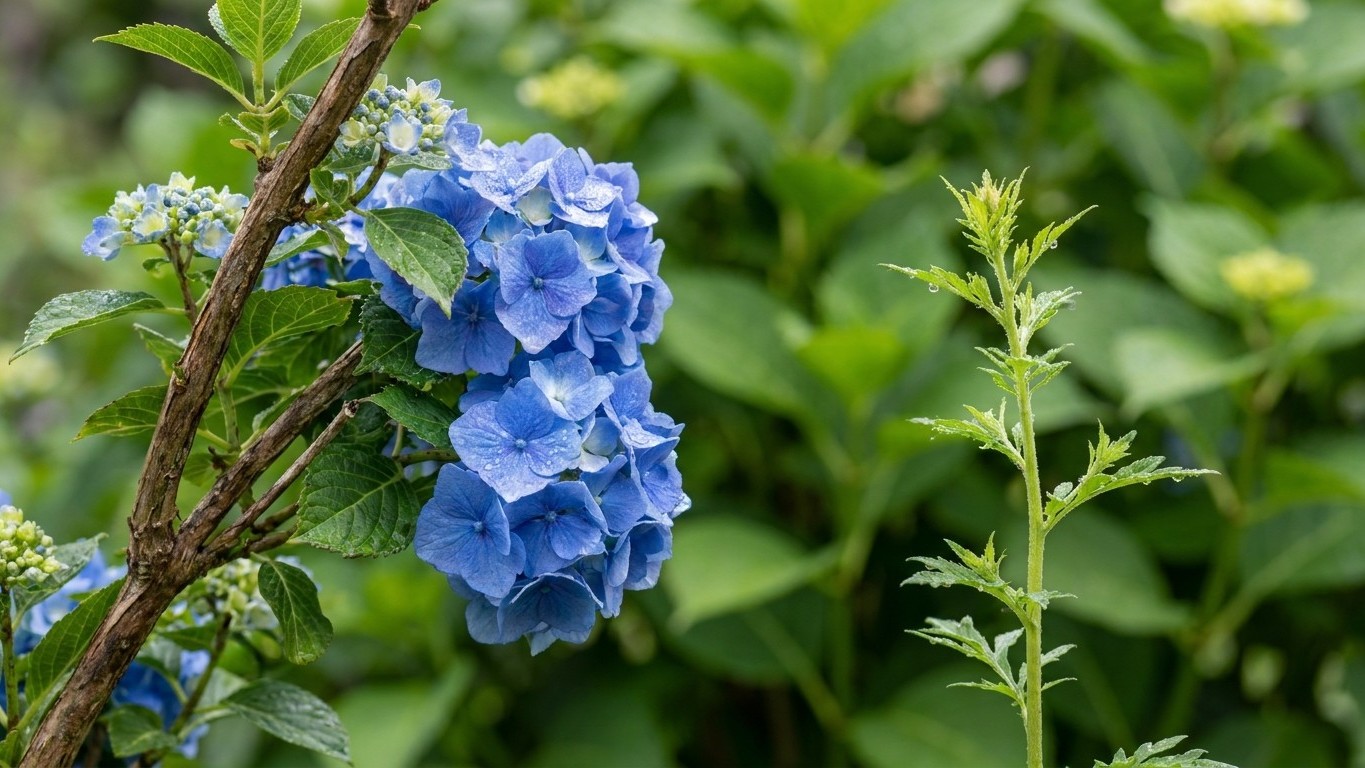

Protecting hydrangeas through an Alaska winter means having mulch, wraps, or burlap fully in place before the first fall frost hits Anchorage, typically September 22 to October 1, and leaving that protection untouched until well after the last spring frost, May 3 to May 12. Outside that window, exposed wood and buds face damage from freeze-thaw cycles the plant hasn’t hardened off against.
What this comes down to in Alaska
The frost window at Anchorage’s reference station runs from May 3-12 in spring to September 22-October 1 in fall, leaving roughly 143 frost-free days to work with. That’s the mildest stretch of weather anywhere in the state, which matters because Alaska’s USDA hardiness zones span an almost absurd range: 1a to 8a. No other state on the map covers that much ground on a single scale.
USDA zones are built on one number: the average annual extreme minimum temperature a location is likely to see. That number decides whether hydrangea wood survives the winter at all, not how pretty the average January feels. A location can have mild average winters and still register a brutal one-week cold snap that defines its zone. That’s why protection isn’t a cosmetic step here, it’s what stands between live wood in spring and a plant that has to regrow from the base, or doesn’t come back.
Snow cover changes the equation more in Alaska than in most states. A consistent, deep snowpack acts as free insulation, often keeping the ground and lower stems several degrees warmer than the air above it. The trouble is that snowpack isn’t guaranteed everywhere the plant grows, and a winter with thin or patchy cover leaves crowns and buds exposed to whatever the air temperature actually does. Long summer daylight helps hydrangeas catch up on growth during the short season, but it does nothing for them once the light fades and the freeze sets in.
None of this is about which hydrangea to plant or when to put it in the ground, those are separate questions with their own answers. This is about what happens to a plant that’s already growing once the frost window closes in on it.
Working it out for your own garden
Start from the fall frost date, not the calendar month. Anchorage’s first fall frost falls September 22 to October 1. Protection, meaning mulch mounded over the crown, burlap wrapping for exposed stems, or both, needs to be finished before that window opens, not during it. Counting back two to three weeks for the work itself puts the practical deadline somewhere around early-to-mid September, a range that shifts earlier the further you are from Anchorage’s relatively mild microclimate.
Work the spring side the same way. The last spring frost runs May 3-12. Pulling mulch and wraps off too soon, right when a warm stretch tempts you, ignores the fact that this is a range, not a hard cutoff. A safer approach removes heavy protection gradually, starting after the range has passed rather than the moment it begins, and keeping a lighter layer down until new growth shows it’s safe to strip the bed bare.
For the plant itself, the test is simple: press a finger into the mulch bed in early fall. If the soil underneath is still workable and not yet frozen solid, you still have time to finish the job. Once the ground has locked up, any mulch you add sits on the surface instead of insulating the root zone, and it does far less good.
Stems tell their own story. Hydrangeas that bloom on old wood, meaning the flower buds formed the previous season and overwinter on the stem, lose next year’s blooms if that wood dies back to the ground. Types that bloom on new wood, growing and flowering in the same season, can be cut back hard in fall or spring and still flower, which makes them far more forgiving of an imperfect protection job. Knowing which kind you’re dealing with changes how much winter protection actually matters for that specific plant, separate from whether it survives at all.
Checking whether your setup worked is a fall task and a spring task both. In fall, confirm mulch depth is even and reaches the drip line, not just the base of the stem. In spring, scratch a small patch of bark on a stem once temperatures climb past the frost range; green tissue underneath means that wood is alive, brown and dry means it isn’t, and you’ll know within a week which stems to cut back.
What changes across the state
Anchorage’s frost window is the reference point here, and it happens to sit on the mild end of what Alaska offers. Coastal areas, moderated by ocean water that holds heat longer than land, tend to see gentler winter extremes and more reliable snow insulation. Move inland toward the Interior and that moderation disappears, replaced by continental swings where the extreme minimum temperature driving the USDA zone number can be dramatically colder, which is a large part of why the state’s zone range stretches all the way down to 1a.
Elevation compounds the difference. Gardens tucked into valley floors often trap cold air on calm nights, a pattern known as cold air drainage, while a slope just a few hundred feet up the same hillside can stay noticeably warmer. Two properties a short drive apart can end up needing very different protection timelines because of nothing more than which side of a ridge they sit on.
Snow reliability shifts too. Areas that reliably bank deep, lasting snow get a layer of natural insulation that outperforms most mulch a gardener could add by hand. Areas prone to wind-scoured or thin snow years lose that advantage and lean harder on manual protection to make up the difference.
None of this produces a second precise frost date worth citing. The only measured figures available for this guide come from the Anchorage station, and the honest way to use them elsewhere in the state is as a starting point that shifts earlier in the season for colder, higher, or more interior ground, and later for mild coastal pockets.
The mistakes this state punishes
The costliest mistake is trusting a warm September stretch. A run of mild afternoons late in the season feels like an invitation to delay mulching, but the frost window doesn’t move because the weather cooperated for a week. Gardeners who wait for the first cold snap to start protecting often find it arrives faster than expected once fall settles in, and the ground can firm up before the job gets finished.
A close second is stripping protection at the first thaw in spring. A few warm days inside the May 3-12 window, or even before it, can look like the all-clear, but that’s exactly the range where a late freeze still has room to hit. Uncovering too early exposes tender new growth to damage it wouldn’t have faced under another week of mulch.
Uneven mulch depth causes quieter damage. A thick pile at the base that thins out toward the drip line still leaves the outer root zone exposed, and that’s often where the coldest soil temperatures do the most harm over a long winter.
Skipping the wood-type question costs bloom seasons rather than plants. Treating an old-wood bloomer the same as a new-wood type, assuming a hard cutback in fall won’t matter, is how a gardener ends up with a healthy plant and no flowers the following summer.
Checking this against your county
Anchorage’s frost dates are a real, measured starting point, not a rule for the whole state. Alaska’s hardiness zones alone span 1a to 8a, which means a garden in a different borough could need protection weeks earlier or later than what works near Anchorage. Before locking in a schedule, check current freeze forecasts and local guidance through your county extension office, and use the University of Alaska Fairbanks Cooperative Extension Service for state-specific hydrangea guidance that reflects conditions closer to home.
Common questions
Does mulch alone protect hydrangeas through an Alaska winter?
Mulch handles the root zone and crown, but exposed stems on old-wood types often still need burlap wrapping or another physical barrier to survive the extreme minimum temperatures that define the state’s coldest zones.
How early is too early to remove winter protection?
Removing it before the last spring frost window, May 3-12 at the Anchorage reference station, risks exposing new growth to a freeze that hasn’t passed yet, even after a warm spell.
Do all hydrangea types need the same winter protection?
No. Types that bloom on new wood tolerate a hard cutback and light protection reasonably well, while old-wood bloomers lose next year’s flowers if the overwintering stems die back, making their protection needs stricter.
Is snow cover enough on its own?
A deep, consistent snowpack insulates well, but it isn’t guaranteed everywhere in Alaska. Where snow is thin or inconsistent, mulch and wrapping still do most of the protective work.