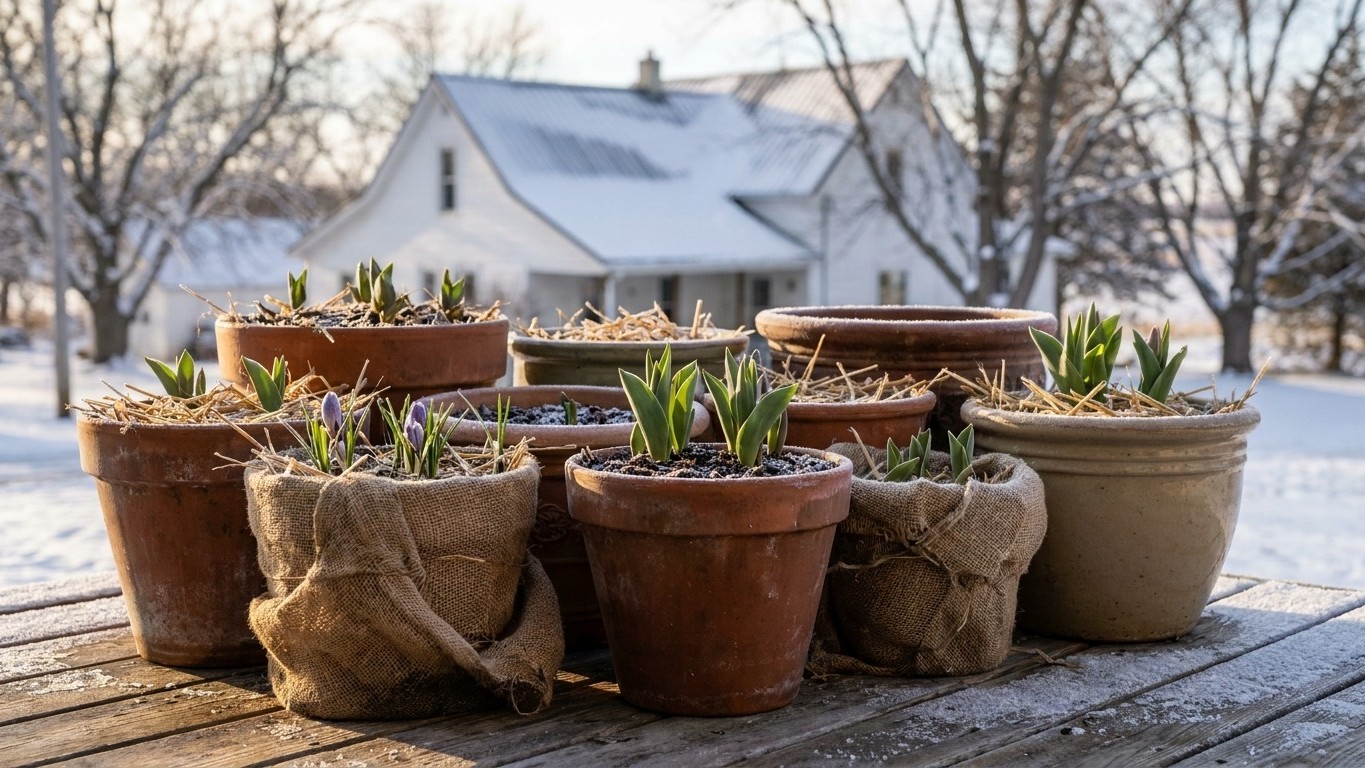

In Alaska, dahlias, cannas and gladiolus come out of the ground every fall. The signal is the first frost that blackens the leaves, which in Anchorage typically arrives between September 22 and October 1. Lift the tubers, rhizomes and corms soon after, let them dry, then keep them cool, dark and barely damp until spring. Dig too early and they rot in the box. Leave them in the soil and most won’t come back.
Do you have to dig them up in Alaska?
Alaska spans zone 1a to zone 8a on the USDA Plant Hardiness Zone Map 2023, and the verdict splits along one question: does the ground freeze deeply where you garden? Where it doesn’t, these three can stay under mulch. Where it does, lift them every fall. Anchorage, the reference point here, falls on the freezing side. So do the Interior and the north, where winters are colder still.
What the numbers say about Anchorage
The USDA system is built on a single variable, the average annual extreme minimum temperature. It tells you what the coldest night of a typical year looks like, not how long the cold lasts or how wet the soil stays. For the second half of the picture, look at NOAA’s NCEI Climate Normals for 1991 to 2020. At the Anchorage reference station, the mean daily minimum of the coldest month is 11.0°F. That is an average of ordinary winter nights, not a record low. Half a winter of nights near that figure means frozen soil at the depth where tubers sit.
Dahlias, cannas and gladiolus are tender storage organs: tubers, rhizomes and corms from plants that evolved in places without hard winters. Frozen tissue turns to mush as it thaws, and you find out in May when nothing sprouts. A thick layer of mulch slows the freeze but does not stop it, and it cannot rescue a bed that sits under a foot of packed snow and weeks of below-zero nights.
Where the line falls within the state
The staying-in-the-ground option only opens up at the mild end of the state’s range, and nothing in the climate data for this territory marks a safe cutoff. The working rule is plain: if the ground freezes in your yard, lift. Anchorage is one of the mildest inhabited parts of Alaska, so if lifting is the answer there, it is the answer for gardens farther north too, and those gardens lift earlier because their first fall frost arrives sooner.
Hardy bulbs are a different story. Tulips, daffodils and crocus spend winter in the ground on purpose, and Which Spring Bulbs Survive Your Winter sorts out which ones can take it. Dahlias, cannas and gladiolus are summer bulbs, a separate group from the Spring Bulbs you plant in fall. Treat them as a summer rental, not a permanent tenant.
When to lift them
Start when frost blackens the foliage, then lift soon after. In Anchorage, that frost typically lands between September 22 and October 1, so the digging window opens at the end of September and runs into early October. The figure comes from NOAA NCEI 1991-2020 Climate Normals for the Anchorage station (USW00026451), using the 32°F freeze probabilities in the 30 to 70 percent band. Treat it as the middle of the odds, not a promise. Some years the frost comes before the band, some years after.
Why the blackened leaves matter
A frost that kills the top growth is the plant’s cue that the season is over. Until then, the foliage keeps feeding the underground parts. Tubers keep bulking up, corms keep filling, and skins keep toughening. Lift while the stalks are still green and you catch the crop in mid-growth: thin skin, high water content, and a cut stem that acts like an open door for rot. Dahlia stems are hollow, so moisture from a fresh cut can travel straight down into the crown. Those tubers often look fine on the day you pull them and turn soft in the storage box by midwinter.
Waiting for frost also costs almost nothing in Alaska. Anchorage gets about 143 frost-free days, and the long summer daylight partly makes up for a short season, so plants tend to be well grown by the time the freeze arrives. The bigger risk is not lifting soon enough after the freeze, because the ground itself will not stay workable forever.
Colder parts of the state lift earlier
The Anchorage range is a reference, not a rule for the whole state. In the Interior and the north, the growing season is far shorter and the first fall frost arrives earlier. Fall tasks move up there, so lifting starts before the Anchorage window. Your own First and Last Frost Dates in Alaska lookup will show where your yard falls. Follow the frost in your yard rather than the calendar.
Pick a dry day when the soil is workable. Loosen the ground with a garden fork a good distance out from the stalk, since dahlia tubers spread wider than you would guess, and lift the whole clump from underneath. Never yank on the stalk. Dahlia necks snap easily, and a tuber without a neck will not sprout. If a hard freeze threatens the ground before the leaves have blackened, cover the bed with old sheets or blankets overnight and buy yourself a few more days.
Storing them over winter
Storage comes down to three steps: cure, clean lightly, then keep cool, dark and slightly moist. The goal is a middle path where the tubers neither rot nor shrivel. All three plants follow that pattern, but they differ in how much dryness or moisture they want, so store them separately.
Curing and cleaning
Curing means letting the surface dry so skins toughen and small wounds seal. Set the clumps somewhere sheltered and airy, out of direct sun and rain, and let the soil dry until it crumbles. Brush off the loose dirt by hand. Skip the hose. Washing tubers adds moisture right when you want it gone, and it is one of the most reliable ways to start rot. Dahlias can be cut down to a short stub of stem. Cannas can lose their tops the same way. Gladiolus corms need the old shriveled corm at the base and the tiny cormels dealt with once they separate easily.
| Plant | What you store | Curing | Packing | Moisture |
|---|---|---|---|---|
| Dahlias | Clumps of tubers with fragile necks | Air-dry briefly, out of sun | Boxes with slightly damp peat moss, vermiculite or wood shavings | Slightly moist; the tubers shrivel fast if too dry |
| Cannas | Fleshy rhizomes, kept in chunks | Dry the surface, do not bake | Boxes with barely damp medium, kept from touching | Slightly moist; they dislike drying out completely |
| Gladiolus | Corms, cleaned of old corm and husks | Longest cure of the three, in a dry, airy spot | Paper bags, mesh bags or open trays | Dry; too much moisture breeds rot and mold |
Where to keep them
The spot needs to stay cool and dark but never freeze. In Anchorage, the coldest month averages a nightly low of 11.0°F (NOAA NCEI 1991-2020), so an uninsulated garage or shed can drop well below freezing during a cold snap. A basement corner, a cool closet against an interior wall, or an insulated crawl space is safer. A room next to the furnace is too warm and dry, which is how corms and tubers shrivel.
Cannas, which come from the warmest climates of the three, tolerate the least cold. Dahlias want cool and steady. Gladiolus corms are the toughest to store, provided they stay dry, and they are the ones most likely to be ruined by damp.
Then comes the step that saves the collection: check every box once a month through winter. Lift the lid, handle a few pieces, and look for two problems. Soft, dark or moldy spots mean rot. Wrinkled, lightweight tubers mean shriveling. Cut out rot with a clean knife, let the cut surface dry, and repack. If dahlias or cannas look wrinkled, mist the packing lightly. If gladiolus corms feel damp, move them to a drier, airier spot. Ten minutes a month catches a small problem before it spreads through the box.
What goes wrong
Rot shows up as soft, dark, sometimes sour-smelling patches, or a fuzzy gray mold. It comes from too much moisture, poor airflow, washing before storage, or lifting before the skins toughened. Prevent it with a proper cure, a barely damp packing medium, and boxes that breathe. One rotten tuber can spoil its neighbors, so pull it out at the first monthly check.
Shriveling is the opposite failure. Tubers turn wrinkled, light and leathery, especially in warm, dry rooms. A light misting of the packing material usually brings them back if you catch it in time. Moving them to a cooler spot prevents a repeat. Gladiolus corms are the exception, since a hard, dry corm is normal and only a mushy or mildewed one is a problem.
Lifting too early produces thin-skinned, wet tubers that rot from the cut stem down. It also gives weaker eyes come spring. The cure is patience: wait for the frost to blacken the foliage, and lift soon after. The same goes for anyone in a colder part of the state, where the frost comes earlier and lifting moves up with it.
Leaving them in the ground one zone too far north is the mistake that costs the most. Nothing looks wrong until spring, when the bed stays empty or you dig up mush. A winter mulch is no match for frozen soil, and the climate data for Anchorage (a coldest-month mean minimum of 11.0°F) shows why. When in doubt, lift. Tender bulbs that spent the winter in a paper bag cost nothing. The ones left outside cost you a whole season’s growth. Hardy bulbs are the ones to plant in the ground each fall, and Planting Spring Bulbs in Alaska covers that side of the job.
Common questions
Can any of these stay in the ground in Anchorage?
Not reliably. The coldest month at the Anchorage reference station has a mean daily minimum of 11.0°F (NOAA NCEI 1991-2020), and that is enough to freeze the soil where tubers sit. Alaska’s zone range is 1a to 8a on the USDA 2023 map, and the mildest pockets may differ, but Anchorage gardeners should plan on lifting.
Do I wait for a hard frost or is a light one enough?
A frost that blackens the foliage is the signal. It does not need to be a deep freeze. Once the leaves are dead, the plant has stopped feeding the tubers, so lift soon after instead of waiting for the ground to freeze hard, which makes digging difficult and risks damage.
Can I store all three in the same box?
Better not to. Dahlias and cannas want a slightly moist packing medium, while gladiolus corms want to stay dry and airy. Keep them in separate containers and label each one, since tubers and rhizomes look alike after a winter in the dark.
Do I lift at the same time in the Interior and the north?
No. The Anchorage window (first frost between September 22 and October 1) is a reference point. In the Interior and the north the first fall frost arrives earlier, so lifting comes earlier too. Other Alaska guides cover local conditions. Because Anchorage is one of the mildest inhabited parts of the state, a colder yard should never lift later than Anchorage does.