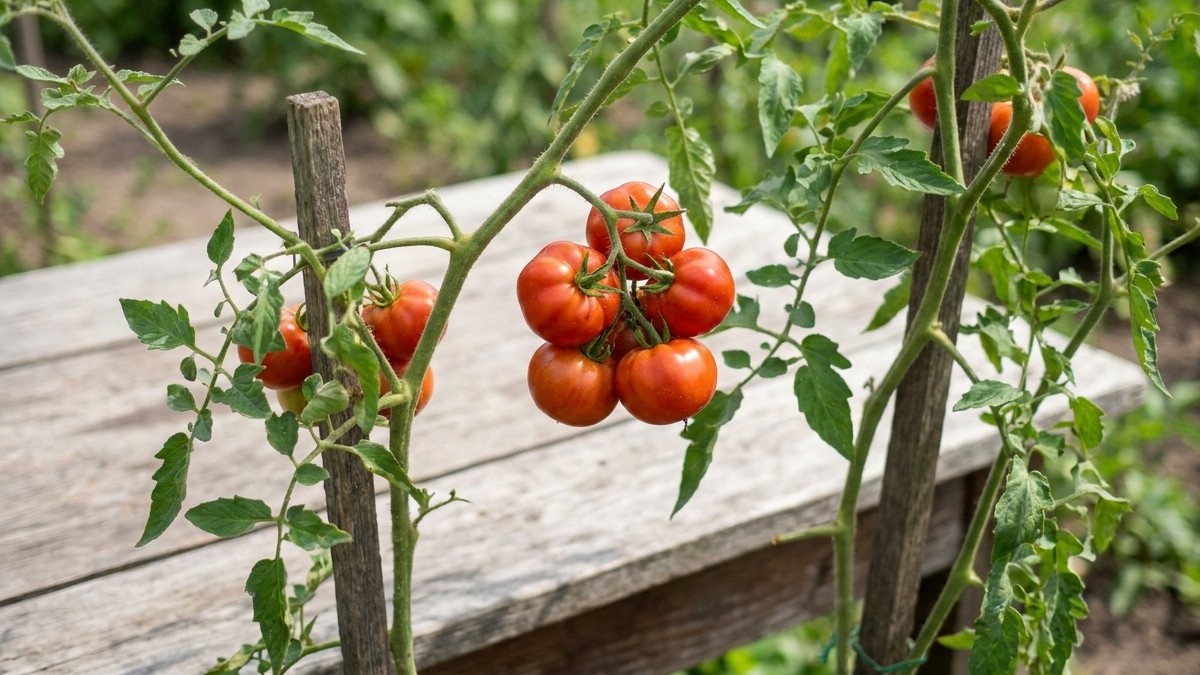

The short answer: harvest before the season’s first hard frost hits, whichever exact date that turns out to be where you garden, and don’t wait for full red color on the vine. Alaska’s compressed frost-free window means most tomatoes finish ripening on a counter, not outdoors. The real skill isn’t picking a calendar date, it’s reading the plant and the sky at the same time.
When to pick tomatoes in Alaska
Anchorage’s growing season, based on NOAA NCEI 1991-2020 Climate Normals for station USW00026451, runs roughly from a last spring frost between May 3 and May 12 to a first fall frost between September 22 and October 1. That’s about 143 frost-free days total, and Anchorage counts as one of the milder, longer-season spots in the state. Other regions, especially the Interior and points north, run shorter, but exact figures for those areas aren’t published here, so don’t assume Anchorage’s dates apply statewide.
Those frost dates aren’t a single switch that flips on a specific day. They come from a 30-70% probability band, meaning the risk of a 32°F freeze climbs gradually through that window rather than arriving on one fixed morning. That’s the detail that should drive your picking decision more than any single date on a calendar. Once you’re inside that band, especially as it moves toward late September, every clear, calm night raises the odds of frost forming on foliage and fruit.
What actually triggers a smart harvest is watching two things at once: the forecast and the fruit itself. A tomato at the “breaker” stage, showing the first blush of pink or yellow at the blossom end, has crossed the point where it will continue ripening off the plant using its own stored sugars and starches. Fruit that’s still hard, deep green, and glossy hasn’t reached that internal turning point yet, and picking it too early just gets you a rock that never colors up properly.
Daylight is doing some of the work
Alaska’s long summer daylight partially offsets the short season. Extended light hours push more photosynthesis into fewer calendar days, which is part of why a tomato plant that started under lights indoors can still put on respectable fruit by late summer despite the compressed timeline. It doesn’t erase the frost risk, but it explains why gardeners here sometimes get more usable fruit than the day count alone would suggest.
USDA’s Plant Hardiness Zone Map places Alaska across an unusually wide range, 1a to 8a, which reflects average annual extreme minimum winter temperatures rather than anything about summer ripening speed. Anchorage itself sits on the milder end of that spread. If you’re using hardiness zone info to plan varieties or protection strategies, cite Anchorage specifically rather than the statewide range, since a single zone number can’t represent a territory that stretches from coastal rainforest to Arctic tundra.
For localized frost timing and season-length guidance beyond what’s covered here, the University of Alaska Fairbanks Cooperative Extension Service tracks regional variation across the state.
What to do with the green ones
Not every green tomato left on the vine at frost warning time is the same, and sorting them correctly before you bring them inside makes the difference between a windowsill full of ripening fruit and a bowl of shriveled disappointments.
Mature green fruit, the kind worth saving for ripening, has already reached full size for its variety, has a glossy rather than dull skin, and often shows a pale whitish or yellowish tinge at the blossom end where the green starts to break. Cut one open and the seeds should have developed a gel coating around them rather than sitting loose in watery flesh. Fruit at this stage has finished its growth phase and has enough stored sugar to finish coloring after picking.
Immature green tomatoes look similar at a glance but tell a different story once you look closer: dull, matte skin, smaller size relative to the variety’s normal fruit, and seeds that cut cleanly without any gel around them. These almost never ripen properly indoors. They tend to shrivel, stay firm and starchy, or rot before they turn color. That doesn’t mean they’re wasted, they’re simply destined for a different use than a ripe slicing tomato.
Sorting before storage
- Mature green (glossy, full-sized, blossom end starting to pale): set aside for indoor ripening
- Immature green (dull, smaller, no seed gel): best used cooked, not stored for ripening
- Breaker stage (first blush of color already showing): ripens fastest, use or eat soonest
- Damaged or split fruit: use immediately, don’t add to a ripening batch
Immature green tomatoes are exactly what fried green tomatoes and green tomato relish were invented for. Their firm, tart flesh holds up to slicing and frying in a way a half-ripe tomato doesn’t, and using them that way avoids the frustration of watching fruit sit on a counter for weeks going nowhere. Sorting takes maybe ten minutes for a full harvest basket, and it saves you from mixing fruit that will ripen with fruit that’s only going to rot in the meantime.
Before storing anything, wipe each tomato dry with a cloth rather than washing it. Excess moisture on the skin speeds up mold growth in storage, which is one of the more common ways a promising green tomato harvest turns into a bin of soft, spoiled fruit within a week.
Ripening indoors, and how long they keep
Once sorted, mature green and breaker-stage tomatoes ripen best somewhere out of direct sunlight, at room temperature, roughly 65°F to 70°F. Direct light on a windowsill feels like the obvious choice, but it can actually cause uneven ripening or soft spots where the sun heats one side of the fruit faster than the rest.
Tomatoes ripen by releasing ethylene gas, and that process happens whether or not light is involved. A single layer of fruit spread out in a shallow box or paper bag, not stacked or crowded, ripens more evenly than a deep pile where fruit at the bottom bruises under the weight of everything above it. Wrapping individual tomatoes loosely in newspaper slows moisture loss and helps prevent one spoiling fruit from spreading rot to its neighbors, which happens quickly when tomatoes touch each other in storage.
Adding a ripe banana or apple to the box speeds things along, since both release extra ethylene that nudges the tomatoes toward color faster. It’s a useful trick when frost has forced an early, large harvest and you’d rather not wait weeks for everything to turn.
Checking and timing
Check the box every couple of days rather than leaving it untouched for a week. Tomatoes ripen at different speeds even within the same batch, since fruit size, skin thickness, and how close each one was to breaker stage at harvest all affect timing. Pull ripe fruit out as it colors rather than waiting for the whole batch to finish together, and discard anything showing soft spots or mold immediately so it doesn’t spread.
Mature green tomatoes picked at the right stage typically take anywhere from one to several weeks to fully color indoors, depending on room temperature and how close they were to breaker stage at harvest. Once ripe, they hold their best flavor at room temperature for a few days. Refrigeration slows further softening if you need to buy time, but cold storage dulls flavor and texture compared to fruit finished and eaten at room temperature, which is worth remembering if you’re saving a batch for a specific meal rather than eating them as they turn.
What goes wrong here
The most common mistake is treating the fall frost window as a fixed deadline rather than a rising probability. Because the NOAA NCEI data for Anchorage describes a 30-70% freeze chance across September 22 to October 1, gardeners who wait until the very end of that window are gambling on the lower end of that probability holding. A single clear, still night early in that stretch can bring frost well before the range’s later dates, and fruit left on the vine that night is lost.
Microclimates make this worse. Low-lying yards, areas near water, or spots without wind movement often see frost settle in before official station readings would suggest, since cold air pools in depressions and stays still on calm nights. A garden a few hundred feet from where the reference station sits can experience frost meaningfully earlier, which is one more reason to treat any published date as a general guide rather than a guarantee for your exact yard.
Indoors, the recurring problem is rot spreading through a ripening box before anyone notices. Tomatoes stored touching each other, in a humid spot, or without being sorted for damage first tend to develop soft spots that go unnoticed until the smell gives it away. Checking the box every couple of days catches this early enough to save the rest of the batch.
The other frequent error is trying to ripen fruit that was never going to ripen in the first place, immature green tomatoes picked in a panic ahead of frost, then left in a box for weeks waiting for color that never comes. Sorting at harvest, not after the fact, avoids that wasted wait and gets the immature fruit into the kitchen for cooking while it’s still firm and useful.
Common questions
Can Alaska tomatoes ripen on the vine at all?
Yes, particularly fruit that set fruit early and had a full run of the frost-free window. In Anchorage that’s roughly 143 days, per NOAA NCEI 1991-2020 Climate Normals for station USW00026451. Vine-ripened fruit is more likely in warm, sheltered spots and with early-setting plants, but a meaningful share of any season’s harvest usually still needs indoor finishing once frost approaches.
What’s the average hardiness zone for growing tomatoes in Alaska?
USDA’s Plant Hardiness Zone Map places the state across an unusually wide 1a to 8a range, since it’s built on one variable, average annual extreme minimum winter temperature, and Alaska stretches from coastal to Arctic climates. Anchorage sits toward the milder end of that spread; using the full statewide range for a single garden’s planning isn’t accurate for most locations.
Should I pick tomatoes before or after the first fall frost warning?
Before. Once a hard frost hits, fruit that touched frozen tissue turns mushy and unusable almost immediately. Given that the fall frost window for Anchorage spans September 22 to October 1 with rising probability across that stretch, picking any breaker-stage or mature green fruit as soon as a frost warning is issued, rather than waiting to see how cold it actually gets, protects the harvest.
Do green tomatoes ripen faster in a paper bag than on a windowsill?
A paper bag or covered box traps the ethylene gas the fruit naturally releases, which speeds ripening compared to an open windowsill where gas dissipates and direct sun can cause uneven softening. A single layer of fruit, loosely wrapped or bagged, out of direct light, tends to ripen more evenly than fruit left exposed on a sill.