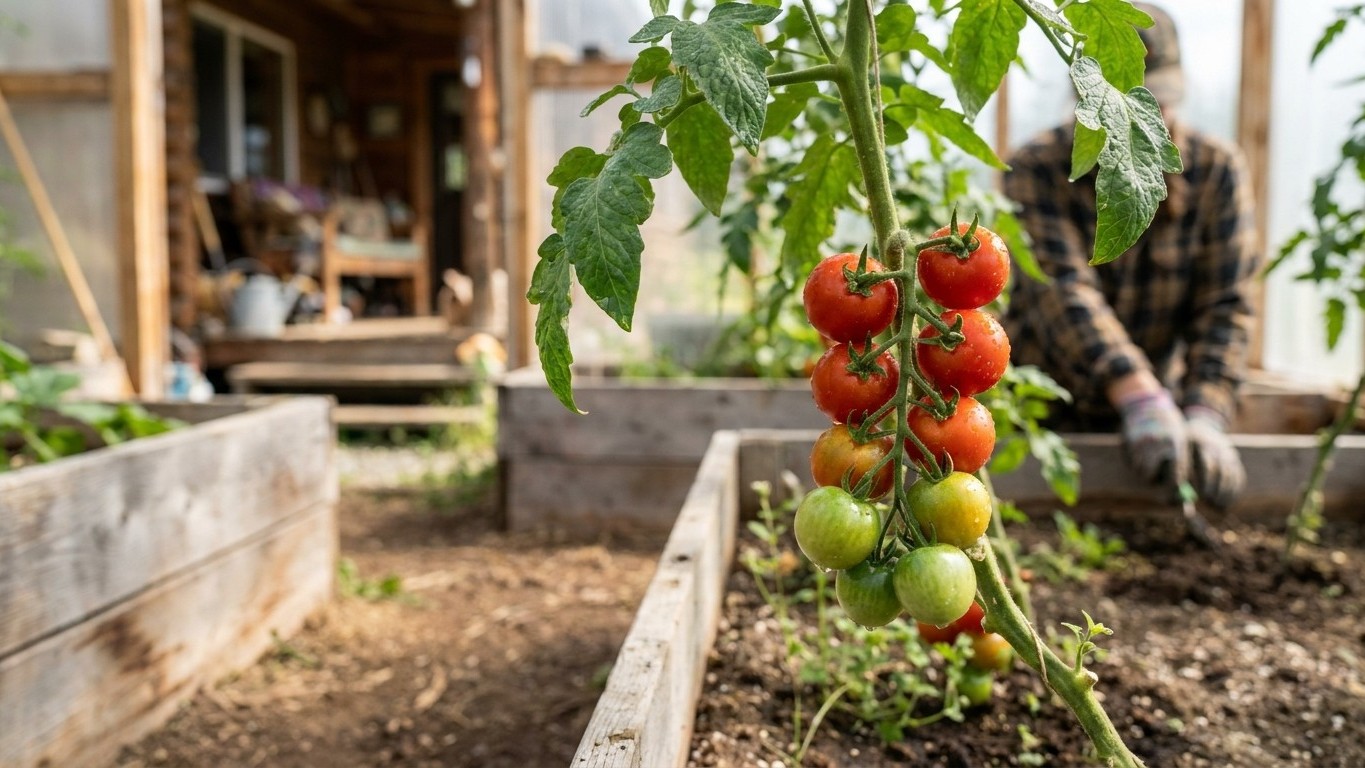

Tomatoes can be grown outdoors in Alaska, but the window is tight. NOAA’s 1991-2020 climate normals put the last spring freeze at the Anchorage station between May 3 and May 12, with a frost-free season averaging around 143 days after that. That’s enough time for short and mid-season varieties if you start seed indoors well ahead and transplant hardened-off plants right after that frost window closes. Check your own county’s dates before you commit, since the Interior and northern Alaska run colder and shorter than Anchorage.
When to plant Tomatoes in Alaska

Six to eight weeks — that’s the window seed packets ask for between sowing and transplant, and it’s what actually decides your tomato’s fate here, not the calendar date everyone fixates on. Count backward from Anchorage’s last-frost range of May 3 to May 12 and indoor sowing lands somewhere between early March and early April. Get that math wrong, or skip the week of hardening off before the seedling meets real wind and sun, and the plant stalls outside before it ever sets fruit.
Starting seeds indoors
Tomatoes need to go in the ground as transplants, not direct-seeded, because Alaska’s season is too short to grow them from seed outdoors and still get fruit. Seed packets for most varieties call for starting six to eight weeks before the plant goes outside. Counted back from the Anchorage last-frost window of May 3 to May 12, that puts indoor sowing somewhere in the range of early March to early April, depending on which end of the frost window you’re aiming for and which end of the six-to-eight-week range the variety calls for. Sow in seed-starting mix under grow lights kept close to the leaves, since Alaska’s early spring daylight alone isn’t strong enough yet to keep seedlings stocky. Bottom heat around 75 to 80 degrees speeds germination, and once true leaves appear, cooler air and strong light keep the stems from getting leggy.
Hardening off and transplanting outside
Before any tomato goes into the ground, it needs to spend a week to ten days outside in stages, first in shade and out of the wind for an hour, then longer and in more direct sun each day. Skipping this step is the single most common reason transplants stall or die back after moving outdoors, since a seedling raised entirely indoors has soft tissue that scorches or chills fast. Don’t transplant before the local frost risk has genuinely passed, and remember that the May 3 to May 12 band from NOAA’s normals is itself a 30 to 70 percent probability window, meaning frost is still a real possibility even at the later end of it in a cold year. Many gardeners in the Anchorage area wait until the back half of that window or a little beyond, and keep row cover or a cold frame on hand in case a late cold snap follows. If you’re gardening further north or inland, push all of these dates later to match your own conditions, and lean on Alaska guides for the wider range of cold-climate strategies used across the state.
Soil and site preparation
Tomatoes want the sunniest spot available. In Alaska that usually means the wall or fence line that catches sun longest through the day, since the trade-off for short-season growing is that every hour of direct light matters more than it would in a warmer state. A south-facing spot against a building also picks up reflected heat, which helps compensate for cool summer nights.
Site and sun
Look for a spot with at least six hours of direct sun, more if you can find it, and away from tall spruce or birch that will shade the bed as the season goes on. Raised beds and containers are worth considering here even if you have open ground, because soil in a raised bed warms up earlier in spring than ground soil, and warmer root zones mean faster early growth in a climate where every week counts.
Building the bed
Tomatoes need soil that drains well but still holds moisture, since both waterlogging and drought stress cause problems later in the season. Work in a few inches of finished compost or well-rotted manure the fall before planting if you can, or at least a few weeks ahead of transplanting in spring, so it has time to break down and stop competing with roots for nitrogen. Avoid fresh, unfinished manure right before planting. Space plants 24 to 36 inches apart depending on the variety’s mature size, with indeterminate types on the wider end since they’ll keep growing and need airflow around the foliage all season. A soil test through your local extension office will tell you where your pH and nutrient levels actually stand rather than guessing, and it’s worth doing before you add any amendment you’re not sure you need.
Varieties that suit Alaska
The trait that matters most here is days to maturity, because Alaska’s frost-free season, even in the relatively mild Anchorage area, gives you roughly 143 days to work with according to NOAA’s climate normals, and that number shrinks fast the further you get from Southcentral. Catalog days-to-maturity figures are counted from the transplant date, not from seed, and they assume the warm, steady summer heat of a longer-season growing region. Alaska’s summers bring long daylight but cooler average temperatures, so actual ripening often runs later than the number on the packet, which is a good reason to lean toward the shorter end of the range rather than the longest one your season can technically fit.
Disease resistance codes on the seed packet are worth reading closely too, since a resistant variety shrugs off a problem that would otherwise cost you weeks you don’t have to spare.
| Variety | Days to maturity | Habit | Notable resistance | Best for |
|---|---|---|---|---|
| Sakura | 55 | Indeterminate | Tomato Mosaic Virus, Fusarium (races 1, 2) | Earliest cherry, snacking |
| Sun Gold | 57 | Indeterminate | Tobacco Mosaic Virus, Fusarium (race 1) | Sweet cherry, containers |
| Jasper | 60 | Indeterminate | Late Blight, Early Blight | Cherry with strong blight defense |
| Supersweet 100 | 60 | Indeterminate | Verticillium, Fusarium (race 1) | Heavy cherry yields |
| Juliet | 60 | Indeterminate | Late Blight, Early Blight | Grape type, crack-resistant |
| Amalfi | 68 | Determinate | Nematodes, Late Blight, Early Blight | Compact paste for sauce |
| Cherokee Purple | 72 | Indeterminate | None listed | Heirloom slicer, best with a head start |
| Big Beef Plus | 72 | Indeterminate | Nematodes, Gray Leaf Spot, Tomato Mosaic Virus | All-purpose slicer |
| Granadero | 75 | Indeterminate | Nematodes, Verticillium, Tomato Mosaic Virus | Roma-style paste |
| Tiren | 75 | Indeterminate | Verticillium, Tomato Mosaic Virus, Fusarium (race 1) | Paste, disease pressure sites |
| San Marzano II | 78 | Indeterminate | None listed | Classic sauce tomato |
| Celebrity Plus | 78 | Determinate | Nematodes, Gray Leaf Spot, Tomato Mosaic Virus | Reliable all-purpose slicer |
| Brandywine | 78 | Indeterminate | None listed | Heirloom flavor, needs a greenhouse or tunnel |
| Amish Paste | 85 | Indeterminate | None listed | Longest-season paste, greenhouse recommended |
Set against a roughly 143-day Anchorage season, even the 85-day Amish Paste fits on paper, but that’s the theoretical ceiling, not a comfortable margin, and it carries no listed disease resistance to buy back time lost to a cool week. Determinate varieties like Celebrity Plus and Amalfi ripen their fruit in a shorter, more concentrated window, which suits a short season better than an indeterminate plant that’s still setting new flowers when the first fall frost shows up. Gardeners in warmer states have more room to gamble on long-season heirlooms without a greenhouse. You can see how differently that math works out in Growing Tomatoes in California, where the frost-free season runs far longer than anything Alaska offers.
What to plant alongside
Basil is the companion most often paired with tomatoes, and while the folklore claim that it improves tomato flavor has no solid evidence behind it, the two do share water and sun needs and basil’s flowers draw in pollinators and other beneficial insects, so the pairing earns its place for practical reasons even if not the ones usually claimed. Borage is another worth including near tomatoes for the same reason: it’s a strong pollinator draw, and its blue flowers keep bees working the bed through the whole season, which matters more in a short Alaska summer where every pollinated flower counts toward the harvest.
Good neighbors
- Marigolds: their scent is thought to confuse some pests looking for tomato plants by smell, and they’re a low-cost, low-risk addition either way.
- Onions and chives: shallow-rooted and don’t compete hard for the same soil layer as tomato roots.
- Nasturtiums: can pull aphids toward themselves as a trap crop, keeping some pressure off the tomatoes.
- Carrots: grow in the same bed without competing for the same nutrients or attracting the same pests.
Keep away
Skip planting tomatoes near potatoes, eggplant or peppers. All are in the nightshade family and share the same diseases, including early blight and late blight, so grouping them together concentrates risk instead of spreading it. Corn and tomatoes both draw the corn earworm, which is also known as the tomato fruitworm on this crop, so keeping distance between them avoids handing one pest two food sources in the same bed. Fennel is worth leaving out of any vegetable bed entirely, since it releases compounds that slow the growth of many neighboring plants, tomatoes included.
Watering, feeding and support
Tomatoes want consistent moisture, not a flood-and-drought cycle, because uneven watering is what drives blossom end rot and split fruit later in the season. Water deeply enough to soak the root zone, then let the top inch or so of soil dry before watering again, rather than giving a light daily sprinkle that only wets the surface.
Watering and feeding
A two to three inch layer of mulch, straw or grass clippings works well, keeps soil moisture more even between waterings and also helps hold what little extra soil warmth accumulates during the day. Feed with a balanced fertilizer at planting, then switch to something lower in nitrogen and higher in phosphorus and potassium once flowering starts. Too much nitrogen late in the season pushes leafy growth at the expense of fruit, which is the last trade-off you want to make when the growing window is already short.
Staking, caging and pruning
Indeterminate varieties, which make up most of the list above, keep growing and setting fruit until frost stops them, so they need a sturdy stake or cage from the start rather than added later once the plant has sprawled. Determinate types like Celebrity Plus and Amalfi stay more compact and can often get by with a lighter cage. Pruning the suckers, the small shoots that form in the joint between the main stem and a branch, on indeterminate plants channels the plant’s energy into fewer, larger trusses of fruit instead of a tangle of stems that ripen slower and later, which matters when the season won’t wait for a late truss to catch up.
Common problems

Most tomato problems show up as a symptom on the fruit or leaves that points to a specific, fixable cause. Reading the symptom correctly saves a whole season of guessing.
Blossom End Rot
A dark, sunken, leathery patch develops on the bottom of the fruit while the rest still looks fine. It’s caused by uneven calcium uptake, which almost always traces back to inconsistent watering rather than a true calcium shortage in the soil. Keeping soil moisture steady fixes it faster than adding calcium ever will.
Fruit Cracking
Concentric rings or splits appear near the stem end, usually after a heavy rain or watering follows a dry stretch. The fruit swells faster than the skin can stretch. Mulching to even out soil moisture between waterings is the main fix.
Leaf Curl
Leaves cup or roll upward but stay green and otherwise healthy. This is most often a response to heat or moisture stress, or heavy pruning, rather than disease, and it usually resolves on its own once conditions even out.
Wilting Plants
Yellowing and drooping lower leaves, sometimes on just one side of the plant, point toward Fusarium or Verticillium wilt, both soil-borne fungal diseases with no cure once a plant is infected. This is exactly why the resistance codes on the seed packet, marked against Fusarium and Verticillium by race, matter more in a bed that’s grown tomatoes before than in brand new soil.
Poor Fruit Set
Flowers drop before setting fruit when night temperatures run too cool or too hot for pollen to be viable, or when pollinator activity is low. Gently shaking the flower trusses by hand on a still day can help move pollen when natural pollinators are scarce.
Aphids and Slugs
Aphids cluster on stems and the undersides of leaves and are easily washed off with a strong jet of water or treated with insecticidal soap. Slugs favor cool, damp soil and are active at night, leaving ragged holes in leaves and a silvery slime trail behind. A ring of coarse material like crushed eggshell or diatomaceous earth around the base of the plant, or a beer trap set at soil level, helps manage them without chemical sprays. Gardeners contending with warmer-climate pests like the tomato hornworm, common further south, can see how that fight plays out differently in Growing Tomatoes in New Jersey.
Pests that actually show up in Alaska
Alaska’s state list of garden pests is short, and most of it has nothing to do with tomatoes. Cutworms are the pest to watch for tomato transplants specifically. A cutworm severs a young seedling stem right at the soil line overnight, so the first sign is a healthy-looking plant lying flat with no chew marks on the leaves at all, just a clean cut near the base. They work early in the season, right after transplanting, before the stem toughens up. A cardboard or foil collar pushed an inch into the soil around each stem stops them cold, and it costs nothing.
Slugs are the other real threat, and UAF Cooperative Extension’s PMC-10070 publication notes they’re a continuing problem in coastal and Southeast Alaska, mostly non-native species that thrive in the same cool, damp summers that make the region livable for tomatoes under cover. Look for ragged holes in leaves and slime trails across the fruit near soil level, worst after a run of wet weather. Iron phosphate slug bait scattered around the base of the plant is the control that actually works without harming pets or soil life, and it beats beer traps for a bed you have to keep refilling.
Root maggots deserve a mention even though they don’t touch tomatoes. UAF’s PMC-00330 publication calls root maggots the most serious annually recurring insect pest of vegetable production statewide, but the damage is confined to turnips, radishes, cabbage, cauliflower and broccoli, with adults emerging very early and a single generation running from late May through July. If you’re growing a mixed vegetable garden alongside your tomatoes, that’s the bed to watch, not the tomato row. Spruce beetle shows up on the state pest list too, but it attacks ornamental spruce trees, not vegetables, so it’s not a tomato problem at all.
Aphids do turn up on tomato stems and leaf undersides, covered above under common problems, and UAF’s own guidance in HGA-00134 lists root maggots and cutworms as the only two vegetable insect pests common enough in Alaska gardens to plan for every year. That short list is the reason a floating row cover over young tomato transplants solves more of the state’s pest pressure than any spray in a bottle.
Harvest and end of season
Pick tomatoes once they’ve reached full color for the variety and give slightly to a gentle squeeze, since fruit left too long on the vine is more prone to splitting and attracts pests. Fruit doesn’t need to ripen fully on the plant to taste good. Tomatoes picked at the first blush of color and finished indoors at room temperature, out of direct sun, ripen almost as well as vine-ripened ones and are far less likely to crack or rot in a wet stretch of weather.
Ripening indoors
Spread mature green or partly colored fruit in a single layer somewhere at room temperature, checking every couple of days and pulling out any that soften unevenly or show soft spots before they spoil the rest. A paper bag with a ripe banana or apple inside speeds things along, since those fruits give off ethylene gas that pushes tomatoes toward full color faster.
End of season
As the first fall frost approaches, which in the Anchorage area falls roughly in the late September to early October range if you count forward from the last spring freeze using NOAA’s average of about 143 frost-free days, pick everything still on the vine rather than risk losing it overnight. Green tomatoes that are still small and hard rarely ripen well even indoors and are better used fried or pickled than saved for ripening. Pull the whole plant and compost healthy vines, but bag and trash any showing wilt or blight symptoms rather than composting them, since home compost piles rarely get hot enough to kill off those pathogens.
Local help
County-level frost dates, soil testing and pest identification are best confirmed locally rather than assumed from Anchorage figures, since conditions shift fast across a state this size. The University of Alaska Fairbanks Cooperative Extension Service offers both, and is worth contacting before you finalize a planting date for your specific area. Browse more Alaska guides for other cold-climate crops that pair well with a short-season tomato bed.
Where to Go From Here
Everything above assumes you already know your dates, your varieties, and what’s likely to bother your plants — so here’s where to nail down each of those. Start with the tomato planting calendar for Alaska, which counts backward from your local frost window so you know exactly when to start seed indoors and when to move transplants out. Once your timeline is set, work out which plants can actually finish in it: the rundown of tomato varieties that ripen in time here sorts the fast-maturing options from the ones that’ll still be green when the freeze hits, so you’re not gambling a whole summer on a seed packet that looked good in a catalog. And once seedlings are in the ground, it helps to know what you’re actually up against — the guide to tomato pests that show up in Alaska covers the short list of insects and problems worth watching for, instead of every pest in a Lower 48 gardening book that will never make it up here. Together, the three pages cover timing, variety choice, and pest pressure — the three things that decide whether your tomatoes ripen at all.
Common questions
Can I grow tomatoes outdoors in Alaska without a greenhouse?
Yes, in the Anchorage area and other relatively mild parts of Southcentral Alaska, short and mid-season varieties can mature outdoors within the roughly 143-day frost-free window NOAA’s climate normals give for that station. In the Interior or further north, an unheated greenhouse or high tunnel adds enough extra warmth and season length to make a real difference, especially for longer-season varieties.
Why are my tomato leaves turning purple?
Purple or reddish leaf color, especially on younger plants, usually points to a phosphorus deficiency, which is more common when soil is still cold, since roots take up phosphorus poorly in cool soil even if the nutrient is present. It often clears up on its own as the soil warms through the season.
Do I need to remove all the suckers?
No. Removing all suckers on an indeterminate variety concentrates energy into fewer trusses but also means less total foliage to support fruit and shade it from sun scald. A lot of Alaska gardeners prune lightly, taking out the lowest suckers and leaving the upper ones, as a middle ground between yield and fruit quality.
My tomatoes are still green with frost coming. Is there anything I can do?
Pick everything that’s reached at least a mature green stage, meaning full size with a slight color break starting, and ripen it indoors as described above. Fruit that’s still small and hard when frost threatens generally won’t ripen well even off the vine and is better used green.
Can I save seed from my own tomatoes to plant next year?
Only from open-pollinated or heirloom varieties like Cherokee Purple, Brandywine or Amish Paste, since hybrids like Celebrity Plus or Big Beef Plus won’t grow true from saved seed and often revert to traits of one of their parent plants instead. Ferment the seeds from a ripe fruit in water for a few days to remove the gel coating before drying and storing them.