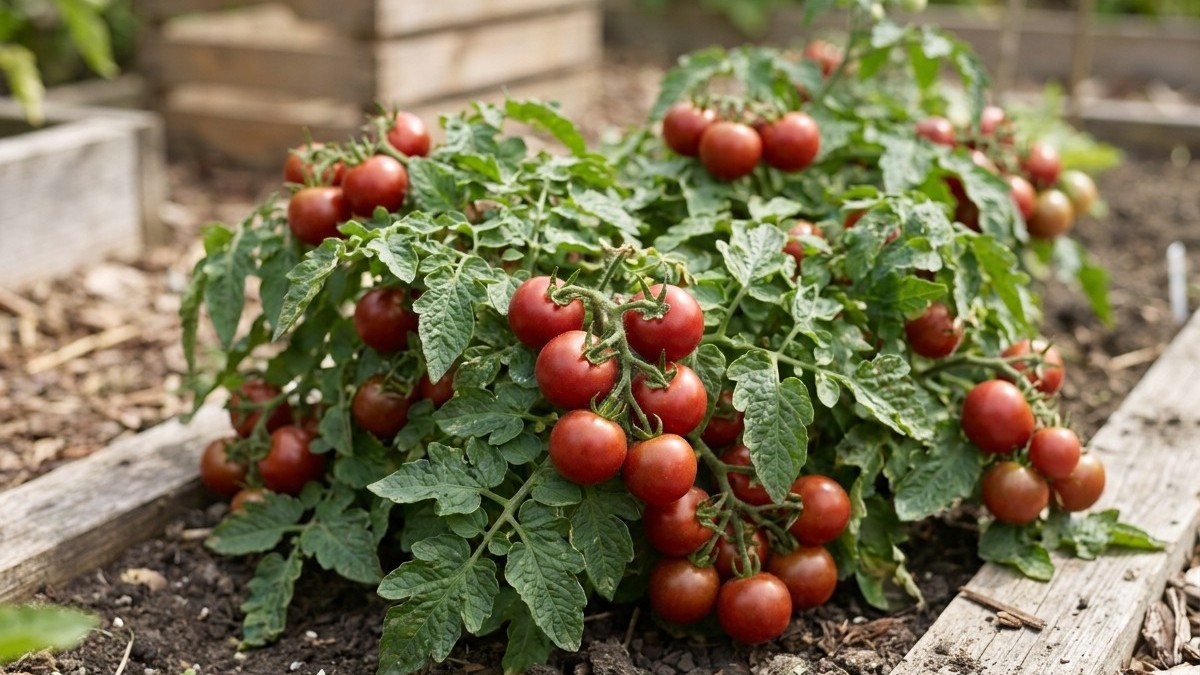

Frost decides the harvest date in Alberta, not the calendar. With an average first fall frost of September 16 recorded at the Calgary Int’l A station, most gardeners pull their tomatoes in mid-September, green or not, rather than risk losing the crop overnight. Everything ripe or nearly ripe comes off the vine first, and the rest gets a second life indoors.
When to pick tomatoes in Alberta
The frost dates that matter here come from Environment and Climate Change Canada’s climate normals for the Calgary Int’l A station: an average last spring frost of May 21 and an average first fall frost of September 16. Subtract one from the other and you get roughly 118 frost-free days, a tight window that explains why so many Alberta tomatoes never finish ripening on the vine before the season ends.
These are averages, not promises. In one year out of two, frost arrives later than September 16, and in the other half, it shows up earlier. Treat that date as the middle of a range, never as a safe deadline. The Calgary Int’l A station also isn’t a stand-in for the whole province: Alberta stretches from foothill valleys to northern boreal country, and districts north of Calgary or at higher elevation typically see frost weeks ahead of that average, while some sheltered pockets run later. If you garden outside the Calgary area, lean on your own local frost history more than a single station’s number.
Reading the plant, not just the forecast
Alberta sits in Canadian hardiness zone 4a around Calgary, based on Natural Resources Canada’s 1991-2020 mapping. That’s a different measuring system than the USDA zones used south of the border, built from seven climate variables instead of one, and it doesn’t convert cleanly onto the American scale. What it tells a gardener here is simple: the growing season is short, and every tomato still hanging on the vine in mid-September is racing a clock that’s already run out for half the years on record.
Watch the ten-day forecast starting in early September. Once frost is mentioned as a possibility, that’s the signal to start clearing fruit, not to wait for a confirmed warning the night before. A plant loaded with green tomatoes on September 10 is worth stripping over two or three picking sessions rather than gambling on two more weeks of warmth that the averages say are unlikely.
What to do with the green ones
Not every green tomato deserves the same treatment. Mature green fruit, full-sized, glossy, and pale green to whitish at the blossom end, will ripen off the vine with decent flavor. Immature green fruit, still small and hard with dull skin, usually won’t ripen properly no matter what you do; the sugars and acids that make a tomato taste like a tomato never finished developing. Sorting the harvest into these two piles before frost hits saves a lot of wasted counter space later.
Before the frost lands
Once frost is forecast, strip the plants of everything worth saving: fully mature green fruit, anything already breaking color, and ripe tomatoes still on the vine. Frost damages plant tissue and fruit skin directly, and tomato fruit left on a frost-hit plant softens and starts to break down within days, so there’s no reason to leave anything behind once the forecast turns.
Immature green tomatoes that won’t ripen aren’t wasted, they’re just destined for a different kitchen use. Fried green tomatoes, green tomato salsa, and green tomato chutney all rely on that firm, tart fruit rather than the ripe version. Pickled green tomatoes are another common route for the smaller, harder fruit that would otherwise sit on a counter turning soft without ever turning red.
A mixed harvest, which is what most Alberta gardens produce by mid-September, usually means splitting the crop three ways: ripe fruit for the table now, mature green fruit set aside to ripen indoors, and the smallest immature green tomatoes routed straight to a green-tomato recipe instead of a windowsill. Sorting at harvest, rather than after everything’s been dumped in one basket, makes the next few weeks of kitchen work a lot more predictable.
Ripening indoors, and how long they keep
Mature green tomatoes ripen indoors through the same ethylene gas process that finishes them on the vine, just slower and out of direct sun. Wrapping each tomato individually in newspaper and setting them in a single layer in a cardboard box is the most common method, and it keeps one spoiling fruit from spreading rot to its neighbors. A paper bag works for smaller batches, and tucking a ripe banana or apple into the bag or box speeds things along, since both release extra ethylene that pushes the tomatoes toward ripeness faster.
What changes the timeline
Fruit that was already showing a blush of color when picked ripens fastest, sometimes within a week. Fully mature green tomatoes with no color at all typically take one to three weeks indoors before they’re ready to eat. Immature green fruit may sit for a month and still never fully color up or develop real flavor, which is the practical argument for using the smallest, hardest green tomatoes in a recipe instead of waiting on them.
Check the box every few days. Tomatoes ripening in a group generate their own humidity, and any fruit that starts to soften unevenly or develop soft spots needs to come out immediately, unwrapped or not, before it spreads mold to the rest. This single habit, a quick check-in rather than sealing a box and forgetting it for three weeks, is what separates a good haul of ripened tomatoes from a box of mush.
Storing tomatoes in the refrigerator isn’t part of the ripening process at all. Cold temperatures halt the enzyme activity that develops flavor and softens texture, so a green tomato refrigerated before it’s ripe will often stay hard and underdeveloped even after it’s brought back to room temperature. Ripening happens on the counter or in a box at normal indoor temperatures, not in the crisper drawer.
What goes wrong here
The most common failure isn’t frost, it’s timing the harvest around the calendar instead of the forecast. Gardeners who wait for a specific date, rather than watching the ten-day outlook once September starts, routinely lose fruit to a frost that arrived before the average would suggest. Given that the September 16 date is a midpoint and not a guarantee, treating it as a safe deadline is the single most avoidable mistake in an Alberta tomato season.
The second failure happens indoors, after the harvest is already saved. Piling unsorted green tomatoes into one bag, mature and immature together, means the ripe ones sit next to fruit that will never properly color, and by the time someone checks the bag, rot from one soft tomato has usually spread to several others. Individual wrapping and regular checks solve this, but skipping that step is common enough that it’s worth repeating.
A third issue is specific to the immature fruit: expecting it to ripen at all. Small, hard, dull-skinned green tomatoes picked at the last minute before frost often just shrivel or rot slowly on the counter instead of turning red, because the fruit hadn’t developed far enough to finish the process off the vine. That fruit belongs in a green tomato recipe from the start, not in the ripening box.
The exact temperature thresholds at which frost damages tomato tissue aren’t published in the source data used here, so this guide won’t put a number on it. What the frost normals do make clear is that the risk window opens well before the average date and that local topography around Alberta shifts it considerably. For finer detail on local frost risk and growing conditions, Alberta’s provincial agriculture service maintains current guidance at alberta.ca/agriculture-and-irrigation.
Common questions
What temperature kills tomato plants in Alberta?
The specific frost-kill temperature isn’t part of the climate normals data cited in this guide. What’s published is the timing: an average first fall frost of September 16 at the Calgary Int’l A station, with the usual caveat that frost arrives earlier than that in about half of all years. For exact frost thresholds, a local forecast with frost warnings is a more reliable guide than a fixed number.
Can you ripen tomatoes on a sunny windowsill?
Ripening is driven by ethylene gas and warmth, not by light, so a sunny windowsill isn’t necessary and can actually cause problems, since direct sun raises the fruit’s surface temperature unevenly and can lead to one side ripening or softening faster than the other. A box or bag at normal room temperature, out of direct sun, does the job more evenly.
How early can frost come in Alberta?
September 16 is the average first fall frost date at the Calgary Int’l A station, which means frost shows up earlier than that in roughly half the years on record. Areas north of Calgary or at higher elevation typically see it sooner still. There’s no single earlier date published here that applies province-wide, which is exactly why watching the local forecast matters more than memorizing one figure.
Should I pick tomatoes before a light frost warning?
Yes. Once any frost is mentioned in the forecast, it’s worth harvesting mature green and ripe fruit rather than waiting to see how cold it actually gets. Frost damages fruit tissue quickly enough that waiting for confirmation overnight often means picking damaged, unusable tomatoes the next morning instead of sound ones the evening before.