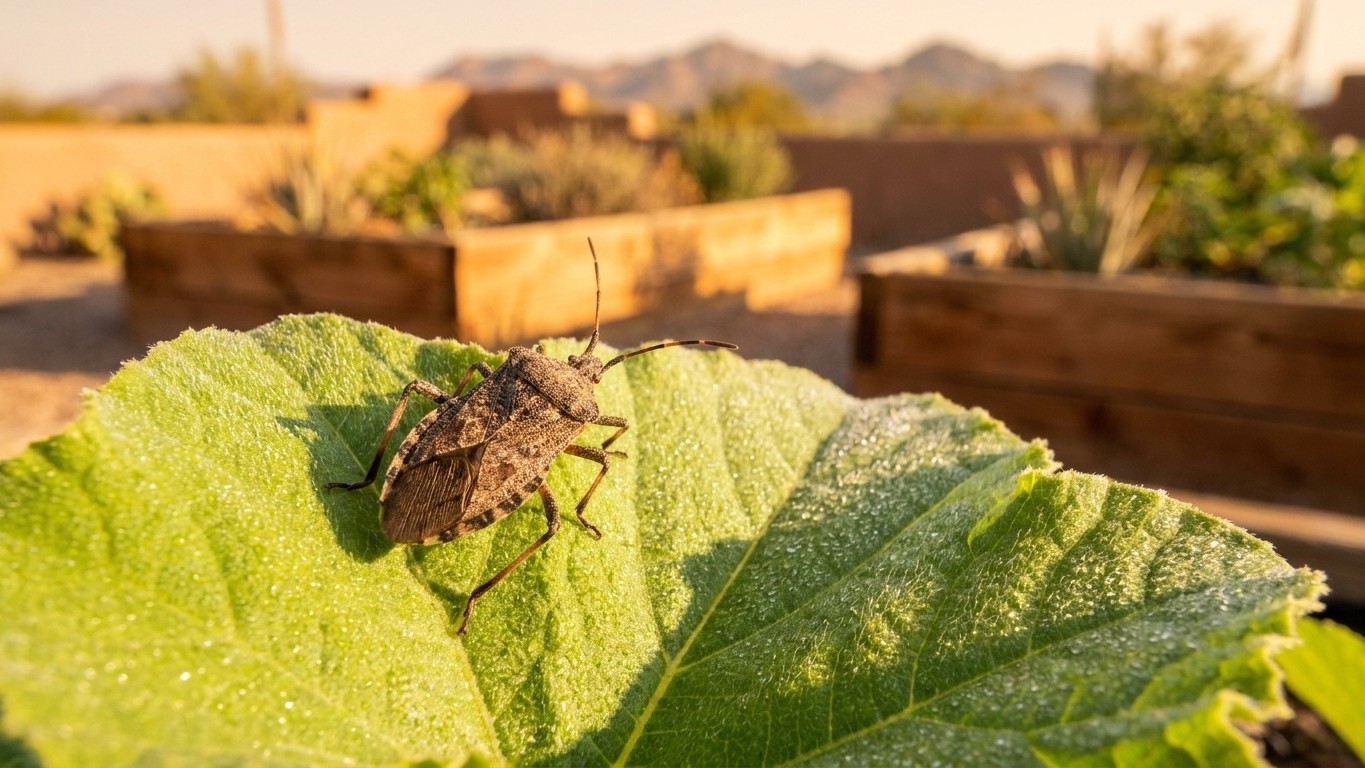

Squash bugs show up in Arizona gardens twice a year in most low-desert areas, once when spring-planted squash and pumpkins start vining in April and May, and again when monsoon-season plantings mature in August and September. In cooler high-desert zones like Flagstaff or Prescott, they typically arrive later, from June through the first fall frost. Stopping them means combining fall garden cleanup, floating row covers during the seedling stage, and targeted treatment of young nymphs before they reach the hard-shelled adult stage that shrugs off most sprays.
When Squash Bugs Show Up in Arizona Gardens

Arizona’s climate gives squash bugs (Anasa tristis) more time on the calendar than they get in most of the country. In Phoenix, Tucson, and Yuma, gardeners often plant cucurbits twice: once in late February through April, and again in July or early August once monsoon humidity breaks the worst of the summer heat. Each planting window gives the pest a fresh crop of tender vines to colonize.
Adults overwinter locally rather than migrating, tucked into leaf litter, under mulch, or in cracks around raised beds and block walls. Because low-desert winters rarely dip below freezing for extended stretches, survival rates stay high compared to states with harder frosts. Those overwintered adults wake up as soon as daytime temperatures hold in the 70s, usually by mid-March in Maricopa and Pima counties, and head straight for the first squash, zucchini, or pumpkin seedlings they can find.
The second wave tends to be worse. By the time monsoon-planted squash is up and growing in August, the original spring generation has already laid eggs and produced adults of its own. Warm nights combined with the extra moisture from monsoon storms speed up nymph development, so a garden that looked clean in June can show heavy bug pressure by mid-September.
High Desert and Northern Arizona Timing
Gardeners in Flagstaff, Prescott, and the White Mountains deal with a shorter, single-generation season. Squash bugs there generally appear from June through September, tracking the region’s shorter frost-free window. Cold nights in October usually knock populations back hard, which is one advantage of gardening at elevation.
What Squash Bug Damage Looks Like
The first sign is usually wilting at the growing tips of vines, even when the soil is moist. Squash bugs feed by piercing plant tissue and injecting saliva that blocks water movement, so leaves can go from green to crispy brown in a matter of days on a heavily infested plant. Flip a leaf over and look for clusters of bronze or copper-colored eggs, often lined up in neat rows along the veins. Gray, spider-like nymphs cluster near the base of the plant, and adults, roughly 5/8 inch long and brownish-gray with flattened backs, tend to hide under mulch or fallen leaves during the hottest part of the day.
Butternut and other hard-shelled winter squash varieties tend to tolerate feeding better than zucchini, yellow squash, or pumpkins, which show damage faster and can collapse entirely in a bad infestation.
What Actually Stops Squash Bugs in Arizona Gardens
No single tactic wipes out squash bugs on its own. What works in Arizona’s long growing season is layering a few cheap, low-effort habits with targeted treatment timed to the pest’s life cycle.
Cultural Controls That Make the Biggest Difference
Floating row covers over young seedlings block adults from laying eggs in the first place, and they’re especially useful during the spring planting window when overwintered adults are most active. Covers need to come off once plants start flowering so pollinators can reach the blossoms, but by then the vines are usually sturdy enough to tolerate light feeding.
Trap boards work well in Arizona’s dry heat. Lay a flat board or shingle on the soil near the base of squash plants in the evening; bugs seeking shade will cluster underneath overnight. Flip the board each morning and drop the bugs into soapy water. This trick is most effective from dawn to about 8 a.m., before daytime temperatures push the bugs to seek shade elsewhere.
Fall garden cleanup matters more here than in colder states, because mild winters let more adults survive to spring. Pulling spent vines, removing mulch that harbors adults, and tilling or turning garden beds after harvest cuts down the overwintering population significantly. Gardeners who leave squash debris in place through a mild Phoenix winter are essentially running a shelter for next year’s infestation.
- Rotate cucurbits to a different bed section each planting, since adults often emerge near where they overwintered
- Space plants to reduce the dense canopy squash bugs prefer for shade and egg-laying
- Check the undersides of leaves every few days during peak season and scrape off egg clusters with a fingernail or piece of tape
When and How to Treat
Timing treatment to the nymph stage matters more than product choice. Young, soft-bodied nymphs are far more vulnerable to insecticidal soap and neem oil than hardened adults, whose shell resists most contact sprays. Spraying in the early morning or at dusk, when squash bugs are less mobile and bees have largely finished foraging for the day, protects pollinators while still hitting the pest directly.
Hand removal remains one of the most reliable methods in home gardens, particularly for small plots common in suburban Arizona yards. A daily check during the two peak windows, spring emergence and the post-monsoon flush, catches most egg clusters before they hatch into a full-blown nymph population.
For gardeners dealing with heavier infestations, pyrethrin-based products labeled for vegetable gardens can knock back nymph populations, but repeated applications are often needed since eggs continue hatching over several weeks. Diatomaceous earth sprinkled around the base of plants can also deter adults crossing the soil surface, though it needs reapplication after irrigation or monsoon rain washes it away.
Preventing Next Year’s Infestation
Because Arizona’s mild winters let adult squash bugs survive in garden debris rather than dying off completely, prevention really starts in October and November rather than the following spring. Clearing beds of old vines, removing mulch piles near the garden, and turning the soil exposes overwintering adults to birds and temperature swings that reduce survival rates.
Gardeners who stagger plantings, putting in a small spring crop and holding off on the bulk of monsoon-season squash until late July, sometimes dodge the worst of the spring generation’s egg-laying window entirely. It’s a trade-off between total harvest size and pest pressure, but for anyone who has watched a thriving zucchini patch collapse in a week during a bad squash bug year, the smaller, cleaner harvest often wins out.
Related guides
- Squash bug in Nevada: When It Shows Up and What Stops It
- Squash bug in Utah: When It Shows Up and What Stops It
- Squash bug in British Columbia: When It Shows Up and What Stops It
- Squash bug in Colorado: When It Shows Up and What Stops It
- Squash bug in New Mexico: When It Shows Up and What Stops It
- Squash bug in Massachusetts: When It Shows Up and What Stops It