
Collards do well in Arkansas, and the state gives them two seasons: a spring planting and, better still, a fall planting that sweetens after frost. In the milder parts of the state the same plants can stay in the ground and be picked leaf by leaf through winter. What matters is the calendar, the heat, and your winter low.
When the soil is warm enough in Arkansas

The date most gardeners want is the end of freezing nights. At Little Rock (NOAA station USW00013963, 1991-2020 Climate Normals), the last spring 32°F freeze falls between March 12 and March 28. That range is the 30-70% probability band, so a freeze after it can still happen in any given year. The National Weather Service in Little Rock gives April 3 as the last 36°F light-frost date, and that later date is the one tender crops need.
Why does soil temperature matter more than the frost date?
Soil lags the air. Once the last freeze has passed, the ground still needs days or weeks of mild weather before seed sprouts quickly and roots grow. Collards tolerate a light frost better than tomatoes or beans do. But a seedling sitting in cold, soggy ground grows slowly and invites damping-off, a fungal rot that collapses young stems at the soil line. Seedlings that stall in cold ground may not develop well once hot weather arrives.
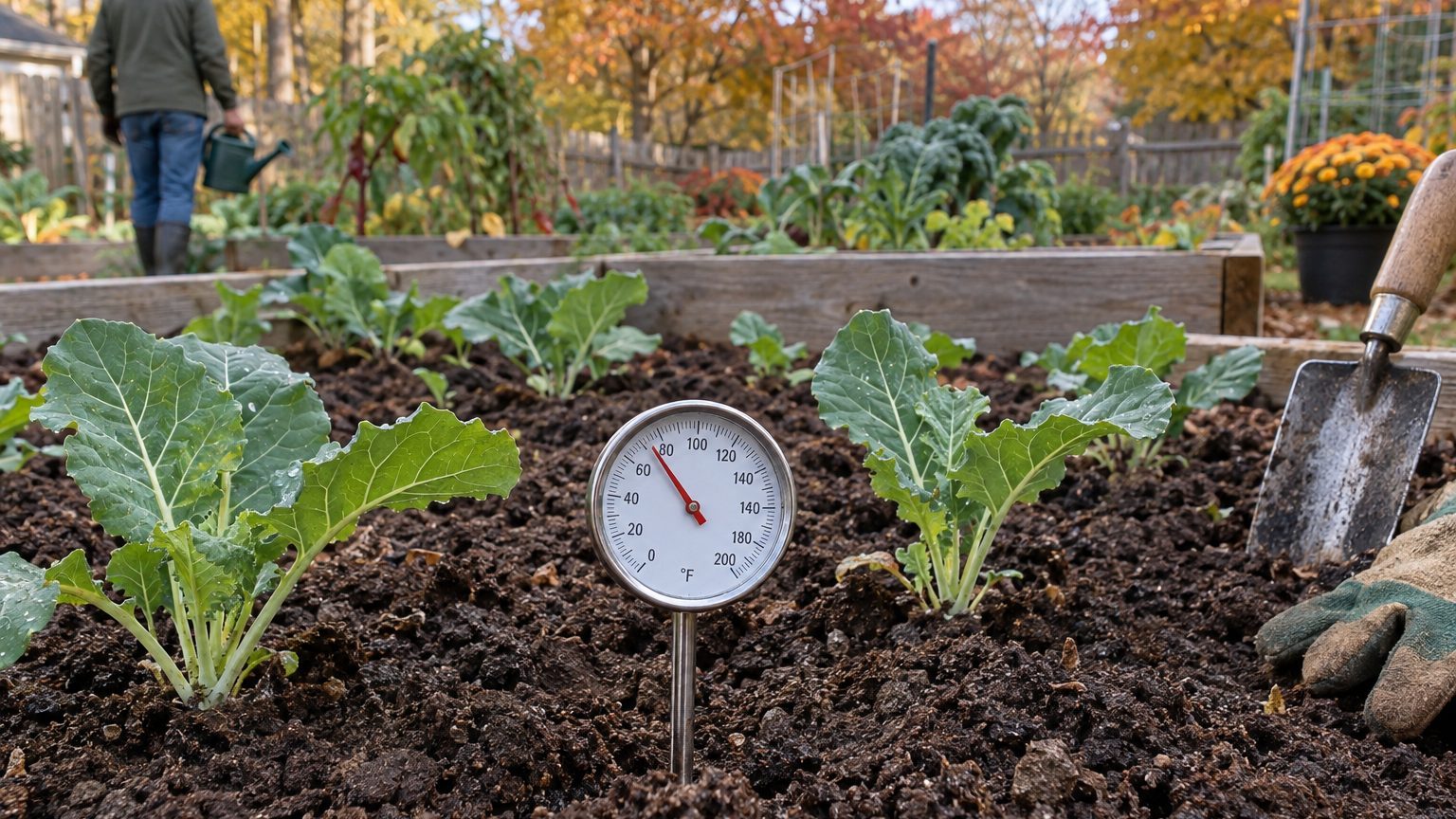
A cheap soil thermometer settles the question. Push it to planting depth in the morning, when the ground is at its coldest, and sow when it reads the same several mornings in a row. Soil that crumbles in your hand instead of clumping into a wet ball is ready too. Raised beds and sandy ground warm sooner than heavy clay, which is common in the Delta and in river bottoms.
Is spring or fall better for collards here?
Fall is the more dependable crop. A late-summer sowing grows into cooling weather, and the first fall 32°F freeze at Little Rock arrives between November 7 and November 20 (same station and probability band). Count backward from that range to decide when seed or transplants go in. A spring crop has less room, because it must size up before summer heat turns the leaves tough and bitter.
Look at your own conditions before trusting a station reading. Little Rock sits in the middle of the state, while the Ozark and Ouachita highlands are cooler and the southern and Delta counties run warmer. Your county office of the University of Arkansas Cooperative Extension Service can tell you what works locally, including the varieties trialled near you.
If you want to see how the calendar shifts elsewhere in the South, the neighboring guide on growing collards in Alabama is a useful comparison. Collards across the country follow the same logic, and the general rules sit in Growing Collards: One Planting, Months of Harvest.
How long the season lasts here
The reference station has roughly eight months between the mean last spring freeze (March 12 to March 28) and the mean first fall freeze (November 7 to November 20). That is a long window for a leafy brassica, and it changes how you plan.
What does a window that long allow?
It allows a second sowing. A spring planting can be cut for weeks, then a fresh round goes in during late summer to carry the crop past the first freeze and, in mild places, well into winter. Two plantings a year is realistic here, where a short-season garden gets one chance. Spacing the rounds a few weeks apart also spreads the harvest, so you are not facing forty plants ready on the same Saturday. The succession sowing guide on this site lays out how to stagger them.
A long window also makes transplanting optional. In a short season, buying started plants saves weeks, and gardeners there have to check the root ball at purchase for circling roots and a healthy white color. With this much time, direct sowing is a fine choice for spring and fall alike, and transplants are a convenience for the hottest part of summer, when seed is slow to establish in baked soil. Whichever route you take, inspect the roots of purchased plants before setting them out.
How cold does it get, and what does that do to the zone?
The USDA Plant Hardiness Zone Map (2023, built on 1991-2020 normals) places the state in zones 6b to 8a. That is a range across the whole state, based on the average annual extreme minimum temperature. Little Rock is the sensible reference point, and the northwestern highlands sit toward the colder end. The mean daily minimum of the coldest month at the station is 30.9°F, just under freezing on an average winter night. Collards cope with that easily, which is why the plants often survive into late winter where the cold stays moderate.
Heat and water in Arkansas

Summers here are hot and humid, with long stretches of warm nights. Collards are a cool-season crop, and by midsummer a spring planting slows down, the leaves coarsen, and the plants attract more pests. Gardeners who try to hold plants through July and August usually get tough leaves, not a better harvest.
Why does the winter low decide how this bed is planned?
Collards live two different lives depending on the winter. Where the coldest month stays mild, they are a standing crop, picked leaf by leaf from November into March. With a mean coldest-month minimum of 30.9°F at Little Rock, much of the central and southern state falls in that group. In the Ozark and Ouachita highlands, where the cold goes deeper, the crop is better treated as an autumn crop that ends at the hard freeze. So the winter low sets the plan, and the summer only sets the planting date.
For a standing crop, pick the lower leaves first and leave the growing tip. Plants that are cut that way keep producing through the cold months. A layer of mulch over the roots holds the soil temperature steadier through freeze and thaw. In colder pockets, plan to harvest heavily ahead of the hard freeze rather than counting on spring regrowth.
What does humidity and rain do to the crop?
Warm, wet weather favors fungal and bacterial trouble on brassicas, including black rot and downy mildew. Water at the base of the plants in the morning so leaves dry quickly, and give plants enough room for air to move between them. Even in a humid state, late-summer dry spells are common, and young transplants need steady moisture to establish. A deep soaking about once a week beats a daily sprinkle.
Collards share pests and diseases with cabbage, kale, mustard, turnips and rutabagas, because all of them are brassicas. Rotating collards into a bed that held any of those has not rotated anything. Give the crop a different plant family for a few seasons, and the general collards guide covers rotation in more detail.
Which collards suit Arkansas
The choice comes down to type, and the climate here points to three things: heat tolerance, airflow, and disease resistance. A long season gives you room, so you do not need the very earliest types. Heat and humidity are the real tests.
What traits should you look for?
- Disease resistance, first, because warm and humid weather encourages black rot and leaf spots.
- Open, upright growth, which lets air move through the leaves and dry them faster after rain or irrigation.
- Slow bolting, so a spring planting holds its quality into early summer.
- Good cold hardiness, if you want a standing winter crop in the milder parts of the state.
Shade at the root also matters. Mulch and a little afternoon shade from taller crops keep the soil cooler in summer, which helps a late planting get started in August heat.
Why is no variety named here?
Variety names mean something only when they come from trials run near you. Soil, elevation and disease pressure change from the Delta to the Ozarks, and a type that thrives in one county can sulk in another. The University of Arkansas Cooperative Extension Service runs variety trials and publishes recommendations by region, and your county agent can tell you what performs where you garden. Seed catalogs also describe resistance traits on the packet.
If you are comparing climates, the guide on growing collards in New Mexico shows how a dry, high-elevation state changes the same decisions.
Common questions
Can I plant collards before the last frost in Arkansas?
Yes, but only once the soil is workable and no longer cold and soggy. Collards tolerate light frost, so the question is root growth. Seedlings in cold wet ground stall and are prone to damping-off, so a soil thermometer is the better guide than the date.
Will collards survive an Arkansas winter?
In the milder parts of the state, often yes. The mean daily minimum of the coldest month at Little Rock is 30.9°F, so plants can be picked from November into March. Colder highland areas see harder freezes, and the crop there usually ends in autumn.
How do I tell if harvested collard leaves are still good?
Look at them before cooking or storing. Slimy or weeping spots, a soft patch, or mold on the leaves or crown mean the leaves should go in the compost. Looking sound does not make something safe, so when in doubt, throw it out.
Where can I get varieties that suit my county?
Contact your county office of the University of Arkansas Cooperative Extension Service. It publishes varieties trialled in the state and can advise on planting dates for your area.