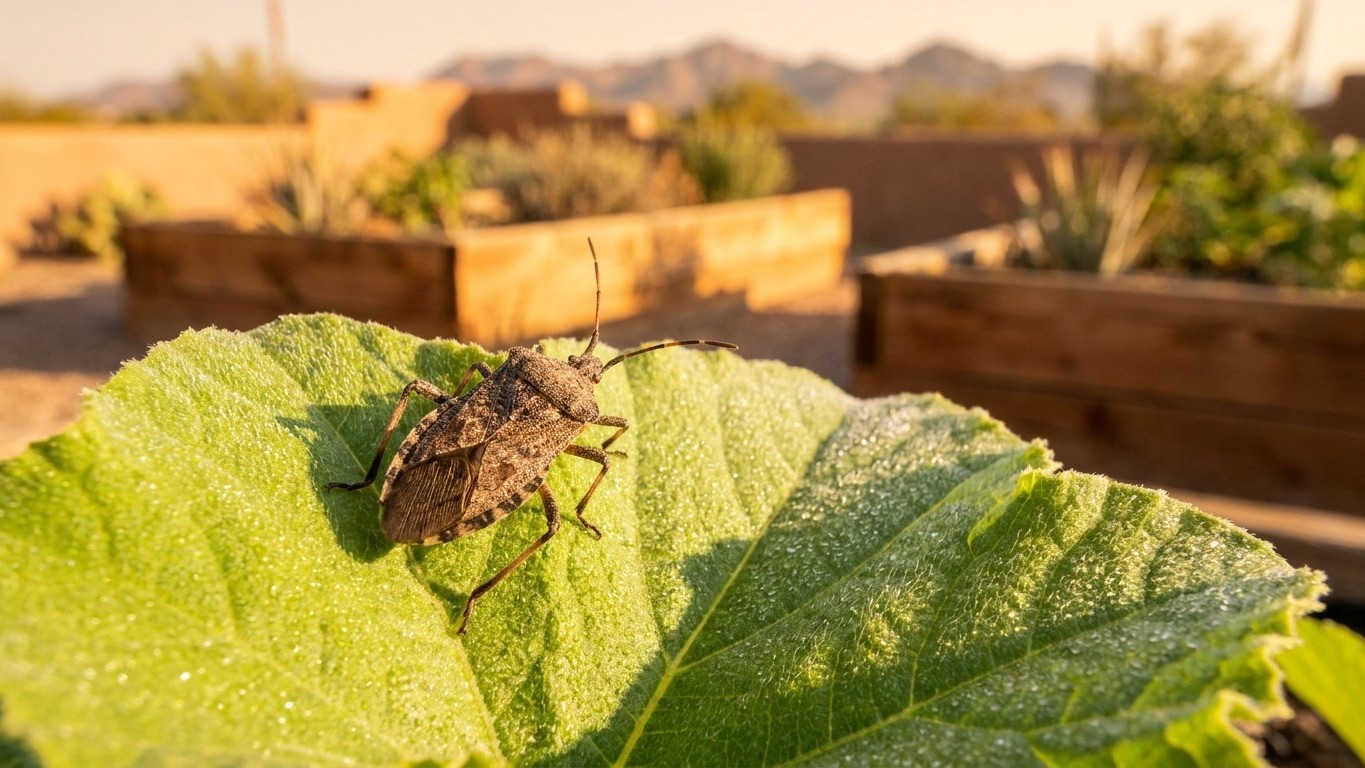

Squash bugs are active in Arkansas from late spring right through the end of summer, with no sharp start-and-stop date the way some pests have. The University of Arkansas Division of Agriculture lists them as present through the entire warm season, alongside Japanese beetles and squash vine borers, so the real question for a home gardener isn’t “when do they arrive” but “how do I catch them before the vine collapses.”
The weeks to watch

Squash bugs are present all summer in Arkansas, according to the Cooperative Extension Service, which groups them with Japanese beetle and squash vine borer as the state’s three major summer garden pests. Unlike squash vine borer, which the same source pins to two distinct adult flights (June and again in August), the extension publication does not break squash bug activity into separate generations or give a narrower window. That’s useful information on its own: it means there’s no safe month to stop checking your plants once cucurbits go in the ground.
Adults return first
Squash bug adults overwinter as adults, not eggs, tucked under garden debris, mulch, or the edges of buildings. Once the soil warms in spring they move into cucurbit plantings and start feeding and mating almost immediately. This is why cleaning up old vines and mulch in fall matters more for this pest than for many others: you’re removing the shelter the next season’s population depends on.
Generations that follow
Because Arkansas Extension lists squash bugs as present through the whole summer rather than in discrete waves, gardeners should treat June, July, and August as equally risky rather than assuming the worst has passed after an early scare. Egg masses, nymphs, and adults can all be found on the same plant at the same time later in the season, which is part of why control gets harder the longer an infestation runs.
Reading the calendar from your last frost

Squash bugs don’t watch a calendar. They respond to soil and air temperature, so a warm March pushes activity earlier and a cold, wet spring delays it, sometimes by weeks. What a gardener can actually plan around is the average last spring frost, which for central Arkansas (NOAA’s 1991-2020 climate normals, station USW00013963) falls somewhere between March 12 and March 28 at the 32°F threshold. That’s a normal built from three decades of data, not a promise for any single year.
Tender squash and cucumber transplants can’t go in the ground until the risk of a damaging freeze has passed, and here the numbers shift: the National Weather Service in Little Rock uses a lighter 36°F threshold for tender plants, giving April 3 in spring and October 31 in fall as the more relevant working dates. That gap between the 32°F freeze date and the 36°F frost date is exactly why so many transplants get burned even after the “last frost” has technically come and gone.
- Start from the frost normal. Use March 12-28 (32°F freeze risk) as your rough guide, but lean on the tighter April 3 (36°F) date from NWS Little Rock if you’re setting out tender squash or cucumber starts.
- Watch the weeks after transplant. Once vines are in the ground and soil has warmed, squash bug adults and their egg masses typically show up within the first few weeks, well before flowering, which is when row covers need to already be in place or already removed for pollination.
What it attacks, and what the damage looks like

Most gardeners notice the plant before they notice the insect. A vine that wilts suddenly in the heat of the day, especially one runner at a time rather than the whole plant, is the classic early warning. Leaves often go from wilted to yellow to crisp brown in a matter of days, sometimes with a slightly bronzed or stippled look where feeding has been heaviest. By the time an entire hill of squash has collapsed, the population behind it has usually been building for weeks.
The crops at risk are all in the same family:
- Summer and winter squash
- Pumpkins
- Cucumbers
- Melons and other cucurbits
Both nymphs and adults do damage by piercing plant tissue and feeding on sap, which is what causes the wilting: their saliva disrupts the plant’s ability to move water through the stem. Nymphs, the small gray-green immature stage found in clusters near egg masses, tend to cause the most concentrated damage because they feed in groups on the same runner. That matters for treatment, because once nymphs have matured into hard-shelled adults, they’re harder to control and better protected against contact methods that work on the soft-bodied young.
How Arkansas sits in this pest’s range
Squash bugs aren’t a regional curiosity. They’re one of the most widely reported cucurbit pests across the United States, and Arkansas Extension groups them with Japanese beetle and squash vine borer as the state’s three main summer garden insects without singling out any part of the state as more or less affected. That pattern, common pest, statewide presence, is typical for squash bugs generally: the difference between one place and another tends to be exactly when the population builds each year, not whether the insect shows up at all.
For Arkansas gardeners, that means the practical guidance doesn’t change much whether you’re gardening in the Ozarks or the Delta. The published Extension material draws on statewide observations rather than pointing to a neighboring state’s data, so there’s no border-state substitute needed here, the recommendations come from within Arkansas itself.
What actually works against it

- Time your planting. Squash and cucumbers set out early, once the soil has warmed past your local frost risk, get a head start on growth before bug populations peak, giving plants a better chance of tolerating some feeding.
- Clear garden debris every fall. Removing old vines, boards, and mulch eliminates the shelter overwintering adults rely on to survive the winter and re-infest next year’s planting.
- Rotate cucurbits to a new spot each year. Adults that do overwinter nearby are less likely to find host plants immediately if squash and cucumbers aren’t planted in the same bed season after season.
- Use row covers, but remove them at bloom. A physical barrier keeps adults from laying eggs on young plants, but squash needs pollinators once flowers open, so covers have to come off right when protection matters most, a tradeoff every gardener using this method runs into.
- Hand-pick eggs, nymphs, and adults. Egg masses are laid in tidy clusters on the undersides of leaves and can be scraped off; nymphs and adults can be picked or knocked into soapy water. This works best early, before populations build, and stops being practical once an infestation is heavy.
- Set out a trap board overnight. Many gardeners lay a flat board near squash plants; adults tend to gather underneath it overnight and can be collected in the morning. It’s a widely used trick, though it won’t touch bugs already established inside a stem.
Once nymphs or larvae have worked their way inside a stem, none of these measures reach them, which is the practical ceiling on hand-control methods: everything on this list works on the surface of the plant, not inside it. Home remedies like copper tape or ultrasonic repellents are sometimes mentioned for garden pests generally, but there’s no established mechanism specific to squash bugs, and gardeners report mixed results at best.
Common questions
Do squash bugs come back every year in the same garden?
Yes, largely because adults overwinter nearby in debris and mulch rather than dying off each fall. A garden that had an infestation one summer is likely to see adults again the following spring unless fall cleanup and crop rotation break that cycle.
Can squash bugs kill an established, mature plant?
They can, particularly through a heavy nymph infestation on a single runner, which cuts off water movement and causes that section of vine to wilt and die. Large, well-established plants with multiple runners tend to tolerate damage better than young transplants.
Is it too late to do anything once I see wilting?
Not necessarily. Wilting means feeding has already been happening, but hand-picking visible nymphs and adults, and destroying any egg masses on nearby leaves, can still slow the population before it spreads to unaffected runners or neighboring plants.